
Translated material
"You are not women, you are bastard!"
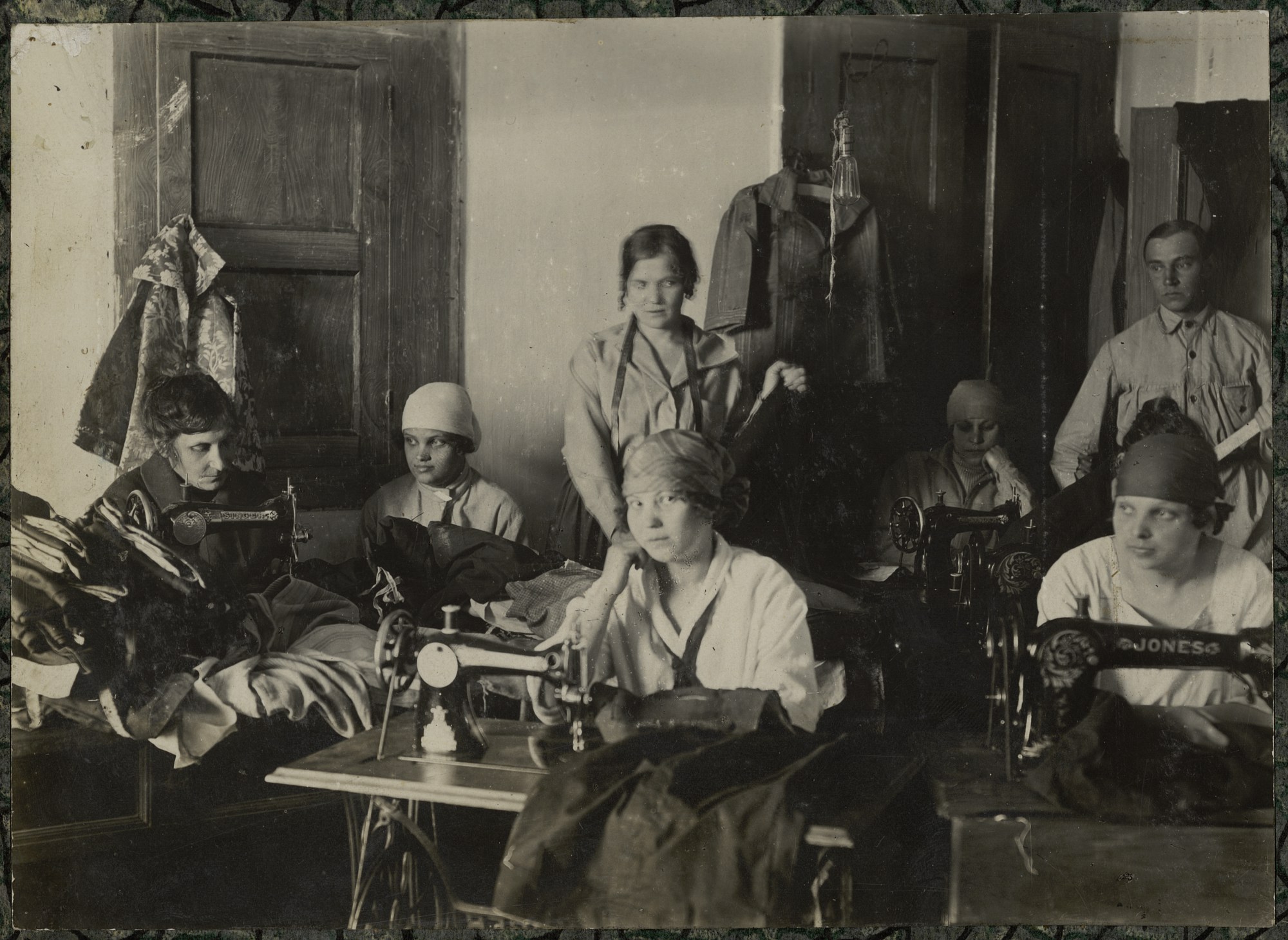
By 1950, more than 500 thousand women were sitting in the Gulag - like residents in a normal regional center. The “female” camp departments were for “political” prisoners with a terrible behind the grinder, where they passed through violence, hunger, despair and attempts to preserve themselves. Among those who survived, there was Vera Prokhorov - the daughter of the last owner of the Trekhgorenoye Manufactory
"I did not slander, I just spared people"
When I first saw Vera Ivanovna, the last thing I could imagine was her among the prisoners. She did not look like a person who spent six years in the zone. Small, fragile, in ninety -four years, Vera Ivanovna taught English, sitting in her small apartment in Arbat lanes, among books and icons, in the company of a gentle cat named Piskun.
We met once a week. Vera Ivanovna was preparing for our meeting: dressed, curled short hair in tight curls and bought “Kukis”-she called tea for tea only, in English.
An hour we were engaged in language and grammar, and then talked. For the first time that Vera Ivanovna was sitting in the camps, I found out by chance - she mentioned this by the way, very calmly and everyday. And then she laughed: “Sometimes in the camp I dreamed of school lessons in algebra. I woke up on the bunks and with relief thought: “No, I'm not at the board!” Then I felt happy. "
When Vera Prokhorova was arrested in August 1951, she was thirty -three years old. The arrests sometimes carried out inventively. Vera heard this story: one woman went to the country. Suddenly she was given to her that she needed to immediately return home.
She went to the city what was in a home dress. And there KGB officers were already waiting for her. Another woman was arrested next to the house. She sat with a small child, when suddenly they knocked on her and asked to go out for a moment - a letter supposedly came to her name. The woman went out, and she was immediately put in a service car. Arrest.
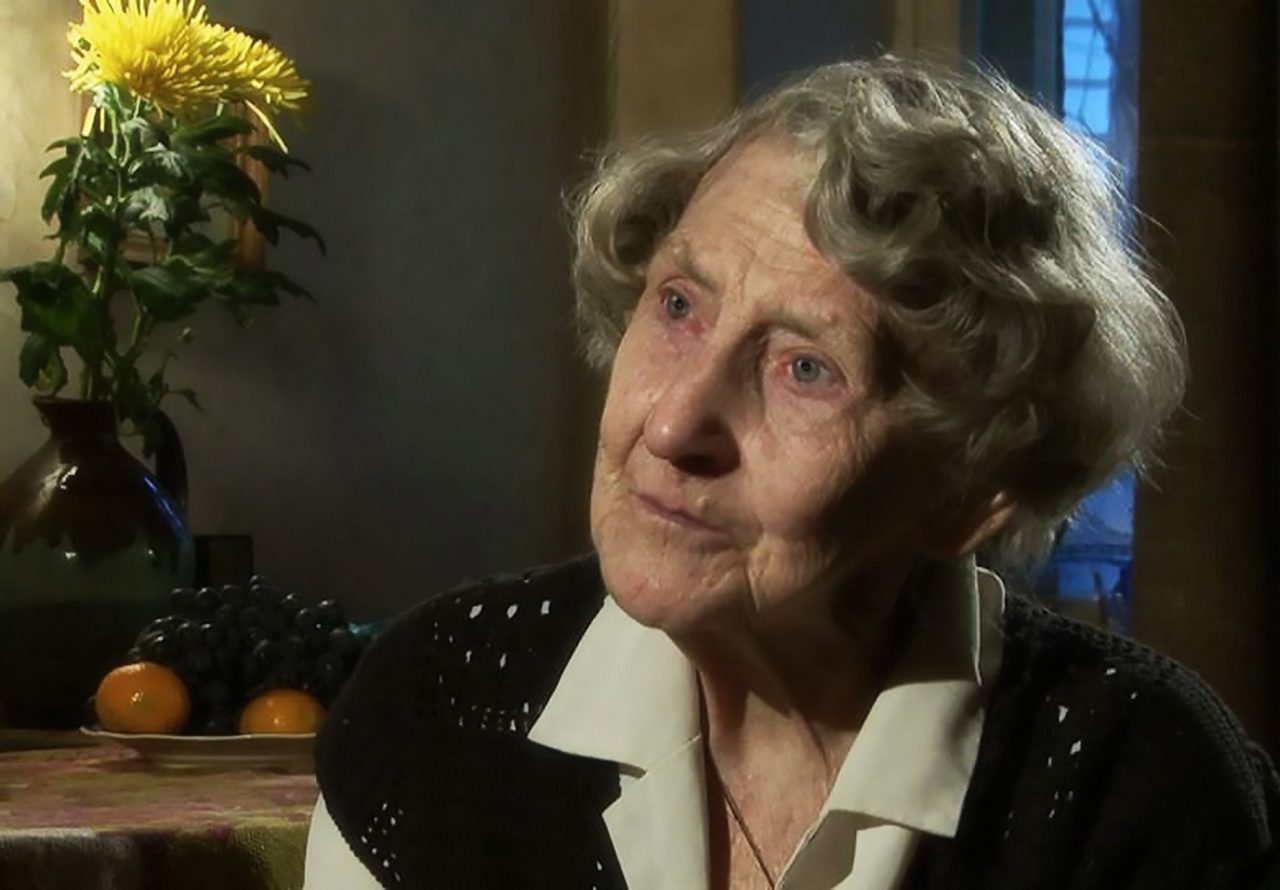 Vera Ivanovna Prokhorova photo: Irina Popova
Vera also did not say that they were going to arrest her. Once they called her and said: "They are looking for you, they want to invite to work in the ministry." It turned out that we are talking about the Ministry of the Interior. They allegedly needed the services of faith: they wanted to tighten English.
“Some young man soon called. I say: “You know, this is a very mysterious and secret ministry, and I am not able to keep secrets.” He in response: “Well, you can.” Incredible politeness. "
Then it turned out that no one needed English: under the pretext of interviewing, faith was called to the Lubyanka and arrested.
“There was a denunciation that I slandered Soviet power. I received the shortest possible time for the 58th point-ten years. Criticism of Soviet power. I did not sign anything. I said: “I did not slander Soviet reality, I just spared people.”
"For myself, I decided: life is over"
Vera was sentenced to ten years of forced labor camps (ITL) under the 58th article “For treason” and sent to Lakelag-one of the “islands” of the Gulag archipelago. She jokingly calls her term for the children's: according to the 58th, they usually gave much more.
The place where Vera, strictly speaking, cannot be called a female camp. As such, women's camps - in the format of modern prisons for women - there was no gulag in the system. Each ITL consisted of camp departments, camp points, often scattered through a fairly vast territory, said Tatyana Polyanskaya, candidate of historical sciences and senior researcher at the Gulag Museum.
“At the same time, the female camp departments were unusually large, where several thousand women were at the same time. Women were in almost every camp, in female zones. In the zone were huts, dining rooms and other household premises. The female zone was separated from men's barbed wire. Men and women intersected at work when they were taken out of the zone. ”
In addition to ordinary camps, they were special. These were Lakelag - it is also called a lake camp or special camp No. 7. Such ITL began to create in 1948 specifically for convicts for political reasons - such as Vera.
There were twelve special camps, and they all wore, according to Polyanskaya, "beautiful, sometimes even poetic names." So, in addition to the lake camp, there was a mountain (special camp No. 2), Dubravnaya (Special Camp No. 3) and River (Special Camp No. 6). Blessed names were given for conspiracy purposes.
“The lake camp was one of the largest, it simultaneously contained more than 50 thousand prisoners. So, at the beginning of 1951 there were 36,843 prisoners in it, of which women were 8351, ”continues Polyanskaya. - There was a strict regime in special camps. The prisoners were directed only to hard work. ”
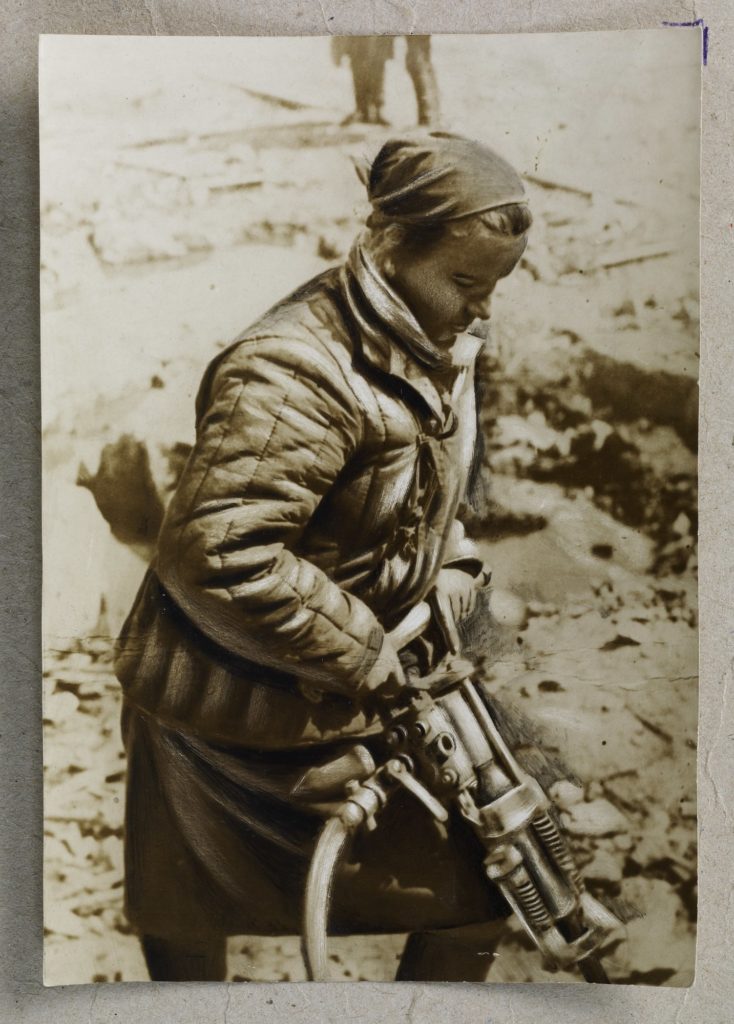 The White Sea-Baltic Canal, the beginning of the 1930s photo: from the funds of the State Archive of the Russian Federation
When Vera first fell into the Ozerlag, it was amazed: around was "the nature of amazing beauty, wood domes, rivers." True, there was no time to enjoy nature. After arriving at the camp, Vera was assigned a number - AB 294 - and sent to work.
“For me, the camp has become a kind of delay,” Vera notes . “Because for myself I have already decided: everything, life is over.”
"Yes, you can't build communism with me"
Women-poked in Ozerlag, along with men, built roads and worked on Lesopoval. Faith of what was happening was calm. Sometimes she was told by escorts that she works badly: she really could not saw the trees.
Vera said to all the remarks: "Yes, you can’t build communism with me." As a result, they stopped putting faith on a saw of trees. Usually she supported the fire in the fire for the escort.
Women with whom faith was in the zone were "completely different ages, nationality and culture."
“There were Kyrgyz, Chinese, Japanese, Americans in the camp-some Americans married ours,” says Vera. - Of course, husbands were given espionage, to them (Americans. - Approx. TD) too. That is, the people were motley. A whole group of girls' girls was driven to us. They put one German - she was in seventy years old. ”
Types of "political" women-conquered in special camps:- Former bodies of bodies. Usually they were arrested by denunciation. With Vera Prokhorova, a former hebista sat, who was in the camp because she did not manage to convey to her friend: she brought the first.
- "The nun." This is the name of women who were planted for faith: for example, secretly conducted church services.
- The wives of the "traitors of the Motherland." Only those women who themselves brought to their husbands were not arrested. If her husband was arrested, and his wife had not reported to him before, she was most often planted. The fate of the arrested husbands of his wife usually officially did not officially know anything. The unspoken rule acted: if the wife received five years, then the husband is alive, if eight are shot.
- The wives of foreigners. The Presidium of the Supreme Soviet of the USSR issued a decree on the prohibition of marriages between citizens of the USSR and foreigners on February 15, 1947. If a woman lived with a foreign husband abroad, but did not have children from him, she was subject to mandatory repatriation-without a husband. Typically, such women were characterized as socially dangerous elements and went to camps for five years.
- "Westerners." So called Ukrainian or Baltic nationalists who participated in an underground struggle against the Soviet regime or were “friends” of members of the organization of Ukrainian nationalists.
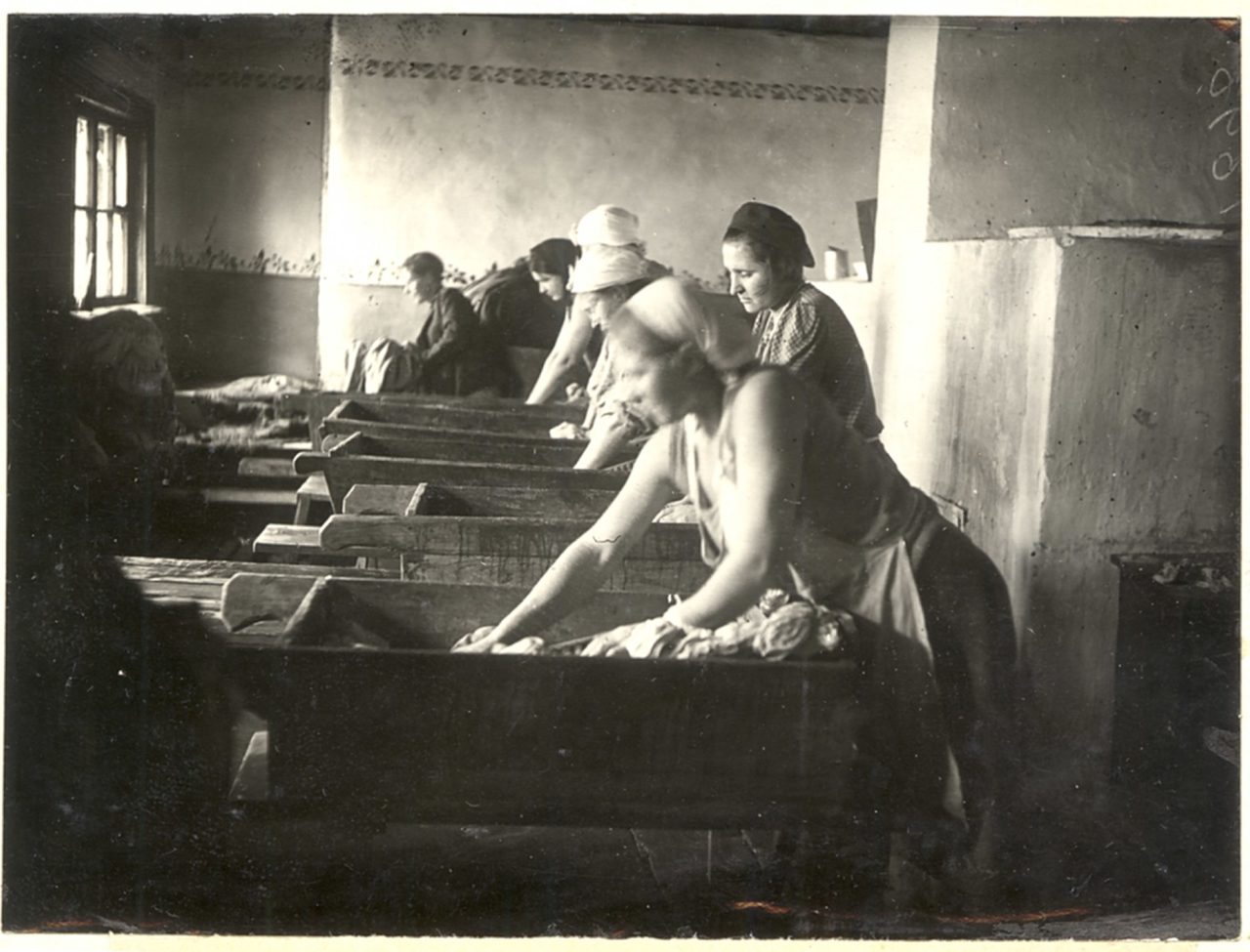 2nd camp department of Chelyabmetallurgstroy, 1945-1946 Photo: From the Funds of the State Archive of the Russian Federation
Among the "political" there were criminals. For them, getting to the "political" was "something like entertainment."
“They made a simple trick,” Vera explains. - They painted a face with a mustache on a piece of paper, signed a drawing in the name of Stalin and a swearing word, prompted a stalk from a shovel and walked along the camp with him. They were immediately grabbed, condemned by a political article and transferred to us. ”
Unlike “political”, convicted of criminal offenses were considered more “socially close” regime of the current government. Therefore, they were usually given the most bread jobs: they were assigned to the foremen, determined in the medical unit or kitchen.
"You will find death here"
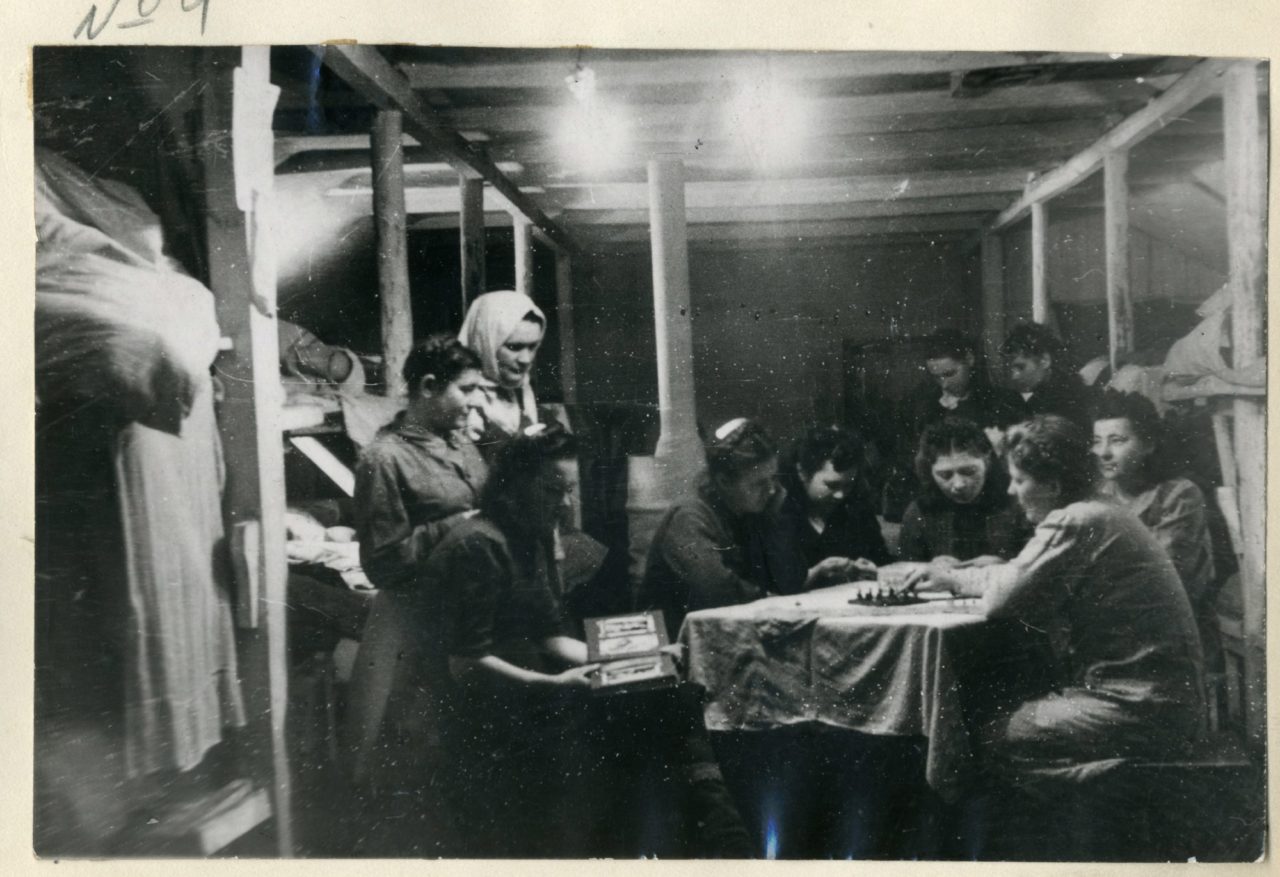
Women slept on two -story bunks, leaning against each other. The night turned into “continuous torment”: it was impossible to lie down as I wanted. To roll over, it was necessary to wake a neighbor in a bed.
Despite any hardships, liberation and life after the camp, it was not accepted to argue aloud: after the camp there was no future. Vera recalled: “What awaited us after liberation? The same Siberia. Only without work, because it was almost impossible to get a former political. They even said that the camp was even better (than at large.-approx. TD) : In the morning they gave some kind of balance, for lunch-a scoop of porridge, and for dinner-a fish stew. Nothing, it was possible to live. "
Vera and other prisoners were looked at the overseer, who was especially annoyed by the desire of some women to look neat. He shouted to them: “You are not women, you are bastard! You will not come out of here, you will find death here. ”
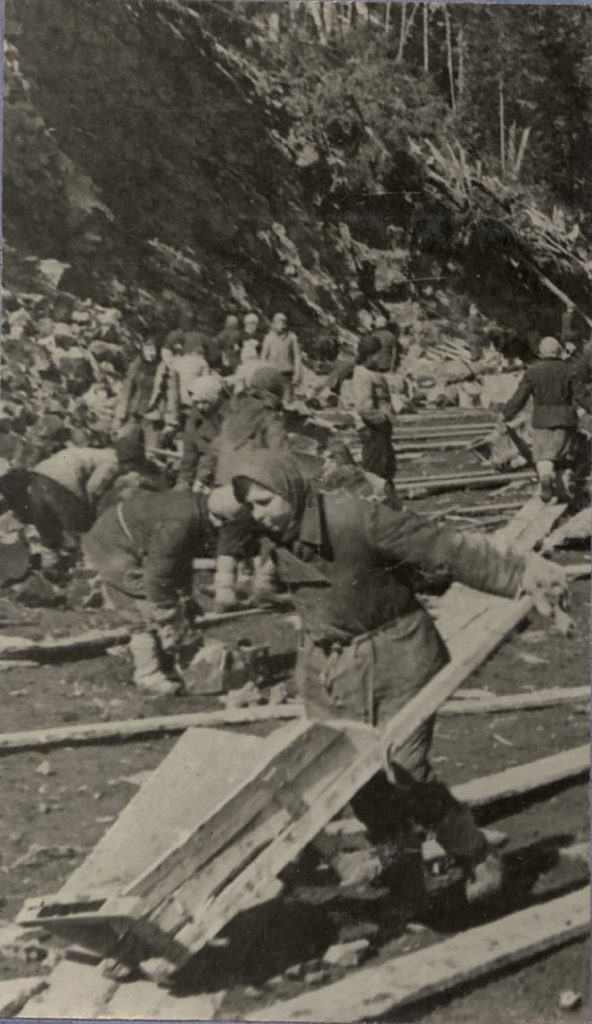 Nizhne-Amur ITL. Khabarovsk Territory, 1940s Photo: From the Funds of the State Archive of the Russian Federation
“The Germans tried to block the shapeless, terrible black camp dresses with a piece of glass, since the scissors were not allowed,” Vera says. - They struck a dress with a belt, which were in fashion at that time. This was terribly angry with the camp authorities. Of course, I did not. The overseer even praised me: “Here, the woman understands that she is in the camp - but you are not!” ”
Not all escorts were limited to comments and ridicule.
“At that time, the biggest prize was supposed to be prevented by the escape,” says Vera. - That is, they simply killed a prisoner who moved ten steps from a plate with the inscription: “ban”. For this they gave a month of vacation, two salaries of bonuses and silver hours. During the time, while I was in custody, there was only one escort who shot the prisoner. He deliberately sent her behind the bonfire branches for the plate: “prohibition” and pressed the trigger. He really wanted to go on vacation to his wife. "
They said that then, when the escort returned to the camp, he suddenly dreamed of how the prisoner he killed was floating through the air directly to him. At that moment he was on the tower and was so frightened by the “ghost” that he fell. Due to injuries, the escort died in the hospital a few days later.
"God awarded us all the same - prison"
One day, the "new" was brought to the zone. Among them was the seventeen -year -old Maya Ulanovskaya. She was given twenty -five years of camps for participating in the Union of the struggle for the cause of the revolution. According to Vera, it was "youth who longed to correct some mistakes in the system that allowed violence and reprisals."
“For this, they studied books (Marx, Plekhanov), made reports, argued and tried to find funds on how to influence power, how to change what was happening,” Vera explains . - They were terribly passionate about this. There were no practical actions, even high -profile performances. As a result, they were judged by a military tribunal as terrorists. ”
Young people were sentenced to death, girls were given every twenty -five years of camps. Almost all the participants in the Union for the Wrestling of the Revolution were yesterday's schoolchildren: the youngest at the time of the sentence was sixteen, the eldest was twenty -one.
In the lake, Maya almost immediately noticed Vera among other prisoners: tall growth, men's ear-hat, lameness (Vera frostbroot her legs at the stage), rejected eyes.
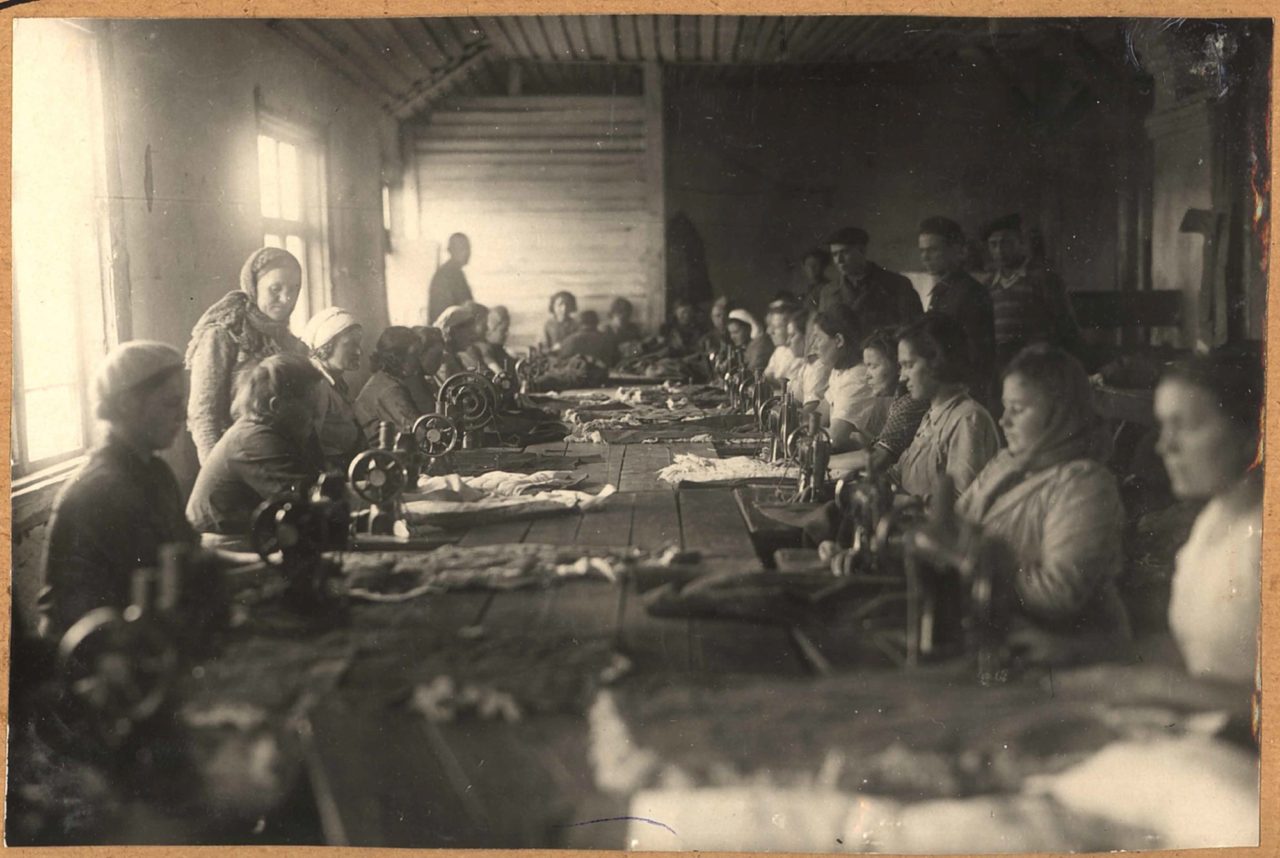 Yagrinsky ITL, 1946-1947 Photo: From the Funds of the State Archive of the Russian Federation
“In her youth, Vera was a Komsomol member, cursed her capitalist ancestors, for which, she believed, and God punished her with a prison,” Maya recalls . - I was silent, but I was surprised at this logic: as he punished, and awarded us all here the same - prison! Which did not interfere with appreciation with what exceptional humility and meekness she transferred the conclusion. She seemed to me like a Christian martyr. ”
Vera affectionately called Maya the Ulanovsky Mayok, T -shirt, T -shirt or just “My Campaurant Daughter”. Everyone in the zone really perceived faith as the mother of Maya. Sometimes they came to her and complained: "Our master cursed." Then Vera called Maya to herself and sternly said: "If you do this, I will not talk to you." And Maya obeyed.
Maya had huge black eyes, a fragile figure and a children's face. During the trial, she behaved calmly and, during interrogations in the face of investigators, said: "I hate you." The Maya camp also kept steadily. She, like Vera, did not think that someday she would be released-and accepted life for herself in the camp of the surroundings.
“Mike tried to instill her moral concepts in the camp for others. That is, one must always help each other, regret, share. I remember the construction of the railway, Mikey and I were traveling with prisoners from another zone. And the prisoners unanimously chose me with a foreman. It was necessary to dig a ditch. None of my subordinates went. Besides whom? T -shirt. The tank stood in the ditch, dug the earth and scolded brigades: “Why don't you want to help?” ”
Sometimes parcels with crackers and sugar came. Then, it happened, Maya sat down, thought how much there were people at the time of the parcel in the hut, and divided everything equally.
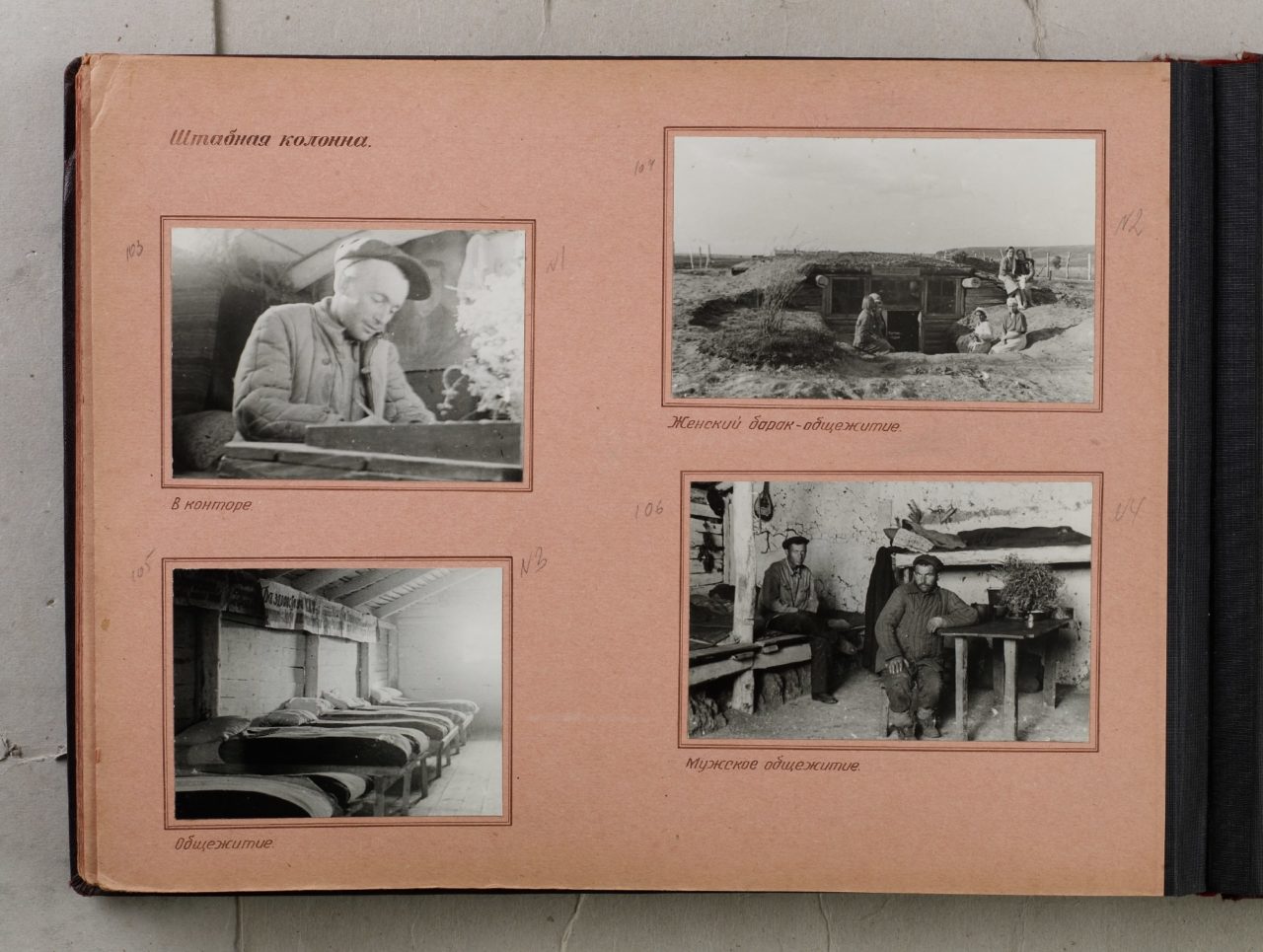 Volga ITL, 1942 Photo: From the Funds of the State Archive of the Russian Federation
“Vera believed that, having received the parcel, it was necessary to distribute everything,” remarks Maya. - I acted inconsistently: sometimes I shared only with close friends, and sometimes I handed out my good to those who did not receive anything. Once she gave half a pound of sugar to one German, telling her to share between her. Easter was coming, but they had nothing to celebrate. I was surprised that I was not thanks, and asked another German, whether she gave the sugar for general use. It turned out to eat alone. ”
"Love was unconditionally punished"
Vera Prokhorova did not have a love story in the camp - neither random nor serious. Ten years before the arrest, in 1937, she met a young man named Svyatoslav Richter. Then he will become a famous pianist, laureate of state Soviet awards, and then for faith he was just a light.
Vera was in love with Richter fifty-seven years, until her death, and in the camp she could not think about someone else. In contrast, other women had relations in the zone.
They were not punished for friendship in the camps, but love between prisoners was banned. A visit to men of female barracks or women of male was considered "the most terrible crime punishing without the slightest mercy."
“Love was unconditionally punishable for ten days of the carrier without going to work with a daily ration of 300 grams of bread with water and a bowl of lunch,” recalls one of the former prisoners.
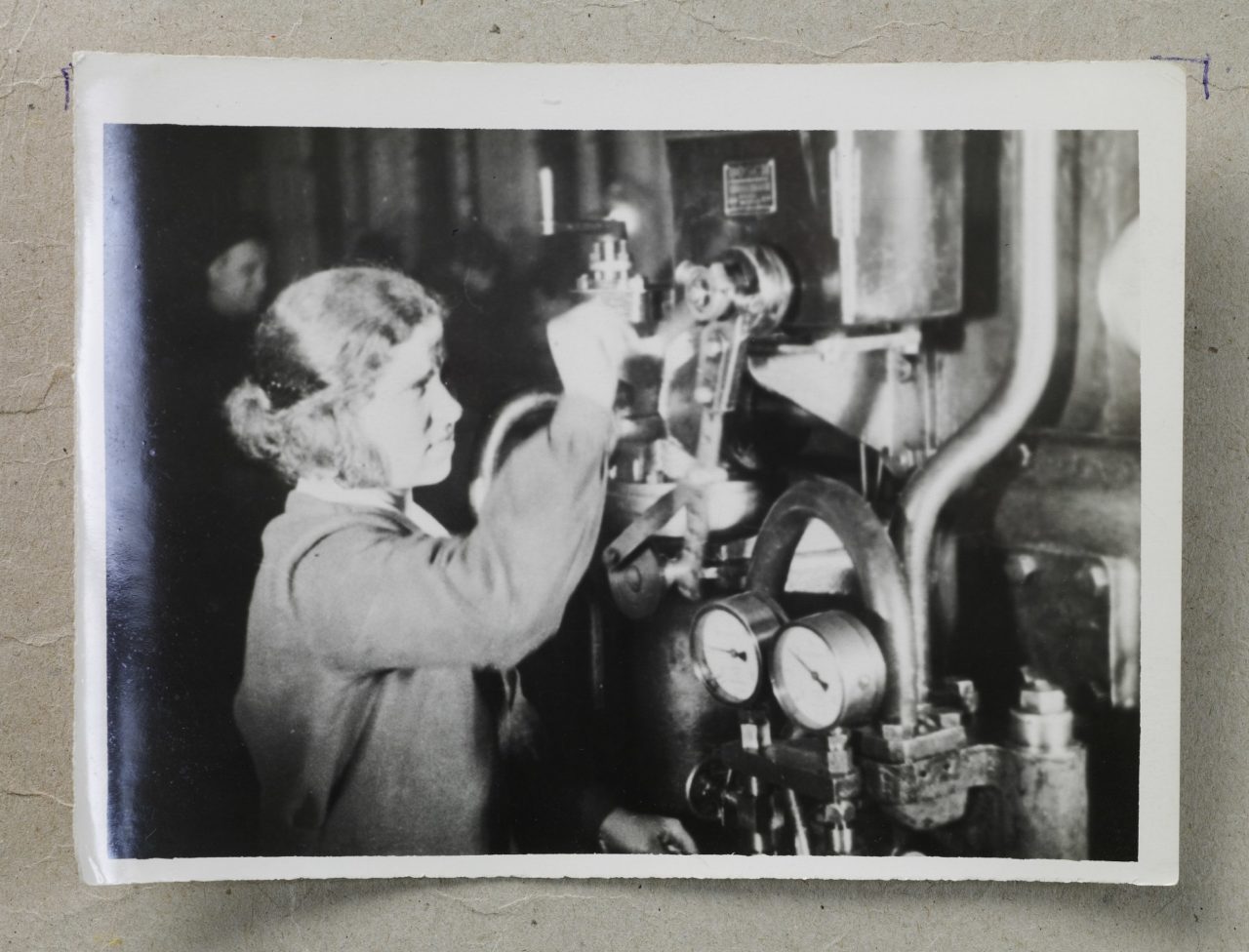 The White Sea-Baltic Canal, the beginning of the 1930s photo: from the funds of the State Archive of the Russian Federation
Despite the punishment, they were not shy in sexual relations in the camp - they were not tried to hide from other prisoners. Prostitution, violence and sudden passion, which surged in the midst of a hut scored by people, were among the prisoners by everyday life.
Once a women's team worked at a sawmill. Suddenly criminals came there. They began to rudely pester women.
“They grabbed the women who they wanted, and fell right in the snow or took them, squeezing the logs to the headquarters. This, it seems, was not the first time for women, and they did not resist. They had a foreman, but she did not mind this intervention - you might think, considered what was happening only by another type of work, ”the former prisoner recalled .
Camp novels were rarely beautiful love stories. One of the prisoners, Tatyana, once came a note from a young guy named Sasha. He headed the shoe workshop and was one of the “camp aristocracy”, that is, he had certain privileges.
Sasha asked the girl: "Let's live with you, and I will help you." Tatyana refused. Enraged Sasha beat her with an iron stick, and then carried it to the camp hospital and told the nurse to take care of her. When Tatyana recovered, she decided to live with Sasha. She had no way out: the girl was afraid that otherwise she would simply be killed.
After Sasha was sent to another camp, Tatyana “moved” to one of the officers.
“I was forced to live with this scum, I had no way out,” Tatyana writes .
In the female camp departments there were same-sex couples-and, unlike male homosexuals, they expressed their feelings openly. In the camp lesbian pairs were usually “wives” and “husbands”. “Husbands” in the jargon were called “Cobles”, they often cut down under men and began to call themselves male names.
About lesbian relations in the camps sang a ditties:
Oh, thanks to Stalin:
I made a young lady from me.
And the cow I, and the bull,
I am a woman and a man.
* * *
The camp of the zipalle ended for most “political” unexpectedly. Vera by that time had already mastered in the camp. Together with the "Camp daughter" Maya played in the performances. Once they put the “Snow Maiden” on the stage in the camp kitchen, Vera sang the party of King Berendei, and Maya - the shepherd Lelya.
Both women understood that they could be released only after the death of Stalin. But he seemed to them almost immortal.
 Vorkutalag Photo: From the Funds of the State Archive of the Russian Federation
«Смерти Сталина я жаждала и ждала. Всегда верила, что с его смертью произойдут перемены к лучшему, — замечает Майя. — И многие так считали, но все наши беседы на эту тему кончались одной фразой: “Грузины долго живут”. Мы не надеялись его пережить».
Вскоре после смерти Сталина начали освобождать «политических», а режим в лагере стал смягчаться. Разрешили переписку между лагерями, стало можно отправлять посылки, бараки перестали запирать на ночь.
О пересмотре дела Веры хлопотали на воле — этим занимался ее близкий друг Юрий Нагибин. В конце концов ее освободили и реабилитировали. Веру восстановили на работе в Институте иностранных языков имени Мориса Тореза.
«В лагере мне сказали, что я могу не засчитывать проведенные в заключении шесть лет, — вспоминает Вера. — Я отказалась: как это так, не считать столько лет жизни? “Ну тогда, — предложили мне, — вы можете говорить, что эти годы были посвящены сотрудничеству с КГБ”. Ну тут уж я тем более отказалась.
Вера Ивановна умерла в январе семь лет назад. Ее отпевали в маленькой желтой церкви на Сивцевом Вражке. После ее смерти я хотела поехать в бывший Озерлаг. Мама меня отговорила: «Куда ты поедешь? Там одни руины, гниль и пустота. Ничего там нет, и как будто ничего и не было».
ГУЛАГ женщины историческая память история