
Translated material
The final solution to the issue of property
The new plan of economic development of the government is aimed at eradicating the middle class by 2030
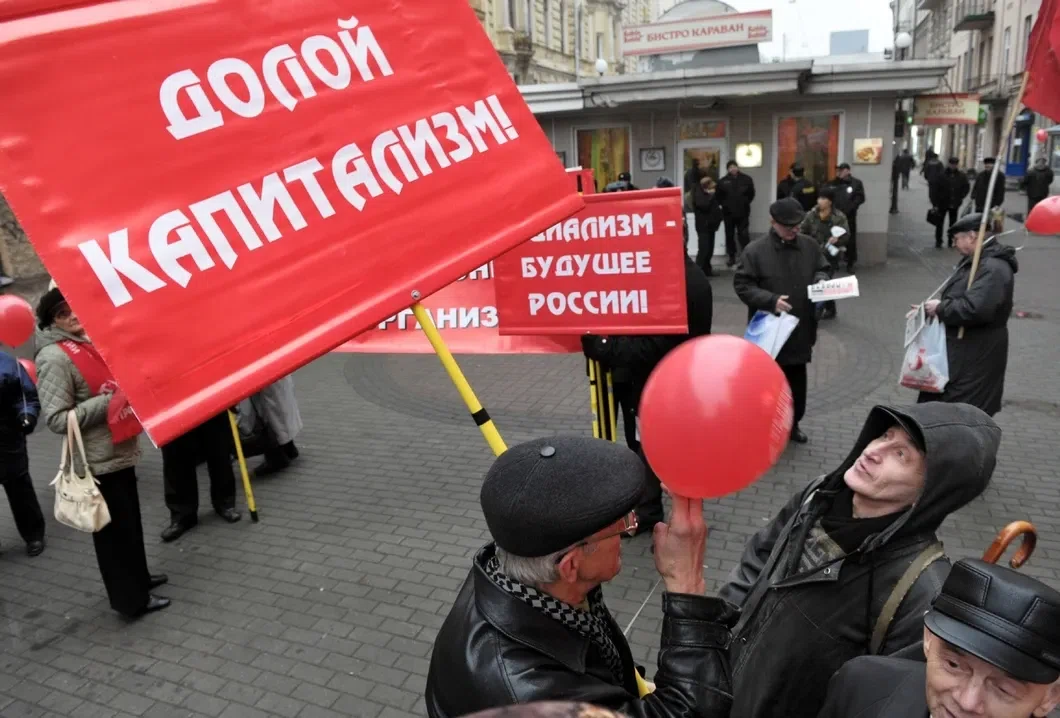
For the last hundred domestic authorities, as if it have not been lucky with strategies. At first, “our goals are clear, the tasks are defined; For work, comrades ”, and then we get for work and something goes wrong. Do not think that the problem of strategic planning is the problem of our time. There were also strategic plans in the USSR, they were called the “CPSU program” or “the Stalinist plan for the transformation of nature”, but nothing happened to them. The Third CPSU Program, if anyone does not remember, was about the “creation of the material and technical base of communism for two decades.” The program was adopted in 1961, but by 1981 it became clear that some material and technical base was created, but there was no communism and would not be in the near future. A few years later, the party set the task easier - each family with a separate housing by 2000, but this task was beyond the power.
The new time forced to write new strategies, but here, luck seemed to turn away from the performers. Take at least “Strategy-2020”, which no one recalls. Having analyzed the failure of Strategy-2020, we wrote that the problem here is exclusively in our misunderstanding of its true goals. It seems to us that the authorities did not succeed.
But maybe the goals declared in the official strategy did not correspond to the true plans of the authorities?
So, by the way, it also came out with the “material and technical base of communism”-after all, by and large it simply got into the property for those who promised people to build communism.
What is proud of the government
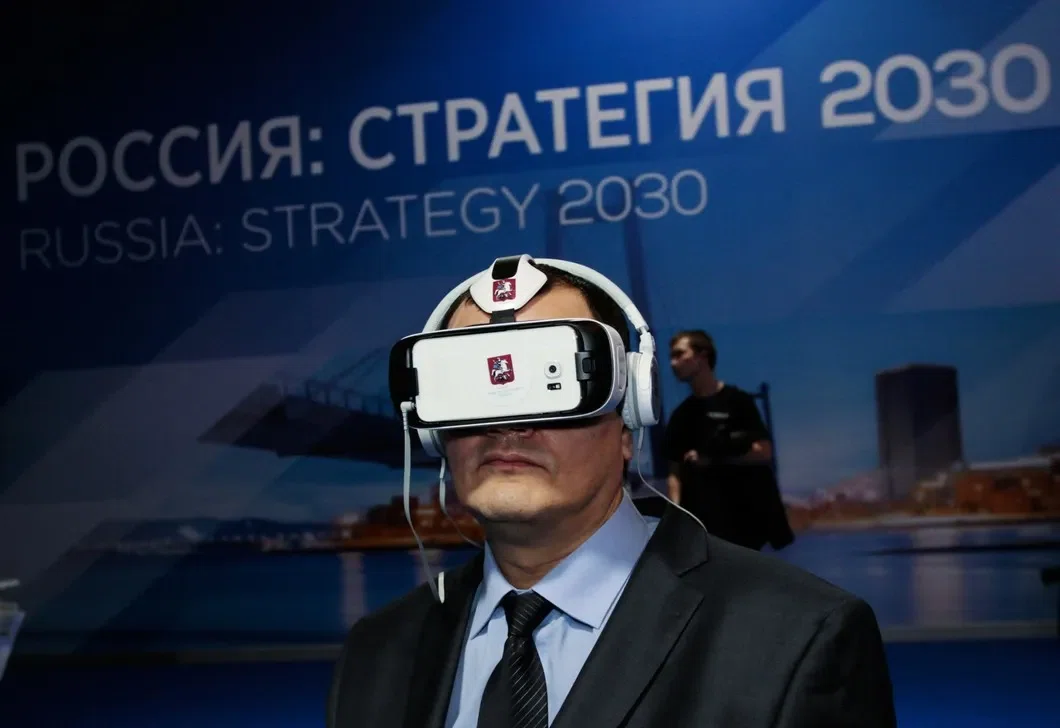
According to informed people, the peculiarity of the new “Strategy-2030” is that the government will be directly engaged in its creation, leaving “Academic Institutes”, “National Universities” and other “brain centers” overboard.
The self -confidence of the government is explained. Ministers can congratulate each other on an unprecedented achievement - according to the results of the “quarantine year”, the economy of the Russian Federation lost not 7%, as overseas experts predicted, not 3.9%, as the Ministry of Economic Development believed, but only 3.1%.
So the “plan for the restoration of the economy”, paid, as we expected , at the expense of workers' salaries, worked 100%. Rosstat will not allow to lie - "the costs of the final consumption of households fell by 8.6%." Over the past year, the real disposable income of people rolled back to the level of 2010, and the current level of salaries in terms of dollars has been minimal since 2009.
But the decline in consumption helped maintain foreign exchange revenue, the reduction in the salary fund ensured an increase in profit, the “national welfare fund” was not spent, and the taxation of individuals even increased. The borders closed for tourist trips left the “inside” of nearly $ 20 billion, due to which “assistance” was provided.
The story with a “preferential mortgage” can be included in the textbooks as an example of Rent-scarping-manipulation of economic policy in private interests.
In the crisis, developers asked the authorities of help, but the government acted cunningly - instead of distributing money, it came up with a “preferential mortgage”.
The magical words “reduction of interest” were so fascinated by people that they rushed to take loans, and the increased demand so dispersed housing prices that the monthly payment “on a preferential mortgage” was not lower than the payment without any benefits. Developers received their money, but the risks of payments did not take on the budget, but people who have to pay on their debts for a long time.
Having decided not to give people money, the bosses suggested that people compensate for the fall in income with loans, and were not mistaken. In 2020, banks issued 2,393 trillion rubles of new loans to individuals. The total debt reached a record 20.044 trillion rubles, or 36% of the cash incomes of the population (estimated by Rosstat of 55 trillion rubles per year). At the same time, the delay in credit cards for 2020 jumped by 20%, for car loans - by 22%, for “cash loans” - by 12%. To pay off the bankers, people go to usurors - microfinance organizations are experiencing a demand boom. And in general, the financial sector in the quarantine year showed excellent results - according to Rosstat, "the increased demand for financial services determined the increase in value added in the field of finance and insurance (growth of 7.9%)."
In addition, the long -promised “import substitution” took place. The statistics saw “a decrease in internal final demand (–5%) and the growth of pure export of goods and services due to the advanced reduction in imports (–13.7%) compared to export (–5.1%)”.
Translated into Russian - by reducing your consumption, the authorities were able to compensate for the fall of their oil revenues.
You thought that “import substitution” is when, instead of expensive imported things, you buy cheap Russian with the same quality? No, import substitution is when you don’t buy anything at all, and the saved currency revenue goes to where you came from, according to the Central Bank of the Russian Federation, the export of capital in 2020 amounted to $ 48 billion.
Other achievements of the government can also be noted-the state of Russian billionaires has grown, in Moscow the sales of Rolls-Roisy beat last year's record (Russia is the main market of this brand in continental Europe), and the sale of real estate of the de-Lux and premium in the capital of the Russian Federation became the largest over six years. If this is not the success of the ministers-capitalists, then I really do not know what you still need.
Plans and people
Therefore, there is nothing to be surprised that the government inspired by such results of its activity decided that it would easily cope with the strategy for achieving national goals by 2030. Five working groups that should be headed by Deputy Prime Ministers will have to represent the first contours of the strategy by the end of February. As Vedomosti wrote , the group “New High -Technologian Economy” was headed by the first deputy chairman of the government Andrei Belousov, the deputy chairman of Marat Khusnullin was responsible for the “aggressive development of infrastructure”, the “new public agreement” will be compiled by the deputy chairman of Tanian Golikov, the “client -centric state” will be described by the head of the government of the government Dmitry Grigorenko, the “national innovation system” - in the hands of the deputy chairman - in the hands of the deputy chairman Dmitry Chernyshenko.
I will not delve into the details of the boss and joke over the plans for creating a ten -year strategy in a couple of months. As Academician Strumilin, who wrote the plan of the first Stalin five -year plan, said, "it is better to stand at a high growth rate than to sit for low."
Moreover, one of the authors of the future strategy, Deputy Prime Minister Belousov, has a brilliant experience of the right forecast stated in the article “Scenarios of the Economic Development of Russia for the Fifteen Bena Perspective” and published in the journal “Problems of Forecasting” of the Russian Academy of Sciences in 2006.
This is not just interesting, but also outright text. The Doctor of Economics Belousov directly pointed out such a social trend as “ an increase in the layer of the population constituting the“ middle class ”, its revolutionizing impact on consumption standards ” as a source of “risks for Russia”. Where does the risks come from here? But from from: “Switching the demand for high -quality imported goods, a decrease in the role of low prices as a competitiveness factor and narrowing of the niches occupied by Russian goods” will cause “ strengthening social conflict and growth of claims to increase wages, exceeding the capabilities of companies to increase labor productivity” .
The exact forecast of the economist Belousov
That is, the very existence of the “middle class” is a threat to the profits of the Russian oligarchy, because the growth of people's income will mean the growth of people's claims - as quality goods and a quality life. Who needs to read these conclusions, and as a result, the middle class does not grow in our country - who did not have time to fit into it, he was late forever. At the same time, you can be thrown out of the middle class in five minutes - as the bosses want. I must say that the future deputy prime minister was not limited to listing the risks, he vividly described “Scenarios for Russia”, one of which we now live.
* “... a reduction in the number of working -age population and increasing the demographic load on it will coincide in time with a deterioration in the health of the population. This will lead, on the one hand, to the spread of poverty, on the other hand, to the impossibility of increasing labor productivity in accordance with the requirements of competitiveness.
... The most likely crisis of social systems, including pension, housing and utilities, systems of mass education and healthcare.
... The deployment of the crisis of social systems will cause further growth in government spending and, therefore, an increase in the fiscal burden on the economy. This will increase the likelihood of further reducing the rate of economic growth - up to the proximal level.
... The decrease in the balance of the trade balance, the intensifying export of capital and the stabilization of direct foreign investment will force the monetary authorities to pursue the policy of the “weak ruble”. (...) The regional crisis associated with the differentiation of regions by the level and capabilities of development, the formation of the territorial belt of stagnant poverty, the spread of foci of degradation of social infrastructure will worsen.
... The dynamics of economic development will decrease to 2% per year - significantly lower than in the developing regions of the world.
... A characteristic feature of the economy will be a multi -folding - a sharp difference between production enclaves that fit into the world economy and stagnant sectors. This multi -laying is projected to the social sphere, social structures and territorial entities, ”concludes economist Belousov.
So what is wrong here? (The script was called "Energy Autism.")
A real plan of power
In general, one person with a clear understanding of what is happening in the Russian economy in the team of developers of the new strategy. But there is no doubt about the competence of all members of the Russian government. Every time the big boss will tell you something about the national goals and the objective difficulties that we must overcome all together, remind yourself that in front of you is a dollar multimillionaire who masterfully able to turn plans and decisions into “living money”. There is no doubt that the strategy will not only be written on time - the authorities will be very tried to implement it. Knowing their past and current matters, it is not very difficult to predict the contours of the bossive plan.
The profit of the “new high -tech economy” will be provided by the systematic reduction of real income of employees.
The “aggressive development of infrastructure” will be achieved in the same ways as the growth of construction through a “preferential mortgage”: everyone who needs a new infrastructure will aggressively force it to pay at a double price. The “National Innovation System” will be built around the tracking cameras, as well as the forced installation of the corresponding software in each gadget (in these innovations we have no equal) and control over people's expenses. Well, the idea of a “client -centric state” makes us recall the Soviet story of a representative of a small people who have heard many times that in the USSR “everything is done for a person’s good”, but, only having got to the CPSU congress, he saw this man.
But the “New Public Treaty”, which is responsible for Deputy Prime Minister Golikov, is the most interesting.
The fact is that the “old public treaty”, within the framework of which the authorities have mastered the “national property”, has already been exhausted. Thirty years ago, everything was clear-people did not ask where the chiefs came from the plants, ports and mining and processing plants, and the bosses give them the keys to the "Soviet" apartments and do not interfere with filling the shelves in stores. The leaders received “socialist property” - people received full supermarkets and a TV with 30 programs instead of three. But you will not surprise youth with a supermarket and TV, you will not scare the conversation about the “empty shelves”. She wants minimal respect for herself and money in her hands. But he is not going to give one or the other authorities.
Both “money in hand” and “respect for people” contradict the main problem, which the authorities will have to be solved by 2030.
And the main task is the ownership of the same “plants-piles-papers”, which the authorities cleaned up 20-30 years ago.
It is only “it seems that it’s easy to look, but you look - it’s so easy to take!” Once, the authorities have already decided who to be a billionaire, and to whom to work for a mortgage. What will interfere with the new authorities (if it suddenly replaces) to cut it again? Property in the Russian Federation was and remained a derivative of power. There is no power - no property. Therefore, children who are preparing to accept property from their fathers will go to everything, only so that people do not intervene in the process of its transfer. Hence such a fierce of power against everyone who doubts her rights. And the “new public contract”, most likely, will simply delete from the company all who will not fit into bosses. If the previous “strategy” was aimed at ensuring that people did not want to ask where so much property came from, then the new strategy will make people asking for this.