
Translated material
Brotherhood of the Ring of Enemies
The future scenario of the elections to the State Duma: we are not negotiating, we don’t take prisoners. Interview with political scientist Mikhail Vinogradov
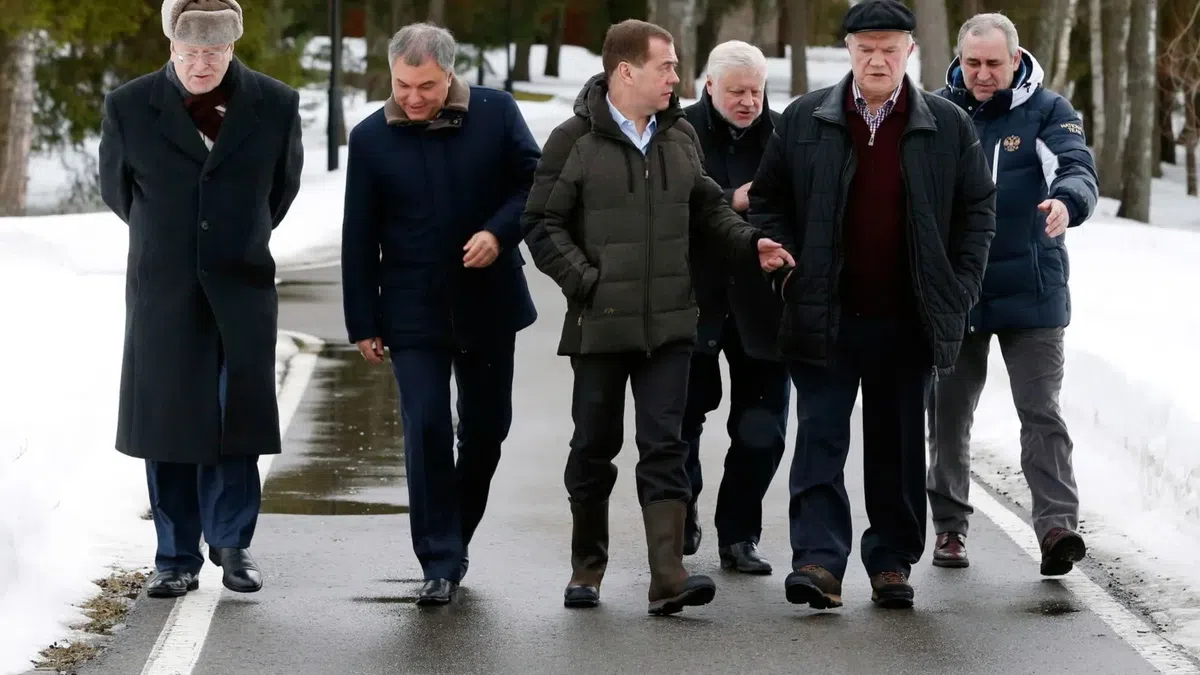
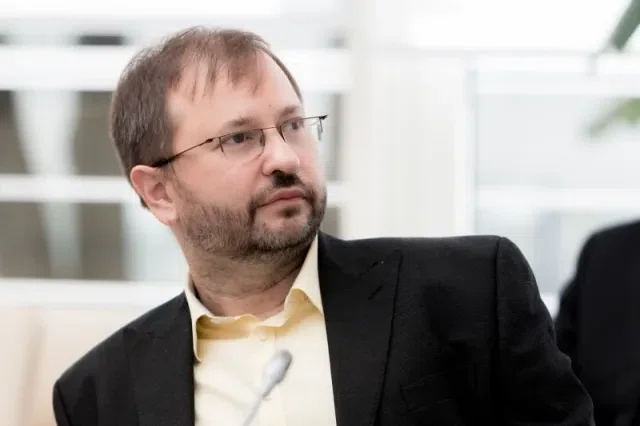
The St. Petersburg Politics Foundation issued a report on future elections to the State Duma in September 2021. According to experts, there may be three scenarios of the election campaign. Total conservation of the system for the sake of the result of the "United Russia" established in advance ("Plan" Fortress). The rejection of the majority on party lists by attracting single -mandate (“wind of change”). Or the departure from control over the result and the need to join the coalition with new batches, which will be allowed into parliament (“elusive majority”). The last option is the most unlikely: given the rhetoric and the events of the last few months, the authorities, rather, will go to domestic political isolation. However, according to the head of the St. Petersburg Politics Foundation, Mikhail Vinogradov, whom the special corner of the “new” spoke with, can still change - and only power itself can do worse.
One and a half script for the closure of Russia
- What should happen in Russia so that the majority of power lost the majority in the State Duma elections?
- There is a more common question here: how much in general the elections to the Duma will become a noticeable event of the year. Today, neither protesting voters, nor voters-Loyalists, or even more so apolitical voters, most likely, do not suspect that there will be some elections in the fall. It is no accident that this topic did not sound at all during the January protests. The intrigue is whether the elections in the State Duma will become a certain point of attraction. And this is not so easy to predict. Take for example to the Moscow City Duma, which has never been interested in anyone: no one remembers the 2014 elections, and the 2019 election suddenly caused a outbreak of activity and anger, although practically nothing changed - the MD remained an imitation structure.
A similar situation is developing now. It would seem that the State Duma, with all the expectations of the growth of its subjectivity and an increase in constitutional powers, is not perceived to the end as a “real” authority. It is clear that the levers of the influence of the executive branch on the State Duma will still be strong regardless of how everything forms with the elections. When we are talking about scenarios of future elections, it is important to understand how important the legitimacy factor is important for the current government. It should not be absolutized, especially with consolidated elites, but in the case of some cracks (which are not yet possible, but they are always possible), the authorities are always important to appeal to some political institutions with a large background. Or the elections to the State Duma will be perceived as another check-on, which you just need to go through. This is the first fork .
The second fork - whether it is worth making the nearest elections to the State Duma of the controlled “exhaust of the couple” so that it does not accumulate, including to the presidential election, and unexpectedly no one tore the roof, or the authorities to confirm the growth of his own expectations from the elections that developed the effect of the habit.
And another growing-rulous fork is a rating component. Today we are experiencing the fifth in the XXI century The period of reduced ratings of power: it is the most prolonged, since it has been coming from the moment of pension reform. This does not lead to an increase in the popularity of other parties, but the problem of anti -rating of power, or at least a decrease in the level of the chemistry of the authorities and the voter as a whole, is obvious, and it will have to be taken into account when choosing a scenario of future Duma elections.
In fact, today a one and a half scenario is indicated. The expectations of critics of power - a repressive wave, prohibitive rhetoric - fit into the fact that we called the "Fortress" plan. " If we take the January seminars with vice-governors, then there was a task to gain 45% of the vote for United Russia-which, in principle, approximately corresponds to the current ratings. These scenarios coexist among themselves, but not one is completely presented as official.
In the public consciousness, of course, the “fortress” dominates, but the question is whether they will be done over the next six months due to prohibitive rhetoric errors.
Another variable is the state of society after Covid. Psychologists and sociologists identify two models of behavior: social optimism or exit from apathy through aggression. The trap between euphoria and aggression is the fourth fork that affects which scenario will ultimately be implemented.
-In the conditions of the trend for the prohibition of everything in the country, is there any at least some change of party composition inside the parliament in the Kremlin’s mind? The Kremlin generally needs this?
- The Kremlin is still a more collective concept. I will put forward two possible approaches, it is not necessary that they are tied to some persons or groups. What the supporters of the first approach say:
Tower 1
There are no halftones, no concessions, Russia in the ring of enemies, the elections will use the European Union and Biden to weaken the country.
In this logic, you need to show our teeth, we need to show that we are all controlled - therefore, in spite of everything, we do not change anything and retain our mandate as we imagine this.
The second possible point of view, which I can expertly model:
Tower 2
It is not necessary to strain and is not necessary, since the constitutional majority is a pleasant bonus, but the main constitutional amendment has already been adopted.Why actually created a coalition system, which includes both the Communist Party and the LDPR - it is not for the fact to fight with these parties (all the more there would be anyone to fight with)
And declare them in 2021 by "foreign agents." In an extreme case, if the parties begin to courage, they can always be opposed to the same “Social Revolutionaries” or “new people”.
These two approaches have the right to exist and will compete in absentia - they are extremely pragmatic and do not imply much idealism.
The flour of the choice
- You mentioned the idea that the Duma elections in Russia for many years are between the part of the four parties. This time there are any fundamental differences in the relationship between rivals? Maybe we don’t see something, and the parties have long been quarreling among themselves.
- There are always political intrigues - especially against the background of attempts to split in the same Communist Party. There are a certain number of challenges with which the parties will have to correlate this time.
"United Russia"
United Russia , for example, will have to be determined with the leadership of the party list in the elections to the State Duma. So far the most obvious candidates are three.
Vladimir Putin once headed the list, in 2007, after that he never particularly explained why he was not included in the party and does not lead the list anymore, creating some duality in relation to the party. But Putin’s ratings are also not at the peak now, and there is a question whether it is necessary to take this risk. Someone is looking for signals in Putin’s words at a meeting with the chief editors of the media that at the end of summer he was going to ride a lot, and therefore, perhaps, he would give himself a vaccine-that is, it seems to be a hint that he will engage in the election campaign. On the other hand, the news of the last week that Putin can lead the list of United Russia did not cause propaganda mobilization, on the contrary, they tried to distance herself from it.
Dmitry Medvedev - the nominal leader of the party - knows how to find himself on the agenda when he needs it that we have been observed just the other day ( meaning a series of pictures on Instagram, a politician with lanterns laid out on February 14. - Ed. ). It is clear that Medvedev for a long time played the role of a lightning rod for the current government, so when talking about his leadership at the head of the list in future elections, there are some restrictions. But nominally, this scenario is understandable taking into account the position of Medvedev as a leader of EP.
The third candidate is Prime Minister Mikhail Mishustin . Its strengths are a calm perception by society and the lack of special anti -rating. The peculiarity lies in the fact that over the past year no one on the agenda has tried to update the question: and the government of Mishustin generally works well or badly? Where are the triumphs, where are the failures? Thus, the possibilities for interpreting the prime minister’s actions are open. If Mishustin appears at the head of the list, the topic of the government will become open, and on this variable you can both score points and stumble.
Communist Party
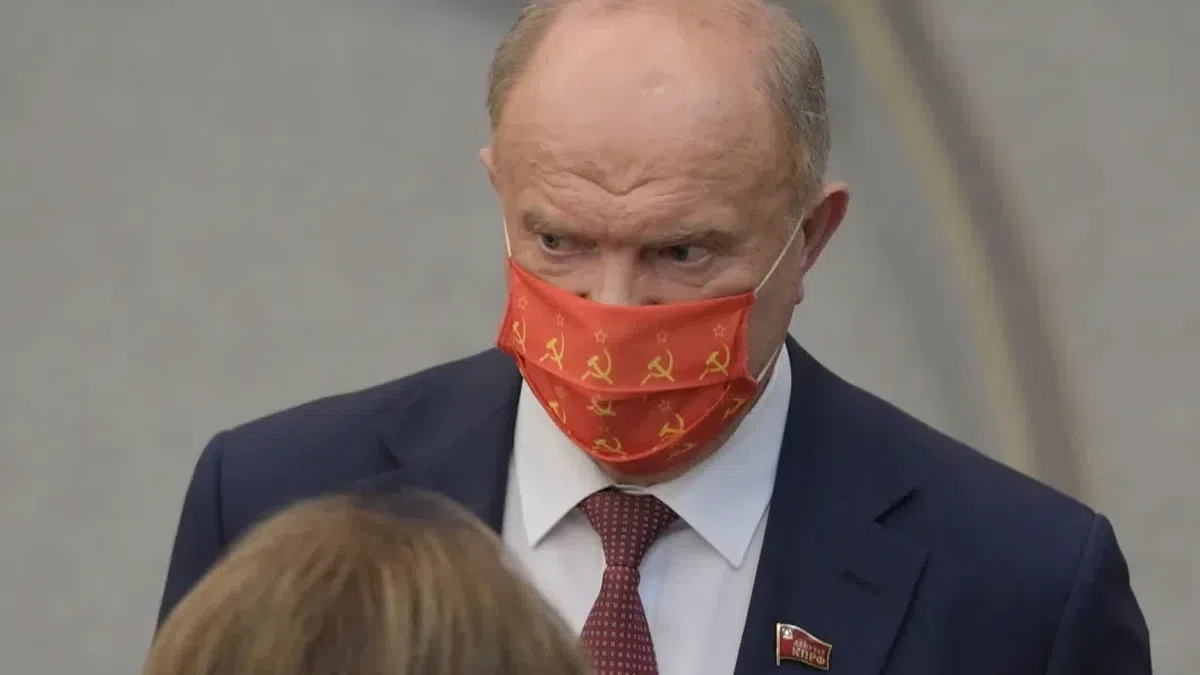
The Communist Party has been in difficult relations with the presidential administration since the elections in 2018 and the campaign of Pavel Grudinin. In 2019, the Communist Party of the Communist Party lost the post of governor of the Irkutsk region. At the same time, notice, in 2020, when the governor of the Furgal was arrested in the Khabarovsk Territory, the region itself was left for the LDPR, the acting went there From their party, and the Communists were deprived of the no less resource Irkutsk region.
The task of the Communist Party is now to show that they have overcome all hardware difficulties and remain a party number two, a party of pragmatic choice and, possibly, even protest layers of society.
In this case, you need to not forget to heat the intra -party riots, but Zyuganov usually copes with this.
- Do you mean Valery Rashkin and his sympathy for the protesters?
- Zyuganov usually neutralizes all critics in general. But here I must say that the Communist Party of the Communist Party never even in words refused the same “smart vote” - this is also a pragmatic choice of the party. So, if suddenly in the spring it is necessary to neutralize even the hypothetical alliance of the protesters from any of the parties, the same communists will try to lock their own ghetto on some agenda-like the removal of Lenin’s body from the mausoleum or the return of the monument to Dzerzhinsky to Lubyanskaya Square. That is, they will try to link them with topics that cause indifference or rejection, which can also affect the choice of pragmatically configured voters.
As for other parties.
LDPR
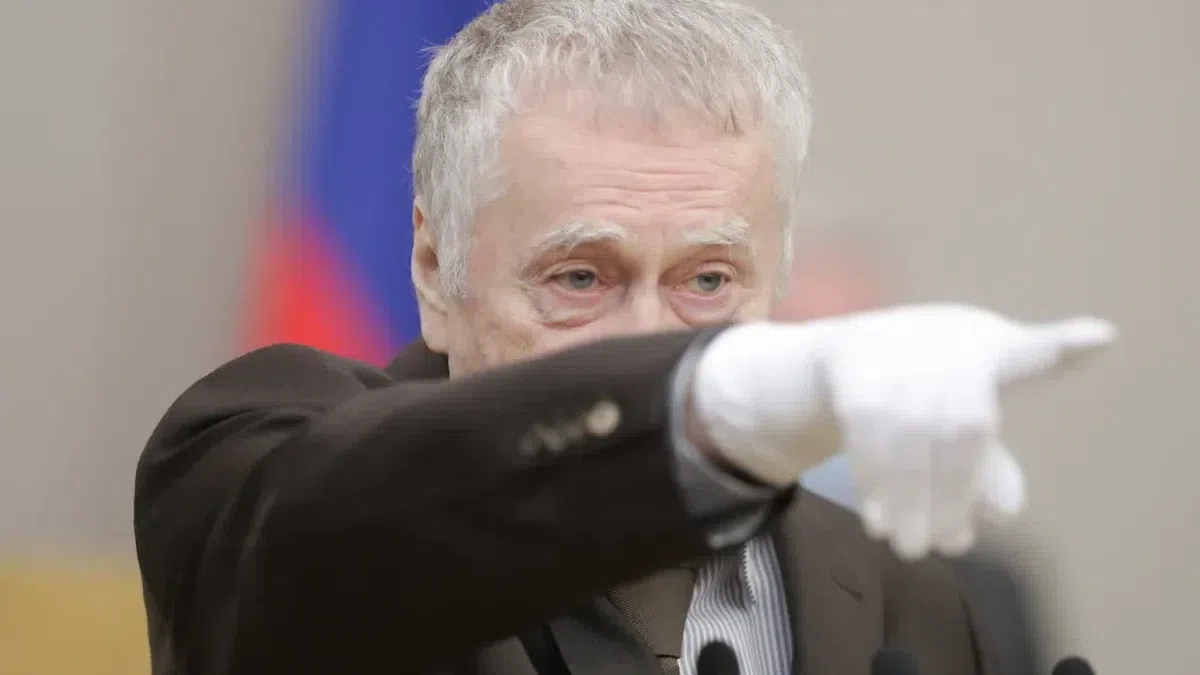
The LDPR’s chance is that, against the backdrop of a shortage of show on the political stage, they can disrupt the bank, be the most striking, and the apathetic and tired society has a chance to notice this.
"Fair Russia" + "Patriots" + "For Truth"
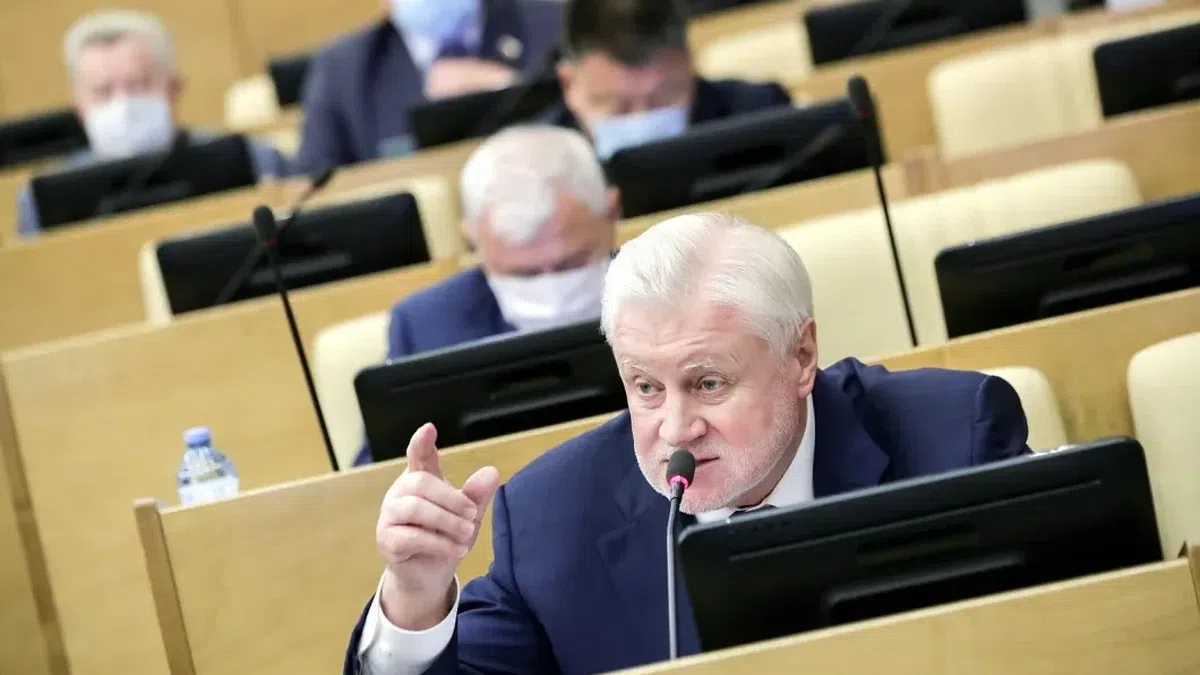
“Fair Russia” * received a license for the possibility of leaving in the Duma, when it was propped by other parties like “patriots of Russia” or “for the truth!”. Thus, it was shown that this is the right party and can fight for something (by the way, ratings are growing a little). The most important advantage of the Social Revolutionaries, however, is that the voter, as a rule, does not notice and makes his choice when it turns out to be one on one with a ballot, sees the name of the party, remembers and votes something in common about it. True, Fair Russia has a serious competitor in the person of the *Russian Party of Pensioners for social justice , which does not lead any campaign at all, but which the voter is pleasantly surprised in the booth.
"New people"
The last intrigue is whether there will be any surprises from new associations: for example, how much the bright start of “new people” will be converted into some result.
"Apple"
As for the “Yabloko” , it is difficult for me to imagine some kind of throw: the party is more engaged in intraspecific conflicts and sees in this partly the meaning of its activity.
- It is clear that it is drawn to the parliament of representatives of regional elites - this is the possibility of influencing their region from Moscow and lobbying for the interests of their region in Moscow. What exactly from the Duma mandate wants to get, for example, Love Sobol? After all, even if she, by some miracle, goes there, not one of the parties presented in the design will want to deal with her, such an ally is toxic for them.
- Generally speaking, a scheme in which it would be possible to allow several protest deputies to the parliament, which would probably be gnawed among themselves on the first day, from a political point of view it seems to me the most elegant.
It also allows you to take aside the discussion about how many people support Navalny - 2% or 30%.
Even if there are ten deputies in parliament - this is 2% of the whole Duma, here, they say, and cook in your ghetto. Attempts to implement such a scheme happened: once in regional parliaments, for example, a PARNAS party took place. However, today, in the conditions of protective rhetoric that protest is practically “betrayal of the Motherland”, it is difficult to imagine such a scenario. Although another six months - anything can happen.
As for the motives of the opposition themselves, this is a source of the implementation of ambitions, his representation in the establishment and integration with him, sometimes influence. The experience of real loners in parliament - from Dmitry Gudkov to Vladimir Ryzhkov - can hardly be called broken the fate of the country or the political system. But still, in conditions when opposition politicians want to grow somewhere, the practical possibility of getting into the Duma looks like the carrot that could be used. Of course, now, looking from mid-February, all the conversations that one of the disagreements can even be allowed before the elections, look utopian-although in modern Russian history everything happened.
Do not nervous grandfather!
-One of the thoughts of your report-that the result of the election still depends on pensioners, but this time they are injured by pension reform. But pensioners are a very inertial social group in their tastes. Is it worth “United Russia” to really fight for their voices, or will they receive them, as they say, automatically?
- It is important not so much to fight for them as not to spray, not to put pensioners in a situation of moral choice. Strictly speaking, the current pensioners did not lose from the same reform: they were going to retire at their age, they left, and they also promised that their financial situation would improve. But older people live not so much their self -esteem, but by fear for the position of children and grandchildren, their parental anxiety and neurosis. As is commonly believed, now the relationship between parents and children is softer than they were 30 years ago: they now listen to each other or pretend to be listened. And the relationship of grandmothers and grandchildren is often much softer than fathers and children. Therefore, given that pensioners remain an important group for voting, the authorities need to try not to escalate the atmosphere and their anti -rating.
The best architect of the protest agenda in Russia is, of course, no opposition, in which the picture of the “beautiful Russia of the future” has played,
And the current government, which with its actions provides a much more criticism addressed to it.
- The question is for the medium term. The leaders of the parliamentary opposition are already people at a respectable age. What will be the update of these parties?
- Apparently, the update will be random, spontaneous and sudden ( smiles ). But there is a more common question. The Russian political system can hardly be called one -party or multi -party. She, by and large, is non -partisan. Parties need the very mechanism of power, but voters are not particularly needed. The late Soviet joke that in order to get out of the CPSU, you need to have a recommendation of two non -partisan are still relevant. The party in the eyes of voters is not a point of changing their world.
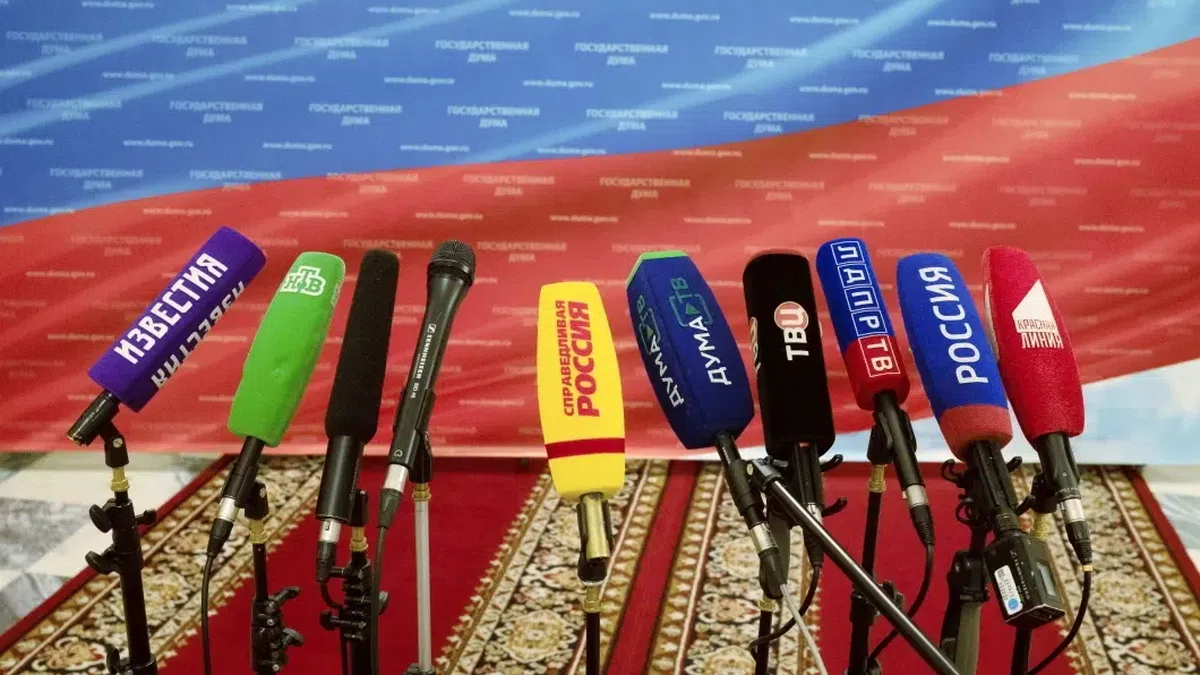
Today, the paradox is that Zhirinovsky, Zyuganov and Mironov needs a system, we need for themselves - and no one really needs their parties.
If something happens - no one will particularly regret them.
- Does this mean that with the departure from the political scene of the conditional Zhirinovsky, the same LDPR will simply crumble?
- So far, nothing has been done so that this does not happen. The same Furgal - could he be a shift in Zhirinovsky? Well, of course, he could. Today this will not happen for obvious reasons, but also because a significant part of the hardware weight of parties is the weight of the leaders of these parties themselves. On the other hand, this allows the age leaders to remain inviolable figures that overcome all the schisms and still for the current activists of a particular party remain talismans, energy sources and people, for which, rather, they need to cling than who should put the footsteps.