
Translated material
Very gray cardinal
Cycle "Motherland Shield"
Very gray cardinal.
Portrait of an inconspicuous Chekist pursuing historian Yuri Dmitriev
Project team, February 16, 2021
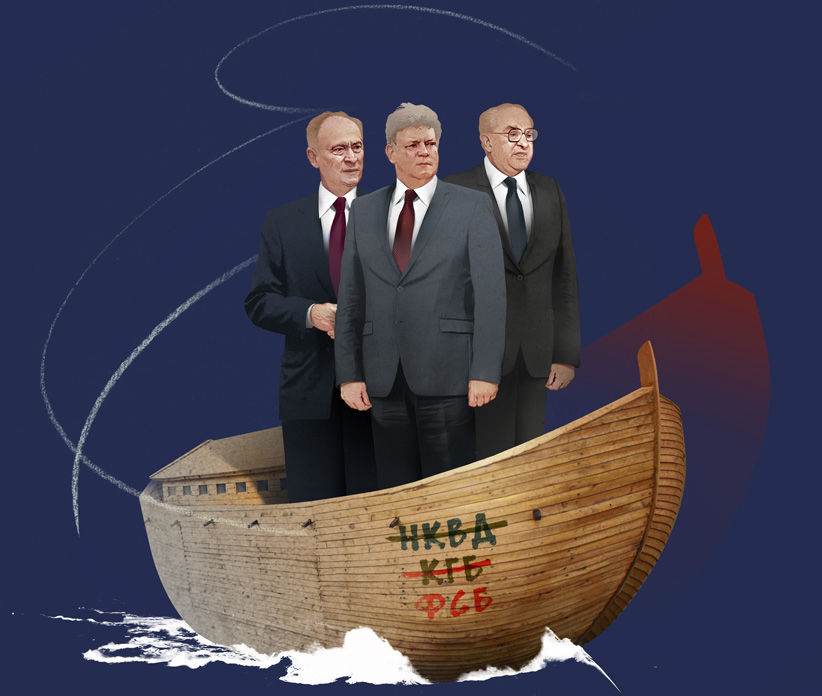
The cassation court left the verdict to the historian Yuri Dmitriev - he was sentenced to 13 years in the colony. His business is one of the most mysterious in modern Russia. Over the past years, he was first justified, but in the end they still condemned, as if somewhere upstairs he had a personal enemy. “Project” found out that the case can really have a senior curator - presidential assistant Anatoly Seryshev. And he may have personal scores with a historian.
The Civil War in the Far East intertwined the fate of thousands of people. Stepan Sereshev, born in the Irkutsk province in 1889, managed to serve in the imperial army, in 1917 he moved to the Reds, where he first fought with the legendary commander Sergei Lazo, and then fought for Soviet power in the current Amur Region. In 1918, Stepan was captured. He spent a year and a half in the prison of Blagoveshchensk, until in February 1920 he was liberated by the troops of the Far Eastern Republic.
Soon Stepan will become a glorified red military leader and diplomat, but will die suddenly in Moscow, not having survived before the beginning of the Stalinist repression. His name will be called a street, square, a village and a warship, the memory of it will remain in the form of a monument, articles in the encyclopedia and archival photos.
The Seryshev brothers
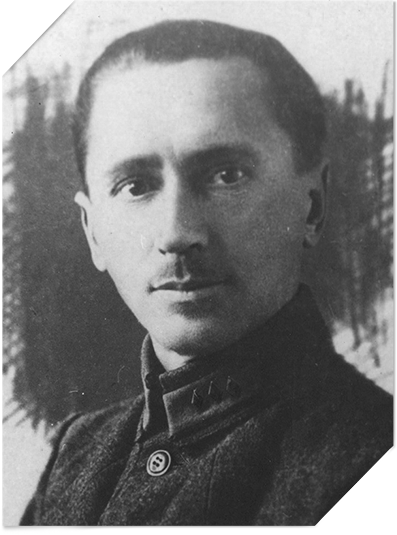
SERISHEV Stepan Mikhailovich
Born in the village of Zalari in 1889
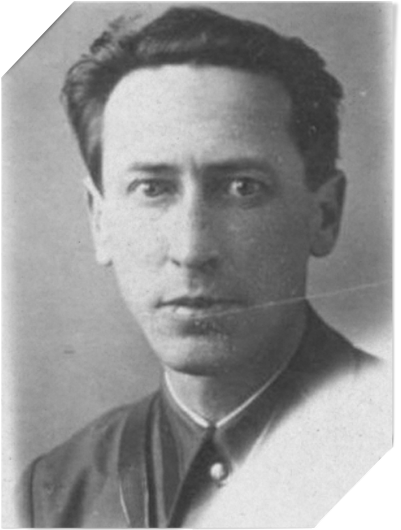
SERISHEV Vasily Mikhailovich
Born in 1902
A completely different matter is his younger brother Vasily, who lived longer and played an inconspicuous, but dramatic role in repressions, unleashed by Joseph Stalin and Chekists against his own people. Vasily was born in 1902, since 1921 he worked in the Cheka, then in the NKVD: he went from the encryption to the deputy head of the department. In 1938 he became a deputy of the Supreme Council of the Belarusian SSR. In 1939, the Chekist, as often happened, he himself got into the millstone of the NKVD. He was convicted of “participating in mass unreasonable arrests” - four years later, at the height of the war, he died in exile.
For many years, the life and death of the Seryshevs, if someone was interested, then perhaps the Far Eastern local historians. But after a hundred years, the fate of the younger brother could tragically affect events in the very beginning of Russia - in Karelia ...
The case of nine photographs
The Sandarmokh tract is a firing training ground in Karelia, one of the largest mass graves of the Stalinist terror, along with the Levashovskaya Eliveau, Butovsky training ground, communal services and Katynya. No one knew about this place a few hours from Petrozavodsk for a long time, there was just a forest here. In 1997, the head of the Karelian Memorial, historian Yuri Dmitriev came here to look for the place of execution of the first Solovetsky stage. And found. By the number of bodies, it became clear that there are thousands of people: the intelligentsia, former White Guards, priests. More than seven thousand people found the remains in Sandarmokh.
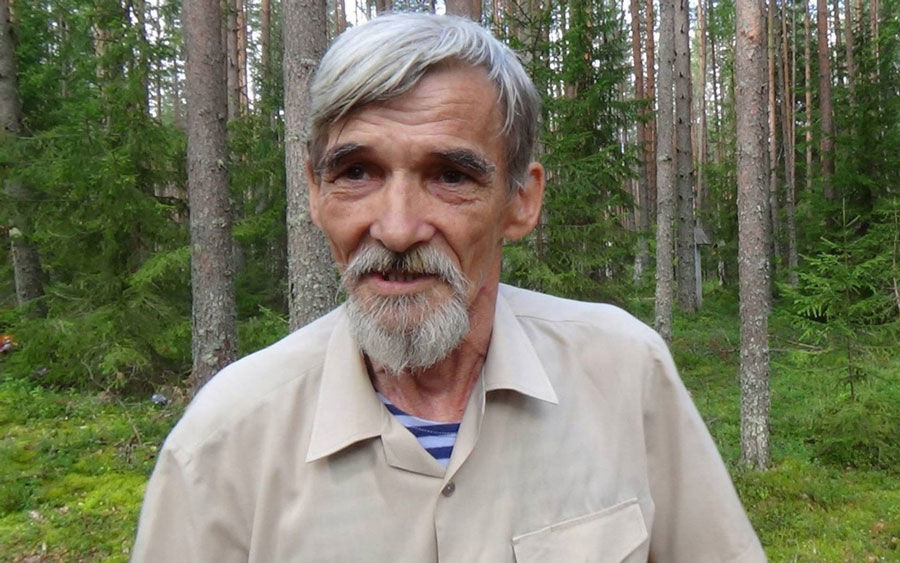
Dmitriev was engaged in the search for burials since the 80s and for a long time did not face opposition to the authorities. But about five years ago, everything changed - the historian began to threaten, local authorities stopped helping in organizing the Day of Memory of Repression victims in Sandarmokh, in the archives they began to give access to the documents with which the historian previously worked unhindered.
- Initially, there was no pressure. [But] In the local archive, they once began to say to him: "Take this daddy, but this - no, we will not give this daddy." Then the excuses began: “Today we will not let you go to the archive, today is a day off,” says Dmitriev’s friend Yuri Tsvibel.
The last six months before the arrest, Dmitriev lived in anticipation of the provocation, joked about the “black funnels” that would come for him: “Either they will put me or kill me,” he said. “Most likely, if they want to put pressure on me, they will act through my daughter,” the historian said to his colleagues, recalls Zwibel. So it happened.
On December 2, 2016, an anonymous statement came to the police: Dmitriev in his apartment takes pictures of a naked daughter. And on December 13, the historian was detained on charges of making children's pornography. The courts that began soon justified Dmitriev several times - including, as human rights activists and activists believe, under the influence of a public campaign in his support, but each time the persecution began again. In the summer of 2020, the last court handed Dmitriev an unexpectedly soft sentence - the historian received 3.5 years, which by that time had already partially left for a pre -trial detention center. The lower limit of the punishment stipulated by the article by which Dmitriev was convicted - 12 years of colony of maximum regime - therefore, such a mild sentence was perceived by society as a victory and another evidence of the innocence of the historian. Dmitriev was supposed to be released in November 2020, but this did not happen.
Right before considering the appeal, the state television channel “Russia” released the plot - in it the soft verdict was called “outrages” - the author of the material referred to users of social networks, and as an illustration the photos of Dmitriev’s daughter from the case file were shown, now the material of “Russia” has been removed from the site. How photographs from the case, whose hearing is on a closed mode, could not explain to the State Media, no one explained. The court of appeal sentenced Dmitriev to 13 years in a maximum security colony. For a number of articles, the case was returned to the Petrozavodsk City Court for a new trial.
More in Karelia, no one is engaged in the search for burial victims of terror.
“The republic is a border region, which is politically problematic and, of course, the region is controlled by [security forces],” explains Emilia Slabunova, Karelian deputy from Yabloko.
Dmitriev’s colleagues and friends interviewed by the “project” are sure that the security forces of Karelia - the FSB and the prosecutor’s office can stand behind the pursuit of the historian. “I begin from the fact that the FSB was frightened by the work of Dmitriev. He not only found repressed, there were also the names of the executioners. I think that there could be someone else's relatives, ”said Dmitriev’s friend Alexander Selyutsky.
Circle of fans of Andropov
Karelia is important for security forces not only a long border with Finland. The republic historically was a forge of personnel for the top leadership of the KGB and the FSB. Here, Yuri Andropov worked for more than ten years, he went from the first secretary of the Komsomol Central Committee to the deputy of the Supreme Council of the Republic, the former Secretary General of the CPSU and the chairman of the KGB, a kind of spiritual leader of subsequent generations of security forces, including Vladimir Putin and his FSB colleagues. At the end of 1999, when Putin was already walking in the successors of Boris Yeltsin, andropov was returned to the FSB building on Lubyanka, in 1991 it was removed from there the Chekists themselves, afraid of its destruction by citizens who demolished the monument to the monument to another famous specialist leader - Felix Dzerzhinsky.
Putin brought with him to the leadership of the country not just the adherers of Andropov - many of the close president were connected with Karelia. There, in the 80s, the future Minister of the Interior Rashid Nurgaliev worked, in the 90s the local FSB was headed by Vladimir Pronichev. The latter will then oversee the fight against terrorism in the rank of the first deputy director of the FSB. But the most important native of Karelia was the former Minister of Security of the Republic Nikolai Patrushev, a long -term ally of the President of Russia. Having left the increase in 1999, Putin left Patrushev to lead the FSB: it was Patrushev who oversaw the investigation of the explosions of residential buildings in Moscow and the failed explosion in Ryazan, the possible involvement in which the FSB still raises questions. With him there was a second war in Chechnya, the seizure of hostages in the Beslan school, the Nord-Ost musical attack, attack on Nalchik and other bloody events. Today, Patrushev holds the key position of the Secretary of the Security Council, Putin trusts him, he is perhaps the Silovik closest to President.
Although Patrushev left Karelia for a long time, he is still involved in the affairs of his “” region. In 2015, he headed the State Commission to prepare for the celebration of the 100th anniversary of Karelia, which was celebrated during 2020. What was the preparation for the holiday? Perhaps, Patrushev announced to “clean up” the region from the opposition and human rights activists, about whose connection with the Finnish “nationalist and revenge socio-political organizations” only by heading the commission.
Carriage of Karelia
Since 2013, criminal cases against the members of the Yabloko party, traditionally strong in the region, have been massively initiated in Karelia. The articles fell: deputy mayor of Petrozavodsk Evgeny Sukhorukova, deputy of the Legislative Assembly Anastasia Kravchuk, leader of the regional branch of the party Vasily Popov, head of the city council of veterans Galina Karasova, deputy of the Petrozavodsk City Council Olga Zaletskaya and others.
The mayor of Petrozavodsk, the "Yablochnya" Galina Shirshina, who defeated United Russia in the elections in 2013, was subjected to pressure. For example, unknown people regularly broke the meetings by Shirshina with voters, recalls Emilia Slabunova. After a long confrontation in 2015, Shirshina was removed from the post of mayor of the city.
In 2015, a businessman and regional deputy Devletkhan Alikhanov was arrested. Shortly before that, he publicly criticized local courts, which, in his opinion, follow orders from the FSB. Alikhanov was charged with an illegal crossing of the border at the diplomatic passport, which he had to hand over by leaving the parliament, and fraud on an especially large scale. In 2017, he was sentenced to six years in prison. In 2018, the Presidium of the Supreme Court justified Alikhanov and recognized him the right to rehabilitation, but in less than a month the Supreme Court canceled his decision, and the businessman was again taken into custody. He spent 4.5 years in prison and in August 2019 was released.
Since 2015, NPOs in Karelia began to add foreign agents in the register: the Association “Union” expert and legal partnership was the first to protect the rights of journalists, was liquidated shortly after introducing to the register, then “Nuori Karil” (“Young Karelia”), and was engaged in the promotion of the language and culture of the indigenous peoples of Karelia, and after them-“Severnaya North Environmental Coalition ”(“ Spock ”). The FSB was engaged in the last case: the employees of this department in September 2016 came with a search of the organization’s office, recalls Olga Ilyina, an employee of Spock.
In 2016, a criminal case appeared against historian Yuri Dmitriev.
To carry out these persecutions, Patrushev had a trusted person. From 2011 to 2016, the Karelian FSB was headed by a non -public person with an inconspicuous surname - Anatoly Seryshev.
Seryshev - Cardinal
Seryshev was born in Koglyakovo, a small village in the Irkutsk region. Now there are about 700 inhabitants, four stores, a school, a kindergarten, a culture house and a hospital in which one paramedic of medical workers. The closest relatives of the FSB General are now scattered in the region - who live in Irkutsk, who - in Bratsk. The Baptists bought the House of the Seryshevs in Koglyakovo and founded a community there, where on Sundays they collected those who wanted to talk about God.
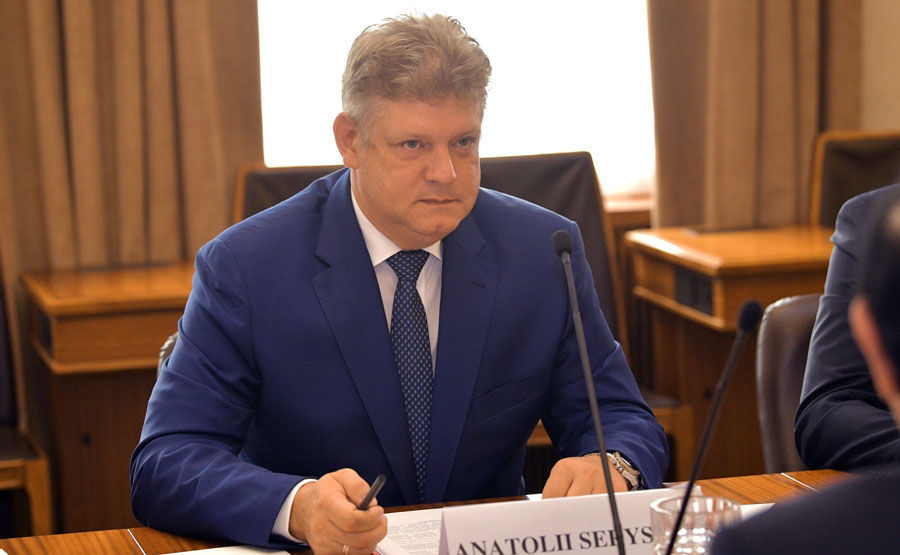
Young Anatoly Seryshev built a career in the Irkutsk KGB since the late 80s, in 2011 he headed the FSB of Karelia. At the beginning of the labor path, Seryshev was a specialist in “economic crimes”, investigated the cases of fake Aviso, his former colleague recalls. In Karelia, his profiles became things against dissenters. “The fact that he soared after, says that he deserved his increase with his cruelty,” Mlabunova thinks, referring to the subsequent career of Seryshev, which is really impressive.
He received a new position just a few days after the anonymous entered Dmitrieva - in 2016, Seryshev moved to Moscow, to the chair of the head of the customs service (FCS). His boss there was another “member of the Patrushev team”, the former deputy head of the FSB Vladimir Bulavin. After only two years, Seryshev is already in the Kremlin - he is an assistant to the president, this post dates back to the “Higher Group of Regulations”, according to the Decree of the President of the Russian Federation “On the Register of the Regulations of the Federal Civil Service of the Russian Federation”. Officially, his sphere is personnel issues and awarding, but his competence includes supervision of judges, according to the Constitution, independent of the executive branch. In 2019, Seryshev became a member of the presidential commission for the consideration of candidates for the posts of judges of federal courts. This can be seen in the current document on the Kremlin’s official website, at the same time, in the section of this commission on the same Seryshev website, for some reason, there is no case in the list of members of the commission. At the same time, the “project” could not find the decree on the exclusion of Seryshev in the public domain. A source of “Project” from among retired judges confirmed that the position of Seryshev “suggests that he is responsible for the coordination of all the candidates of judges”. The curaticity over the courts-the traditionally important direction, for example, under the early Putin, a similar position was held by a native of the KGB Viktor Ivanov, the closest acquaintance of the president in St. Petersburg and a very important person at that time.
Seryshev is also very influential, he has direct access to the president, says the Kremlin interlocutor. Another acquaintance with Seryshev’s interlocutor characterizes him as a “gloomy, heavy” person and confirms that a few years ago the general has become noticeably more influential - now he oversees the personnel issues of the entire power block, except for the army.
Two sources of the “project”, familiar with the investigation of the Dmitriev case, claim that it was Seryshev’s curator of the historian. A source close to the presidential administration noted that Seryshev was “interested” by the process over Dmitriev.
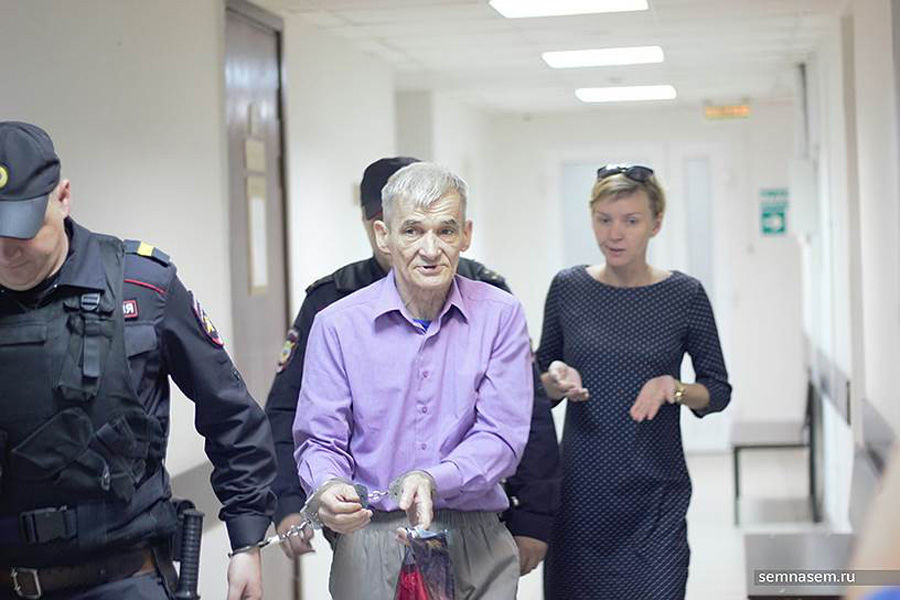
The course of the case of Dmitriev’s case indicates that pressure may have been on the courts. And the movement of Seryshev up the career ladder is surprisingly echoing with the events associated with the process over the historian, this was the new newspaper in the summer of 2020. The justification of Dmitriev happened at the moment when Sereshev worked at customs, however, as soon as he received a position in the Kremlin, potentially related to control over the judicial authorities, people related to the acquittal, for various reasons, left their posts. The prosecutor Elena Askerova resigned. Dmitriev’s lawyer Viktor Anufriev is convinced that this happened precisely because of the Dmitriev case. In a conversation with the Project, Askerova herself denied the connection of her dismissal with the case of a historian. Judge Marina Nosova continues to work in the Petrozavodsk City Court, who produced an acquittal, refused to raise, she had to go to the Supreme Court of Karelia, the Republican Qualification Collegium approved her candidacy, but the Kremlin commission did not agree on to Nosov - Seryshev formally was in her at that time, Nosova also ceased to be the deputy chairman of Petrozavodsky The city court, its place was taken by Judge Alexander Merkov. Later, Merkov will conduct the second process against Dmitriev and finds him guilty.
Twice to Putin turned to a petition for him to take the historian’s work under personal control, says a good friend of Dmitriev. Natalya Solzhenitsyna, the widow of the writer and former Prisoner of the Gulag, told the “project” that in 2018 she really mentioned Dmitriev at a meeting with the president and handed him a note from the lawyer of the historian. Dmitrieva was also paid attention to by the Commissioner for Human Rights Tatyana Moskalkova. “The project” failed to get comments by Moskalkova.
But neither petitions nor numerous collective letters in defense of the historian convinced the president. The feeling was created that the historian had a personal enemy, to whom Putin trusts more than the petitioners. Dmitriev is still in custody.
What Dmitriev was guilty of
The Memorial, in which Dmitriev worked, has long been annoying the security forces. In 2016, the Ministry of Justice brought a human rights center to the register of foreign agents. Then the attacks of pro -government activists, federal television channels and officials were even organized by the “Memorial” by the school contest “Man in History. Russia is the XX century ”is a competition of historical works of high school students, its goal is to encourage schoolchildren to engage in independent studies of Russian history of the 20th century. Since 2016, the participants and the jury of the competition have been attacked by the activists of NOD and SERB, which are provided by the federal television channels-REN TV and Russia-24. In the same year, the chairman of the jury, Lyudmila Ulitskaya, was doused with Zelenka in front of the winners awarding ceremony. А научных руководителей школьников-победителей конкурса — учителей — не раз вызывали к директорам школ для встреч с людьми, которые представляются сотрудниками местных департаментов образования, региональной администрации или ФСБ.
— Вероятно, это давление пошло просто в общем тренде после 2014 года, — Крым, Украина, борьба с Западом и правозащитниками как наймитами Запада, — комментирует член правления «Мемориала» Сергей Кривенко.
Но что могло стать причиной преследования лично Дмитриева? Одна из версий, которую высказывают правозащитники, связана с деятельностью Дмитриева в Сандармохе и его взглядами на действия России на Украине и присоединение Крыма — каждый год он выступал с речью на Дне памяти в Карелии, где одновременно присутствовали представители местной власти и иностранные делегации. Эти выступления, как утверждают его коллеги , рассказывает Сергей Кривенко, местной власти и силовикам не нравились.
Выступление Дмитриева на Дне памяти в урочище Сандармох, 5 августа 2014 года
— И сейчас времена ой какие непростые. Опять наша политическая власть — назовем ее так, политкорректно — принимает политику двойных стандартов. Говорит одно, делает — другое. Это никогда ничем хорошим не заканчивалось. Нельзя бесконечно обманывать свой народ. Да, нас можно обманывать, нас можно пугать тюрьмой, нас можно сажать в лагеря, нас можно убивать, но весь народ эта власть не посадит и не убьет. В конце концов, с этой власти будет спрошено за все, что она сделала. Когда весь мир признает, что в Донецке, с одной стороны воюют ну просто бандиты Януковича на наши с вами деньги, на налогоплательщиков, нашим оружием. А с другой стороны, законная украинская власть их пытается как-то прижучить. А наши кричат, что это не власть, это каратели. Слова-то какие находят — пострашнее.Так вот, дорогие мои братцы и сестры, что-то надо с этой властью делать. Самое главное не бойтесь. Максимум, что она может с вами сделать — это убить.
За кадром слышится мужской голос: «Так, это куда-то не туда…»
— Если кому-то что-то не нравится, сатисфакцию можете за соснами поиметь, — отвечает Дмитриев.
— На него начали давить, его настоятельно просили прекратить международные акции в Сандармохе — мол, не зовите иностранцев. На это Юра пойти не мог, — говорит Кривенко.
Но, возможно, есть и другая причина. В ноябре 2016 года «Мемориал» опубликовал список кадровых сотрудников НКВД «Кадровый состав органов государственной безопасности СССР. 1935−1939», который в прессе тут же прозвали «списком палачей» . Составлял список историк Андрей Жуков. Он подчеркивает, что составители не ставили целью заявить, что все указанные сотрудники НКВД виновны в репрессиях. Хотя Дмитриев и не принимал прямого участия в составлении списка, он, будучи сотрудником «Мемориала», активно занимался исследованием репрессий.
После публикации списка Дмитриеву начали поступать анонимные звонки, иногда угрозы. «Юре звонили какие-то люди, спрашивали про список и не верили, что он списков сотрудников не готовил», — вспоминает его друг Андрей Литвин . Это подтверждают и другие друзья историка.
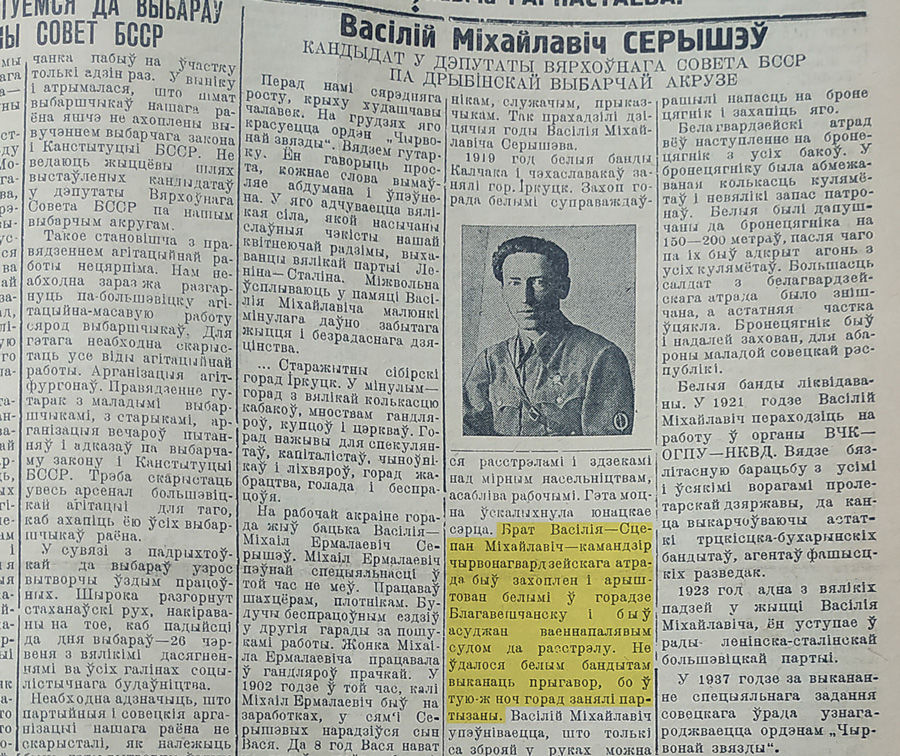
Возможно, причина интереса чекистов кроется в той части списка из 42 тысяч человек, где перечислены сотрудники НКВД с фамилией на букву «С». Там значится Василий Михайлович Серышев, чекист, участвовавший в сталинских репрессиях, затем арестованный за «участие в массовых необоснованных арестах» и позже даже не реабилитированный.
Подробных данных о репрессированном сотруднике НКВД, если вы ему не родственник, российские архивы почти не предоставляют. Но в нескольких архивных публикациях, которые нашел «Проект», упоминается, что у Василия Серышева есть старший брат — Степан. Он — герой Гражданской войны . Согласно архивным документам, которые есть в распоряжении «Проекта», отцов обоих Серышевых звали Михаил Ермолаевич Серышев. Так, можно предположить, что Серышев из списка «Мемориала» — брат того самого Степана Серышева, воевавшего за красных и родившегося в Иркутской губернии. Степан родом из поселка Залари к югу от Братска.
По данным заларинского краеведа Галины Макогон, родовые корни героя гражданской войны происходят из северной части Братского района, из деревни Антоново . Эту версию подтверждают и другие краеведы. Деревня Антоново была затоплена в 70-х, местные жители расселились по окрестным деревням и селам.
Одно из сел, куда переселились те Серышевы, было Кобляково (в 30 км от Антоново), где родился будущий помощник президента. Со слов брата Анатолия Серышева Николая, которого корреспонденты «Проекта» разыскали в деревне близ Братска, из Антоново же происходит и их дед, Семен Серышев.
Брат Анатолия Серышева Николай на вопрос, приходятся ли их семье родственниками репрессированный офицер НКВД и красный командир, ответил, что об этих людях ему ничего неизвестно: «Про предков — забылось все уже давно, живем настоящим». Второй брат Серышева Александр также сказал, что, хотя интересовался историей фамилии, ничего о родстве со Степаном или Василием не знает: «Может, там и есть какая-то родственная связь, но очень дальняя». Редакция «Проекта» отправила вопросы Анатолию Серышеву, однако не получила ответа ни на один из них.
В любом случае, помощник президента постарался забыть о родных местах — в деревне, по словам родных, он давно не был. Теперь его место — в строю, рядом с товарищами.
Чекистский ковчег
— Наши лучшие сотрудники, честь и гордость ФСБ, работают не ради денег. Когда мне приходится вручать нашим ребятам награды, я внимательно вглядываюсь в их лица. Высоколобые интеллектуалы-аналитики, широкоплечие обветренные бойцы спецназа, молчаливые взрывотехники, строгие следователи, сдержанные опера-контрразведчики… Внешне они разные, но есть одно важное качество, объединяющее их, — это служивые люди, если угодно, современные «неодворяне», — этой знаменитой фразой еще в 2000 году описывал своих подчиненных директор ФСБ Патрушев.
Как и положено дворянству, чекисты вьют себе родовые гнезда в окружении таких же, как они, «служивых людей» из ФСБ.
Деревня Тимонино находится к юго-западу от Москвы, в получасе езды от МКАД. Несколько лет назад к местным дачным товариществам с названиями «Недра» и «Надежда» добавилось еще одно — «Ковчег». Его эмблема , гордо украшающая въезд на территорию поселка, оставляет мало сомнений в том, кто здесь живет: это чекистский щит и меч со звездой, а в центре — самый настоящий библейский ковчег.
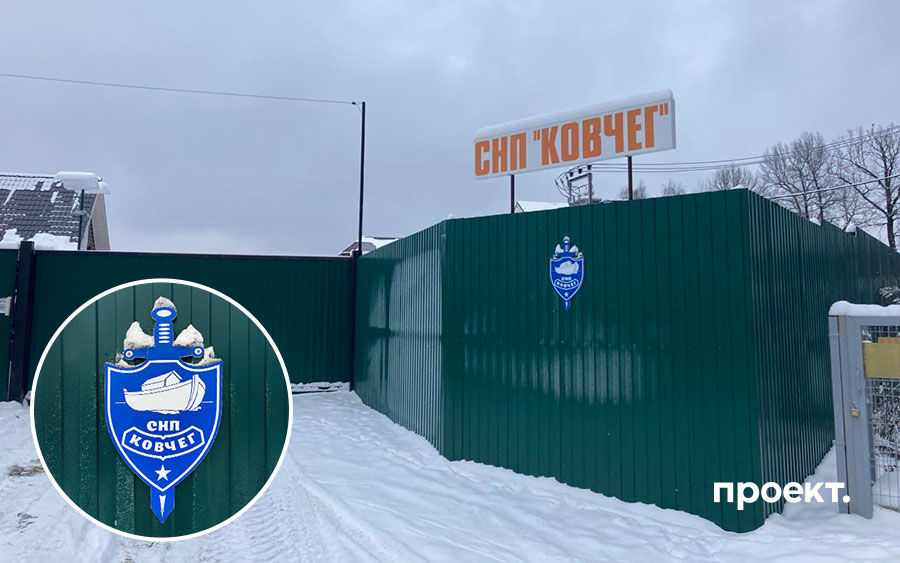
Строительством «Ковчега» занимается крупный бизнесмен родом из Дагестана — Хаммят Сулейманов . Связанная с ним компания занималась земельными вопросами, отвечала за подключения садоводства к газовой сети. Он преуспел, тесно работая с ФСБ со времен, когда эту службу возглавлял Патрушев . Его «Специализированное отделочное управление №2» занималось ремонтом здания ФСБ на Лубянке и чекистского СИЗО «Лефортово», а сейчас обслуживает жилые дома, где живут сотрудники ведомства госбезопасности. «Под вашим чутким руководством в течение длительного промежутка времени выполняется задача по обустройству, ремонту и вводу в строй объектов ФСБ России», — поздравлял компанию в 2007 году руководитель службы обеспечения деятельности ФСБ Михаил Шекин. «Ковчег» обнесен забором, но на территорию корреспондентов «Проекта» впустили — так как многие дома еще строятся, туда-сюда снуют рабочие, за которых нас и приняли. «Генералы тут, эфэсбэшники. Как вы вообще сюда попали?» — спросил один из строителей.
Данные Росреестра подтверждают его слова. В 2019-2020 годах места в «Ковчеге» приобрели высокопоставленные выходцы из ФСБ . Сведения о большинстве из них в интернете отрывочны, поэтому мы будем указывать те звания и должности, которые точно зафиксированы в СМИ. Среди пайщиков можно встретить бывшего ректора Хабаровского погранинститута ФСБ Дамира Галиуллина, экс-замглавы Национального антитеррористического комитета Ивана Жидкова, экс-главу нескольких региональных управлений ФСБ Олега Яцкова, бывшего главу УФСБ по Крыму Виктора Палагина и других. Здесь же поселился и генерал Серышев.
Его дом, в отличие от многих других здесь, уже обжит: у входа стоит новогодняя елка, внутри видна беговая дорожка. Рядом дом семьи коллеги Серышева по «неодворянству», экс-заместителя главы ФСБ по Карелии Игоря Пыхтина, который теперь вместе с Серышевым работает в Кремле.
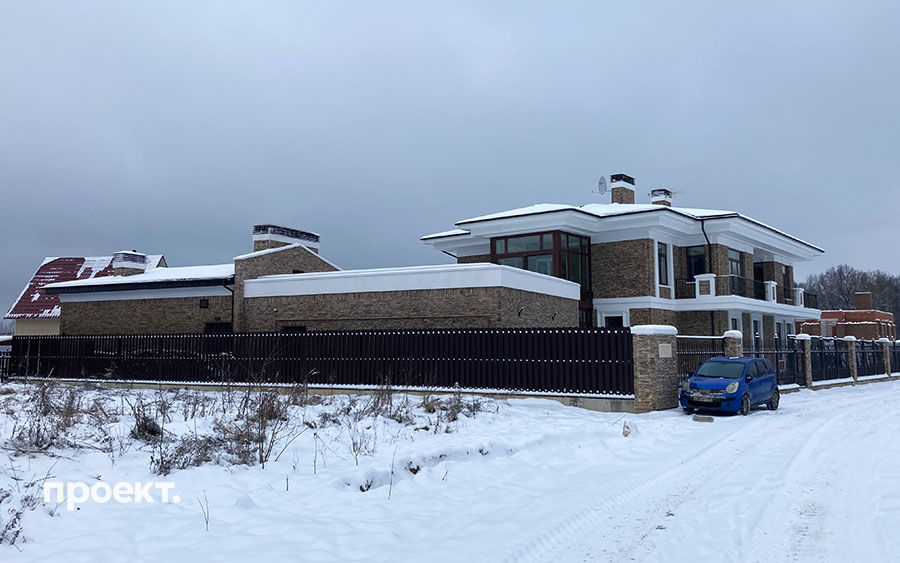
Дома Серышевых, Пыхтиных, и некоторых других «неодворян» в Тимонино записаны на членов их семей, что позволяет высокопоставленным чекистам не указывать эту недвижимость в своих служебных декларациях. Дом Пыхтиных принадлежит сыну кремлевского чиновника, а дом Серышевых, хотя генерал и бывает в нем регулярно , как сказал один из строителей поселка, записан на 26-летнюю дочь генерала Анастасию. Данные Росреестра подтверждают это наблюдение: как только сотрудник ФСБ выходит в отставку, избавляясь от необходимости декларировать имущество, дом переходит в его личную собственность. Так, к примеру, произошло с особняком бывшего начальника следственного управления ФСБ Михаила Шишова , сначала дом был записан на его 25-летнего сына Никиту, но как только генерал ушел на пенсию, то переписал дом на себя.
Дом такой же площади, как у Серышевых, в районе Тимонино может стоить до 50 млн рублей , следует из объявлений на сайте ЦИАН о продаже домов в этом районе. Эта сумма выглядит посильной для семьи генерала , чей совокупный доход с 2016 года, когда он ушел из ФСБ на госслужбу, составил почти 28 млн рублей. Почти такой же доход за это время получила его жена Эльвира Серышева, хотя в «Ковчеге» главное не деньги. Главное — общность идеалов.
Серый кардинал при Путине.
Подкаст о том, кто преследует историка Юрия Дмитриева
Подкасты «Проекта» : Castbox , Яндекс.Музыка , Apple Music , SoundCloud , Google Podcasts