
Translated material
Snow leopards are counted in Altai
The National Park "Sailyugem" began the annual record of the snow leopard and mountain goat. Employees install additional photoeepers.
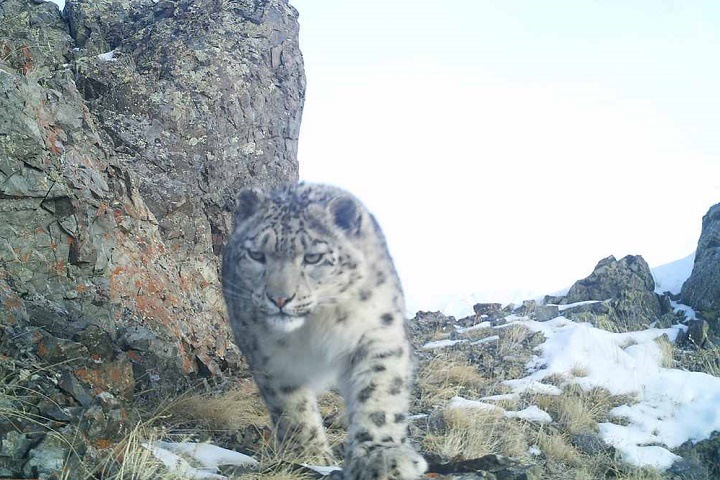
Employees of the "Sailyugem" examine the Argut cluster-one of the most remote and inaccessible areas where the Irbis live, the press service of the national park said.
“Monitoring the number of snow leopards and its feed base will be held in two stages: the expeditions will be held in the valley of the Argut River basin on the Sailyuga Range, as well as in the territories adjacent to them,” said Denis Malikov, director of Sailyugem. - At the first stage, the researchers will check the current network of photoeepers in the argument. If new habitats are detected, additional cameras will be installed. The second stage will be held on the Sailyuga ridge. Accounting for a snow leopard in this territory will be held in March in parallel with colleagues from Silham National Park in Mongolia.
In addition to monitoring points in Argut, the park employees will check automatic cameras in the South Chuysky, Kurai and North-Chuy ridges.
“It is necessary to check the extensive monitoring network - only about 40-50 photoeepers, if weather conditions allow you to get to them. In addition, during this expedition, we will receive the first data from 11 cameras on the North-Chuy Range set by us in the fall of last year. Prior to this, only visual research was carried out here without photo and video recording, ”said Denis Gulyaev, senior researcher at the national park.
The account of the accounting group included 8 people and 4 local residents-conductor. The expedition will last at least two weeks. In addition to monitoring the number of snow leopards, the employees of the national park will record the Siberian Mountain Goat - the main feed of Irbis in the argument.
In 2019, 65 individuals of Irbis were counted in Russia, the bulk of which, about 40, lives in the Altai Republic, of which 15 in the Argut River basin. The total number of species in the country is estimated at 70–90 individuals.