
Translated material
Bipolar radiance
MP Julia Galyamin looked at the performance of Chekhova and found a healing recipe for the whole country
A familiar psychiatrist told me that for many years, one of the most beloved popular science genres in psychiatry is a diagnosis of literary heroes.
Ophelia has PTSR, Sherlock Holmes has Asperger's syndrome, Don Quixote has a reactive psychosis and mania of greatness, and even Winnie the Pooh has hyperactivity. Against this background, the story told by the author himself as a medical history - the history of Chekhovsky Ivanov - is a very frank case.
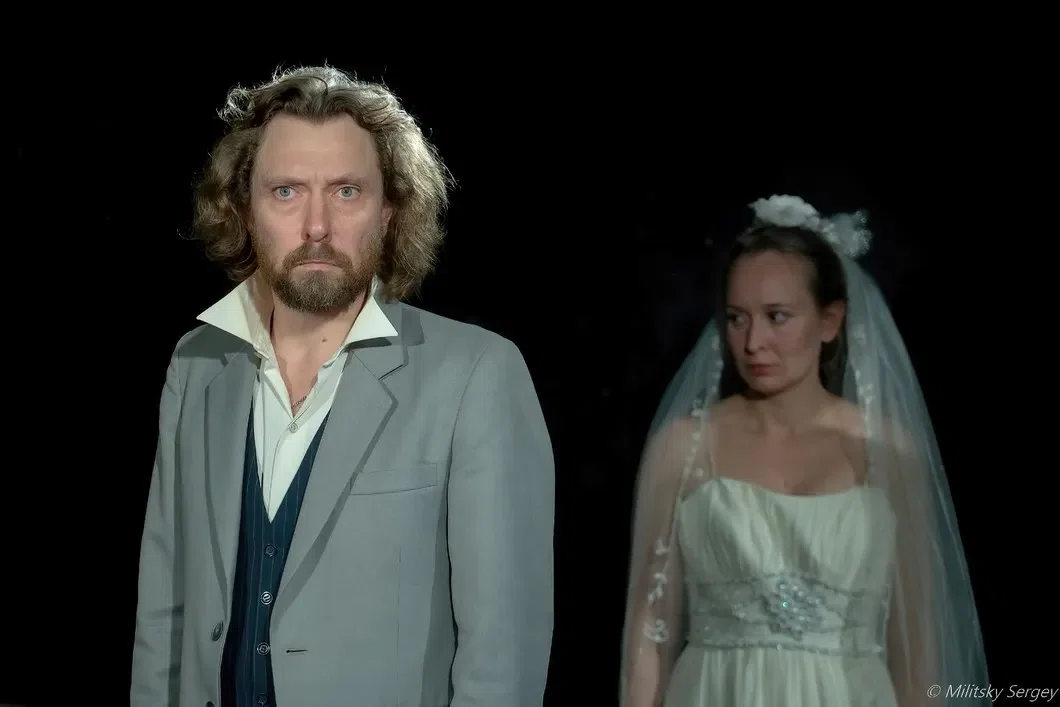
In 2003, Alexander Magalif wrote in an “independent psychiatric journal” that Nikolai Alekseevich Ivanov suffers from “endogenous depression with a prolonged course in the framework of manic-depressive psychosis”, which is called bipolar disorder in a more modern language. And Ivanov, who is in the premiere of the Moscow Theater “International Chekhov Laboratory” (the idea of setting up Viktor Gulchenko, the director and artist - Sergey Tereshchuk) plays a very deep actor Oleg Dulenin, that is exactly the whole person in a complex psychological state that no one can understand: neither he himself nor others.
The hysterical passion and simultaneous helplessness of Ivanov, Sarra (Anastasia Dnieper), Shurochka (Daria Dementieva-Zapletny), Lviv (Danil Lavrenov) and all the heroes of the play were diagnosed, according to Chekhov himself, not only to the main character, but also of time and society as a whole. Chekhov wrote: “Disappointment, apathy, nervous friability and fatigue are an indispensable consequence of excessive excitability, and such excitability is inherent in our youth to an extreme degree. Take literature. Take the present ... "
The time at which the play was written is the end of the 1880s is largely similar to the current one. And today, however, not young people, but people of the older generation-but in the play “International Chekhov Laboratory”, by the way, all the heroes a little older than Chekhov suggested-look at the socio-political processes that occur in the country in a very similar way. They see the problems that excite them, they want to solve them, but cannot, not believing in themselves, not believing in others, tired of these problems.
Large rallies of 2011-2012, excitement, euphoria are replaced by apathy due to the fact that it is quickly not possible to solve the problem.
New bursts of activity and new disappointments. A misunderstanding of the nature of the disease, unremarking for daily therapeutic work to overcome it, apathy and aggression, aggression and apathy. The search for the guilty, the search for the Savior, disappointment in any political groom (by analogy with the bride of Ivanov Sasha), appointed and self -assembled Savior. Carpman triangle. The lack of desire to break out of it.
We suffer, we do not understand the diagnosis and do not see the way out, because we are inside this play and are not able to jump out, no matter how hard we try. The same actors do the same thing on the stage of MCHL: they live the life of the heroes until the nervous trembling in the fingers, to sweat on the forehead, to the color of suffering in the pupils. They live in a familiar play of our life, where society cannot escape from its role as a victim, every new attempt to drive itself into it even deeper.
But thank God that the youth, who is called by Chekhov a bearer of such an attitude to life, in our modernity demonstrates other qualities. Personal psychologist and psychiatrist, coach and non-fictional psychology, subscription to thematic Instagram and Yetub, tablets from depression and bodily practices ... Young people simply do not understand why Ivanov prefers to suffer instead of contacting a specialist.
The gaze of people who escaped from the depths of the inverted world of psychiatric states is the look of healthy people.
It is he who is needed today in order to change. To drink pills, work out with bodily practices, build new institutions, improve relations in society, look from the side of your complexes, believe in your own strength, stop suffering and start acting. To realize their values and interests, take a step in their direction, realize them, and not fight the aggressor or rely on a lonely savior. It seems so simple. If you are not inside.
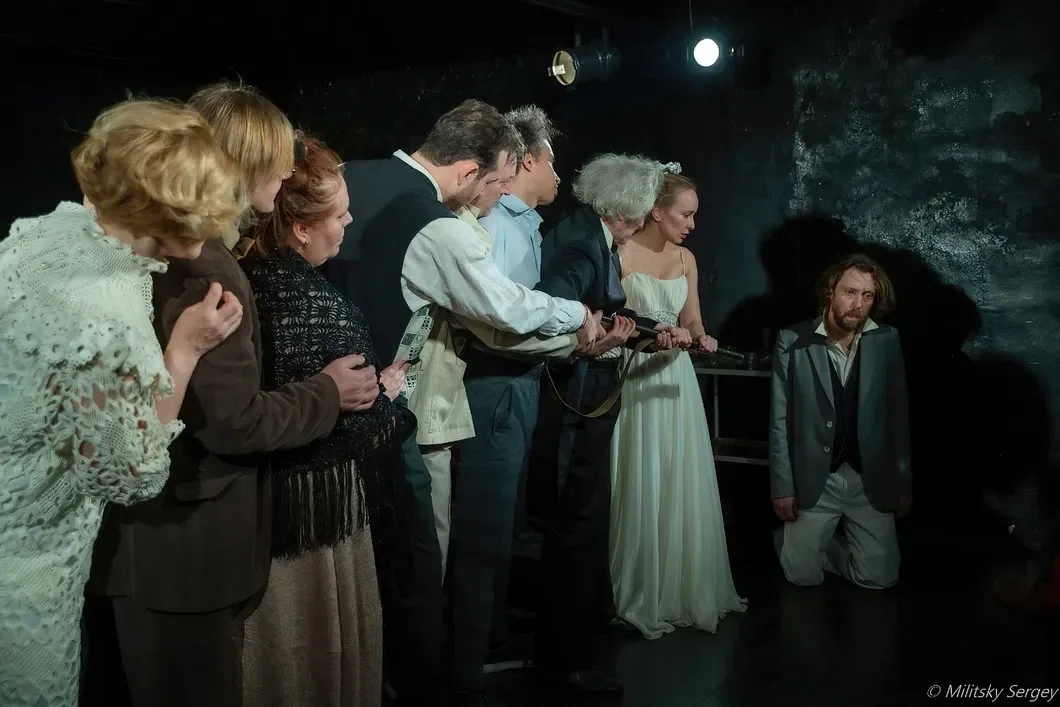
In the final scene of the play, the characters all together instruct Ivanov’s gun to himself. The very one that always shoots. And it shoots ... (although Oleg Duninin as a smart actor permanently hints at us at the first edition of Ivanov, that the hero’s heart muscle is ready to burst at any second.) However, I really want the actors of our drama of life to choose a different path, escaping from the enchanted triangle of the victim’s complex and starting a slow and conscious path to a healthy political life.