
Translated material
Dominant on the blood
Why to the authorities return the monument to Dzerzhinsky to Lubyanka
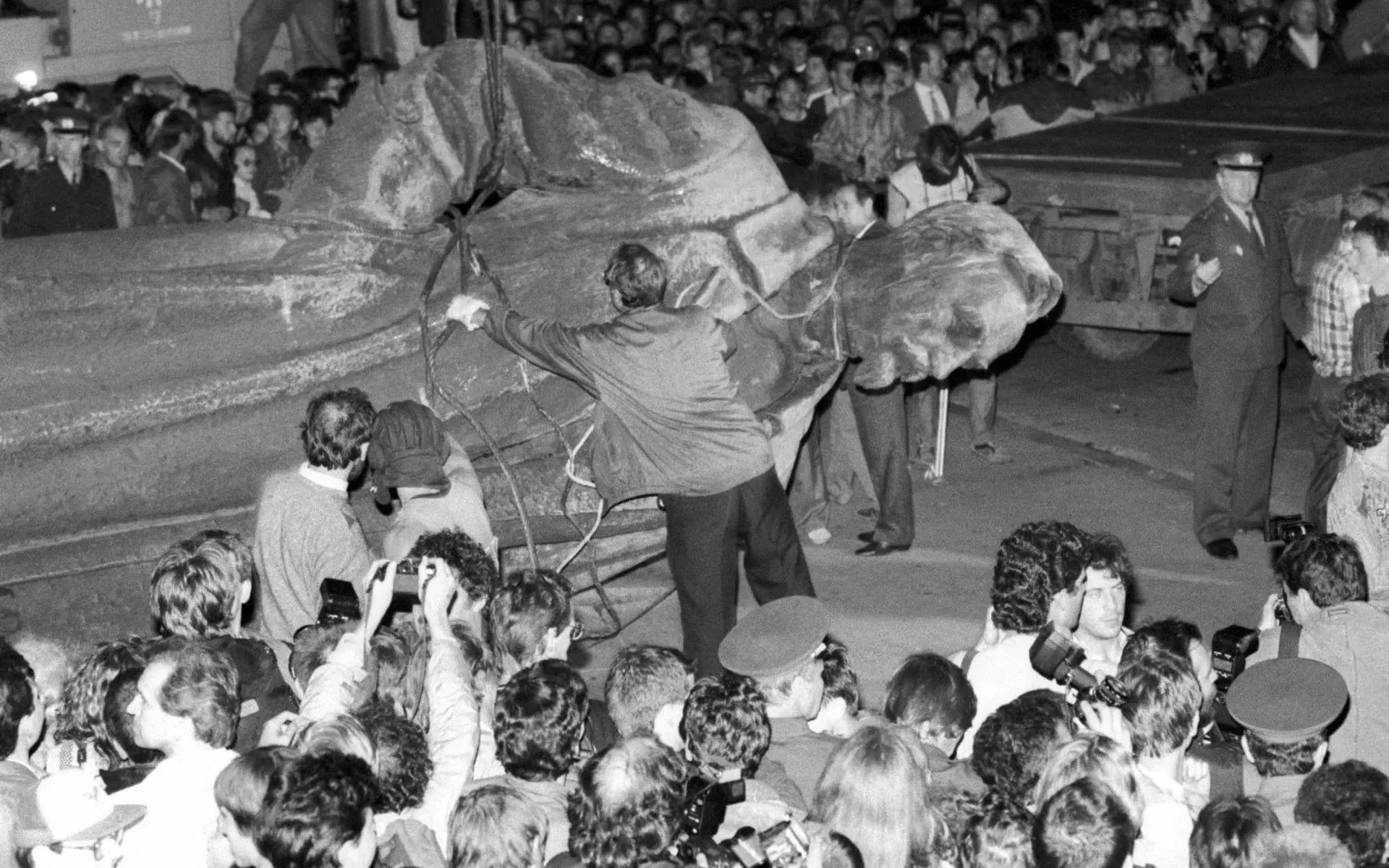
Recently, a discussion of the installation of monuments to the leaders of the totalitarian past has intensified in Russia. We are talking about the return of the monument to Felix Dzerzhinsky to Lubyanskaya Square in Moscow. And earlier, in various groups, attempts were made - and sometimes quite successful - to erect monuments to Joseph Stalin.
For a long time, the arguments of supporters of the revival of monuments to totalitarian leaders were rather scarce. They, as a rule, argued that although such monuments are devoted to conflicting characters, they are a reflection of national history from which it makes no sense to dismiss.
However, this argument is nothing more than an attempt to hide behind the back of historical science. Yes, it really does not need to be brushed away from history. But the channels of the transfer of historical knowledge are by no means monuments to tyrants, but history textbooks, scientific articles, books, documentaries and lectures. It is thanks to them that people know and remember their story.
The purpose of the monuments is different - by them a society or the ruling regime notes its heroes. This is a tribute to those who are proud of the country.
If on the pedestals there is someone who is guilty of mass deaths, then it turns out that it is from him that society calls on the younger generation to take an example.
However, others recently added to this argument. For example, the chief architect of Moscow does not see anything shameful in returning the monument to Felix Dzerzhinsky for the simple reason that he can play the role of the “dominant” on Lubyanskaya Square. This, however, is an even more strange argument: it is obvious that the problem of returning monuments to totalitarian leaders is not limited to architectural measurement. On the squares, a variety of alternative dominants can be installed, absolutely neutral from non -architectural points of view.
Another argument was cited by the visant historian Roman Shlyakhtin. He actually proposed not to arrange red flags of censure and liberalize public attitude to monuments to various historical characters.
The Argument of the novel lies in the fact that parts of Russian society lived under Soviet power better than without it. And the monuments to the totalitarian leaders somehow bring a certain reassurance to the life of such people. The monuments to Vladimir Lenin, apparently, are a kind of tombstone to the “bright past”, and their location in central public places gives them a high status. Or creates such an illusion.
Generally speaking, in strict accordance with this logic of the city of the world, you can force monuments to absolutely any characters. There are people who lived well with the floor of sweat or Mussolini. And some individuals still perceive the loss of these regimes with regret. There are countless reasons for nostalgia.
However, nostalgia is hardly an unconditional criterion for the establishment of monuments in public places. The grounds for this appear when it is, in particular, a large -scale tragedy. For example, Chernobyl disaster or Stalinist repressions. Therefore, the memory of them is immortalized in the form of monuments.
The transformational decline in the 1990s, depriving many families of even quite slight well-being, and not nostalgia for the Soviet past, definitely deserves empathy. But only monuments to Lenin have nothing to do with him. Vladimir Lenin is not a symbol of suffering and deprivation of the transition period, among which the most difficult was the armed conflict in Chechnya. Lenin is an architect of numerous troubles.
The loss of well -being by many of those Russians who are faced with the most severe manifestations of the transformation process is definitely deep injustice. However, the reaction to this tragedy should, first of all, become the formation of a functional social system in the form of sufficient unemployment, pensions or good hospitals for a decent life. An honest discussion of all adverse results, omissions and errors of that time cannot be avoided. The suffering, which many had to endure in that era, quite definitely deserve monumental memory.
But in no way, the monuments of the architects of even greater troubles could not serve as a response to the troubles of the 1990s. Such a reaction destroys with great difficulty forming moral values, since actually makes the glorification of one dark era in response to insufficient attention and recognition of troubles. Such an answer only enhances the atmosphere of conflict and distrust in Russian society, complicating cooperation and consolidation between people, so necessary for solving important social problems.