
Translated material
Russians are on the screen
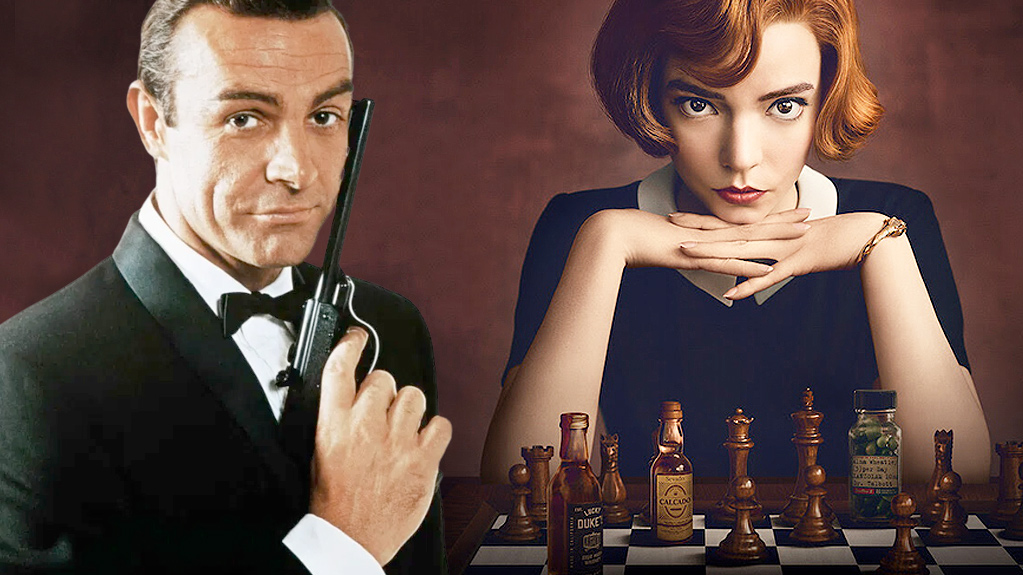
Conversation with Professor of Columbia University Mark Lipovetsky
Alexander Genis: Russians have always been present on the American screen. Once in a still pre-war cinema, they appeared without mandatory accompaniment of balalaks, gypsies and vodka. Then the first and second ones became smaller, but the vodka remained. Ours in Western cinema drink, regardless of ranks and circumstances, in the morning and without a snack.
Observing almost half a century to the evolution of Russian characters, I decided to discuss this evergreen topic, which has become especially relevant in recent years - thanks to the super -successful television series: Chernobyl and Fergose Gambit. In both Russia, or rather the Soviet Union, play a central role.
Today I invited the brand of Lipovetsky, Professor of Colombian University and the organizer of the Russian cinema club with him in order to talk to these burning topics.
Mark, how does the image of Russian under the pressure of history change?
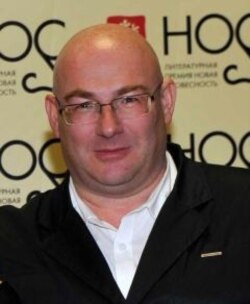
Mark Lipovetsky: Unfortunately, less than we would like. It would seem that for 30 years there is no “iron curtain”, there are plenty of Russians in America, it would seem that Russia can go to Russia if desired, but the stereotypes that are inherited from the Cold War, and perhaps they go back to more distant antiquity, continue to attend the screen, especially on the television screen.
Alexander Genis: When I arrived in the USA, this is 1977, in America there was still a popular film "Russians are coming! Russians are coming!" (1966). When we, the third wave, arrived, then newspaper articles came out under the Russian cap “already here”. The meaning of this film, which I saw much later, came down to the fact that the Russians, of course, were animals, for they sent an atomic submarine to the shores of America, but when it was time to save the child, the Russians turned out to be the same people as everyone. That is, a kind Russian soul hides under the terrible skin of Barbara, which nevertheless pees through the uniform. This image was always quite popular. But there is one thing, I would say, a fundamental exception: James Bond and a special image of Russian in these films.
What is the inheritance of James Bond in Hollywood, and indeed in the mass consciousness?
Mark Lipovetsky: I would start from afar. If we are talking about American culture, about American cinema and television, the Russians occupied the honorary role of "another", which only looks like an "normal" American man, but in principle represents the complete opposite. The example that you brought, the famous film "Russians go" the Cold War is just a classic "other", ascending, I think, to a romantic, or even a soromanetic culture called Bon Sauvage. Generally speaking, the beast, but sometimes in it there is, we can recognize as nice features.
Alexander Genis: It comes from Jean-Jacques Rousseau with his "noble savage." That is, do you think that Russian on the western screen is this same “noble savage”?
Mark Lipovetsky: Sometimes noble, but more often not.
Alexander Genis: Recall that the “noble savage” was noble because he was not civilized, this was the idea of Russo, his romantic ideal. By the way, the noble savage was searched in America of the 18th century, where civilization has not yet reached it. It is quite difficult to call Russians not spoiled by civilization, especially when Russia threatened to destroy America in a Cold War. She was afraid precisely as a potential liquidator of an entire country, which she could well do today.
Mark Lipovetsky: Yes, but this did not interfere with the depicting Russians just like savages, however, not with a club, but with a nuclear rocket. That is, completely savage behavior, but multiplied by relatively high technologies. In this sense, films about James Bond are characteristic that in them the image of the Russian perfect monster opposite to the human race, naturally, opposed the representative of Western civilization in the person, primarily Bond himself. This conflict was brought to grotesque proportions. "Bondiana" is generally a grotesque genre, there everything is brought to its limit, usually a semi -parodic one. We remember that Bondiana began with parody films, which then began to act more and more serious. Those Russians that we see even in films, it would seem, perestroika, where shooting was carried out in Moscow (there, if you remember, tanks in the Golden Eye literally drive around Moscow and destroy most of historical architecture), the Russians still look like completely monstrous creatures, among which, however, there are sometimes some exceptions. These are, as a rule, women, and this is a purely colonial path. There is a "Pokakhontas", which, of course, will love the colonist, and everyone else, her parents and brothers are animals.
Alexander Genis: If Pokakhontas, then the Conquistador will love. But I do not quite agree with you, I specifically revised the classic series of James Bond as a Cold War before our conversation. It seems to me that everything is not so simple. The Russians are represented here in two types: either this, as you correctly said, the monsters going beyond humanity, or these are cunning, experienced, smart villains with whom James Bond and all Western intelligence are constantly struggling. But I would say that this is a duel, the musketeers of the king and the guards of the cardinal. In these films there is a certain parity between good and evil, it lies in the fact that it is bad to live with the Russians on the same planet, but it is possible. And this is the essence of the Cold War, which therefore did not go to the hot war. All sorts of KGB generals who wear literary surnames of Russian classics are ultimately also for peace. After all, what is the essence of the duel? Why did D`Artagnan, for example, have taken and yelled with a stick? Because the stick is not a duel, it is a fight. And here, nevertheless, it was about equal, both sides had a cunning technique, and only some idiots try to break all this technology and break the balance of power.
It seems to me that it was in this capacity that James Bond was a true hero of the Cold War. Then everything changed, because perestroika changed the nature of evil in the root. How did the restructuring affect the image of Russian?
Mark Lipovetsky: Again, she did not work, in my opinion, except that the savage became a bit more noble. It seems to me that the radical shift in the image, relatively speaking, of the Russian, Soviet and post -Soviet world, occurs only in the series "Chernobyl". This is an amazing turn of the steering wheel, which differs from everything that I saw in the past and present.
Alexander Genis: We will return to Chernobyl. But while I want to dwell on the period of perestroika, because for the first time there were many Russians not only on the screen, but also just in America. In the 1990s, Russians appeared in Hollywood, and on the screen, and on TV, everywhere, these Russians are already talking without an accent, correctly and "bottle on the hairdryer." The new image of the Russians led to the fact that on the screen all women from Russia are only prostitutes named Natasha. My friend has a daughter Natasha, she says: "Though change her name."
But with men everything became more interesting. I remember how the wonderful series "Law and Order" flourished in the 1990s, one of the best on American television, where the Russian theme appeared. Russian bandits who interfere with American justice tell the prosecutor the phrase that should be remembered, they said: "How can you intimidate us if we, Russians, survived Stalin? What can an American prison do after the Gulag?" This is a new turn of the topic, it seems to me. Because now the Russians are not bandits with an atomic bomb, but these are just bandits. This is the spirit of time. Russia is already a mafia superpower, and not a superpower with a communist ideology and an atomic bomb. It seems to me that this has changed the situation.
But I agree with you in another, that the archetype remained the same: Russians on the American screen are always executioners and victims, only two options: either this is an executioner, or it is his victim.
Mark Lipovetsky: Yes, I completely agree with this. All the same, the Russian is allotted, I am repeated, of course, the role of "another." That is, Russian is a contrasting background for a certain abstract American norm. Whether it is an image of Russian as a monster with an atomic bomb or a monster from the mafia.
Moreover, fundamental differences are important. In the "Cross Father" the mafia is us, the mafia is our background. Once Fredrick Jamison wrote that the "godfather" recreated the missing story for modern America. None of the films in which the Russian mafia appears is involved in this process-these are always some aliens who live in Brooklyn, drink vodka and with an accent nostalgize about the USSR. Think for yourself, after a minimum of 40 years they remember how they were sitting in a Gulag - this is a rather long memory. That is, there is no story in this world, everything happens at the same time. Ivan the Terrible, Catherine the Great, Stalin, Gulag, Putin - everything is compressed.
Alexander Genis: But with all modes, only one thing remains a constant element - vodka. This is terribly infuriated, because no matter how Russians showed me, they begin to drink vodka at 8 in the morning and bite it with caviar, red, black or zucchini. But even Russians do not always have breakfast with caviar at 8 in the morning.
Honestly, I can’t stand ordinary Western films about Russia, because I feel in the shadow of a hanging cranberry. Everything is as Ilf and Petrov, who said that the main character of Hollywood, when it comes to Russians, is Princess Grishka. This princess Grishka still triumphs on the screen, and always all this is poured with vodka. Who would tell them that in Russia, for example, whiskey has long been loved, not necessarily everyone drinks vodka, and most importantly, that they always do not drink it.
But one way or another, the images of Russians are increasingly appearing on the screens. If only because the Russians have become a noticeable sign of Western life, of course. The main thing in recent years, the event for Russians on the screen is television series. Here I want to talk more about this.
(Music)
Mark Lipovetsky: What you said about vodka at 8 in the morning is amazingly illustrated by one of the last hits, the Fergsev Ghambit series, where, as many people remember, the heroine is in Moscow, as you might guess, either the end of the 60s or the beginning of the 70s and apparently lives in National. In the morning, having breakfast in a restaurant, she sees how a boy, a child 10-11 years old, is going on in the aisle between the tables, and delivers vodka in some tag or boiler, which is poured with a large scoop. In the morning, at 8, scooping vodka, child! This is so stunningly funny that, I think, the Princess Grishka sprinkles.
Alexander Genis: But you know, this reminded me of the fact that 600 types of vods are sold in Russia, of which 200 are called "ladies", there is, for example, "mother -in -law vodka", there is "girlish vodka" and so on. So maybe there is "children's vodka", I do not know.
In the "Gambit" it is really funny. But when we watch films about Russians, they always amuse us, because we see cranberries. But if the Chinese watch films where there are Chinese, they probably also indignant and amuse them. Just as us, for example, amuse the images of Americans in Russian cinema. Probably, these are inevitable mistakes that we should not perceive too seriously. Because the last series that you mentioned represent a serious attempt to understand the Russians. First of all, it is Chernobyl, which, as I found out, is the most popular series in general, that is, number one now, if you look at the rating. He gained immense popularity. Why?
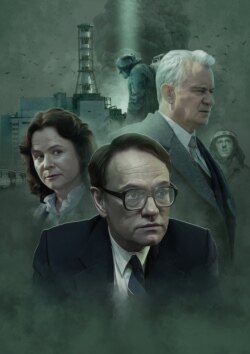
Mark Lipovetsky: Firstly, it affects the minimum number of cranberries. Secondly, it seems to me that for the first time on such a scale, an attempt to abandon the look at the Russians, in this case, Soviet, as “others”, and see in Russians such as Western, simply their circumstances are extremely different. The “Chernobyl” is interesting to the fact that it shows how a catastrophe is caused by a system, how people inside the system try to resist it differently, to fight it. Moreover, all this is not with a saber, not with the Jamesball scope, but at the level of a complex hardware game. For me, for example, the figures of the two main characters became a great revelation (which, of course, testifies to my ignorance): Valery Legasov and Boris Shcherbina, as it turned out, quite really existing, who were simply amazingly played by the famous actors Jared Harris and Stellan Skarsgard. Each of them creates a deep, psychologically complex character, which does not fit into the image of a party fanatic, or a crazy scientist who could be expected in accordance with the stereotype. No, these are multifaceted, exhausted, crushed by the system and powerlessness in front of the disaster, but very charming, very interesting figures. Thanks to them, the whole picture becomes completely different.
Alexander Genis: You know, we talked about this film with my colleague and friend Andrei Zagdansky, who lived during the Chernobyl disaster in Kiev, found and found a lot. He talked about the reliability of this series, which, as we found out, is very rare when they show the Russians on the screen.
But I have one consideration. Tell me, if all the same, everything that was in the film did not happen in Russia, but in America, could there be such a series? For some reason, it seems to me that he could easily exist in American scenery: a disaster at the nuclear power plant, some officials hide the truth, others reveal it.
Mark Lipovetsky: No, it seems to me that no. For me, it was a very important moment in the first series, when the leadership gathers and all the bosses are afraid to report this accident up, they silence this accident precisely because of the fear of party leadership. This is a very Soviet moment. Very characteristic of "stagnation" (although, of course, everything is already happening under Gorbachev). It is better to pretend that there was nothing. I lived in Sverdlovsk when there was a fire in the laboratory where they made bacteriological weapons in the 79th year, and the city would be infected with a Siberian ulcer. Everyone whispered, but officially nothing happened. Also, Chernobyl would have to happen. This is the presence of the Soviet political machine, which causes a non -metabolic, which gives rise to fear of violating the glead, the fear of reporting "up" the bad news, plays a most important role here. In America or Europe, everything else, of course, could be the same. But this is too much the difference that it does not affect the entire series. Plus, of course, not only carefully reproduced Soviet scenery, this is still everyday horror shown without pathos. Here a very thin and piercing intonation was found.
Alexander Genis: What do you think, how do Americans watch such a movie? How clear to them what is clear to you?
Mark Lipovetsky: You see, I am talking with students whom we prepare to perceive this as we perceive ourselves. If you set some kind of coordinate system, then many things are perceived differently. You know, I, specially preparing for our conversation, looked at who made this series Chernobyl, its creator, author of the script, director, producer Craig Maizin. He is from the Russian-Jewish family, his parents were emigrants in the first generation. That is, it would seem that he has some kind of connection with the intimate memories of the USSR, for him, perhaps this is not entirely exotic material. But on the other hand, take the famous series "Americans" about Soviet spies. There, one of the authors was generally an analyst of the CIA, that is, it would seem, the Soviet Union knows, Russia of that period is not bad. In addition, many Russian actors were shot there, including such stars of the first magnitude as Daria Ekamasova and Yuri Kolokolnikov. And all the same, how the Soviet Union of the early 80s or the end of the 70s is shown there is fantastic! My favorite detail: the heroine who worked at the Soviet embassy went to cooperate with the Americans, she is arrested and put in prison, I believe, in Lubyanka or somewhere else. And here is one of the last frames: she sits in a single chamber, next to her sadly, indicating that she is sobbing, there is a roll of toilet paper. In 1979! In prison. Toilet paper. You laugh, but, apparently, only we remember that the toilet paper was a luxury subject that they fought and fought for it. And here in prison, it turns out, it is easily accessible.
Alexander Genis: If we talk about such cranberry details, then my favorite episode is completely old. There was such a series "McGayiver" about an American who, with the help of a Swiss penknife knife, neutralize the atomic bomb and defeat the superpower. In one series, he goes to the KGB prison, saves from there a brilliant poet, by which, of course, Brodsky is meant. It is not named by name, but everyone understands. My comrade Ilya Baskin plays it. McGayiver pulls the poet from a Soviet prison with the help of a helicopter and again a Swiss knife. Brodsky asks him: "Where are we flying?" He says: "How where? To America." Then Brodsky jumps with happiness and shouts: "I will have jeans."
The only thing I really hate in Hollywood are such Russian images. But you and I decided that the screen is corrected before our eyes. The last series "Fersy Gambit", which is terribly popular both in America and in Russia, it was not for nothing that it was nominated for Golden Globe. О его успехе говорит и тот факт, что в Америке стали продавать огромное количество шахмат. Такое было только тогда, когда чемпионом мира стал Фишер, который, собственно говоря, и выведен здесь, правда, в женском образе. Я прекрасно помню победы Фишера, потому что тогда и я увлекся шахматами, разыгрывал каждую его партию. Для нас Фишер был знаменем демократии и свободы, мы все за него болели. В "Ферзевом гамбите" очень интересно показана Россия. Это опять-таки сверхдержава, но сверхдержава в области шахмат. Как вам этот образ?
Марк Липовецкий: Это тоже продолжение стереотипов. Вы-то хотя бы разыгрывали партии Фишера, а я дальше детского мата не продвинулся. Но почему-то всегда мои американские знакомые, желая сказать мне приятное, говорят: "Вы, наверное, очень хорошо играете в шахматы". Я обычно отвечаю, что в "Чапаева" я играю лучше, чем в шахматы. То есть это тоже стереотипный образ России как шахматной державы, где все играют в шахматы, все следят за этим матчем как за самым важным событием. Он обоснован глубоко фантастической сюжетной основой всего сериала. Ведь мы же знаем, что женщины не допускались до участия в мужских турнирах, что никакого гендерного равенства не было. То есть это утопическое допущение очень важное, мне кажется, по-своему революционное, оно как бы оправдывает все остальные допущения, которые из него следуют.
Александр Генис: Гипербола русских шахмат выглядит немножко идиотски – когда любители в мороз сидят за шахматными столиками и каждый ход – как весть с Луны. Но на самом деле под этим можно найти историческую реальность. Во времена Сталина самым безопасным видом досуга были шахматы. Это с 1930-х годов идет, вспомните "Лапшина" Германа. Так что увлечения шахматами имеют давнюю и довольно страшную историю. Но в этом фильме русские показаны джентльменами. В этом отношении есть, я считаю, сдвиг, есть какая-то территория, на которой русские и нерусские могут подружиться. В данном случае это нейтральная территория шахмат, где опять-таки, как в Джеймсе Бонде, происходит не драка, а дуэль, а дуэль – это общение.
Скажите, Марк, как можно сломать те стереотипы русских на экране, о которых мы с вами сегодня говорим? Что можно сделать для того, чтобы изменить эту ситуацию?
Марк Липовецкий: Сломать это волевым порядком невозможно. Сам этот стереотип является оборотной стороной мифологии американской исключительности, мифологии представлений о том, что Америка, американский человек, американский образ жизни – это и есть собственно человеческое, а все остальное – это где-то там на подступах к нему. Как только эта мифология расшатывается, так сразу же стены становятся проницаемыми. А мир вокруг нас вообще более проницаем, чем был даже не 30, но 10 лет тому назад.
В кино, однако, все равно есть эта комфортабельная область мифа, которая воспроизводится, ибо находит, конечно, потребителей. В том-то и дело, что как только кинематограф отказывается от точки зрения на Россию (здесь можно подставить любую другую страну) как на "другого", сразу же происходит что-то интересное. Не всегда удачное. Допустим, мы с вами смотрели два сериала про Екатерину Великую с гениальной Хелен Миррен и гораздо менее гениальной актрисой в фильме "Великая". Там была интересная установка – неудавшаяся, но все же интересная попытка посмотреть на всю эту дальнюю историю не как на экзотику. Но, увы, ничего не получилось: экзотика осталась непреодолимой. А экзотика – это всегда эстетическая оболочка "другого".
Александр Генис: Поделюсь одной мыслью. У русской культуры есть ресурс, чтобы войти в контакт с западной массовой культурой, которая является подсознанием общества. Как на него можно влиять с помощью культуры? Мне кажется, что это возможно. Вот смотрите, авторы "Гамбита" нашли интересный ход: шахматы – это что-то нейтральное и что-то, в чем Россия, бесспорно, является главной. То есть нужно найти такие области, где Россия – первый игрок. Мы с вами прекрасно знаем, что Россия была сверхдержавой в области научной фантастики. Можно использовать такой могучий ресурс, как книги Стругацких. Мы так любим все сериал X-file, "Секретные материалы". Вот бы сделать по Стругацким подобный сериал, причем именно с русскими, включая ученых. Там есть все, что нужно для того, чтобы создать поле взаимопроникновения. И вот такие новые "Секретные материалы" на русском материале с использованием Стругацких, по-моему, вполне могут сблизить две культуры и послужить таким мостом, таким, я бы сказал, эсперанто масскульта, который позволяет понять и тех, и других.
Марк Липовецкий: Мне очень нравится ваша идея про Стругацких. Действительно Стругацкие – это язык, который, безусловно, имеет советское происхождение, но он явно ближе к глобальному языку, особенно сегодня. Во всяком случае, слухи об экранизации "Пикника на обочине" в виде сериала ходят уже довольно давно.
Александр Генис: Да, я тоже слышал об этом. Мы еще с вами поговорим о Стругацких, раз мы оба любим эту тему.
(Music)