
Translated material
Parish - in consumption
In Russia, a business for the sale of churches has blossomed: we study lots and announcements
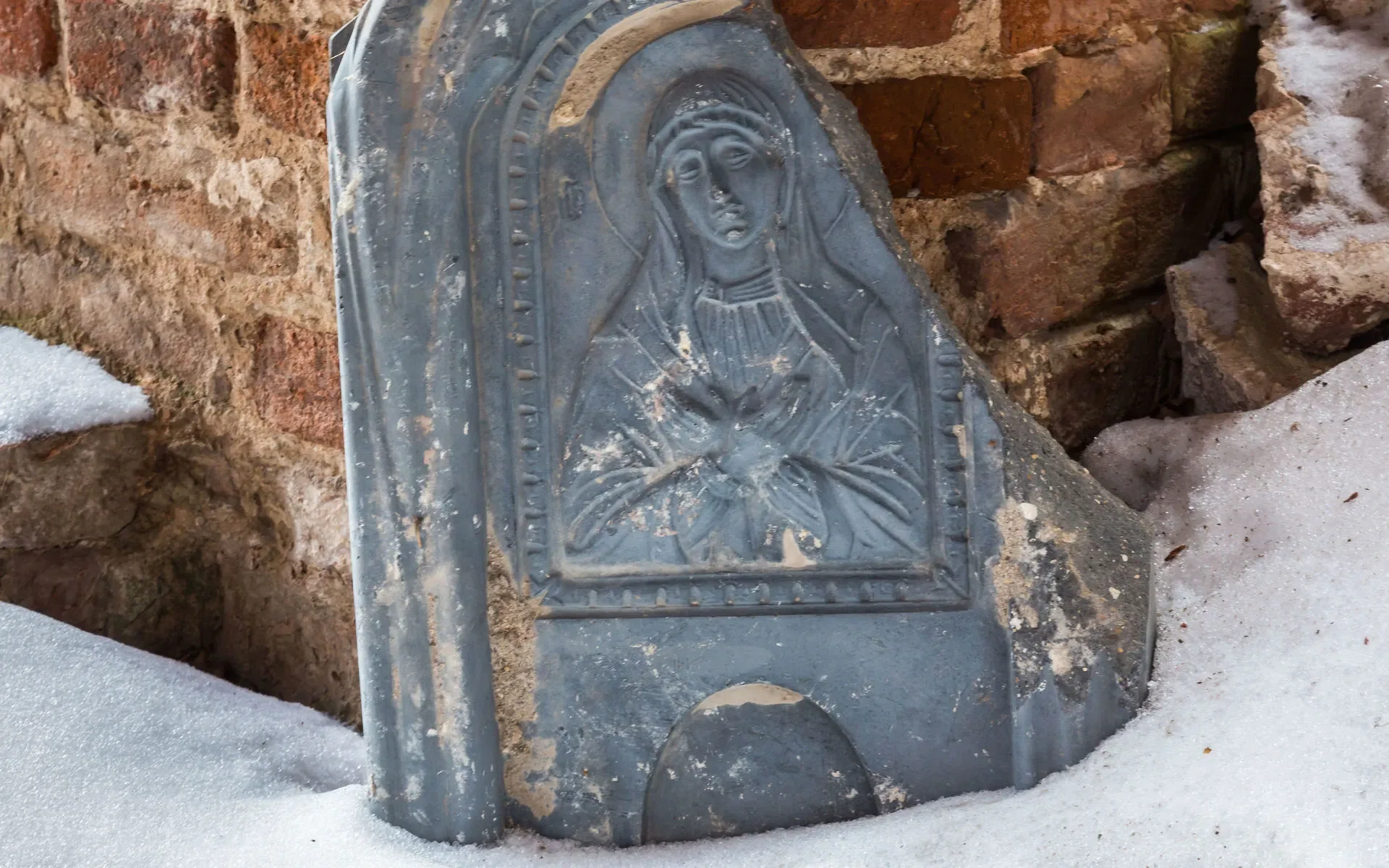
Yaroslavl
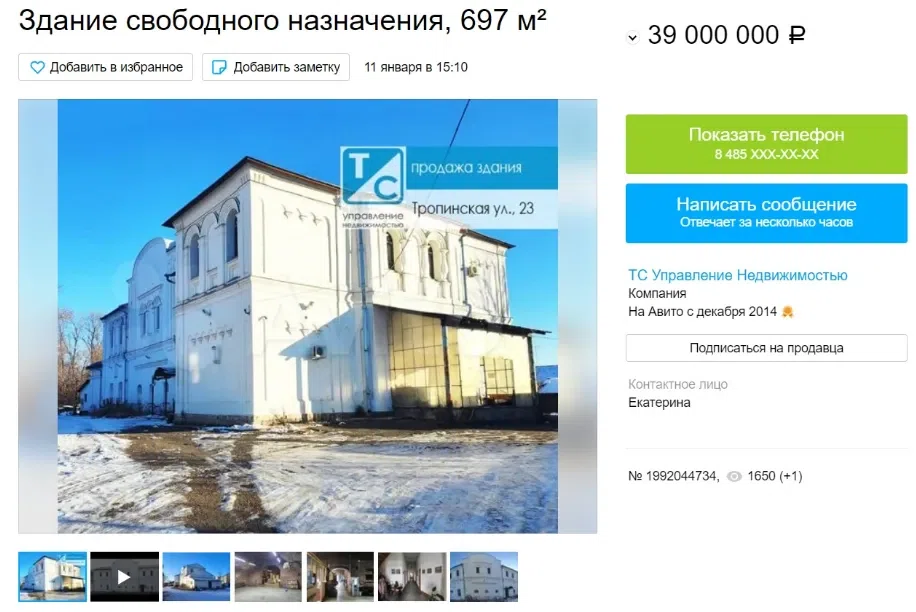
The Nikolo-Tropinsky Church of the XVII century stands in the very center of Yaroslavl-from the main square of the city it is separated by the Kotosl River. On the sites of real estate agencies ( here and here ) it has been sold for a long time, so the price has to be reduced: from the original 45 million reached the current 39. Sellers and agents do not advertise the origin of the object: Cyan claims that the building was built in 1900 and is “administrative-Kuda”. The announcement says that the ancient church "is ideal for the placement of ... offices of large companies, political parties, public and state funds, hotel and restaurant complexes, and health and fitness medical institutions." A good condition of the object is evidenced by an advertising video . The total area of the object is 697 square meters. m; Together with it, a plot of 45 acres is sold.
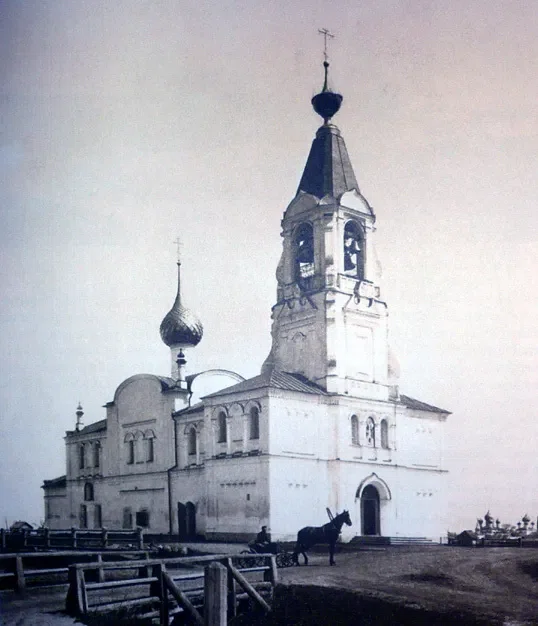
Temple of St. Nicholas in the Tropin Slobod of Yaroslavl was actually built in 1660 and gained fame when next to him, at a crossing through Kotosl, Patriarch Nikon, the father of church reform and the culprit of the Russian schism, died. Having received the forgiveness of the king after the disgrace, he returned from exile to Moscow, but did not reach. The coffin with the body of the Patriarch was installed in the Tropin Church on August 17, 1681. The Russian Orthodox Church periodically has talks about the canonization of Nikon.
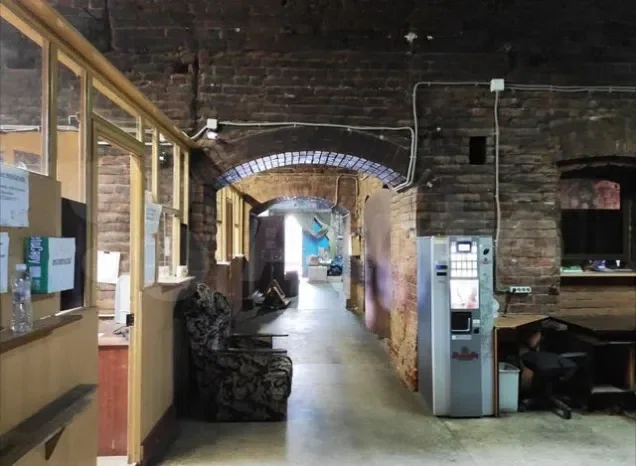
The temple was closed in 1931 and handed it over to the woodworking factory. Having equipped a club for workers in it, the factory demolished the dome and the bell tower, and the parish cemetery was gradually built up with residential buildings (now there are elite cottages). In the postwar years, the disfigured temple was used as a warehouse: its last owner at the beginning of the 21st century was OJSC Yaroslavryba, which conducted a utilitarian restoration of the building, dividing it into offices. The last owner of the temple in the register is LLC Torgommerts, where - in connection with bankruptcy - the arbitration court in mid -February appointed a bankruptcy trustee. Perhaps now the sale of the temple will accelerate.
Realtors involved in the object assure that “there are all approvals” to expand its area by about half. Back in 2018, the Department of Protection of Cultural Heritage Supervision of the Yaroslavl Region agreed on a project for the reconstruction of the temple, developed by LLC “Wind”. It provides for the construction of the Mr.-shaped corps and a new fence in the elevator territory, but does not return the temple of historical appearance, which may confuse potential tenants. The project received a positive conclusion from the state historical and cultural examination.
The Yaroslavl diocese of the Russian Orthodox Church, which point blank does not notice the Nikolo-Tropic Temple, nevertheless could not come to terms with the existence of an “alternative” Orthodox Church in the city of the parish of the “alternative” Orthodox Church-the Russian Orthodox Autonomous (RPAC), which since 1992 has been legally occupied by the Temple of the Vladimir Icon of the Mother of God on the Bozhedomk (also the 17th century), having carried out a complete scientific restoration of this unique three -shaped monument. In November 2016, the Arbitration Court seized this temple from believers “in favor of the state”, and already in 2017 it was transferred to the Russian Orthodox Church. Since then, the RPAC, which has a large registered community in the city, has no permanent place for worship.
Village of Zavalovo Tula region
Temple of St. The Great Martyr Demetrius of Solunsky in the village of Zavalovo, the Odoevsky district of the Tula region, was built in 1843 in the style of late classicism on the site of a wooden church of the 17th century. In the same XIX century. The chapel, refectory and the bell tower were added to him. The announcement of its sale sagged on Avito all last year, and it was more honest than in Yaroslavl: "The church is sold ... located on the banks of the UPA River." The lot included a land plot of 1,345 square meters. meters. For all this cultural and derivative heritage, only 450 thousand were asked. As a result, on New Year's Eve, the church went for 186 thousand - at the price of old Lada!
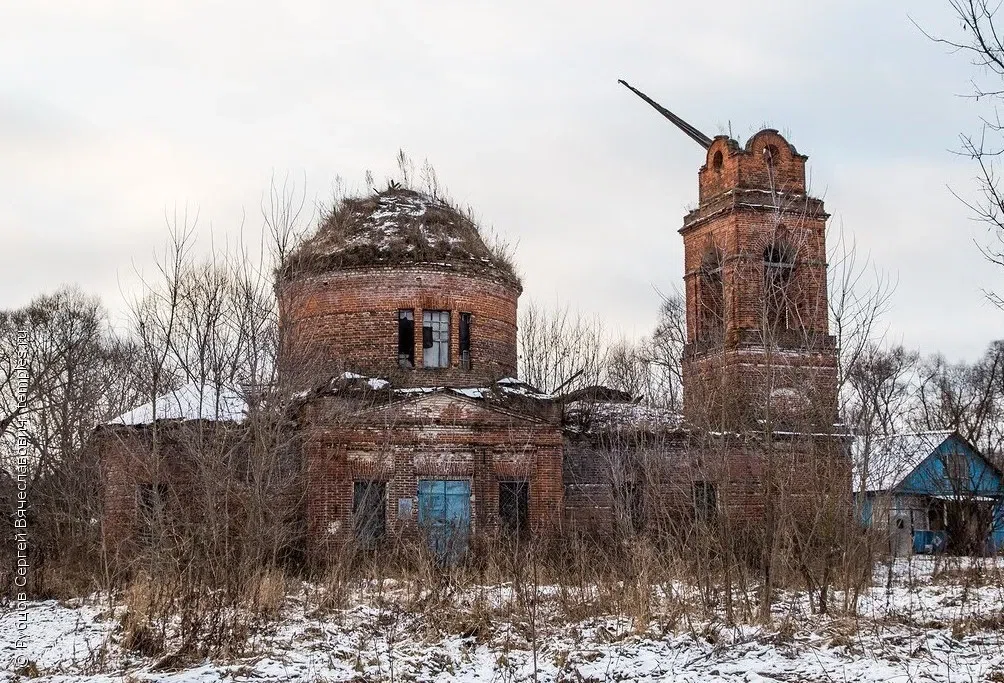
The village of Zavalovo arose at the "trash" of the Moscow kingdom under Ivan the Terrible. Now it has officially registered 18 residents, but there are many rich summer residents, including high -ranking military from Moscow. Probably, for the sake of them last year, a new bridge was opened over the Up. Opposite Zavalov begins the famous Tula Zaksi reserve. The buyer of the temple was also a Muscovite - Pavel Yuryevich Osipov, whose data coincides with the information posted on the Internet about the metropolitan arbitration manager.
The Tula Arbitration Manager, appointed by the court after bankruptcy of the owner of the building-30-year-old local entrepreneur Natalia Kurkryukhina, sold the temple. She, in turn, acquired the temple when the Zavalovsky agricultural cooperative went bankrupt - the heir to the collective farm, who kept grain in the temple.
The temple received the security status as a monument of local importance back in the 1960s, but not a single owner did anything for its restoration.
Inside the temple, however, you can find simple candlesticks and analoi-someone made prayers in it. But this was clearly not the Russian Orthodox Church, since in its Belevsky diocese, covering the Odoevsky district, the temple was not interested until the emergence of information about its sale. When journalists began to call the diocese, she initiated a “verification of the legality of the sale”. The declared goal: to get a temple in church ownership, but how to arrange it legally is incomprehensible. The diocese is mainly counted on the “consciousness” of the buyer ...
Moscow
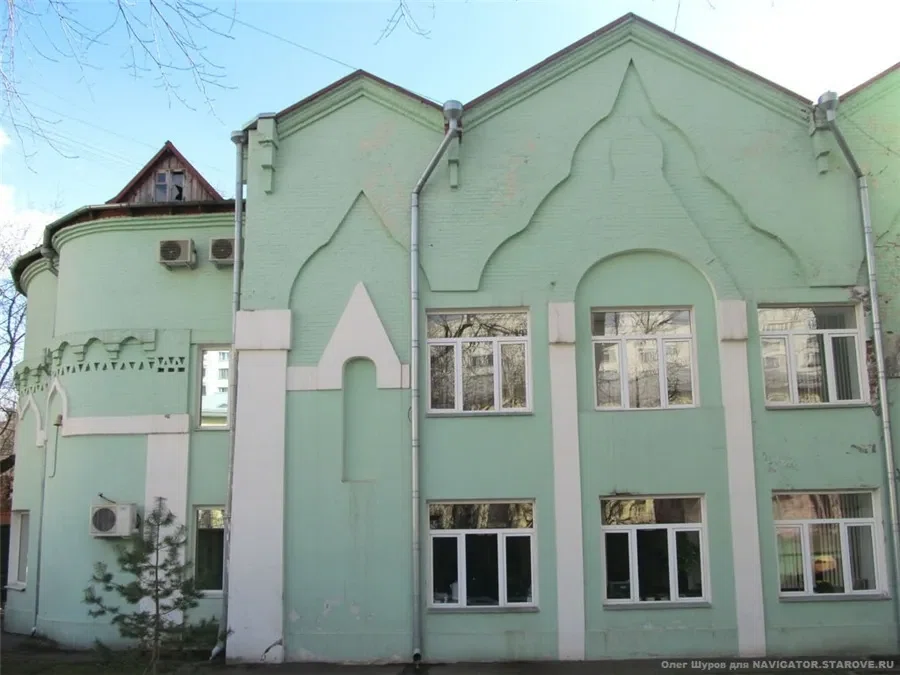
For a long time and, it seems, the historical temple of the Nikolo-Rogozhsky community of ancient Old Orthodox Christians-Old Believers on Malaya Andronievskaya Street, not far from the Ilyich Square, is hopelessly sold in Moscow. In Internet, it is designated as a “mansion” with an area of 1,204 sq. m and worth 228 million 760 thousand rubles. Moreover, over the past couple of years, the price of the lot has already reduced by half.
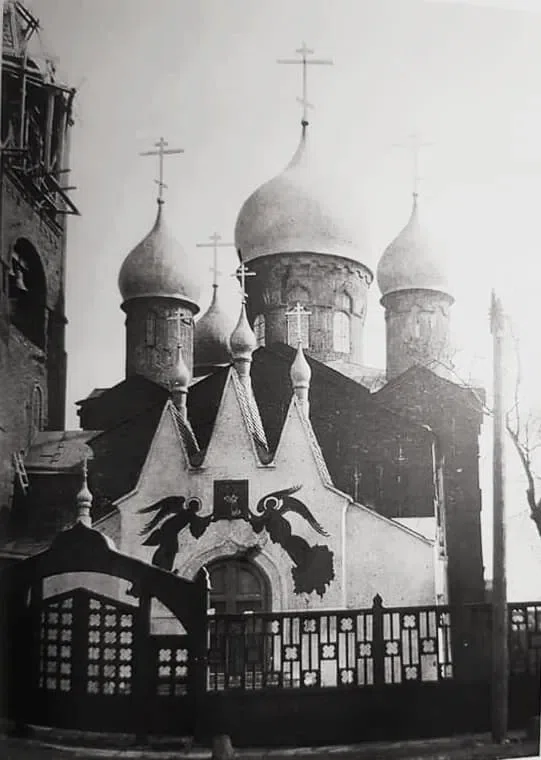
The Nikolo-Rogozhsky Church is a recognized unique model of modernity, or the “neo-Russian style”, built in 1910-15. According to the project of architects Bondarenko and Blagoveshchensky. Until the closure in the 1929th, the temple was the spiritual and administrative center of the Russian ancient Orthodox Church (RDC), which restored its hierarchy in 1923. For seven years, the main church council of the RDC and the Unification Commission to bring the two largest Old Believers consent in this temple. The Presidium of the Moscow City Council motivated the removal of the temple from believers "by the sharp need for workers' factory No. 4 of the Moskvoshway in a club room." The Moskvoshway factory eventually became the Pioneer association, which brought the temple to an emergency state by 1993, when it was sold in private hands and reconstructed for offices. One of them at the turn of the century was occupied by the “Union of Right Forces”.
Now the building is on the balance of Altavir LLC, associated with the Renova group Viktor Vekselberg. In any case, when the leadership of the RDC raised the question of the return of the Church of the Church, the negotiations with it were "people of Vekselberg", who allegedly offered the Old Believers to buy their own temple "at a discount". Altavir positions itself as a construction company, and its founder is the Cyprus offshore “Dolardino Holdings Limited”, which until recently registered at the same address as the company “CM Renova Limited”.
As reported by the Credo.press portal, last fall, the Tagansky court of Moscow fined 200,000 rubles to the owner of the Nikolskoye-Khogozh Church for violation of the obligations to preserve the monument. Now the main tenant of temple premises is the Russian Academy of Entrepreneurship, one of the founders of which is the Russian Union of Industrialists and Entrepreneurs. Among the mass of other tenants, the “Center for Family and Sexual Development of Valeria of Aginskaya” is distinguished, which directly in the temple organizes courses for the “development of intimate muscles” and the “art of oral caresses”.
The RDC leaves no attempt to return the temple, but so far the situation looks dead -end.
According to the representative of the church about. Andrei Marchenko, “the monuments from private owners should redeem the state, which at one time nationalized them. Since the Russian Federation recognizes itself as the successor of the USSR, pays on debts, including international organizations, why not fulfill obligations to its citizens? The page of repressions against believers will not be turned up while such examples exist in society. ”
Saratov
Another Old Believer monument - the whole Cathedral of the Pokrovsky Cathedral of the Belokrinitsky hierarchy (now the Russian Orthodox Old Believers' Church, the RPSC) - has been sold since the fall of last year through the company Cyan in Saratov. It is located in the city center, on Kuznechnaya Street, and was built in an eclectic style in the 1890s. As in Yaroslavl, the seller is silent about the origin of the object, calling him a “non -residential building of free purpose” with an area of 377 square meters. m with a plot of 6 acres. “The building requires repairs, is suitable for all types of activities, a hotel, a hostel, a night club. Closed courtyard for 3 houses, automatic gates, ”the Lot’s description says. Price - 13.5 million.
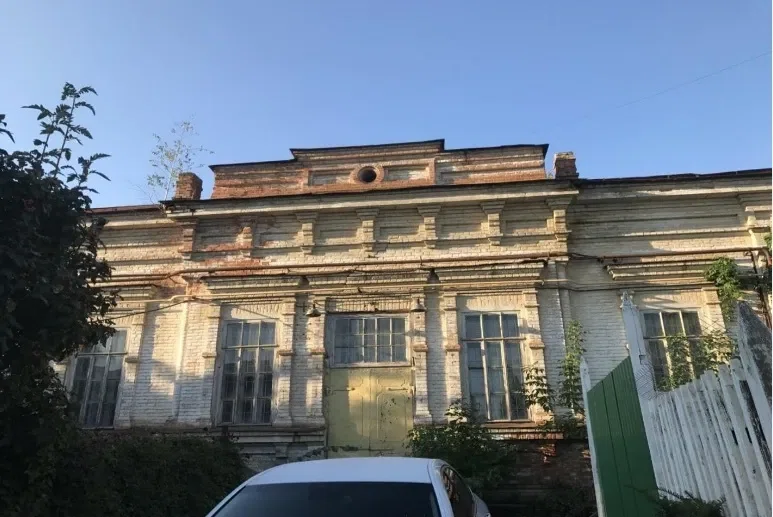
The cathedral is included in the list of cultural heritage objects of the Saratov region, although the current owner - the entrepreneur and social activist Vyacheslav Sevostyanov - is trying to challenge this status with the help of the examinations ordered by him. The temple remained operating almost until the very war - the guards of the Saratov prison achieved its closure in 1940, settling the building adjacent to the cathedral. From 1954 to 2016 The cathedral was occupied by the Club of All -Russian Society of the Blind, which sold the building to Sevostyanov. Once he organized a Chinese business center in Saratov, and then unsuccessfully ran to the State Duma and local representative bodies from the LDPR and the “patriots of Russia”, simultaneously buying out different real estate. But difficult times have come, and real estate has to be sold until the competitive managers, as in cases with temples in Yaroslavl and Zavalov, did not do this.
Of course, these examples are not exhausted by a list of historical temples put up for sale in the Russian Federation. Even two Moscow temples were sold to the zero - St. Alexander Alexandria on Leningradsky Prospekt, where the bank was located, and St. Philip on Bolshaya Nikitskaya, where there is now a restaurant. According to MK journalist Sergei Bychkov, who investigated these incidents, the owners of the buildings avoided the ROC's claims with the help of Metropolitan Arseny (Epifanov), who allegedly accepted the generous “donations” from the Moscow parishes.
Konstantin Mikhailov, editor -in -chief of the Heritage Guardian site and Activist of Archnadzor, published several more examples of the sale of temples, which, by law, could claim the Russian Orthodox Church. These are the churches of the Nativity of the Virgin in the Kashin (XVIII century), where the cinema was located, transformations in the village of Nesterovo (1820s), which at the time of sale was operating, Mikhail Archangel in the vicinity of Cherepovets (end of the 19th century), the creation of the Lord in Kineshm (XVIII century), the Kazan icon of the mother in Bezhetsk (XVIII century) and the Nativity of the Virgin in the Ryazan region (beginning of the XIX century).
The sale of unnecessary temples occurs in modern Russia against the backdrop of the power exile of the "alternative" Orthodox communities from the restored or even built by these communities of temples, which they just need. In the Suzdal and the Suzdal district alone, the believers of the RPAC were expelled from 16 temples, as a rule in the form of ruins in the 90s and completely restored by communities. In the Penza region several years ago, the bailiffs generally demolished the whole monastery of the IPC, which has existed there since Soviet times.
The sale of temples is a bright indicator of hypocrisy of “Orthodox-patriotic” propaganda and state ideology of the support for “traditional values”. In a country where most temples, despite their cultural value, were defiled and mutilated in a very recent past, the state is unacceptable from responsibility for their fate if such temples fell into private hands.
If Russia becomes free, then the question of restitution will certainly arise in it - with reasonable compensation for the damage caused to historical owners.
But this question has two sides: the stupidity of the state and the establishment of the proper owner. And the decision of the second part of the issue, given all the conflicts of the church history of the twentieth century, does not promise to be simple.