
Translated material
"No name is worse than mine"
Dzerzhinsky, assigning himself the right to execute and mercy, created a system of complete injustice
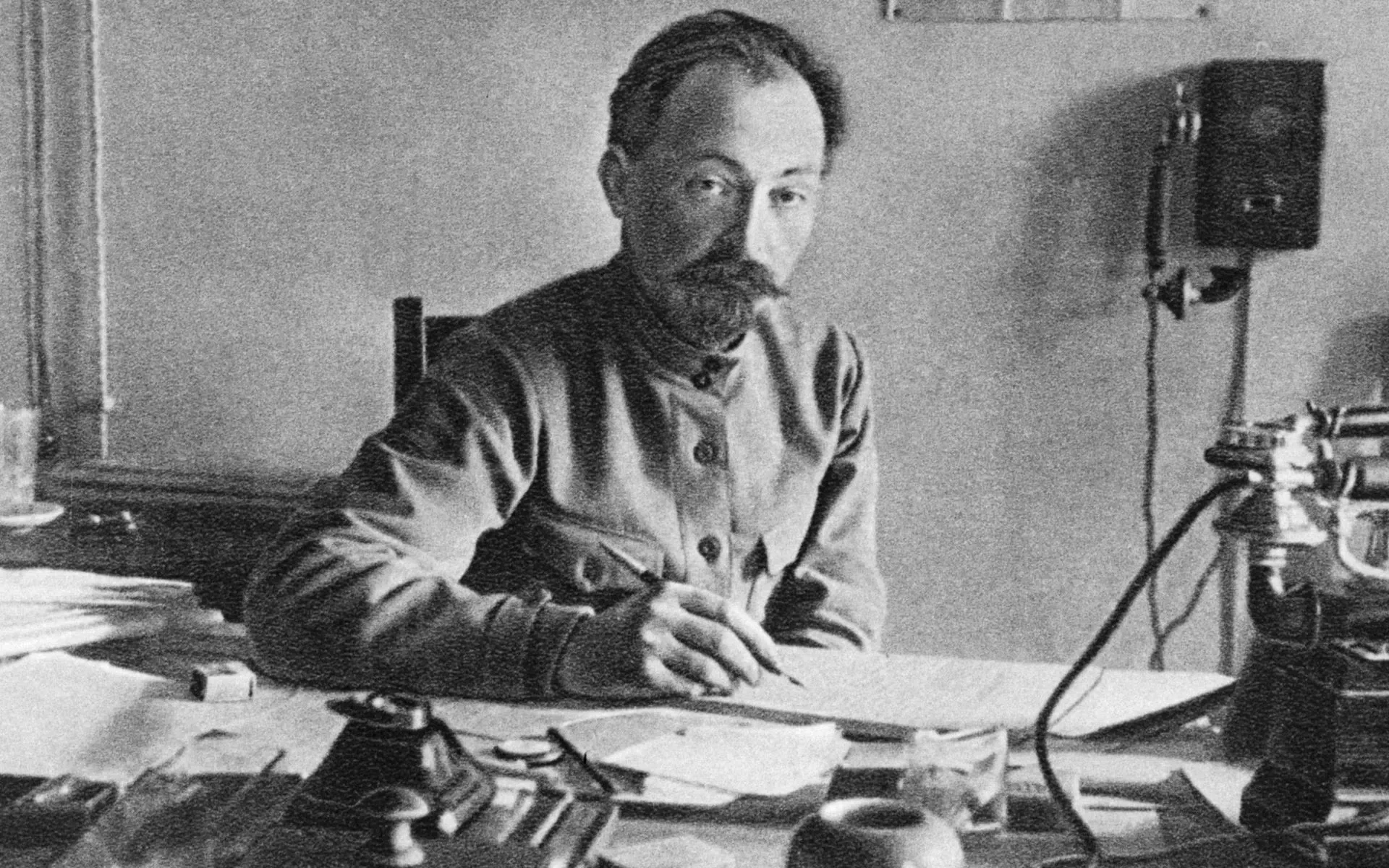
Already in the role of the chairman of the Cheka, who brought fear to all of Russia, Felix Dzerzhinsky wrote to his sister: “For many there is no name worse than mine. And I feel that you cannot come to terms with the thought that I am I am, and you cannot understand me, knowing me in the past ...
You see only what comes to you, perhaps in condensed colors. You are a witness and a victim of the Molokh of the War, and now devastes. The soil on which you lived eludes from under your legs. I am an eternal monastery - I am in the thick of changes and the creation of a new life. You turn to your thought and soul to the past. I see the future and want and must be a participant in its creation. ” He tried to explain to his sister why he became so cruel. And she remembered him as an idealist and a romantic who hated gendarmes, provocateurs, torture, prisons, death penalty ...
"Today someone will be hanged"
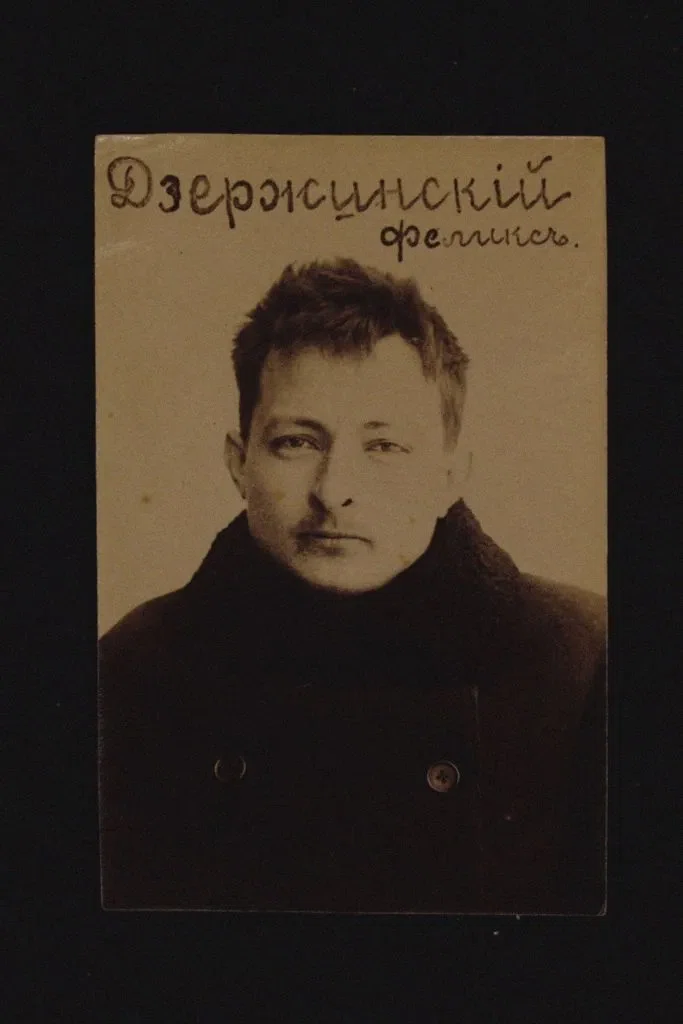
I was in a house near Minsk, where the future chairman of the Cheka grew. Good house, beautiful place. In old photographs, a cute young man with thin facial features, the nature is open and noble. From a good noble family. He studied at the gymnasium, but quit. He did not look for work, joined the Social Democratic Circle, then in the party. Until 1917, he did nothing but revolutionary activity. He spent six years in hard labor, five in exile. The gendarmes offered him freedom in exchange for cooperation. Refused. I was ready for the worst. Obviously, I would not have renounced his faith and before the scaffold.
“In the night silence, I clearly hear how to saw, they are stuck boards,” he wrote in his diary on May 7, 1908. “It is preparing a gallows,” flickers in his head. I lie down, pulling the blanket on my head. This does not help. Today someone will be hanged. He knows about it. They come to him, pounce on him, knit, shut up his mouth so as not to scream. Or maybe he does not resist, allows you to tie your hands and put on a shirt of death. And they lead him and look at how the executioner is enough, they look at his dying convulsions and, perhaps, with cynical words, escort him when they burrow the corpse, how they burrow the carrion. ”
He believed that there was no reason to be condescending to those who kept him in hard labor. In the struggle, it is not for life, but for death he did not consider himself related norms of morality.
He said that there is no objective honesty for the revolutionary: the revolution excludes any objectivism. What is considered honest in some conditions is dishonest in others, and for revolutionaries, in general, honestly only what leads to the goal.
He was not a pathological sadist, as he was portrayed, did not enjoy the destruction of enemies, but considered it necessary.
They canceled all laws
10 days after the October Revolution, the article “Terror and the Civil War” appeared in Izvestia CEC. It said: "The requirements for the termination of terror, to restore civil freedoms, are strange, if not more, to say." It was a fundamental position of the Soviet government: the restoration of life requires terror and lawlessness. Dzerzhinsky was instructed to create and head the All -Russian Emergency Commission under the Council of People's Commissars to Combat Counterrevolution and Sabotage.
Felix Edmundovich turned to the Council of People's Commissars:
“Without our own automobile base, our commission is not able to cope at least any satisfactory with the task assigned to us with counter-revolution, sabotage and looting ... Give us the right to requisition cars, gasoline, lubricants and other automobile supplies.” He asked not to allocate appropriations for the purchase or rental of cars, but to allow the requisition, that is, to select the cars.
On February 21, 1918, the Council of People's Commissars approved the decree "Socialist Fatherland in danger!" He threatened the execution as an extra -court of punishment "enemy agents, German spies, counter -revolutionary agitators, speculators, smelly, hooligans."
It is important to note this wording:
Emphasized measure of punishment! The Bolsheviks canceled all laws. They undertook to administer themselves. Principle: Political expediency is more important than law.
The main postulate of personnel policy: lack of doubts about the right of leadership. Dzerzhinsky immediately determined who he needed: “If you have to choose between, of course, our person, but not particularly capable, and not quite ours, but very capable, in our CHC, it is necessary to leave the first one.”
He explained how to check the device:
“We need to make a list of questions that should be clarified. Among them should be:
Wednesday and persons, among whom lives and with whom the employee is associated.
Family.
The hardness of the employee, whether he drinks, and if so, then with whom.
Does it take business and documents at home.
How they are stored here.
Slearies and close life of employees outside of work.
Where they live: in a hostel or separately.
Whether to the women, or the paddock is to men.
Intellectual or worker.
Who (from personal life) knows from hostile to us.
Relatives are our enemies, members of a foreign party.
Whether they go to amusement places.
Which of the enemies of Soviet power was exposed himself, in addition to the affairs given to him. ”
Rebellion in Moscow
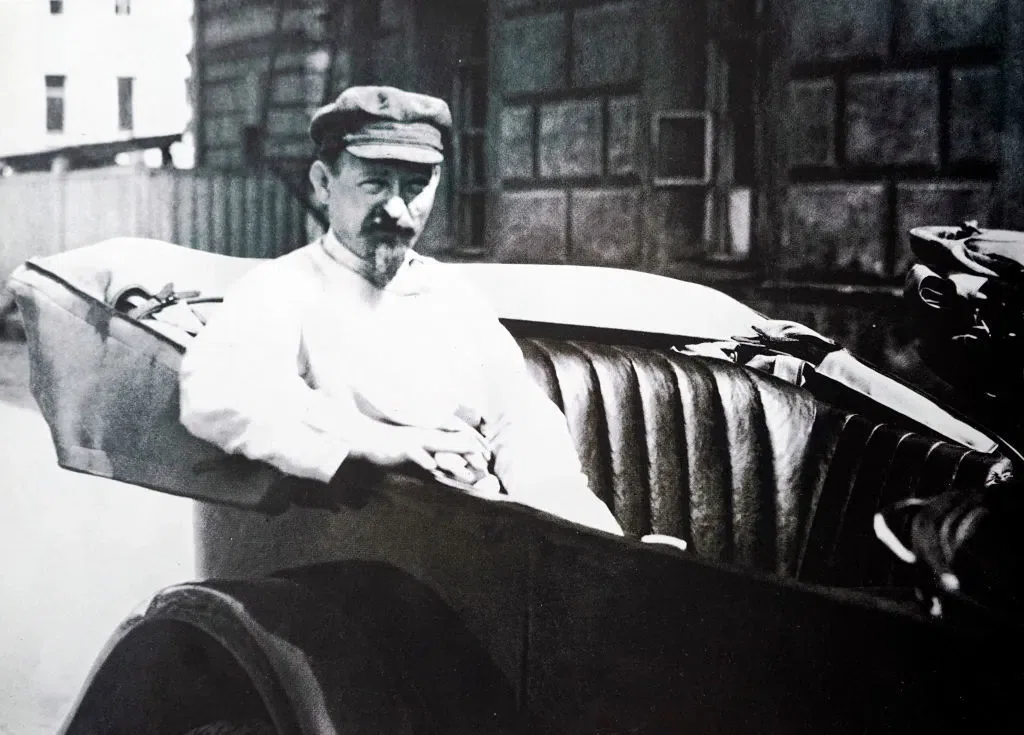
His department was blown up by a real rebellion, when in Moscow in July 1918 the Left Socialist Revolutionaries killed the German ambassador von Mirbach and raised an uprising. Dzerzhinsky learned about the murder of the ambassador from Lenin. He went to a cavalry detachment subordinate to him in the Bolshaya Trekhoviteli Lane. The detachment was commanded by Socialist Revolutionary Dmitry Popov. Members of the Socialist Revolutionary Central Committee gathered at his headquarters.
Dzerzhinsky told them: "Behind Mirbach’s head, all your Central Committee will answer with his head."
Member of the Central Committee of the Party of Left Socialist Revolutionaries Vladimir Karelin, recent the People's Commissar of Property (resigned in protest against the Brest world), proposed to disarm the protection of Dzerzhinsky. She did not resist. The chairman of the Cheka was arrested.
The subordinates of Dzerzhinsky did not know what to do. In a critical situation, they were confused.
The liquidation of the rebellion took on the People's Commissar for Military and Marine Affairs Trotsky. He called two Latvian regiments from under Moscow, faithful to the Bolsheviks, pulled up the armored cars and ordered Popov’s headquarters from artillery guns to fire. By the evening, the rebellion was suppressed. Dzerzhinsky was released.
The chairman of the Cheka did not succeed and suppress the detachments of the leader of the anarchists Nestor Makhno. To resist the battlefield with an armed and skilled enemy is not only to lead the arrests of unarmed people.
On June 26, 1920, the chairman of the Cheka reported to Lenin from Kharkov: “Dear Vladimir Ilyich! I hasten to answer that I am not in the country, but I am intensely treated with hydrotheism. Doctors found only nervous overwork, and everything else is in perfect order, including the lungs. I am not lucky with Makhno. It was possible to deal with him soon, having cavalry. I didn't have it. Only now I manage to put together a regiment of squadrons that managed to interrupt. I hope to put this regiment into action in a week. ”
Firing and disposable statistics
The scale of terror in the civil war is difficult to establish. Everyone boasted with their exploits, but they did not lead the shooting and altitude statistics. The difference between what was happening with white and red, on the scale of terror and in relation to it.
White terror was rather the amateur performances of individual military leaders. The Soviet government declared the destruction of enemies as state policy.
Dzerzhinsky is quickly used to the fact that he has the right to deprive people of life. On August 2, 1921, after the Civil War, Felix Edmundovich ordered the head of the All -Ukrainian Cheka Vasily Mantsev:
“In view of the interventionist preparations of the Entente, it is necessary to destroy the arrested Petliurian-prisoners to destroy more and more. It is necessary to shoot them. The processes should not be carried away. Time will take, and they will be saved for counter -revolution. Talks about amnesty will rise and so on. I ask you to solve this question before your vacation. ”
In other words, he ordered to execute without trial and investigation. But he understood that these people would be amnestied and released ... Felix Edmundovich was firmly sure that he, who passed through prisons and links, would not be fair and in vain. And, probably, he did not think that, having appropriated himself the right to execute and mercy and allowing his subordinates to pass out death sentences, he created a system of complete injustice.
"We" and "You"
The civil war ended. Fulfilling the instructions of the highest power and making itself necessary, the department of state security took control of all aspects of the life of the country.
On April 21, 1921, Dzerzhinsky sent a protest to the Central Committee against the petition of the People's Commissariat of Education, who asked to allow exit abroad to individual cultural figures and theaters.
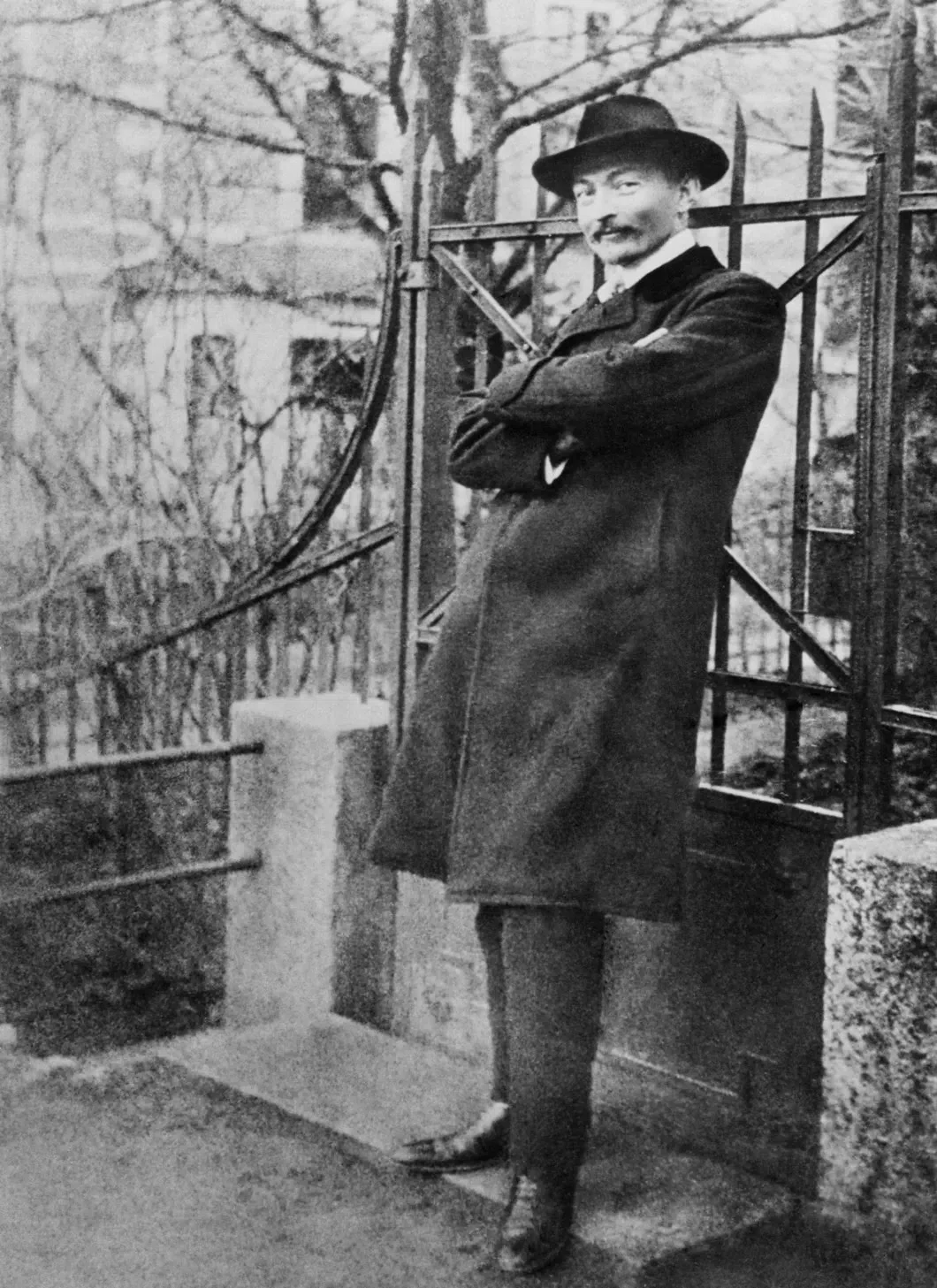
On April 3, 1801, Emperor Alexander I allowed free travel abroad. The Bolsheviks again forbade people to freely leave the country and return home - crossing the border only with the permission of the state security authorities. On June 6, 1920, the People's Commissariat of Foreign Affairs approved the instructions on foreign passports, which actually operated until 1991. The departure required the permission of the Chekists.
The confidence of the state apparatus is characteristic that if the Soviet person is allowed to go to the West, then he will definitely stay there! And if he begins to talk about the Soviet regime, then the worst is necessarily the worst.
In other words, from the very beginning, the leaders of the socialist state were aware that their subjects were ready to quit everything and flee? And that the Soviet person knows their price, hates and despises them themselves and their policy? Therefore, all decades of Soviet power, the state was carefully isolated from the outside world: not to let anyone in and not let anyone out.
The rector of Moscow University Biologist Mikhail Novikov addressed the Deputy People's Commissar of Education Mikhail Pokrovsky: why are teachers arrest one after another, why never happened in the history of Russia?
- You, as a biologist, should know how much blood and dirt happens at the birth of a person. And we give birth to a whole world, - followed the cold -blooded answer.
Novikov refused the post of rector of Moscow State University. On February 1, 1922, the university stopped classes.
Professors compiled a petition in the Council of People's Commissars:
“After the destruction of high school, the highest, almost devoid of material resources and cut off from world science. Provincial universities, who have served with honor of the people and science for decades, close or turn into secondary schools. The light of science is barely warming in the capital's universities ... We must decide on one of the two: either close higher educational institutions, or to directly and decisively finish with the former attitude towards higher schools and teachers. ”
Scandal! The delegation of the professors was adopted by Deputy Lenin Alexander Zurup. He promised them academic (that is, the highest category) rations. He invited people's commissars to a meeting of the Council of People's Commissars to find a common language. On behalf of university teachers, the dean of the Physics and Mathematics Faculty was held by Professor Vsevolod Stratonov. He ended the description of the provisions of the Higher School with the words:
“We are telling you directly and seriously.”
His words defeated Dzerzhinsky:
- So, you distinguish - “we” and “you”? So, you contrast yourself with the working and peasant power? I know that the professor was striking at the direction of Paris. You were deliberately forced to strike to interfere with the Soviet regime ...
Professor Stratonov calmly answered Dzerzhinsky that they did not receive any instructions from Paris, and this should be well known to Felix Edmundovich himself. And added:
- The People's Commissar of Internal Affairs fell upon me for the alleged contrast of “we” and “you”. But otherwise I could not put it. If, turning to the members of the Council of People's Commissars, I would say “we”, we would have thought that we suspect members of the government of the desire to become professors, while this career is hardly seducing them. Or one might think that we dream of becoming members of the Council of People's Commissars, while we are too modest to dream of such a career ...
There was a laughter in the hall.
Police house
In 1922, having visited Lenin in Gorki, Dzerzhinsky ordered methodically to collect information about the most noticeable representatives of the intelligentsia - from writers and doctors to engineers and agronomists. He ordered all the information to concentrate in the "Department for the Intelligentsia":
“There should be business for each intellectual. Each group and subgroup should be covered by comprehensive competent comrades ... Information should be checked from different sides so that our conclusion is unmistakable and irrevocably, which is still not due to the hurry and unilaterality of lighting. ”
In June 1922, the Politburo formed several commissions that were supposed to compile lists of those who should be sent abroad. In July, all proposals were reduced to the general list. The “unnecessary and undesirable” intelligentsia began to expel from the country.
The chairman of the All -Russian Union of Journalists, Mikhail Osorgin, was arrested after he entered the All -Russian Assistance Committee of the Hunger of the Volga region. The investigator asked him the usual question in those years:
- How do you feel about the Soviet regime?
“With surprise,” Osorgin answered, “the storm degenerated into the usual police house.”
In 1924, local state security authorities received an instruction:
“OGPU invites all Guboddel to be strictly guided by the following:
To prevent public execution for both on the stage and in the clubs of “new eccentric”, as they are usually called, dancing - foxtrot, shimmi, touched, and so on.
Similarly, the indicated dances should not be allowed at dance evenings in club and other spectacular enterprises.
Do not allow the named dances in operettes and other stage works. ”
Stalin against
Felix Edmundovich did not succeed in big politics. He never became a member of the Politburo, remained a candidate. Less authoritative in the party, people went around him on a career ladder. Lenin did not particularly complain to Dzerzhinsky and did not put forward in the first row.
In his youth, the doctor warned Felix that in three years he would die from tuberculosis. In the last years of his life, he was constantly observed by doctors. Together with his deputy Vyacheslav Menzhinsky, also a person is sick, they went to resorts to Crimea, to Kislovodsk. But the fatal for him was not tuberculosis, but a heart failure.
Felix Edmundovich became bad at the Plenum of the Central Committee on July 20, 1926, where he spoke, as always, passionately. Returning home, Dzerzhinsky lost consciousness and fell. They called the doctor. He made a injection of Campara. But this did not help. The creator of the State Security Department died of an attack, as they said then, a chest toad (angina pectoris). He was not even 49 years old.
6 years after the death of Felix Edmundovich, in November 1932, the new head of the Chekists Menzhinsky proposed to establish the Order of Dzerzhinsky on the 15th anniversary of the state security organs. Stalin wrote on paper: "Again." And five years later, on June 2, 1937, when the arrests of the highest command staff of the Red Army began, at an expanded meeting of the military council at the People’s Commissar of Defense, the leader shook the audience with an unexpected discovery:
- Dzerzhinsky voted for Trotsky, not only voted, but openly supported Trotsky under Lenin against Lenin. Do you know that? He was not a man who could remain passive in anything. It was a very active Trotskyist, and he wanted to raise the whole GPU to defend Trotsky. He did not succeed.
The hall listened with amazement.
If Felix Edmundovich still lived, the creator of the State Security department would also be shot - his own students?