Translated material
Furious, dissimilar, young
What theater needs a vague time and what to watch first
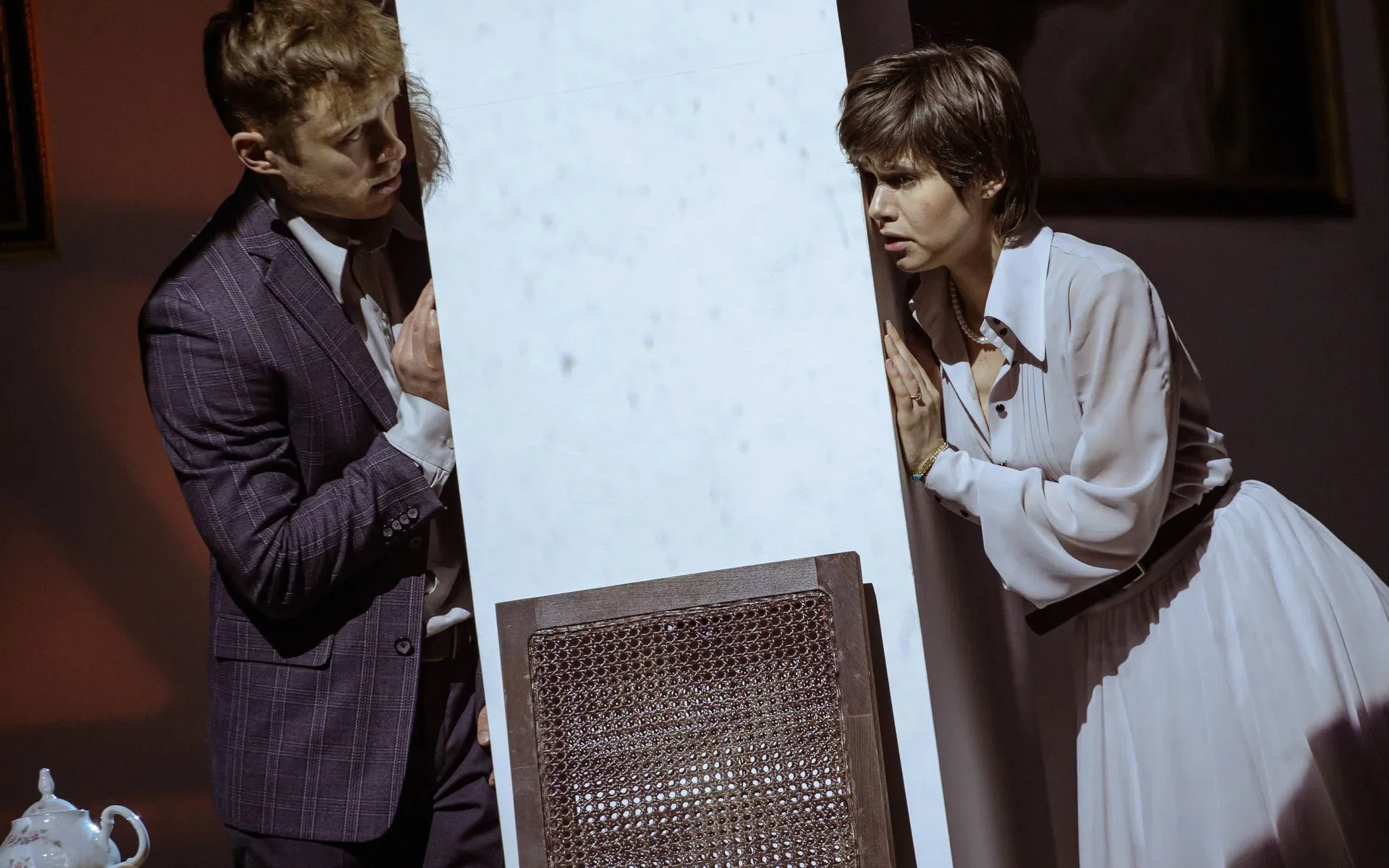
“Observers,” Mikhail Plutakhin called his first performance. He goes to the Museum of the History of the Gulag.
On the long table along the stage are things, objects. They were brought from the uranium mines of Kolyma and Chukotka, found in camp huts, on landfills, in ruins. Now they are participants in the performance.
Once upon a time, the Anthropologist Gerasimov recreated the appearance of our ancestors on the surviving bones of the skull, fragments extracted from the ground. “Observers” on the fragments of camp life, extracted from under the rubble of time, recreate their imprint of the past. The past that does not pass.
There is not a single word in the play. Only the silent movement of people dressed in robes, around the table, on which mugs, meat grinders, blanks for nesting dolls, hammer, shoes, tin. Typical objects. Witnesses. Before our eyes, starting to live in their post-life, gaining strength, from the level of life, turning into symbols.
A gray -haired kettle pours the fog of the past, a white blank is rolled up by a formidable monument, a wrench flies plaintively under a hammer, a weightless feather flies out of the vent of the meat grinder ... Rusty, severed, torn from mud and permafrosts, these things are humanized by genetic memory, their sound and movement of drama are already stanza. Sometimes naive, sometimes sophisticated, but the emerging, as Granin said, "water signs of authenticity."
It used to seem: when everyone who remembers the Soviet time, in whom the experience of suffering is alive, society will change, will change, be attended. But people working in the performance refute this.
They want to know how they lived whose bread and water was despair. They pull out gloves from the belt and treat objects in which it is encoded, as museum, but in their calm disciplined extension, the need to assign a story. But they are not assigned, but eternity.
The language of the performance is based on the poetry of a stingy gesture, the rigid mythology of things and - music. The Komon ensemble with a whistle, a stump, a harsh sound environment (rustles, hum, echoing tunnel, rail blows) will be involved in action.
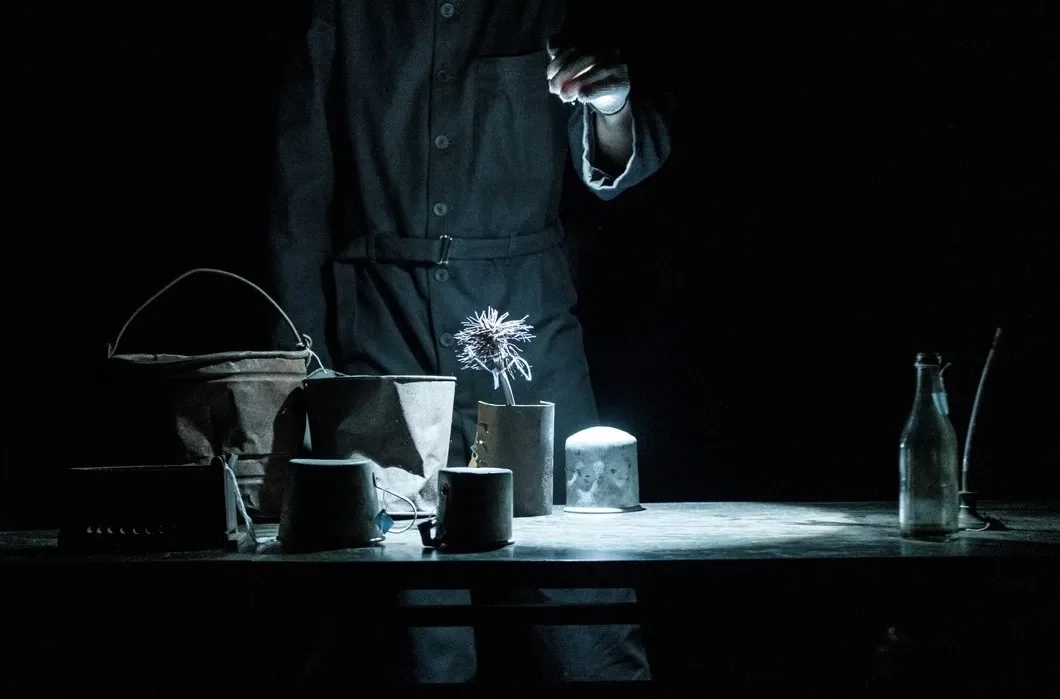
The performance speaks with the hall, by the way, very young, without a note of pathos. Pieces of wood and iron are powerfully narrative here. The wordlessness does not fake, but the intonation has what is happening: restrained.
The thirty -year -old debutant and his team created a quiet event.
... Above the dumps of the earth covering objects, two light spots tremble, like creatures from nowhere and leaving nowhere , with music .
"Kudryashi" are always good. And almost always unexpected. Professor Kudryashov knows a secret word. So this winter, the third -class exam in his workshop in GITIS has become theatrical joy.
Oleg Lvovich proposed to future actors/directors in the first semester to connect Gogol with Ionesko. Eight fantasies arose on the themes of a Russian fantastic realist and French absurdist. In my opinion, in the artistic result, Gogol “outplayed” Ionesko: “Viy”, “Dead Souls” and “Vladimir 111st degree”.
The charm of these works in the essay "Based" in the free sense of the nature of the author. &
... The story, how the hop of Homa knocks on an unfamiliar door, asking for an overnight stay, how the bent old woman is dragging him inside, washes in the trough, and then turns out to be a panel with which he, not understanding, in reality or in a dream, is drawn into a viscous, like honey, seduced seduction, is full of poetic eroticism. Denis Denis Paramonov.
Well, Chichikov at the very moment of happy calculations surround the dead souls. With your stories, classes, a terrible look. They are crowded, embarrassed by the vision of the suddenly arising inexorable bride - death (“Come, Pavel Ivanovich, it's time!”). In this work, as in a drop of water, the whole complex Gogol poem shimmers. The director Alexander Zolotovitsky .
He is also an exemplary son of a despotistical mother (Seraphim of Goshchan) in “Vladimir 111st degree”, a mysterious thing, outlined, but for sure. Prisoner Yaroslav Zhevner.
Eight unequal passages. The 3rd year exam for the first semester is only a project of the future. But - promising.
Nothing unites the recent premieres of young directors Hugo Erickssen, Denis Azarov and Anatoly Shuliev, except for acting, which in each case determine whether the performance took place.
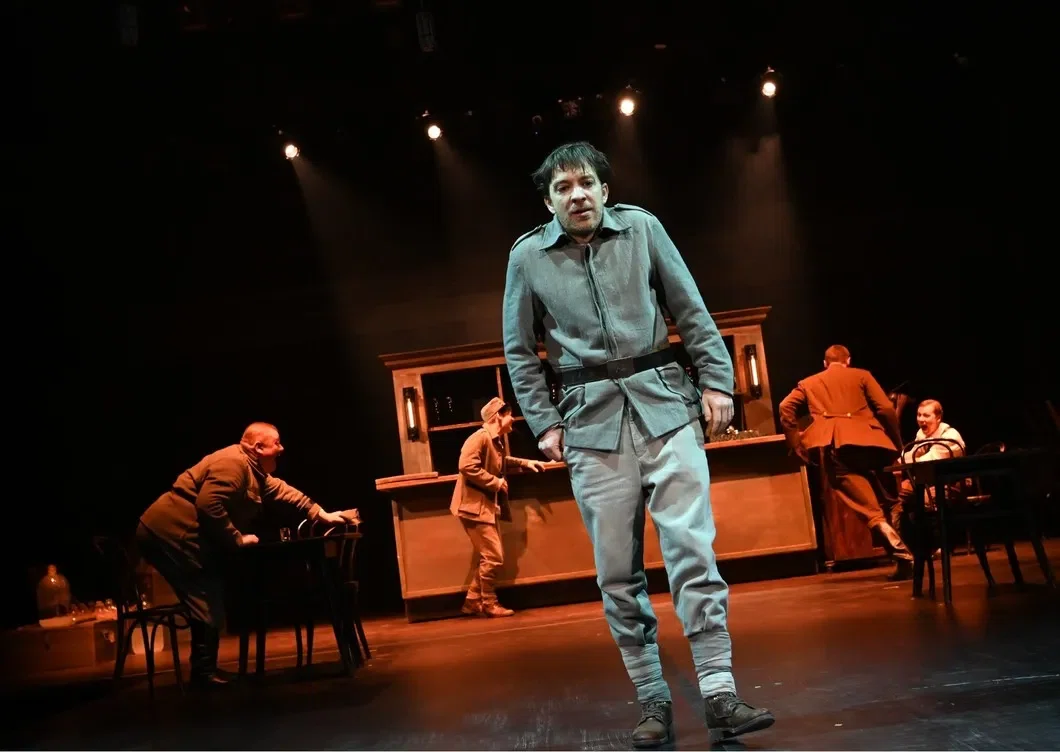
Erickssen on the new scene of the Vakhtangov Theater set the play “Wojutzek”. Wojutzeca, a “little man” with a big drama, is played by Maxim Sevrinovsky: dutifully lowered shoulders, humbly retained head, a quiet voice. An inconspicuous hero in a world infected with cruelty, a “screw”, on which people and circumstances are experimenting. But the "Window" has a rebellious soul. Sevrinovsky with his hero passes the path to her death - to murder. Serious work and serious acting range: from Shakespearean Richard to an unhappy ordinary.
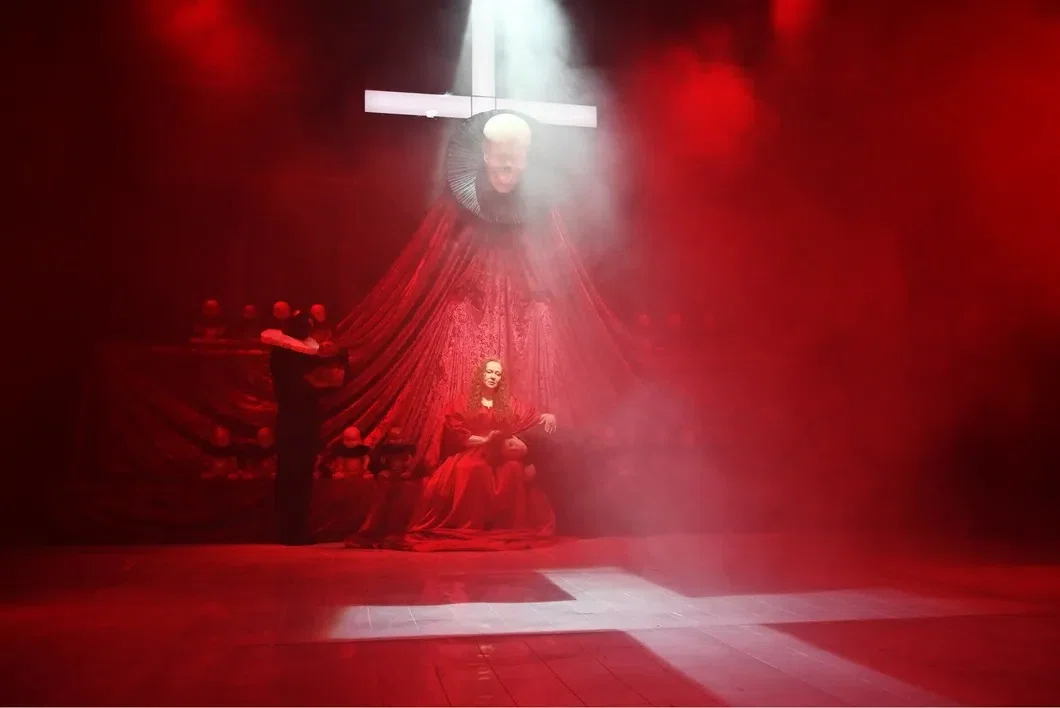
The little -known text of Alexei Shipenko “Garden” is a Gothic black plot: passion, wine, murder. Shipenko took into account the Latin American literary tradition in his play, creating a play for two, almost a monologue. It is pronounced by a white -skinned and red -haired, all the time pregnant, infanta Ines de Castro, Julia Aug.
And while Ines tells her story, her slightly suffocating voice changes shades: somnambulic statement, stoicism, irony, and triumph.
She will become a voice over her own relics, the spirit that she will see how the cervical vertebrae will break under the weight of the crown at the canonization ceremony, how the skull will ride on the floor of the cathedral, and King Pedro that loved it so much as his power.
Denis Azarov, the director of the performance, who goes in the Stanislavsky Electrotheater, largely repeats the long-standing techniques of Krzysztof Varlikovsky, puts on the scene of rubber navels, gives an ultrasound-projection of the uterus, in which the fetal’s life is spinning, and burns the actress with a large liner stomach. But the AUG in its inner system carries a certain self -sufficient energy. She holds the performance.
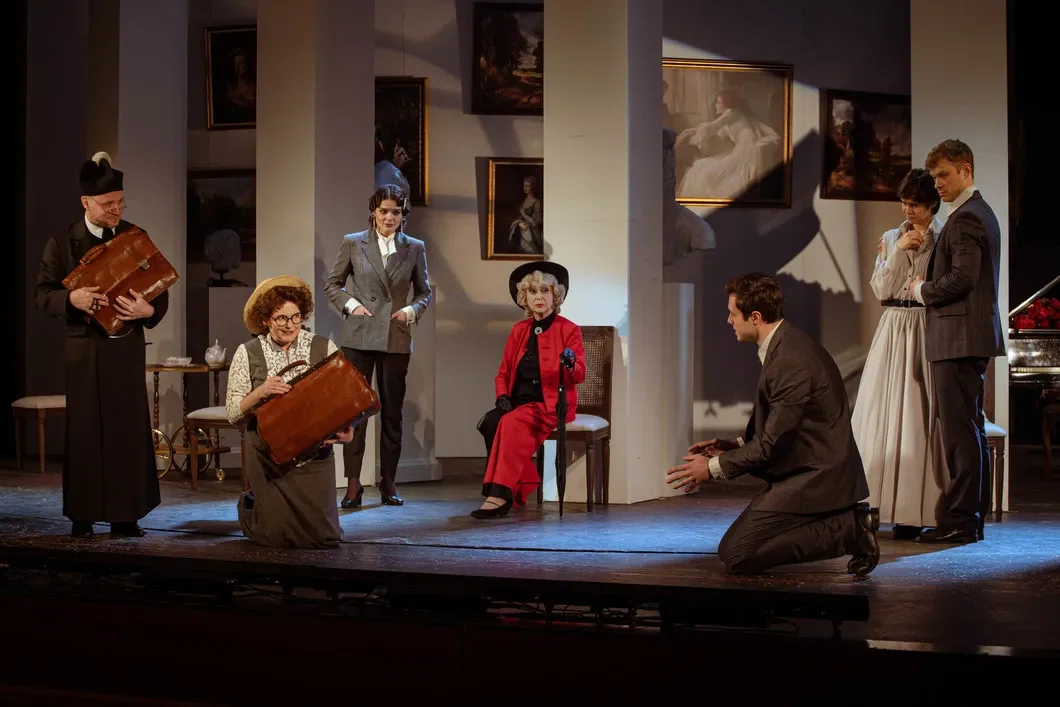
Anatoly Shuliev thought about the audience. This is not common with young directors. But, it seems, the director decided: in the fartial year, joy and good text are needed. I chose, it seemed, a win -win option - “how important it is to be serious” Oscar Wilde. And the second -plan character on the big stage of the Mayakovsky Theater went to the first. Svetlana Nemolyaeva, once legendary convincing in the role of the Conservative, with age became an elegant English lady, a festive-cynical aunt of both heroes. Her acting matte brilliance justifies the action in which young people have not yet enough comparable style and drive.