
Translated material
Sit down, "deuce"
Whether Navalny will be able to break the "Lomka mode"
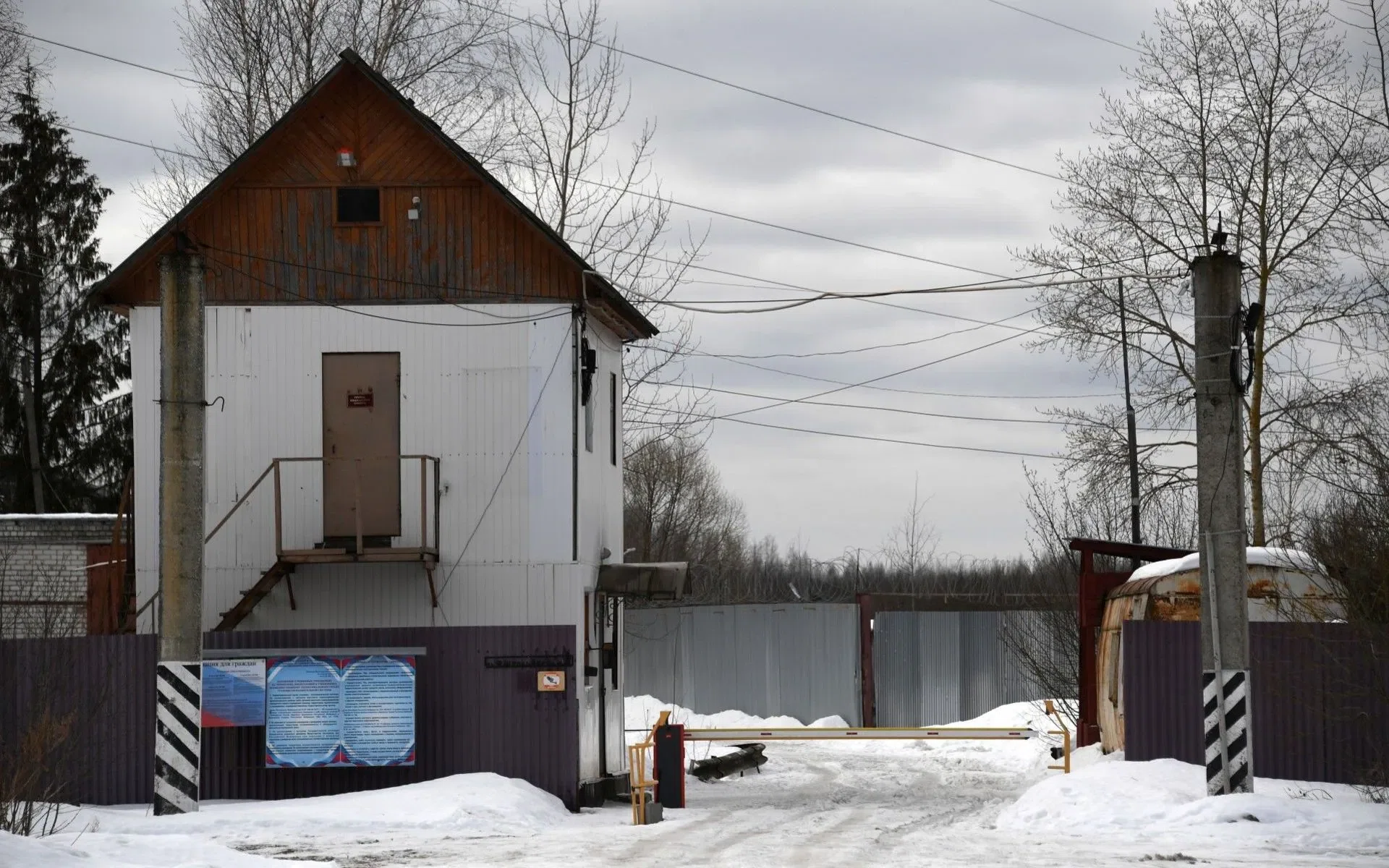
On February 25, Alexei Navalny was taken out of the Moscow Sailor Silence from the Moscow pre -trial detention center and sent to a correctional colony a sentence imposed by the court in the absurd case of Yves Rocher, under Article 159.4 of the Criminal Code, which is no longer in the Criminal Code of Russia.
On February 28, reliable information appeared that Navalny was delivered to a penal colony No. 2 in a small town of Pokrov in the Vladimir region. This was confirmed by the secretary of the Moscow Supervisory Commission Alexei Melnikov.
A huge number of publications appeared immediately about what IK-2 is. That this is only at first glance a common colony of general regime, in which there is a club, a library, and sports grounds, and even an Orthodox temple and a prayer room for Muslims. But according to the testimonies of those who had a chance to serve his sentence in this colony, this is not a very ordinary correctional institution. A
a colony, the whole way of life is “aimed at the complete destruction of a person”,
This is a “rigidly exemplary institution”, in which the “reputation of the breaking”, which the colony “rule the activists-prisoners who cooperate with the administration, they also participate in“ Slimka ”.
These are quotes from the memoirs of two famous prisoners who were serving a sentence “on a deuce” in the Vladimir region. Civil activist Konstantin Kotov, who was released on December 20, 2020 after almost a year and a half spent in the colony for violations of the legislation on the holding of public protests. And the ultra -right policy of Dmitry Demushkin, sentenced to 2.5 years in a colony under Part 1 of Art. 282 of the Criminal Code for the excitement of hatred in the form of a repost of photography from the "Russian march" in VKontakte.
The general message of all texts about the “deuce”: Navalny will “break”.
I have great doubts that this is generally possible to break Navalny. Hurry, this Navalny will “break the mode” IK-2. At the same time, relying exclusively on laws and legal norms. For example, for the Criminal Executive Code of Russia and the “internal regulations of correctional institutions”, approved by order No. 295 of the Ministry of Justice of the Russian Federation of December 16, 2016
In these rules, which in the colonies are commonly called the PVR, 199 points. And in them the whole way of life of prisoners is spelled out in detail. Even such obvious things are not bypassed as a ban on “without the permission of the administration of the IU to climb the roofs of buildings, workshops, buildings and other IU structures” or the ban “use obscene and jargon words, give, assign and use nicknames in relation to people”.
And there is also paragraph 15 in the PVR, which states: “When convicts of their rights, the administration of the IU should not be violated by the procedure and conditions for serving sentences, as well as the rights and legitimate interests of the convicts.”
And this item, if you know it and skillfully use it, makes it impossible, for example, many hours of aimless standing on the street, which many former prisoners who were serving a sentence in IK-2 recall.
This standing on the street is impossible even by the “schedule of the Day of Convicts”, approved by the head of the colony and hung in all prominent places. In the schedule, absolutely everything is painted: lifting, charging, washing, educational work, personal time. And in the routine there is no standing on the street. Well, perhaps, suppose this is “educational work” - but this event also has a strictly allotted time. And any deviation from the “daily routine” is a de facto failure to comply with the order of the head of the colony and ignore the order of the Minister of Justice (because the standard routine is approved at the federal level by the Minister of Justice).
The PVR and "activists" are not provided, which are actively involved when someone "breaks". The PVR does not at all provide for the division of convicts into ordinary and "better ones." According to the PHC and the PVR, all prisoners have the same rights and obligations. And there is no, for example, the requirements to get up at each appearance of an “activist” next to you, as is practiced in IK-2.
The main problem of IK-2, like all the colonies of Russia, is that few people know these same “internal rules”. Not only convicts do not know them. Employees do not know them either.
When I was serving a sentence in Mendeleev’s “Ten” under Art. 282 of the Criminal Code of the Russian Federation “For inciting social growth” in relation to the social group “Representatives of the authorities”, the PVR literally learned by heart, while still on quarantine. And later he often focused on the colony officers.
For example, at 22.00 on the “Sprinking of the Day” was the hunger. Exactly at 22.00 I went to sleep. Somewhere at midnight, and even later, I woke me up, I obediently went to the construction, but I necessarily asked the employee a question:
- Tell me, please, I correctly understood that the head of the colony, Colonel Garipov, canceled his order on the approval of the “daily routine”, which is provided at 21.30? And appointed a new time to check? The fact is that, in accordance with paragraph 15 of the PVR, I am obliged to “observe the daily routine installed in the IU”, but now I do not fulfill it ...
As a rule, the employee was lost and immediately dissolved the system.
Employees flowed into a greater stupor when they demanded something from me, not provided for by the PEC and the PVR, for example, to go at night, after the end, to clear the snow, and met me.
- Do you refuse to fulfill the requirement? - the employee asked me sternly.
And I answered:
-Sorry, but according to paragraph 16 of the PVR, the convict is obliged to "comply with the legal requirements of employees of the penal system." The keyword is legal. And your requirement to violate the “daily routine”, approved by the head of the colony, is obviously illegal.
Of course, after each such incident, I transferred an appeal to the special unit in the name of the prosecutor for supervision, the Commissioner for Human Rights and Director of the Federal Penitentiary Service.
At first, they were simply not registered or sent to the addressees. But every week a lawyer came to me. And I dictated my complaints to him. And they had to react to them.
Of course, all this was greatly nervous by the leadership of the colony. And I was sent four times to the penalty area. But each time, finding myself in a schizo, I announced a hunger strike, realizing that I would hold out for seven or even ten days. And after three days of hunger strike, the administration is already obliged to report this to the regional department of the FSIN. And it always happened that already on the second or third day of the hunger strike, information appeared in the press.
My confrontation with the administration ended with the fact that I was simply kicked out of the colony.
By parole. This is that the court session, which was held in the premises of educational work, was brought from the penalty isolator. In my personal file, eight reprimands were recorded, four schizo, red and blue stripes, as a colony prone to escape and disorganization.
I have no doubt that Alexey Navalny will also learn both the WIK and the internal regulations. And this will not be broken, but he will break the “breaking mode”, which operates in the IK-2 of the Vladimir region.