
Translated material
Prisoner of the castle IR
What can wait for Alexei Navalny in the colony of the city of Pokrov, which former prisoners recall with a shudder

Alexei Navalny will serve his sentence in the Yves Rocher case in a penal colony No. 2 of the city of Pokrov of the Vladimir Region - on Saturday, the edition of Yarnovosti reported with reference to a source in the Federal Penitentiary Service, later this information was confirmed by TASS, citing his source in the department. Given the time spent under house arrest, Navalny will sit in this colony for 2.5 years.
Earlier, Nationalist Dmitry Demushkin served in IK-2 (he was convicted in 2017 by 2.5 years for a picture posted in VKontakte, which was seen by extremism) and Moscow activist Konstantin Kotov, convicted in 2019 under the “Dadinsky article”.
Former prisoners call the IK-2 “completely regime colony”, in which the prisoners are isolated from the outside world and from which it is almost impossible to get out of parole, and each action is controlled by the administration and the convicts with it. In addition, beatings are apparently practicing in IK-2.
The correspondent of Novaya and the Novye knew that it could wait for Alexei Navalny in the colony.
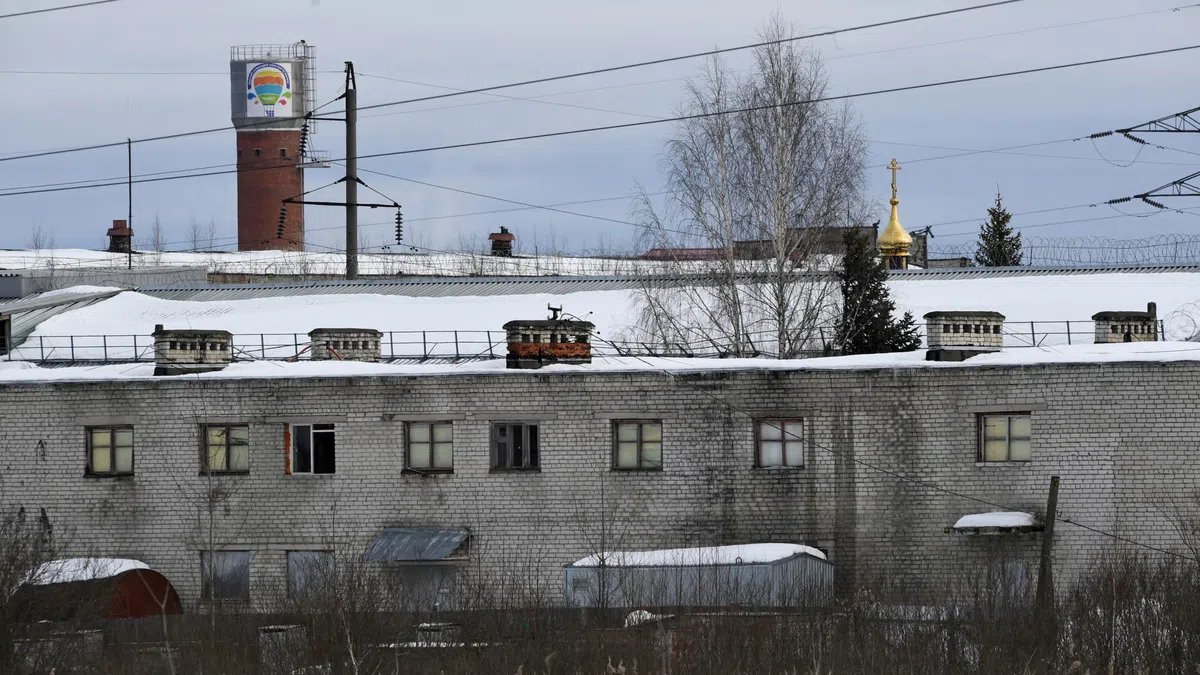
IK-2 is a general regime colony. The limit of its filling is 794 places. Such colonies contain for the first time convicts who have received a term for serious crimes. But they can be directed there for crimes of small or medium severity, if the court decides that it is impossible to send the convicted person to the colony-settlement. In addition to the main regime inside the IR, there are different conditions for serving a sentence.
A person, entering the colony, is sent to ordinary conditions: he lives in a hostel (in IK-2 these are two-story buildings made of gray brick), sleeps in a two-tier bed, has the right to 6 short-term (four hours) and 4 long-term (three days) dates during the year, 6 parcels and 6 parcel from their will. It can spend every month on products and basic necessities of 9,000 rubles from their personal accounts, as well as their entire pension and salary (by the way, in Russia, the average salary of the prisoner for 2018 was from 4.8 to 5 thousand rubles, while the annual amount of work performed in monetary equivalent was at least 30 billion rubles). In the absence of penalties for violations of the rules after nine months of imprisonment, the IR administration can transfer the concluded from ordinary conditions into lightweight (more dates, more parcels, you can spend an unlimited amount of money a month, and six months before the end of the deadline you can even get the permission of the head of the colony outside the IR and the family).
In strict conditions, prisoners “recognized by malicious violators of the established procedure for serving the sentence” (Article 122 of the Criminal Executive Code) are found. Such prisoners live the worst of all: they are settled “in the locked rooms”, they have the right to daily hour and a half walk, three short -term and three long dates, three parcels and three parcels from will per year, and in addition to pension and salaries, they can spend 7,800 rubles from their accounts. In the Pokrovskaya IK-2 10 detachments of the usual conditions of content, one lightweight and one are strict conditions of content. At the same time, according to reports replicated by Russia 1, prisoners can “receive a higher and secondary vocational education on a paid basis in IK-2,“ Orthodox Church and a Prayer Room for Muslims ”operate on the territory of the colony, a bathhouse works, and the" Club, Library, Sports Party and the Room of Educational Work "work.
In general, not a colony, but a sanatorium.
According to Konstantin Kotov, in fact, despite the fact that IK-2 is a colony of general regime, “real conditions there are quite strict”:
Konstantin Kotov, former political prisoner:
“The administration controls everything in the colony. Each step of the convict is known, she completely controls everything. ”
At the same time, the IK-2 administration carries out control over the actions of prisoners “mainly by the hands of the prisoners themselves”:
Kotov - About surveillance in IK-2 :
“In each detachment, there are convicts, cooperating with the administration, the so -called asset, in expansion they are called goats. This is the so -called manager, which actually controls the life of the entire detachment, and the day. They were constantly next to me and told the administration about every step: what letters I read, which newspapers come to me. When I was in the hut of an enhanced regime, I had to write letters under the control of the day. They sat next to me, gave me writing accessories, and I wrote right under their supervision. ”
The hands of this “asset”, according to Kotov, the IK-2 administration also carries out physical violence against the prisoners:
Kotov-about physical violence in IK-2:
“I personally did not experience it myself, but for other prisoners, for example, if they were guilty of something, even violated the internal schedule even in a small attitude, they apply physical impact to them. The prisoners beat the heels with the legs from the stool. This is a common method of punishment. Activists do this for their facilitated conditions. Activists, for example, can wash in the shower, and we, ordinary convicts, went only once a week to the bathhouse. And other privileges are given to them: additional dates, additional transfers. ”
But the main privilege that is given to the “asset” is “to be the first in line for parole”:
Kotov-about the system of encouraging informers in IK-2:
“For everyone else, this is a big problem. In my memory, not a single person came out precisely by law. That is, if you cooperate with the administration, you can really count on conditionally early release. Otherwise, they do not even allow you to write a petition for parole, they just forbid you to do it. ”
In addition to the physical impact and manipulation of prisoners, using the U -Cots, distinguishes other pressure methods that the colony administration uses.
Kotov-about other means of pressure methods on prisoners in IK-2:
“I was reprimanded for minor violations of the internal rules, because I did not say hello to the employee for the fact that the other prisoner had borrowed gloves when I froze on the street. Still, despite the fact that everything is supposedly according to the law, according to the regime, in the colony there are the so -called corner - concluded low social status, which perform all the dirty work that eat separately. Such outcasts are actually. And they threatened me that I would get into this caste "
(Obviously, Konstantin speaks of prisoners entering into homosexual relations with other prisoners in a passive role, the so -called “lowered”. - A. R. ).
According to the activist, the colony administration tried in every possible way to isolate it:
Kotov - about how he was isolated from other prisoners:
“I was forbidden to talk to other prisoners under the threat of various sanctions. In the detachment, sometimes up to sixty people were. I go to a person, I ask you to do something, and he does not say anything to me. And so most of my term went on. This is also such a way of influence. Days, weeks you do not talk to anyone, and then you are called in the operational department and a friendly tone ask various questions about life, about the family, about criminal record. They asked me why I went to these pickets, why I did not live calmly. They asked about Navalny, about how I relate to him "
(As Dmitry Demushkin told Mediazone, in the colony he was immediately asked how he relates to Vladimir Putin. - A. R. ).
The prisoners are isolated in IK-2, not only depriving the opportunity to talk with other convicts, but also stopping their contacts with the outside world. For example, according to Kotov, IK-2 differs from other colonies in that it “doesn’t get the phone in it, even the simplest SIM card will not fall into these places.” As Dmitry Demushkin said, in IK-2 he was deprived of dates and programs, his lawyer was allowed only twice in the colony, and he had to communicate with him through the glass under the supervision of employees. In addition, Demushkin was allowed to write letters only 15 minutes a week, and only single letters from relatives came from the will. Kotov tells similar things:
Kotov - On the restriction of meetings with lawyers:
“They are trying to keep people in maximum isolation so that the outside world does not know what was happening there. My lawyer came to me almost every two weeks, and they really did not like it (according to the lawyer Kotov Maria Aismont, she “waited five to six hours, even when she was recorded in advance.”- A. R. ). Employees of the operational department spoke with me repeatedly, and asked me not to meet a lawyer, so that he would come to me as little as possible. ”
It is not very clear why all these attractions like a library and a club were built in the colony - the convicts simply do not have time for them. This is what the day in IK-2 looks like, according to Kotov:
Kotov-about life in IK-2:
“The rise of everyone at 6 in the morning, a call is heard, everyone gets up quickly, dresses and immediately run to the local sector. This is such an open space next to the room where the detachment is located, where everyone gets up, listen to the anthem and exercises for five minutes. After that, everyone washes, go to breakfast with the whole detachment, and then they stand for about an hour on the street and wait until the employee recounts them. Next, various regime events begin. Those who work go to the industrial zone. There are two such zones in this camp. There is sewing production, woodworking, paint production.
Those who do not work are watching TV all day. When I was in the sixth detachment, there were mainly people with health problems that do not work. We watched TV all day, either various lectures on the rules of the internal routine, according to the norms of legislation, or federal television channels.
You can’t sleep - they wake up. Hell at 10 pm, before the hitch is given an hour of personal time_. _ And only at this personal time can be read, responding to letters, at any other time it is forbidden. ”
Separately, it is worth saying about the "prayer room for Muslims" in IK-2. According to Kotov, in the colony “There are a lot of Muslims from Dagestan, from Ingushetia”, and they “actually forbid them to conduct their religious rites”:
Kotov-about religion in IK-2:
“Muslims are forbidden to make prayers, it is forbidden to pray. In the prayer room, garbage was stored with me. And at the same time, the Orthodox are allowed to go to church, a priest comes there. ”