
Translated material
"All -mocking talent"
160 years ago Emperor Alexander II canceled serfdom in Russia
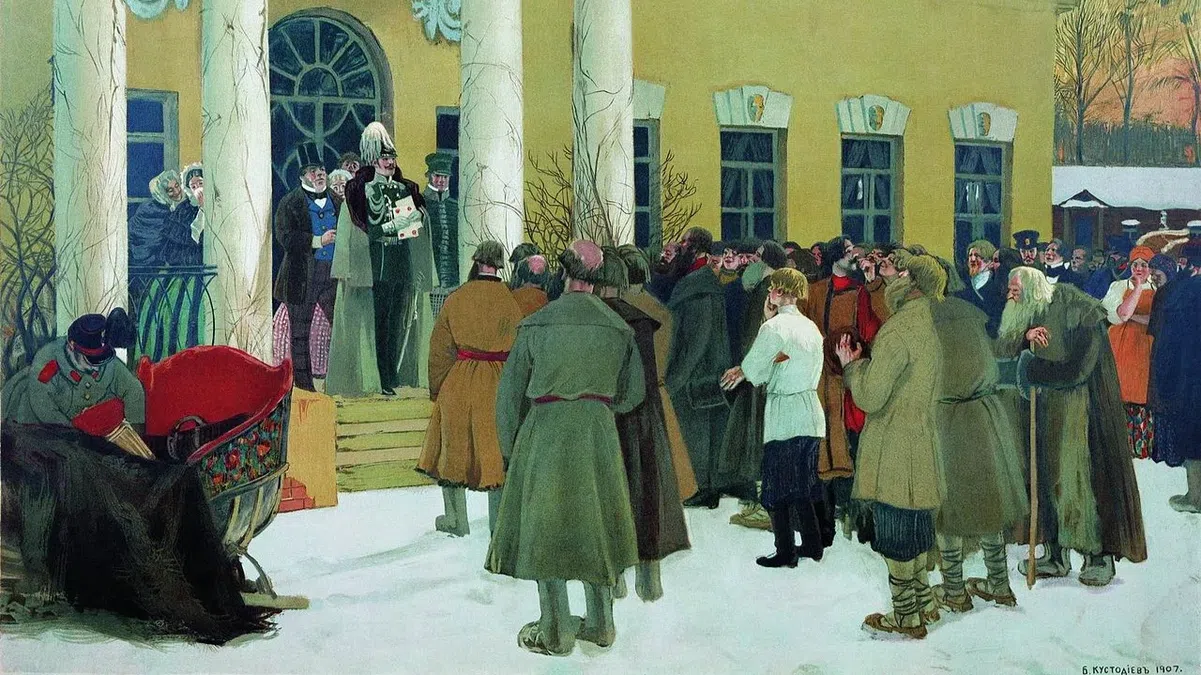
The mysterious monument on Fontanka 132, the St. Petersburg wits christened the void with the monument. Or-invisible person. On a granite pedestal, surrounded by heavy chains, there is no artifact itself itself. Meanwhile, on March 3, Petersburgers gathered here, who laid flowers on the pedestal. Why they called him a “monument of freedom,” explains the local historian Evgeny Baklagin.
-Not so long ago, someone attached a sheet to the fence: “At this place there was a bust of Emperor Alexander II, created by Academician N.I. Lavretsky. The monument was opened on February 19 ( March 3 in a new style. - L. Z. ) 1893 in front of the facade of the hospital, the founder of which was also the emperor. It is not said, however, that the monument was opened on the 32nd anniversary of the great date for our country-the abolition of serfdom. It was on this day of 1861 that Emperor Alexander II signed the manifesto "On the most mocking granting to serfdom, the rights of the state of free rural inhabitants."
- What is the fate of the monument?
- A bust of Alexander II, like the upper part of the pedestal, was dismantled in 1931. Only a base and a fence with a massive cast -iron chain survived to our time. As for the hospital, in 1985 she moved to a building specially built for her on Solidarity Avenue. Moreover, after moving, she was again called Alexandrovskaya. And in the old building on Fontanka today there is a psychiatric hospital No. 5.
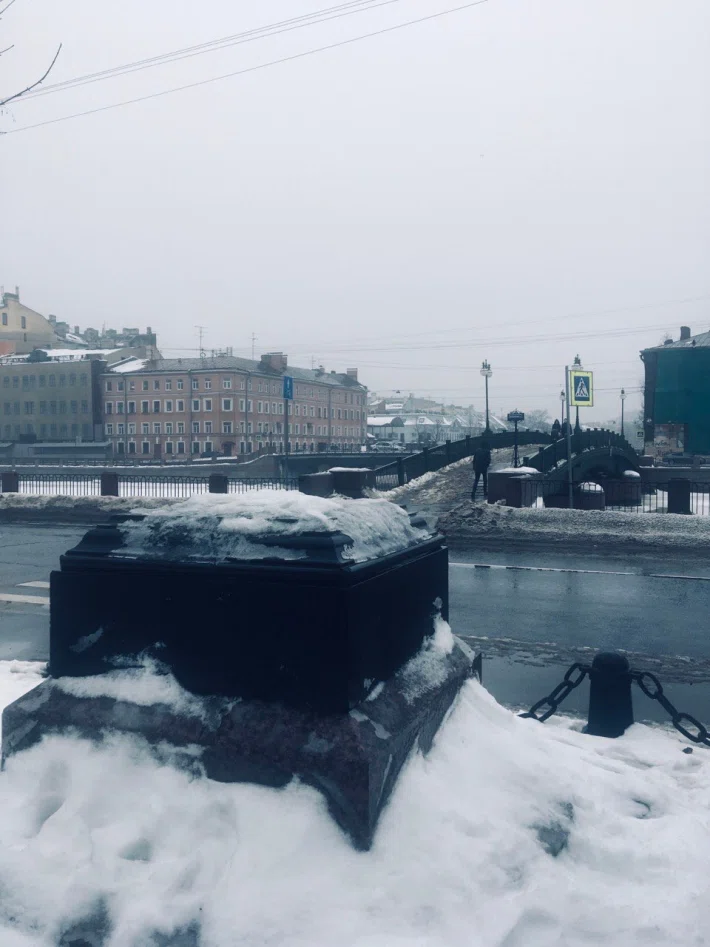
Peasant reform, the meaning of which is difficult to overestimate, is almost forgotten. The abolition of serfdom put power to the need to continue reforms: zemstvo, judicial, military. This was a thorough reconstruction of all spheres of life of the country, which ensured the Russian Empire by violent economic growth in the late XIX and early XX centuries. At the same time, the dream of the best representatives of the nobility, the Russian intelligentsia about a fair life management, was embodied.
Although there were many questions to the reform itself. The main one is land. The landowner peasants, unlike the state, were freed without land, they had to redeem it, which led to the ruin of many peasant farms. Their fate - and they were about half of the number of peasantry - is unenviable.
The state were obliged to pay a fixed tax to the treasury and did not depend on the arbitrariness of the landowners. They could freely move around the province, even beyond its borders, however, with the permission of the trim.
According to the manifesto, each peasant - the head of the family - was provided not only by freedom, but also by a small land allotment, which he could continue to cultivate. But the former landowner serfdom was not provided. Many, having received free, finally ruined, were submitted to the cities, replenishing the working class.
- It turns out that the manifesto created the prerequisites for the origin of civil society in the Russian Empire.
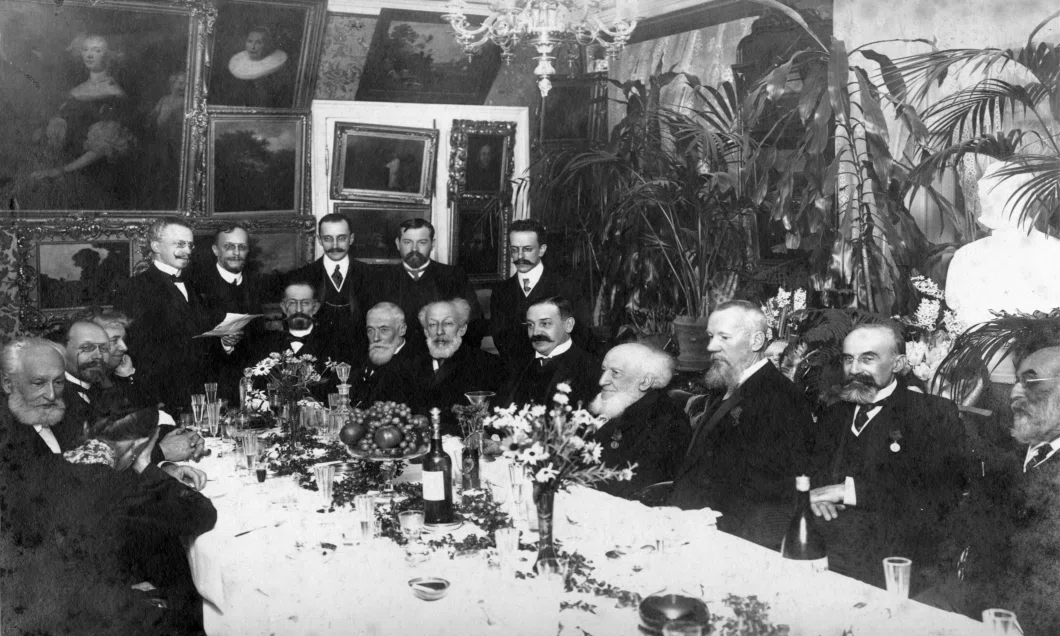
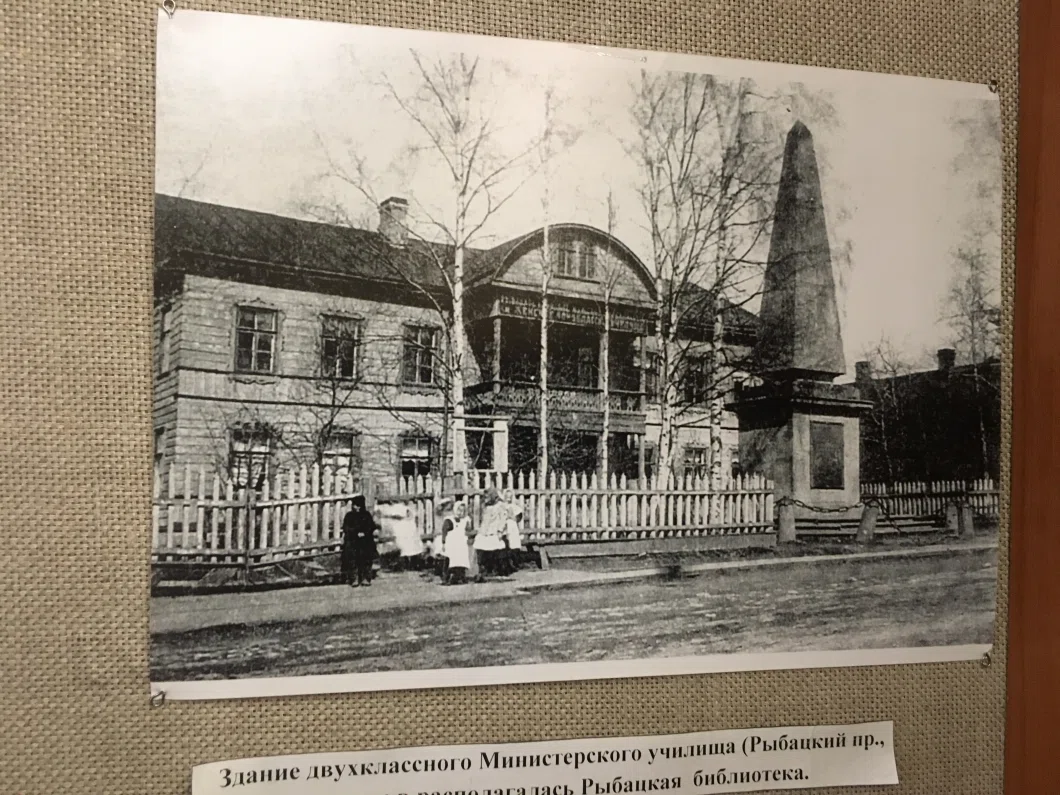
- The current St. Petersburg microdistrict Rybatskoye was called from the village, which has been in this place since 1716. The reform provided former serfs with full civil legal capacity. People got to their feet, their well -being increased, there was a need for education. In 1900, the residents of Rybatsky founded "a society of remembrance of the needy students of the schools of the village of Rybatsky." It helped poor students, paid scholarships capable of school graduates who wanted to continue education. And if in the first year there were only two scholarships, then by 1914-already 10 people.
At the expense of society in Rybatsky, the first reader library was opened. “When everything necessary for the actions of the reading library was done, the rule convened an emergency general meeting on December 24, 1904, at which after asking the Lord the blessing to the intended business and the opening of the fishing library in the test of an unprecedented and great for the Russian people of the day on February 19, 1861.” Here is the attitude of contemporaries to this date. By the way, residents of the surrounding villages of Ust-Izhora, Murzinki, Ust-Slavyanka also used the library. This is a model of quite mature folk self -government, that is, civil society.
- Is the library alive today?
- The historical wooden building did not survive. But the successor became the current fishing library No. 6. By the way, on February 27, a meeting was held in its walls on the topic of peasant reform, and the descendants of Peter Petrovich Semenov-Tyan-Shansky were her guests.
-And what is the attitude of the Russian scientist, the state and public figure, the vice-chairman of the imperial Russian geographical society had to great reform?
- The most direct. Pyotr Petrovich was a member of the editorial commissions as a member of the expert and, in addition, was appointed manager of commissions. The chairman of the commissions was Yakov Ivanovich Rostovtsev, it was created by decree of Alexander II in March 1859 to consider numerous projects submitted by the provincial representatives, and the final preparation of the draft peasant reform.
Editorial commissions worked days and nights. The situation in all provinces was analyzed, data was collected, and statistics were formed. There were disputes about whether to provide peasants with land allotments or not. Semenov-Tyan-Shansky managed to convince Rostovtsev, with whom they were familiar even before the creation of the editorial commissions that the landless release of peasants was impossible. And he convinced the sovereign of this, being his teacher and friend. As a result, it was decided to oblige the landlords to provide the peasants with “manor settings” (house plot) and field allotment to the rural society (community) for ransom for the use of the peasants. The state, in turn, on preferential conditions, provided the landowners with financial guarantees of redeeming payments (redemption operation), accepting their payment. Subsequently, these payments were made for 50 years. The reformers were able to go between Scylla and Haribda, that is, to observe the necessary balance of interests of the two main classes of the state: landowners and peasants.
For years, Pyotr Petrovich Semenov-Tyan-Shansky considered the liberation of the peasants the main work of his life, despite the fact that he committed great things for Russia to benefit Russia in his lifetime. And, indeed, the reform was and still remains the great victory of Russia not over the external enemy, but over its own inertness and conservatism.
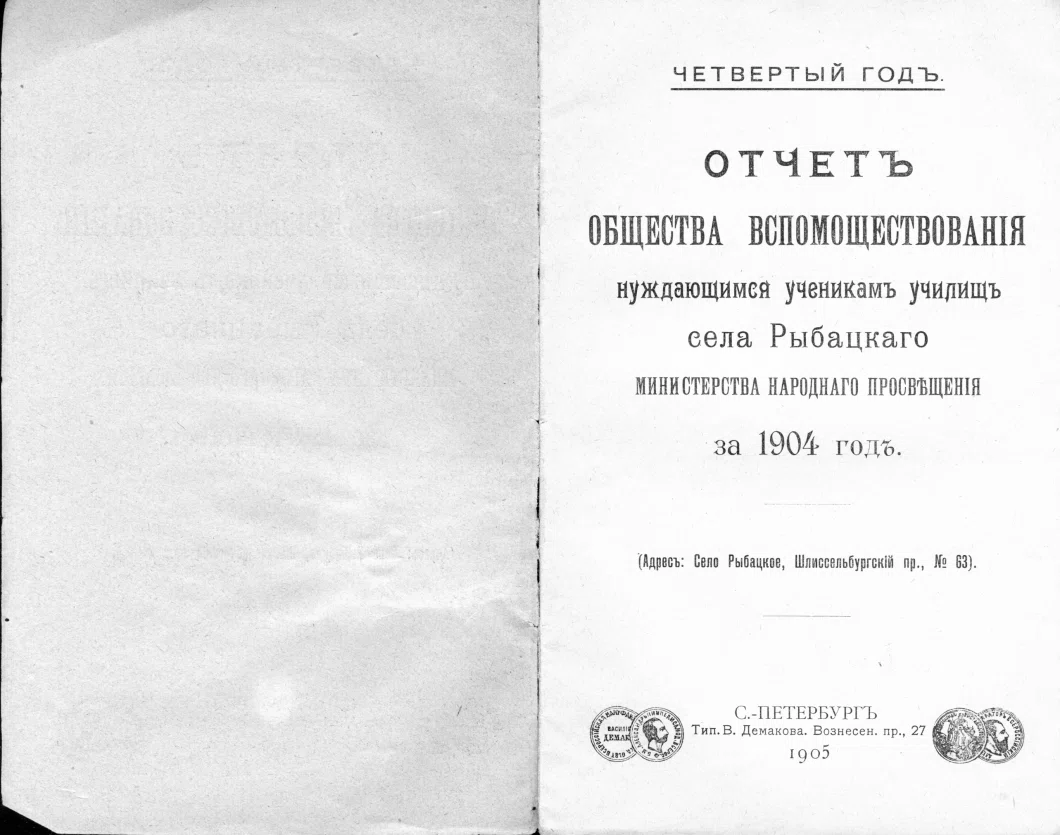
Participants in the preparation of the reform annually gathered on February 19 for a “glass of champagne” - as they called their meetings in memory of the great day of the announcement of the highest manifesto. In 1911-on the day of the fiftieth anniversary of the peasant reform-Semenov-Tyan-Shansky, as an elderly person, he invited the children and grandchildren of his already departed associates to his apartment on the 8th line of the Vasilyevsky Island. A photograph of this memorable lunch has been preserved. The half -century anniversary of the reform was widely celebrated on the territory of the entire Russian Empire. On this day, Peter Petrovich was awarded the highest order of Russia - the Order of St. Andrew the First -Called.
And today, in my opinion, the great reform, which gave freedom to the Russian people, want to forget.
Let's see what from the monuments associated with the peasant reform is preserved in St. Petersburg. The Temple of the Savior on the Blood, on which there is a stone table with a quote from the manifesto about the liberation of the peasants, the farm Palace in Peterhof is the summer residence of the emperor, where the situation of the blue cabinet was recreated, in which the sovereign held meetings of the country's reforming committees.
On the 50th anniversary of the abolition of serfdom on the 22nd line of the Vasilievsky Island, a city school house was built. In 1946, the building was transferred to the Faculty of Law of St. Petersburg State University. Only a memorial plaque with a quote from the manifesto about the liberation of peasants resembles the initial purpose of the building. But why and under what circumstances the board appeared on the building, most students and Petersburgers are unknown.
On Tambovskaya Street, 16, there was a "Passionate Society in memory of February 19, 1861." The church at the school was consecrated on February 19, 1904 with the participation of John of Kronstadt. In May 2009, the "House of Veterans" moved here. In the lobby, instead of a bust of Alexander II, a bust of Marshal Zhukov was installed.
The memory of the events of 160 years ago in the Menshikovsky Palace (First Cadet Corps), in which meetings of the same editorial commission, took place from 1859 to 1861, has not been preserved. Finally, DC to them. Tsuryups on the embankment of the Obvodny Canal, 181. As I recently found out, the house of educational institutions in memory of February 19, 1861 was built here (1911-1912).
- At about the same time - in 1865 - the United States abolished slavery on its territory. And President Abraham Lincoln and Alexander II, as you know, were in a friendly correspondence.
- For the United States, the abolition of slavery is still a subject of national pride.
Every year on February 1, Americans celebrate the national day of freedom when President Lincoln introduced the 13th amendment to the abolition of slavery to the US Constitution. So March 3 can and should become the same holiday for us. Why do not we want to appreciate our historical victories, honor our heroes, our story? People who today brought flowers to the place where the monument to the king-liberator on the Fontanka stood, see not a void on an abandoned pedestal, but the image of folk freedom.