
Translated material
Will they take Russia to the future?
Economics and demography as burial grounds of the political regime
Looking back at the last 20 years of the latest Russian history, you can see what will happen to the country in the next two decades. This is my statement, of course, requires argumentation. I'll try to state it.
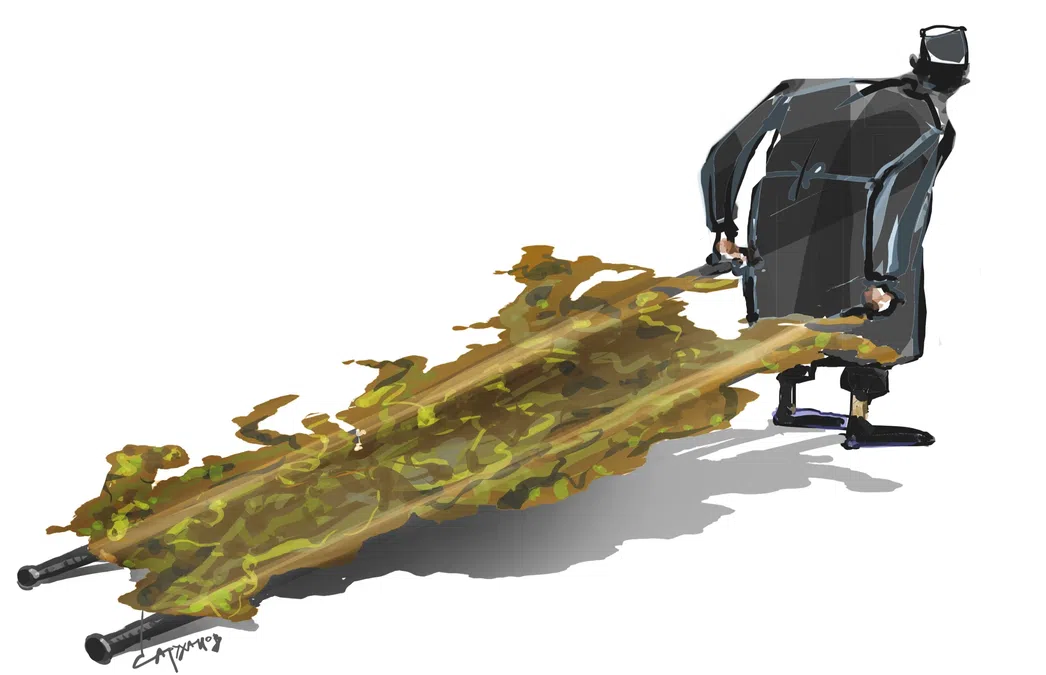
A retrospective look
After the economic and social collapse of the 90s in the 2000s, an unprecedented period of improvement of the level of welfare came for Russia. For 2000–2007 Real income per capita has increased by an average of almost 2.4 times. At the same time, Gini, which shows the scale of the stratification, increased from 0.395 in 2000 to only 0.429 in 2008. This means that all groups of the population began to live significantly better, and not just the richest. The proof of this was the consumer and credit boom, which was observed in these years.
And what is important - people believed that such an encouraging dynamics of improving their material life - for a long time, if not forever. This is evident by a change in such an indicator as the total birth rate. In the late 90s in Russia, he sank to a historical minimum-1.16 births, and by 2010 rose to almost 1.6 births.
REFERENCE
The total fertility coefficient - how much one woman would give birth on average throughout the reproductive period (that is, from 15 to 50 years) while maintaining at each age the birth rate of the year for which the indicator is calculated regardless of mortality and changes in the age composition.
It is clear that all this grace occurred only due to an avalanche-like increase in export prices for Russian raw materials. If in January 2000 Brent oil cost $ 25 per barrel, then in July 2008 it reached $ 134.
Russia received additionally almost trillion dollars, part (despite corruption and extreme inefficiency of public administration) reached the broad masses of people.
Such inconsistency - a tangible increase in living standards on the basis of a very unstable and unreliable economic foundation - largely laid the foundations of the political state in which modern Russian society is located.
After an unprecedented jump of welfare in 2000-2007. The period of slowdown came: in 2008–2013. The increase was only 22%. And then, since 2014, the real incomes of the population became steadily (with the exception of purely symbolic growth of 0.1% in 2018 and 2019) to fall.
As a result, this recession for 2014–2020. amounted to more than 11%. This, of course, is an unpleasant fact for many families - after all, very serious industry and regional differences are hidden behind the average numbers. But, if you look wider, then 11% of the fall against the background of an almost 3-fold increase in 2000–2013. It looks like a very small trouble. In the public consciousness, this is expressed in the fact that
Firstly, for their mass, people still do not feel the catastrophicity of their financial situation
Secondly, they retain the subconscious hope that those-fertile-times will return without any shock.
It’s just that Vladimir Vladimirovich, together with Mikhail Vladimirovich, will finally put things in order - and everything will turn for the better.
Such an attitude that many prefer, embarrassed not to talk about, is publicly common among people of senior and partially middle -aged, for whom “stability” is more important than incomprehensible and risky “changes”, especially reforms. This creates a rather serious “airbag” for Vladimir Putin.
Such a “pillow” is insured by solid state financial reserves accumulated, despite the already 10-year actual stagnation of the Russian economy (average annual GDP growth rates for 2011–2020-less than 1%). It is about
The National Welfare Fund, which over the past covid year has increased by almost 2 times (largely due to the weakening of the ruble) and reached 13 trillion rubles,
very solid gold and foreign exchange reserves (almost $ 600 billion),
The extremely low sovereign debt (only 19% of Russia's GDP), which allows you to confidently borrow.
All these resources are saved on a “rainy day”, which did not come according to the authorities last year in connection with the Pandemia of the Coronavirus, when the population and small business were provided with very modest support.
Of these “bins of the Motherland”, money will be very dosed and addressed to the most problematic social points on the eve of important political events, for example, national elections, and/or in the event of open protests, as happened in 2004-2005. During "Monetization of benefits."
And if you add to this the growing state repressiveness in relation to almost any not even political, but simply activist movement, then
The retrospective picture from March 2021 looks quite simple: the current power is stable and will be unshakable for more than one year, and maybe until 2036.
For someone, this conclusion is a source of optimism, and someone, on the contrary, should be very upset.
But at the beginning of this article, the thesis stated that "looking at the last 20 years of recent Russian history, one can see what will happen to the country in the next two decades." The fact is that, as it has already happened in the world and in our country, inside, a seemingly stable socio-political system, its burial player is gradually ripening.
A promising look
In the Russian case, these graves are already two pieces: economics and demography.
I have already mentioned a ten -year economic stagnation. Its causes are not only in the preserved archaic structure of our national economy, but also in the absence of institutions necessary for the innovative and investment process, as, in particular, an independent court and an effective state. Even if we assume that Covid will leave, the sanctions will be canceled and oil prices will again increase to $ 100 per barrel, anyway, no economic breakthrough, like the beginning of the 2000s, will no longer happen. By the way, this became clear according to the results of the dosagnic 2013, when the price of oil on average was $ 110 per barrel, and the total GDP growth amounted to only 1.3%.
It has already become a banal assertion that Russia has long been in need of large-scale institutional reforms, which in scale not inferior to the transformations that were carried out by the Yeltsin-Gaidar team in the early 90s. And the main of these reforms is the restructuring of state power, all its branches.
But the current leadership of Russia - and above all, its president - do not even think about this, believing that the “airbag” described above will keep the situation without any reform. You can limit yourself, as can be seen from the activities of the government of Mikhail Mishustin, the digitalization of everything and everything, as well as state investments, the volume of which is still insufficient in order for the economy to earn.
Also, in the conditions of the emerging creep of the state, such a powerful development institution as competition, theft and corruption, continues to flourish, is depreciated into all the gaps of economic life. See how many times the estimate of the cost of building any object that goes at the expense of state investments is inflated.
The conservation of this situation provides Russia for the foreseeable perspective of GDP growth rate of not more than 2-3% per year. And this is an optimistic option. After all, we should not forget that the economy of developed countries quickly switches to new energy -saving and “green” technologies. The European Union set the task to ensure by 2050 the complete decarbonization of the economy, that is, the complete cessation of greenhouse gas emissions. By the way, China set the same task, setting a term for 2060.
What does this mean for the Russian economy, the basis of which is the extraction and export of fossil raw materials?
A gradual, but steady decrease in world demand for this raw materials with a corresponding decrease in prices for it. And the sanctions imposed on Russia, the cancellation of which has not yet been visible, impede the receipt of modern technologies to us, so much in demand in oil and gas production, which is farther north with the corresponding increase in cost.
At the same time, we see that the high -tech industries, with rare exceptions of the Yandex type, do not appear, the venture and small business is stagnant. The state corporations and raw material monopolies, directly controlled by the state, are still hanging apart. Although there, judging by the emerging information about losses and extreme closing, everything is not so rosy.
Therefore, the economic stagnation and the degradation of all state institutions accompanying it, which we have been living with for more than one year, and will continue to continue. How will this affect life and, most importantly, the mood of people?
And here demography comes to the fore, or rather - its political aspect.
The supply of social strength, which, as I noted above, was created in the 2000s, still has a decisive stabilizing value, primarily for senior and partly medium-sized ages.
They are ready to tighten the belts and wait for money to be poured from the state again. But those who are now less than 40, especially less than 35 are differently configured.
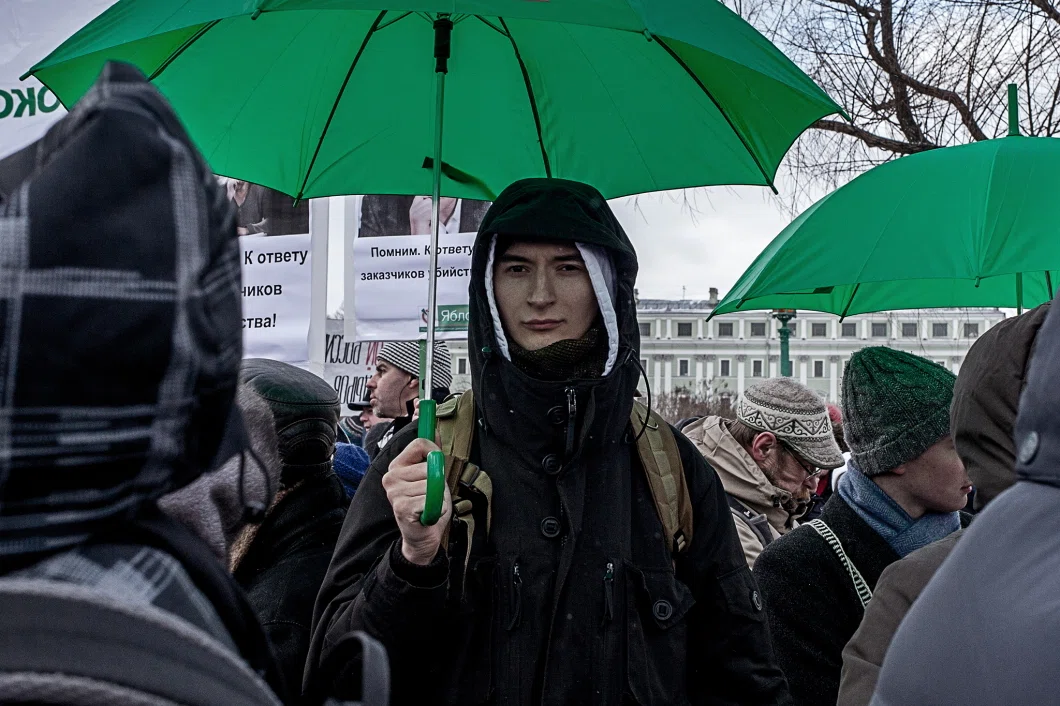
They did not live in the Soviet Union with empty shops and grocery cards, and the 90s for them-early childhood, when their parents tried to create tolerant conditions of existence with an incredible price. In the 2000s, they were also covered by a consumer boom, when many parents provided them not only by the daily bread, but also for trips, all kinds of fashionable gadgets. For them, who have become adults in recent years, it is vital to earn, make a career, raise their children, acquire real estate, which requires not even simple stability, but a constant increase in material opportunities for this. Therefore, the creeping decrease in real income, which has become obvious, is an alarming call for them.
Another such call is the stop of social elevators. Due to the archaic structure of the Russian economy, good (including highly paid) jobs are much smaller than good-educated young people who enter adulthood in their mass. It is difficult to engage in entrepreneurship because of the overwhelming risks associated with the activities of the state and its specific local representatives. At the same time, a few decent jobs occupy in patronage or because your parents themselves belong to the leading nomenclature. This causes more and more irritation among those who are less than 35–40 years old.
And we will add to this piggy bank a negative mood already obvious long-term prospects for continuing economic and social stagnation in the complete absence of a desire to begin at least some systemic changes.
It was not without reason that I just used the word "nomenclature". It is from the Soviet past. From there, the word “gerontocracy”, which is now visible, if we look closely at the phenomenon of the “irremovability of power”, with which we live, starting, as it seems to me, from the moment of “castling” of the fall of 2011. And if we add to this we will add the economic and social stagnation described above, then
All this smacks of Brezhnev’s “stagnation” strongly.
For people born in the last Soviet years and even more so in the new Russia, the realization that they live and will live in such circumstances for a long time is a very strong stimulus. Therefore, the most active of them at the first opportunity are connected to public public, and some - to political activity.
Studies show that already in protests 2011-2012. It was those who are less than 35–40 years old who played the most active role. The same was repeated in 2019 in election Moscow, and more recently - in dozens of cities across the country. By the way, exactly the same political demography is demonstrated by protests in Belarus.
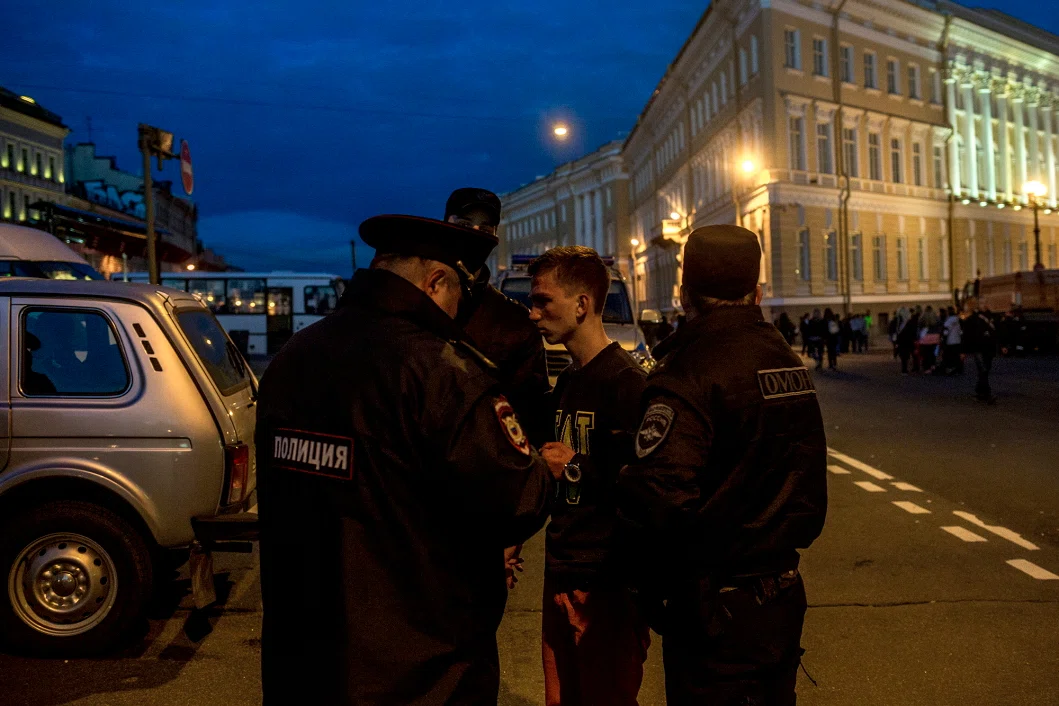
What does the authorities answer? Exactly the same as during the Soviet “stagnation”: deafening propaganda and the use of force in relation to the “dissenters” (here is another resurrected word from the late Soviet vocabulary). And I must admit that the momentary effect is achieved: someone was “closed”, someone was scared, someone was fed. I do not expect in Russia in the near future no mass protests, all the more leading to the change of power or “overturning” elections.
But already in the medium term (5-10 years), the continuation of the stagnation of the economy and all public institutions is equivalent to degradation. What will happen during this time with generations of current 20-40-year-olds?
There are several outcomes (in the order of decrease in scale):
personal screening, loss of life energy and the formation of the attitude that is common among the older generations “nothing depends on us” and paternalist sentiments;
conformism in relation to the current order;
marginalization, falling to the public bottom, the spread of all forms of deviant behavior;
emigration from Russia, which is already becoming a trend among the most educated and energetic people;
Political radicalization.
With such “human capital,” Russia may not even dream of some kind of innovative and creative development.
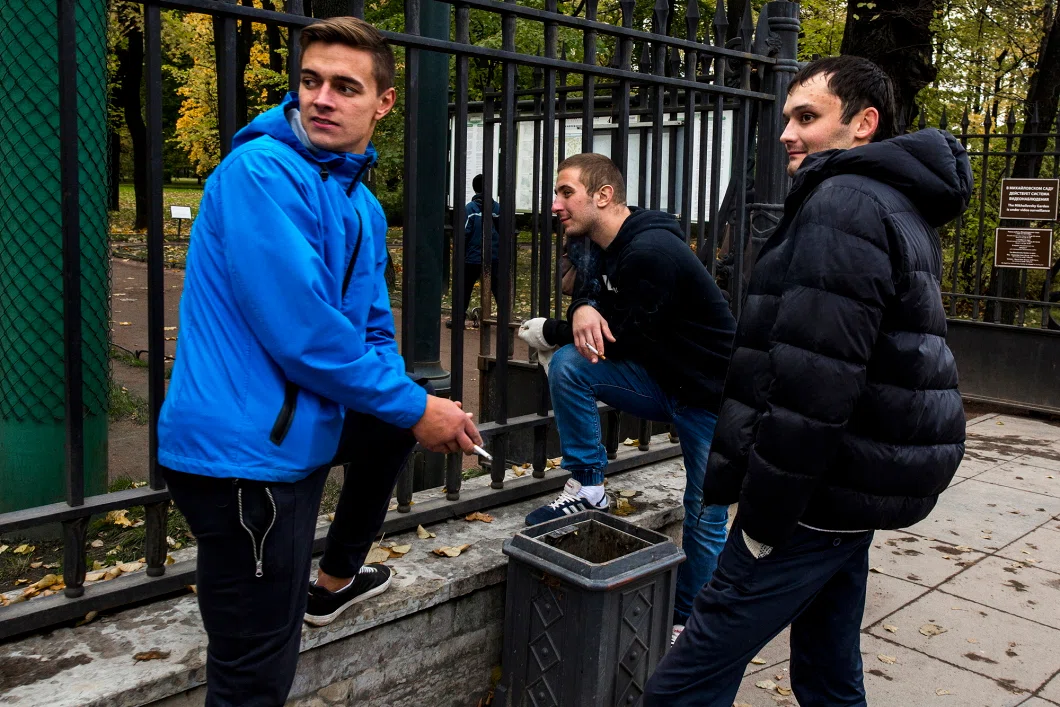
If we have several years of stagnation and degradation, then who came to power, at least for purely physiological reasons, representatives of the generation of current 30–40-year-olds, will freely or involuntarily not be able to pull Russia out of the historical rut of backwardness, where we have been constantly demolishing for more than one century. Even the new charismatic leader will not be able to do this, because
The XXI century requires collective action not vertically, but horizontally public relations and relations.
This is especially regrettable against the background of the fact that the most developed countries, sooner or later cope with coronavirus or adapted to it, apparently, will proceed to the stage of very powerful economic growth, based on the use of breakthrough technologies. They have a society and, above all, young generations are ready for self -organization and horizontally public power.
And we will find ourselves in the unhook of the train, which dies to new civilization horizons. This is an unknown future in the world European space will form today's 25–40-year-olds, breaking through the accumulated local and global challenges, making mistakes and correcting them. The result, as the whole history of European civilization shows, will become a society of some new harmony, that-and this is the most important thing! - It will be a coveted goal for escaping from that part of humanity, which, like Russia, remained in the unhook of the car.
Such a pessimistic vision of our prospects follows from objective trends, which have been formed for the last years. And while there are no reasons for their sudden breakup. At the same time, of course, I do not exclude the appearance of some “black swan” in our life, which will bring down the current “stability” as a house of a house.
But it is not known what will germinate on the wreckage of the previous system, what forces will take power into their own hands while we all look around in confusion. History shows that radicals can get their chance then, as happened in October 1917 in Russia, in 1922 - in Italy and in 1933 in Germany. And they may not get.
***
What to do to us living in Russia now and not going to leave it? First you need to at least realize in a quagmire what depth we hit and continue to plunge. Then, without lowering his hands, still try to understand how to help young generations that are doomed to come to power, to be ready for this. Here, there are no places of notations, lectures and old people from the height of the past years.
The keyword is self -organization. It is necessary not to interfere with young people spontaneously or consciously unite for the solution of the problems of their house, the microdistrict, the city, to vote for those of them who want to become a municipal deputy or go to work in local authorities. And who knows: maybe when a hypothetical “black swan” will fly to Russia, these really “new people” will compose that critical mass that will still help to find a optimistic future to the country.