
Translated material
Mike knocked on the piano, goats tore off the concert of Kurekhin, Pugacheva hunted for the guitarist BG
40 facts about the Leningrad rock club, which turned 40 years old
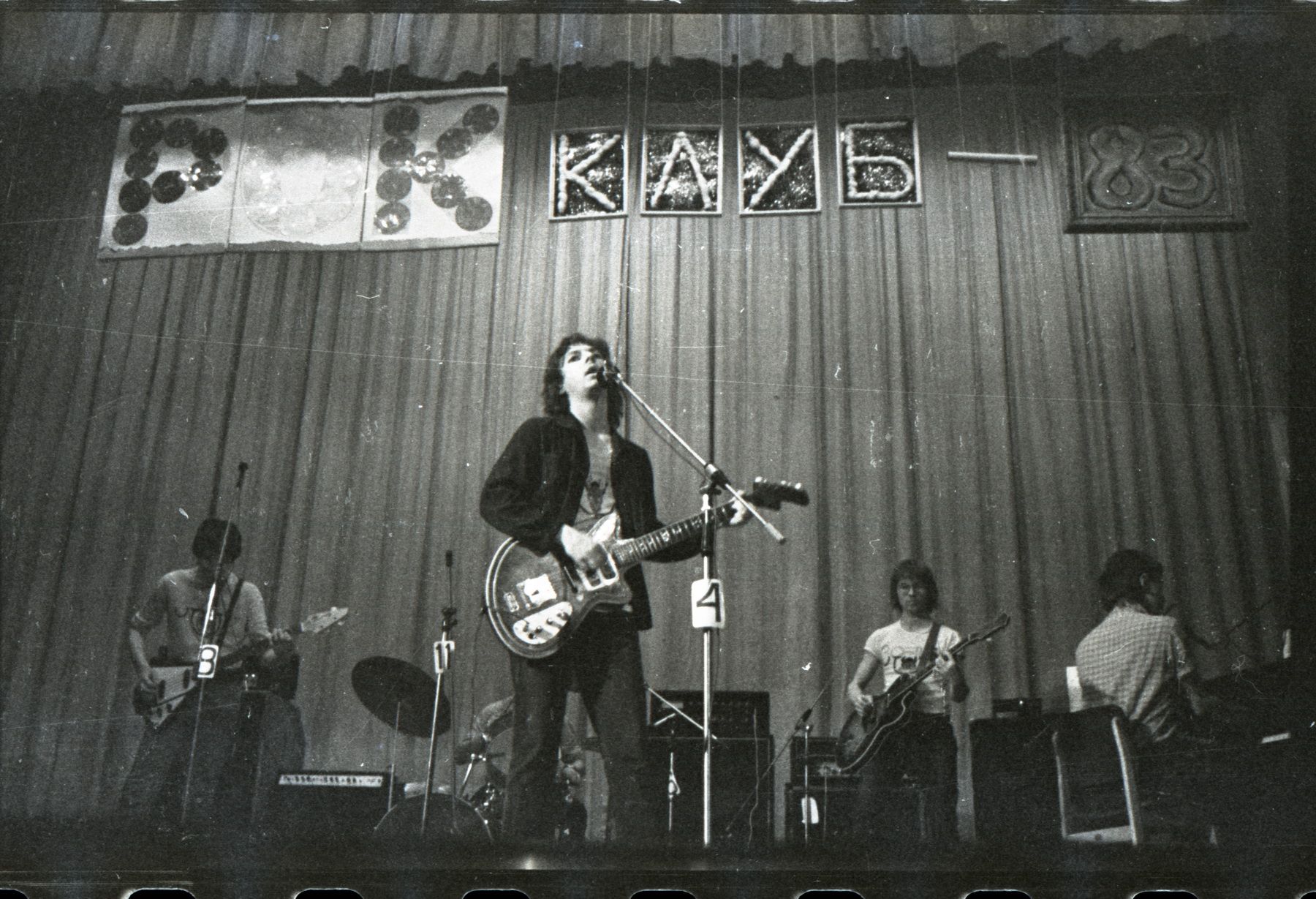
On March 7, 1981, the Leningrad Rock Club appeared-perhaps the main cradle of Russian rock, from where in the 1980s-especially during the years of perestroika-the most influential rock groups of the country came out: Aquarium, Cinema, Alice, Zoo, Auktsyon, TV, Zero and many others. Modern guitar music in the capitals was played before, but not too openly: amateur groups were occasionally allowed into a recreation center and on student evenings. Any of their concerts could disperse the police. The rock club legalized a rock movement and breathed a new life into it: the musicians gave the scene, equipment and the opportunity to create-though under the control of censors. The journalist and author of the telegram channel “Between The Rolling Stones and Dostoevsky” Alexander Morsin collected 40 facts about the device, backstage and stories of LRK.
1. Leningrad rock club came up with hippies
The idea of creating a rock club in Leningrad in the 1970s was invented by the brothers Gennady and Vladimir Zaitsevs-avid music lovers, hippies, the organizers of the apartment and holders of the underground Pop Club. Together with rock musicians, they turned to the city authorities dozens of times with a request to allow them to arrange “Seychens” on an ongoing basis-or at least stop raids and persecution. A couple of times the prisoner was the young leader of the Aquarium Boris Grebenshchikov.
2. The authorities hoped to collect all informals in one place
At one time, a literary “club-81” and a partnership of experimental fine art arose with a rock club. Formally, they all engaged in the support of youth who did not find themselves in creative unions (composers, writers, anyone), but in fact served as a reservation for the new generation of the cultural underground of Leningrad. “It was believed that it was easier to collect these moral freaks [in one place] in order to control and educate full-fledged members of society,” recalled the second president of the rock club Nikolai Mikhailov.
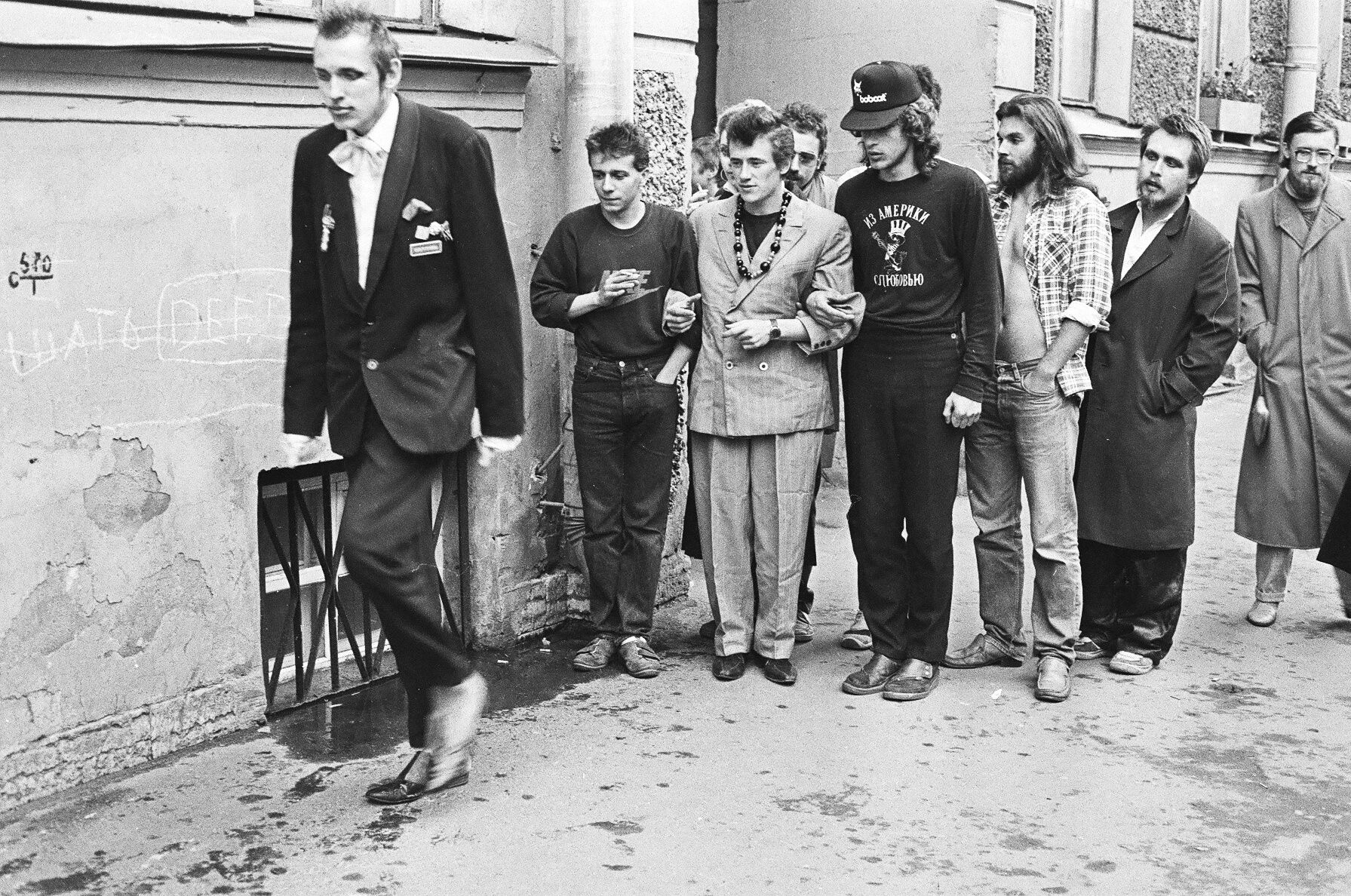
3. Yes, the rock club had his own president!
The Rock Club was ruled by a council of five or six people, led by the president, the musicians elected by musicians. The main document regulating the organization’s work was a charter. The project of the charter at one time was written by Gennady Zaitsev from the Pop Club, and he became the first president of the LRK.
4. The musicians tried to prove that there is nothing wrong with rock music
A direct predecessor of a rock club is considered to be a combination with the unpronounceable name (carefully!) "The city experimental club of lovers of modern youth music." Its organizers regularly invited to their events the secretaries of the Komsomol and the heads of trade unions to prove that there is nothing wrong with the work of Leningrad rock musicians.
5. After the appearance of LRK, small halls remained in the past
Similar “introductory” rock concerts with the obligatory collection of reviews and “recommendations to musicians” usually took place in halls for 200-300 people. The rock club, opened on the basis of the Leningrad Interior House of Amateur Creativity (LMDST), allowed to accommodate three times more-up to 600 people.
6. Initially, the rock club had a different name
Namely, "Lenklub of music lovers." The word "rock" a few more years after the founding embarrassed the local chiefs of culture. Especially after the scandalous performances of the Leningrad groups at the First All-Union Rock Festival in Tbilisi-there the musicians were removed from the competition and prematurely sent home for inappropriate behavior on the stage.
7. The musicians in Moscow envied
“In Moscow, a rock club reacted to the opening [in Leningrad] on the one hand, on the one hand, very positive and joyfully, and on the other, with a deep inner feeling of creeping envy,” admitted the musical critic and chief chronicler of Russian rock Artemy Troitsky. Own Rock Laboratory will appear in Moscow four years later, in the fall of 1985, although the first establishments applying for the status of a permitted rock club announced themselves in the capital even earlier, back in the early 1970s.
8. Rock veterans played at the first concert
Four groups participated in the opening of the youth rock club: “Russians”, “Mirror”, “Picnic” (then without Edmund Shklyarsky) and the oldest rock band of the city “Myths”, which has played in the mid-1960s. The average age of the musicians of the rock club at the first concert was approaching the age of 30, but it seems that this did not bother anyone.
9. The first membership ticket went to the chief Soviet bitloman
Of course, they were the legendary collector of everything related to The Beatles, Kolya Vasin. The second ticket left Boris Grebenshchikov. According to legend, he asked himself ticket number 7 (more precisely, 007). Imagine how he would get a “crust” and said: “Grebenshchikov. Boris Grebenshchikov "! But, as he himself sang 40 years later, " not fate ."
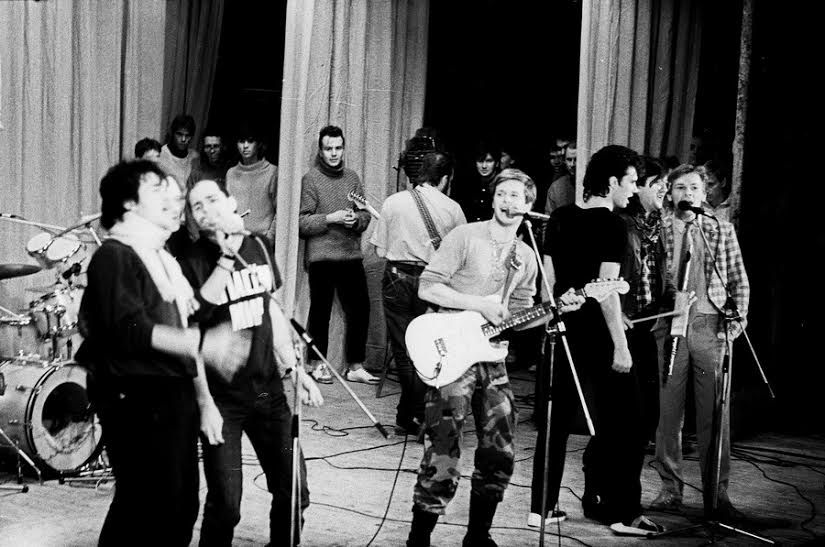
10. The performances were evaluated by the jury, the rockers were awarded with diplomas
Since 1983, the rock club has held seasonal festivals. The musicians took prizes and became laureates, received diplomas and letters. For example, “for the search for new expressive means” or “for high professionalism”. The group “Object of ridicule” received a special prize “For Shoking”, no matter what it means. Maybe because their repertoire was the song "I love to shock."
11. The work of the rock club was monitored in the KGB
The club members regularly met with curators from the KGB. Grebenshchikov claimed that most often this happened in rented apartments. “They wanted information that could go to a dossier to one of the musicians: the use of alcohol, drugs, communications with foreigners, statements against the regime.”
12. Not everyone was accepted into the rock club
To begin with, the musicians needed to write an application for listening. According to its results, the musicians became either LRK members (and paid five rubles of annual contributions), or candidates for membership (and paid three rubles). Due to the large stream of those who wish, the Club Council could overlook promising musicians without finding future stars with unsolved talent in them. So, for example, occurred with the first group of Alexander Vasiliev from Sspill - Mitra.
13. Groups came across very wild names
By the beginning of the 1990s, about 400 groups passed through the rock club. Some of them wore at least strange names, for example, “the mountain on which the beans grow”, “the hunt of their romantic”, “diamonds from Neckermann”. Sometimes the artists were completely enough for one letter (“ё”) or number (“600”).
14. Fem wave on the male stage
Throughout the history of the club, the vast majority of its members were men. Vivid exception-the first uncompromising girl’s rock band LRK-was the “situation”: the girls played hard rock with deliberately brutal texts and heavy riffs.
15. Fans during concerts were forbidden to get up from places
In the rock club there was a “sedentary” hall with chairs, dancing in front of the stage were not welcomed. Once, during the performance of the Tamburin group, Artemy Troitsky, carried away by music, got up and began to dance. “Komsomol members and operatives immediately attacked him,” said the second president of the rock club Nikolai Mikhailov. “It was not allowed to get up under any circumstances even to the jury members.” Later, prohibitions weakened.
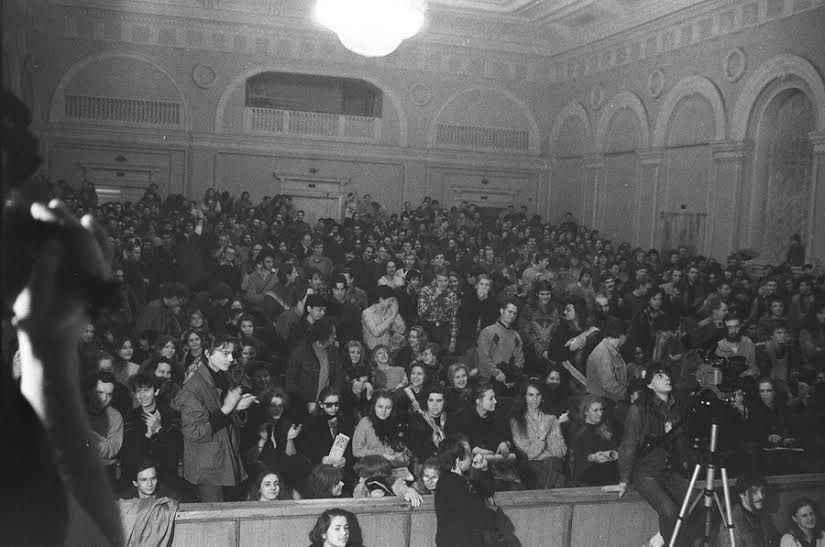
16. The audience still had fun
According to the testimony of the DDT leader, Yuri Shevchuk, by the end of the 1980s it was possible to get up in the hall no longer only to get up, but to do anything literally: “This was happening there! They had sex right during the concert, I myself saw. ”
17. Tickets for concerts were not sold
It was possible to get into a rock club only by invitation. During the festivals, when the demand for “rides” was especially high, the symbolic value of the place in the hall grew to heaven. The speculators caught the moment and saved invitations for decent money.
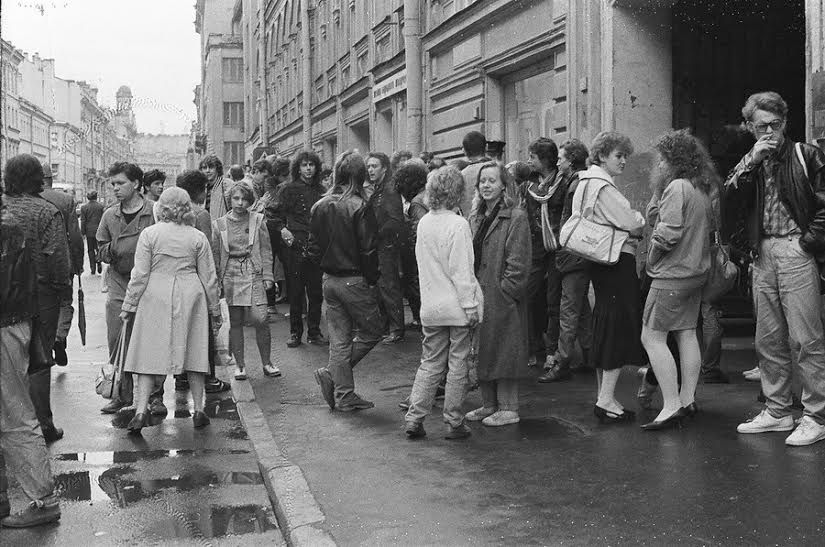
18. The lyrics were tested
Before the concert, musicians needed to obtain permission: to coordinate the content and style of poems with the editor. Typically, such a “Lithuanian” was an empty formality (for example, an excuse should be changed ), but sometimes the incoming claims were at a dead end. So the line of Boris Grebenshchikov, which mentioned “her shoulders”, the censors found “pornographic”. The musicians tried to argue. So the leader of “Alice” Konstantin Kinchev convinced the editors that the song “My Generation” with its transparent hints of the repressive instruments of the state was actually “was dedicated to the labor movement of the San Francisco workers for their rights.”
19. There was a damn bad sound in the hall
“Each concert began with rebuilding, because the Saundchels were not held in advance,” recalled the cellist of Aquarium Seva Gakkel. - Each group was forced to check out of five hundred people with a grueling. For the audience, this was a test of forty minutes. As soon as the group played out and the sound disappeared, it all started first. ”
20. The musicians were excluded from the rock club. For example, BG - for six months
Moreover, this was done as informally as possible: the Council of LRK gathered at the entrance of Grebenshchikov voted right on the street. According to him, they punished for the “unauthorized concert” of the Aquarium in Arkhangelsk in the spring of 1982 - the group performed without a ticket from the club, in fact independently. In addition, the soloist was on stage in Kimono, which seriously insulted several spectators and was accused of racism, fascism and anti -Soviet agitation. A complaint was received in the rock club-and measures were taken. Meanwhile, Gennady Zaitsev calls the exclusion of Grebenshchikov at the entrance “myth”. According to him, the meeting voted against the exception, and the new leadership of the LRK was already dealing with the BG.
21. Some excluded forever
The most loud, however, was the exclusion of Andrei Tropillo-the sound engineer-underpower, who recorded the first studio albums of Aquarium, Zoo, Alice, Kino and a dozen other groups in his studio at the house of young technicians. In 1988, bypassing the Rock Club Council, he organized the LRK exit festival at the Winter Stadium and agreed with Goskino on the filming of the film-concert. The release of audio recordings and posters was also planned. Tropillo reserved copyrights for all products. Immediately after the festival, he was expelled from the members of the rock club “For Voluntarism and Military Thought”, but he still published records on his Anthropian label.
22. Sometimes the musicians themselves left the rock club
Mostly for the sake of more concerts and earnings. It was believed that in the club the musicians are engaged in amateur performances and cannot receive fees for performances. Real money was offered by the Philharmonic and the Len Concert, but only to the so -called professional (preferably with a musical education) performers with the approved program and songs of Soviet composers. One of the first rock club was left by the participants of the Picnic.
23. The rock club had a newspaper
Since 1984, LRK published his own Rock-Bulletin newspaper by the editorial office of the Roxy magazine, the first rock-Samizdat in the Soviet Union. The authors talked about the new records of members of the rock club and nearest concerts, but the main thing is about the role of rock music in modern life. For example, the articles “rock music as a phenomenon of culture” and “There is a wave” came out.
24. Mike knocked on the piano
The future guitarist of the Secret Andrei Ziudovsky first performed in the rock club as part of the Quartet “Exit”. “In support of our scene, the“ show group ”in the person of Grebenshchikov and Mike Naumenko rose on the stage,” said Nerudovsky. “Mike began to knock his feet on the closed lid of the piano, and to dance strange wild dances.” The next day, in the journal Roxy, the official ballot of the rock club, they wrote: “There was no music, but a steady feeling was created that a commodity train had passed.”
25. Leningrad musicians were shown in the cinema and at MTV
Chronicle with musicians and rooms of rock club repeatedly fell on the air of foreign television channels, including the American MTV ( Tell Tchaikovsky The News , 1987) and British BBC ( Comrades , 1985). The turns about the club printed French magazines. In the Soviet Union, the film of Alexei Teacher “Rock” was released about the Leningrad Rock-Superior.
26. And yet not everyone recognized the stars
The stars of the rock club were idols of youth, especially for beginner musicians, but by no means for everyone. The leader of the pilot group Ilya Damn recalled that he met Viktor Tsoi while still studying at school, not knowing that he was a famous artist - for him he was a “incomprehensible man in a cloak” from a neighboring house. The devil even came to Tsoi, or rather his wife Maryan, for drugs for the dog. “I lived on the ground floor, and Vitya constantly went to the stop with the guitar past my window,” says the leader of the pilot.
27. The club also had Russian rock without texts
It is customary to blame the Russian rock of excessive attention to the detriment of the already rustic music: pathos and elevated lines - as much as you like, tenacious melodies and interesting transitions - almost no. Nevertheless, in LRK there was a place for purely instrumental projects "Jungle" and "Rain season" . They played a complex art and jazz-rock, instead of songs they composed the suits and were more noticeable than others on the western pioneers of the King Crimson and Weather Report genre.
28. Pugacheva called the guitarist the Aquarium to her ensemble
Once, a musical critic Artemy Troitsky brought Alla Pugacheva to the Aquarium concert. In the rock club, the singer, she said, “tried to find a new key to creating a song” and needed new composers. “She did not bother Borina’s songs, but she madly liked the guitarist of the Aquarium Sasha Lyapin. Immediately after the concert, she appeared in the dressing room and began to shield him so that he would move into her ensemble, ”Troitsky recalled . “Despite the furious money that threatened him, he did not bother and refused.” Two years later, Lyapin nevertheless made concessions to the stage and played in the notes of Larisa Valley.
29. Goats tore off the concert "Pop Mechanics" Kurekhin
In 1987, at the festival in the Youth Palace, Sergey Kurekhin and his “pop-mechanics” show were expected. At the last moment, the concert was canceled. “I am going to the stage and I can’t understand-some incomprehensible smell goes. What's happened? It seems that there was nothing yesterday on Saundke, ” recalled the host of the club’s concerts Alexander Semenov. - I go to the stage and see behind the scenes of two goats that live there in the evening, they spent the whole night like the participants in the concert of Kurekhin. Nobody could take them out of need. ”
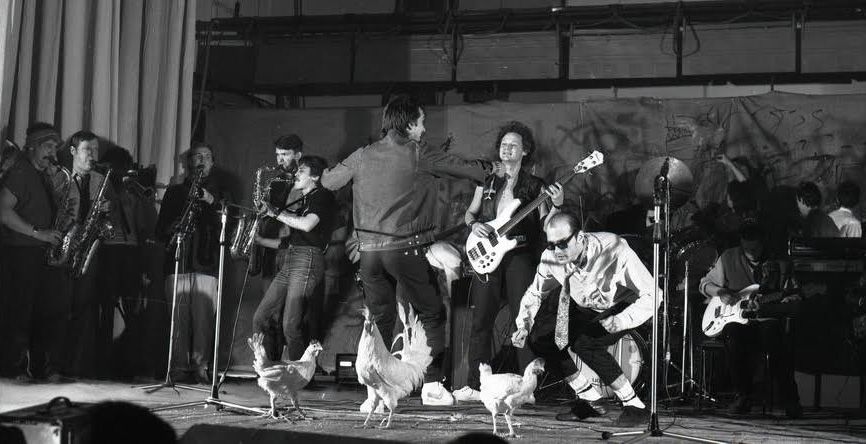
30. The rock club became the hero of several songs
Forces as a new place wrote about the club not only in the press, but also in the LRK itself. Mike Naumenko dedicated him a verse in the "Song of a common man" , and Yuri Shevchuk is a whole song- "A policeman in a rock club."
31. Scorpions performed in LRK
It is difficult to believe, but the German group of Scorpions, who came to Leningrad on tour (and making a film ) performed in a rock club with a couple of songs. Behind the drummer, the red banner hung, between the vocalist and the guitarist - a meter portrait of Vladimir Lenin. It is noteworthy that scorpions, who arrived at the club on a limousine the size of a yacht, used the same tools and equipment, on which the punk group “Automatic Satishes” played half an hour before.
32. Festivals of a rock club brought underground to sports areas
In 1986, the LRK festival took place in a new place, in a more spacious hall - in the Nevsky recreation center. “It was already a city event for several days,” recalled the leader of the Rock Petersburg rock band Vladimir Rekshan. Every year, the sites moved closer to the center and became more and more. The exit of Leningrad Rock to the stadiums was a matter of time.
33. Everything changed in 1988
In 1987, the state monopoly on the organization of concerts was canceled, cooperatives and first entrepreneurs came to the music. From this moment, according to Artemy Troitsky, there was no more sense in the rock club. “The last year of the entire club movement is the 1988th. Money and lack of censorship-two large nails in the lid of the tomb of the rock club. "
34. On the record "Leningrad Rock Club" there is no "movie" and "DDT"
In 1988, the Leningrad Rock Club recorded on the Melody. It could be expected that it would include hits of the most famous groups, but the release did not resemble the discs from the All the Best series. There were no “aquarium”, “cinema” and “ddt” on the record, but there was a little known “presence”. В аннотации отмечалось, что «самые одаренные [из членов Рок-клуба] стремились играть не просто не хуже „Битлз“ или „Лед Зеппелин“, не просто вывести советский рок на уровень мировых стандартов, а создать свою, основанную на национальной традиции рок-музыку».
35. В ЛРК было последнее выступление Майка Науменко
Весной 1991 года Майк Науменко неожиданно присоединился к выступлению «Аквариума» на фестивале, посвященном десятилетию Рок-клуба, и спел свой знаменитый «Пригородный блюз». Это был его последний концерт, меньше чем через полгода он умер в своей квартире от кровоизлияния в мозг.
36. В КГБ недооценили силу Рок-клуба
БГ считает , что появление ЛРК способствовало концу советского режима: «То, что было придумано, как средство контроля, обернулось неконтролируемым феноменом, который уничтожил тех, кто хотел контролировать».
37. Рок-клуб исчез вместе с СССР
После распада СССР активность клуба пошла на спад. Музыканты больше не представляли союзы и объединения, а занимались собственной карьерой. Ежегодные фестивали были упразднены. С середины 1990-х музыканты «старого Рок-клуба» встречаются только на юбилейных концертах, а деятельность ЛРК носит сугубо мемориальный характер.
38. Цой и Науменко — Мусоргский и Римский-Корсаков
Фронтмен группы «Ноль» Федор Чистяков сравнил костяк Рок-клуба с «Могучей кучкой», содружеством музыкантов в Санкт-Петербурге середины XIX века. «Они тоже в одно время появились, друг с другом общались и были фигурами очень большого масштаба. Одновременно прошли и остались в том времени».
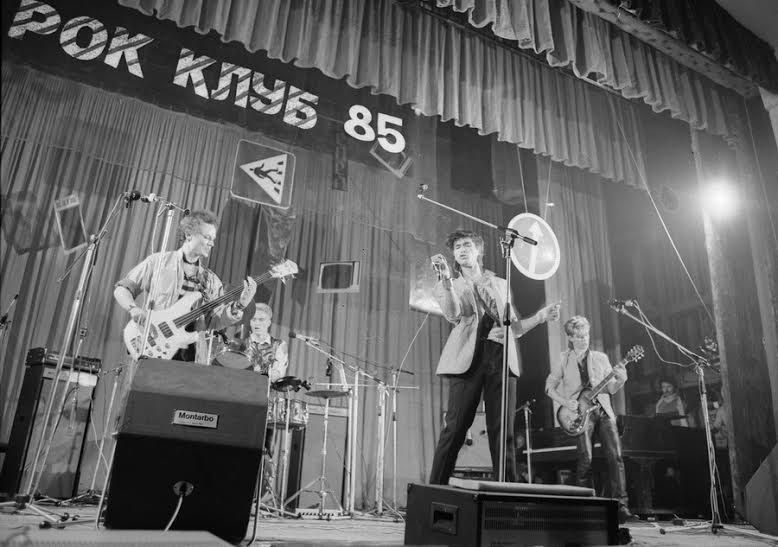
39. Рок-клуб остался без помещения
В 2000 году Рок-клуб лишился площадки, его вытеснил театр «Зазеркалье». Сейчас на сцене, где выступали «Аквариум», «Кино» и «Пикник», проходят детские музыкальные спектакли. Там, где когда-то пели про восьмиклассницу, теперь показывают царскую невесту.
40. По старому Рок-клубу ностальгируют не все
«Очень хорошо, что Рок-клуб закончился, потому что это бред. „Литовка“, прослушивания, вот это все, — недоумевал участник групп „Объект насмешек“ и Tequilajazzz Евгений Федоров. — Скажи сейчас любому юноше, что какие-то старперы будут давать тебе разрешение играть или нет [и они посмеются]. Я играю — и все. Это мое право и моя святая обязанность, если я хочу это делать. Какой нафиг рок-клуб, вы чего?».
Alexander Morsin