
Translated material
Woman's body to work
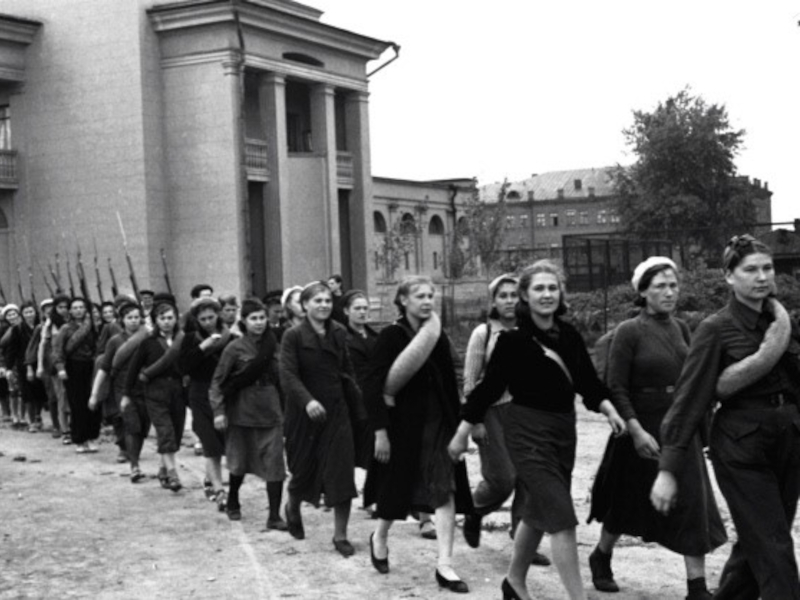
The equality of men and women exists in Russia “on pieces of paper” - in laws, plans and international reports. In fact, the state is not very interested in protecting women's rights. Why and how it works, explains Lola Kirilova's lawyer
In 1917, Russia became one of the first countries in the world where women and men were equalized in political and economic rights. Since then, our country has not departed from the principle of equality: the USSR and the Russian Federation are participants in all international agreements to prevent the floor discrimination. The legislation of our country in this part is impeccable. In a large number of normative acts, a ban on infringement, diminishing the rights of women is established.
However, do not calm down. So, in the recently considered case of Volodin’s violence, the court indicated that “in the light of the crundous and inhuman circumstances of this case, apparently, there is a discrepancy between the reports on gender violence in Russia and the fact that the Russian court does not want to occupy a firm position in determining the corresponding name for the fact that the victim was tested.”
What happened to Volodina? She is a victim of domestic violence: she left the man who humiliated her and beat her, but he pursued her. He threatened with reprisal, brought into the unusable brake of her car. Her numerous appeals to law enforcement agencies ended with refusals to institute criminal proceedings: it was answered that the circumstances were not proven or that the causer of harm and the victim were in close relations.
If Russia reports only formally about gender violence, it is logical to assume that the rights of women in other areas also exist nominally.
Most often, women are amazed in labor rights due to the “real purpose”-the possibility of giving birth to a child: this justifies the choice not only with an increase not in favor of women, the difference in salaries, but also “urgent” contracts-so the employer will not have to pay “maternity”.
To understand why inequality still exists, why it remains unnoticed, let's look into the past - in the prerequisites of how we think about this problem. And let's try to figure out whether the protection of women's rights is really now is a formal bureaucratic unsubscription, or there are real measures to combat discrimination.
USSR and contradictory rights of women
After the revolution, women received rights - to dispose of property, work, study. They were able to do what women throughout the world achieved - and not everyone succeeded. But soon the idea of equality was distorted: the Soviet woman was supposed to be not only a Komsomol member and a shock, but also a distributor of labor in the family. It was she, who was declared in Soviet books for women, should take care of elderly relatives, children and home comfort. For men, such attitudes did not exist.
The same concerned the reproductive "ideology." In the mid-1930s, it became clear that it was going to war. And for the war, people are needed. Maybe you need not quantity, but the quality of people? One trained will replace the heels of ignorant. The Soviet government decided to go on both fronts. The right to abortion was widely used by Soviet women, they decided to withdraw it.
On June 27, 1936, the decision of the CEC and the Council of People's Commissars of the USSR was adopted, which did not have an abortion for medical indications (the threat of mother’s life) under the ban. For violation of the ban, the criminal prosecution of both women themselves and persons who assisted in this procedure was supposed.
The ideological platform was this: “The necessary material support of women and their children, state assistance to multi -family, the development of a network of maternity hospitals, kindergartens, the legislative establishment of a minimum of the amounts payable to the child’s maintenance for a separate residence of spouses, on the one hand, and the prohibition of abortion on the other, along with the strengthening of the malicious non -payment of the courts for the maintenance of children and By making some changes to the legislation on divorces, in order to combat a frivolous attitude to the family and family duties - such are the paths that need to be stood on to resolve this large, affecting the entire population of the issue. In this regard, the Soviet government is coming towards numerous statements by working women "
It is difficult to imagine that working women were stacked by statements with a demand to ban abortion. But there were letters with a request to provide kindergartens and increase benefits to mothers. They were actually enlarged. Moreover, the mothers of six or more children at the birth of each next child had a benefit of 2 thousand rubles annually - a colossal amount at that time. For comparison: the size of the manual issued by the mother for feeding the child was determined by the same act of 10 rubles.
Long before it was done at the international level, a decree of 1936 also established a criminal punishment for refusing to hire women based on pregnancy, and reducing their wages for the same motives.
This did not cause a surge in the birth rate. Reasons: underground abortions, help from doctors in the design of abortion as necessary for medical reasons, detubication and simply the unwillingness of people to multiply in the quantity of the desired authorities.
Despite this rather recent experience, and now some people have similar ideas: to give money to many children, and remove abortion from compulsory medical insurance. They, who own verbal equalibrics and understand that as a ship you will call, so it will float, suggest : "Stop calling the termination of pregnancy with medical assistance, and the specialists who conduct it doctors."
The consequences are obvious: compulsory medical insurance is insurance in medical care. Abortion, respectively, will not be insured. Is it possible to draw a parallel with an abortion? No. But these so -called “spiritual scrapers” are nothing but a repetition of Soviet logic. Only one nuance: we are no longer in the USSR, we have completely different economic conditions. Such schizophrenia will only hit women in rights, inefficiently and aimlessly.
The fight against discrimination now
The elimination of the actual inequality between women and men in the world and, in particular, in the Russian Federation is a matter of more than one generation.
The elimination of inequality involves as a change in legislation (in general, this task can be considered achieved in the Russian Federation, with the exception of the norms of domestic violence), and law enforcement. What is the position of judicial authorities in Russia in cases of discrimination in the field of labor?
Experience from the definition of the Constitutional Court of the Russian Federation of March 22, 2012: “The implementation of the principle of equality cannot be carried out without taking into account the role of a woman in the continuation of the genus, which obliges the state to establish additional guarantees for women, including in the field of labor relations aimed at protecting motherhood.” The employer cannot fire the pregnant woman on his own initiative.
Even in the case of termination of the employment contract at her request, if there was evidence that the employer forced the employee to submit an application for dismissal at his own request precisely in connection with the pregnancy of a woman or the presence of children under three years of age, such actions also form the corpus delicti under Article 144.1 or 145 of the Criminal Code of the Russian Federation, respectively (excerpt from the decision of the Plenum of the Supreme Court of the Russian Federation of December 25, 2018). But how many women know about these norms?
For an unreasonable refusal to hire or dismiss a pregnant woman or having children under the age of three, according to judicial statistics for 2017 and 2018, two people were condemned annually, not a single one in 2019 and 2020. Does this mean that in four years only four women were dismissed under these circumstances? Of course, it does not mean.
Is there any responsibility for the establishment of women's salaries is lower than that of men in the same positions? There are, but existing remuneration systems have long made wages only by a small part of the remuneration that a person receives for his work.
Systems of bonuses, bonuses, incentive payments, KPI and other things, allegedly designed to motivate a person to higher labor productivity, create a barrier for the perseverators - that smoke curtain that cannot be pierced with any court request.
The steeper the degree of organization of production, the less chance of clarifying the situation with a difference in the level of remuneration of employees. Firstly, because the value of the remuneration of your colleagues is the information that you will receive only if the colleagues themselves agree to share it with you. Secondly, professionals work on the side of the companies. Their goal is to protect the employer from risks of this kind. They will form an impeccable document for the court, which will indicate that the salary of workers performing the same work function is the same for everyone. And the case, who decided to prove discrimination on the floor, simply did not reach the indicators that other employees have, and, accordingly, did not receive a similar bonus size.
Currently, a person faced with discrimination by gender, age or other signs does not apply to the court of the Russian Federation. And those who turn can not provide evidence of the presence of it. In Russia there were only a few cases, and in all - a refusal to satisfy the claim for this requirement. Employers actually establish an equal salary for persons performing the same work, well, and encouragement is the business!
Today, the court is the only body that will allow the debate about discrimination in the field of labor. Other institutions are not endowed with the right to make decisions. And those of them that could attract public attention to these problems do not even see them.
The Commissioner for Human Rights could attract attention to inequality. But from the report of the UPC for 2019, it is clear that the issue of discrimination in the field of labor, this body considers it permitted: “From January 1, 2021, a new list of production, works and positions that the use of women's labor will be limited to force. According to him, the number of professions in which the use of female labor is prohibited has decreased from 456 to 100. ”
The paragraph of this report on the labor rights of citizens, other information about the existing discrimination on the basis of gender is not contained.
The order of the Government of the Russian Federation approved the National Strategy of Actions in the interests of women for 2017–2022. It, among others, indicates the tasks: “Creation of conditions for women to receive vocational education in the most advanced areas of the economy, reducing the difference in wages of men and women.”
How does the government plan to bring these tasks to life? Firstly, “to organize professional training of women and form new competencies and qualifications in them, including in the field of entrepreneurial activity,” the document says. To develop and carry out measures that should reduce the difference in the remuneration of men and women. What are these events, the strategy is silent.
Is it possible to reproach officials that they are not able to formulate specific actions on a specific task? I think no. Because the changes do not take place in the wave of a magic wand in the hands of strategists. They take place if at different levels emphasizes the inaccessibility of injustice. For example, if a male colleague finds out that a woman who worked just like him, but gets less, will not agree to such a state of affairs. And in order for a man to possess such qualities, he must be brought up from childhood. A vicious circle is formed here, because the upbringing of children as a whole is given to women. Women are also often - carriers of ideology "The husband must earn more." Many remnants, having lost their economic basis, live in our society, due to the tolerable relations to them, often under the guise of national traditions.
What to do? And just continue what has begun. Light the problem, teach children. The law, especially if it is fair, has a change in the behavior of people and their attitudes. Such global changes require a certain time, the duration of which is difficult to indicate.