
Translated material
Apple and TSMC will combine efforts to develop a 2-nm process of chips production process
The world's largest manufacturer of semiconductor products, TSMC and Apple, began the joint development of the 2-nanometer technology process for the production of chips. It is assumed that cooperation will accelerate the creation and implementation of this process, which provides for the use of transistors with a size of 2 nanometers.
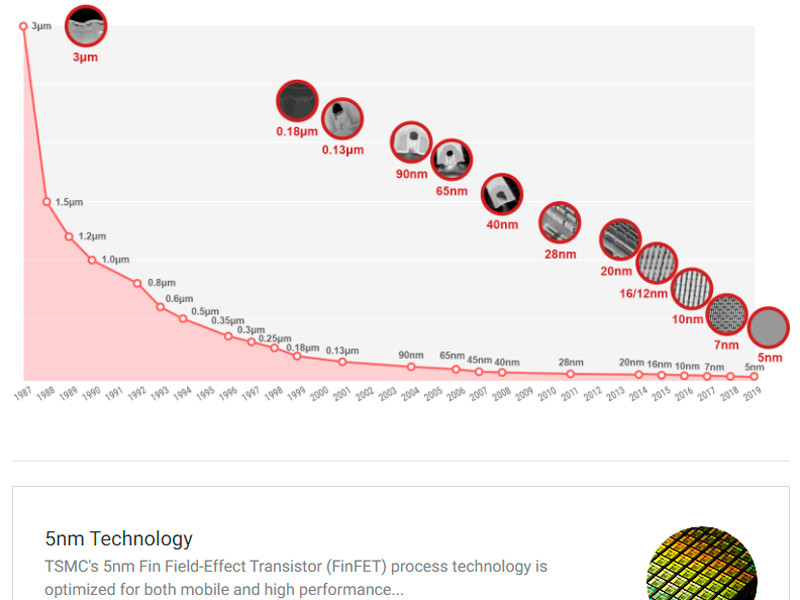
According to CNews , now TSMC is one of the few companies that have mastered the 5-nm process process. According to this process, the company produces chips for many customers, including Apple, Qualcomm and AMD. It is assumed that first TSMC will master the 3-nm technology process that is interested in Apple-now TSMC is setting up a separate production line for 3-nanometer chips at the enterprise in the Chinese city of Baoshan. Probably, the release of the first chips according to the 2-nm process for the process will be established there, but their main production will be launched in a new factory.
Apple has already received from TSMC the first test batches of chips released with a 3-nm process of process, and another customer of such chips call Intel. It is expected that the mass production of the 3-nm chips will be launched in 2022, while prototypes of 2-nm chips can be released in 2023, but the timing of the start of the full production of such chips is not specified. Apple wants to use new chips for the release of branded processors that equip the iPhone smartphones and iPad tablets, and since last year, the Cupertino company produces processors for the MAC computer, while earlier the processors were supplied by Intel.
Recall that the so -called Moore law states that every two years the number of transistors on integrated boards doubles. Despite the fact that at different times the speed of increasing the number of transistors varied, in general, this law was really observed for decades. But in recent years, engineers have almost come close to physical restrictions: the thickness of silicon elements has already been measured by dozens of atoms, and further miniaturization is becoming increasingly difficult. In this regard, the development of new technological processes and the construction of enterprises for the production of chips takes more time and requires significant costs.