
Translated material
Woe crafty
Lukashenko for Moscow, of course, is not a gift, but under him Belarus will definitely not become a member of NATO
Moscow after some doubts last summer, when the regime of Alexander Lukashenko staggered under the pressure of mass protests, she still decided to support him in every possible way. That is, Lukashenko himself in the power structures of the Russian Federation frankly do not like and do not trust him in anything, but an alternative, say, with his replacement with Svetlana Tikhanovskaya, which, according to many in Belarus itself and abroad, won the presidential election on August 9, 2020, it seems much worse.
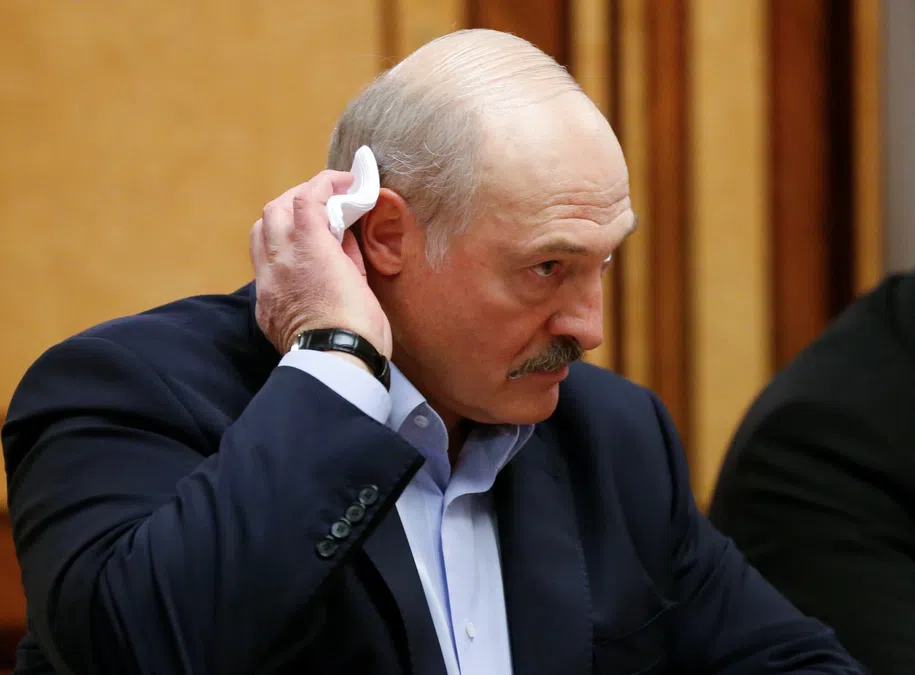
Like, there will be new elections with an unpredictable outcome, dismantling the police state, destabilization and democratization, and all this is so terrible that it is better not at all. Tikhanovskaya and her adviser (representative) for foreign affairs, the personnel Belarusian diplomat Valery Kovalevsky, claim that they repeatedly tried to establish any, albeit unofficial, contacts with the Kremlin, but nothing came of it. Whatever the Tikhanovskaya and her associates say about the future democratic Belarus, who will maintain close relations with the Putin’s Russian Federation, no one believes in Moscow. In conditions of growing military and political confrontation with the West, they see only one thing: inevitable, in the case of Lukashenko’s fall, the advance of NATO bases and “tanks” from the Polish border on the Bug to the east for the Dnieper, to Mogilev and Orsha, to the threshold of Smolensk. So it’s not far to Moscow.
It remains to endure Lukashenko, but this is not easy.
Even in growing international isolation, the Belarusian ruler did not become more accommodating.
He continues to publicly reject any conversations about the integration of Belarus and Russia into a single, and not a fictitious union state, as “stupid” and “absolutely unnecessary”. Of course, these statements, first of all, are an attempt to combine the split Belarusian society on a patriotic basis in order to weaken the opposition. But he really does not intend to reunite, and it is not clear what our superiors do with this.
Agree with Lukashenko on economic issues is also not easy. The regime in Minsk urgently needs money to stabilize money, and they are ready to get it where they will have to. For example, Russian oil through Belarus pumps the UP “West-Transnefteprodukt”, which, together with pipelines and other property, belongs to the Russian State Monopolis of PJSC Transneft. Minsk tried in 2021 to sharply (almost 25%) to increase the tariff for pumping Russian oil through the territory of Belarus. Moscow resolutely refused, and under the current agreement the tariff was indexed by 6.7%. In response, Minsk increased the rate of income tax from 18% to 50% and introduced an environmental fee specifically directed against the West Transnefteproduct, and the Belarusian government agencies, including local KGB and the Ministry of Internal Affairs, strengthened the company's checks. Transneft believes that the West Transnefteprodukt is waiting for a quick ruin and forced bankruptcy, and Russian oil pipelines and other property in Belarus will be nationalized.
Russia and Belarus are military allies. According to Lukashenko, NATO’s joint confrontation was discussed during the summit with Vladimir Putin in February in Sochi, and in March, the defense ministers of the two countries Sergei Shoigu and Viktor Khrenin in the negotiations in Moscow agreed to create three training centers for joint training of military personnel in the Nizhny Novgorod region, where the most modern army training ground is located, as well as in the Kaliningrad region (Russia) and in the Russian Grodno region (Belarus) - that is, on both sides of the so -called Suvalka corridor in more than a hundred kilometers, which separates the Kaliningrad enclave from Belarus. He is the only land corridor between the Baltic states and the rest of NATO member countries. The centers of joint training will become a symbol of military integration, but nothing more.
In the fall, joint strategic exercises “West -2021” are planned to repel the military threat from NATO, and right now, tactical joint training of fighters of Russian Airborne Forces and Belarusian forces of special operations (MSC) has begun, first in the Ulyanovsk and then in the Minsk regions. In the previous years, the Belarusians partially mobilized and deployed a lot of reservists in the previous years, since the country's defense is built on police and mobilization principles, and joint training of the Airborne Forces and MSC in March 2021 will be several hundred people.
Lukashenko is unlikely to be ready to massively call on and distribute weapons to his own reservoir citizens, since it is not clear where they can turn it.
Lukashenko also proposed instead of a possible Russian air base in Belarus, about which in recent years a conversation between Minsk and Moscow had been going on several times, to place the latest Russian combat aircraft with the latest weapons “on our bases, and our guys will fly with the Russians”. This proposal looks like a mockery. Moscow type supplies and contains expensive equipment, and Minsk will really control it.
The alliance with Lukashenko is very expensive, and the only practical benefit consists, it seems that that under him Belarus will never be accepted in NATO, even if he suddenly asked.
In 2020, Lukashenko barely resisted power, but mass protests and international isolation, apparently, only strengthened the position of Minsk in endless bargaining with Moscow. Now, again, it is not the time to try to restore the intractable ally: the escalation of the conflict in the Donbass has begun, and warlike rhetoric is growing on both sides of the front line. There are more and more conversations in Moscow and in Kyiv about a possible “big war” by May, when fields and dirt roads are dried after spring thaw. In such a situation, no destabilization of any property in Belarus is unacceptable. Lukashenko understands this best and behaves accordingly. What a allied state is an ally.