
Translated material
The universe of one pig
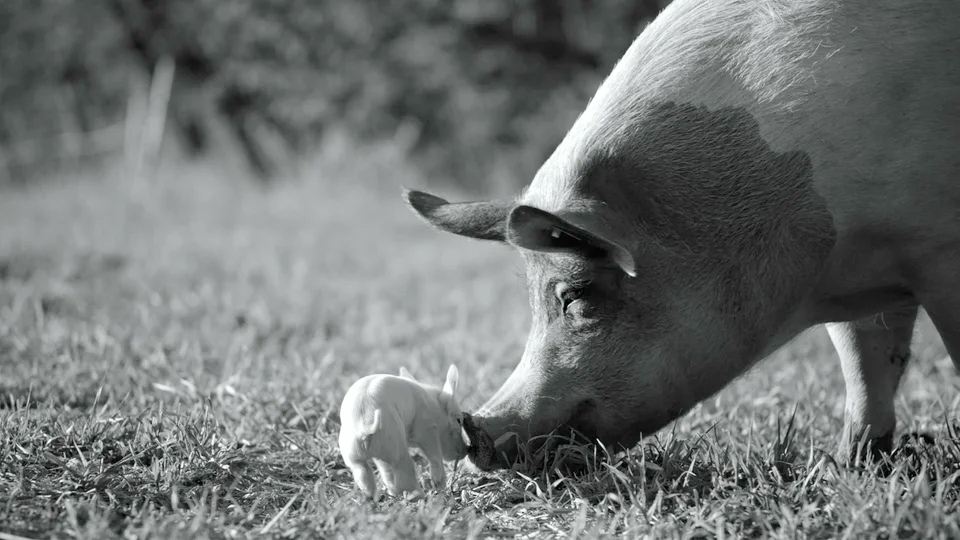
Zoopeter Konstantin Sabinin, director Viktor Kosakovsky and sociologist Arseniy Khitrov about how the film "Gunda" changes our view of the world
- The documentary "Gunda" of Victor Kosakovsky, telling about the life of pigs and its piglets on the Norwegian farm, fell into the short list of Oscars.
- Violence against animals, their murder for the sake of food or clothing inevitably entails an increase in cruelty in human society, up to the murder of people.
- Veganism, that is, a complete exclusion from the diet of animal products, is one of the important ways of struggle for animal rights.
Sergey Medvedev: This year, three films were made from Russia for the Oscar Award: “Dear Comrades”, “Gunda” and “Welcome to Chechnya”. Today we will talk about the documentary of Viktor Kosakovsky “Gund”, which talks about life on the Norwegian Pig farm, its piglets, one -legged chicken and herds of cows.
On April 25, we will recognize the names of the winners, April 15 the film will be released in Russian rental. It is important to talk about the ethical problems that this movie poses. What is a human view of animals? Who are animals in the world in general - our smaller brothers or our equal brothers? What are the ethical problems of agriculture and veganism?
Video version of the program
Correspondent: In the black and white picture of Viktor Kosakovsky "Gunda" there is no human speech and music. The place of shooting was a small farm near Oslo. The executive producer was the defender of the animals, actor Hoacin Phoenix, known for the films "Joker" and "Gladiator". The picture is a reminder of humanity that we divide the planet with billions of other animals, discusses the value of life and mystery of consciousness. The film shows the beauty of the animal world without a person. The tape turned out more about sympathy and the ability to empathize with nature in all its manifestations. After the film was released, the farm hosts decided that a pig named Gunda should survive until the end of his years. Is it possible to dissuade people from killing animals with such a movie?
Sergey Medvedev: Let's talk about this with Konstantin Sabinin , the head of the project of the Center for Protection of the Rights of Animal Rights Vita . In touch, director Viktor Kosakovsky .
In the black and white picture of Victor Kosakovsky "Gunda" there is no human speech and music
Victor, why did you stay on this farm, on this pig? What was the principle of selection?
Victor Kosakovsky: The fact is that no one agreed for 20 years: not one of the producers in Russia or abroad believed in my idea. It was difficult for me to explain to them on paper what I want to do. And then I said to the producer: "Let's go to any farm, and I will specifically show you what I mean." We planned, as usual, for four to six months to look for a heroine. But we arrived at the first farm near Oslo, at the first minute we opened the door and the first we saw was Gunda. She came up to me, looked friendly into my eyes. It was obvious that she was already communicating with me with my eyes. And I told the producer that we had already found our Maryl Streep. In principle, the director of documentary cinema does the same work as the director of the art: chooses individuality with an extraordinary appearance, with expressive behavior, which is interesting to watch for a long time.
But I would not want us to talk in isolation from what is happening in the country and in the world. The country has a catastrophe, it is obviously included in the final tragic phase of some big period of its history. People in prison. Yesterday, the unfortunate Yuri Dmitriev was left in prison for 13 years. They tried to poison Navalny. I want to express support to his family and himself. Can the director at this moment not shoot about this terrible pain?
Tolstoy brought me to these thoughts, saying that until we overcome the first step and will not understand that the murder of a person and the murder of an animal is one and the same thing, an act of murder and nothing more ... He said: he could not pretend that this is not. We know very well that our breakfast, lunch and dinner have just killed, but we pretend that we do not know this. We pretend that animals do not feel that they have no emotions. The parliament of the most ancient democracy of Europe last year adopted a law that says that animals do not feel pain. They want to say that we have the right to kill other creatures. But in fact, I think the mistake is laid down in the first page of the Bible.
Sergey Medvedev: In our program we are constantly exploring this circle of violence in human society and its connection with violence, which occurs in relation to animals: adult violence for children, a man’s violence, violence of power to his subjects. This is really the links of one chain.
Konstantin Sabinin: This is a key link in the chain. The person who laid the law of life, destroying another living creature, committed an act of violence, aggression against the animal. Then this unleashed the hands of humanity in relation to its own kind. This is about the roots of aggression, which now dominates the world.
Sergey Medvedev: Victor, why was black and white cinema chosen?
Victor Kosakovsky: We love to look at animals. Everyone who has animals at home knows that they feel us, understand, give us love. They are real friends. In Switzerland, where the border with Germany, France and Italy, there are families where they speak three languages, and in such families, dogs understand all three languages. It is proved that animals can understand up to two thousand words. We understand only a dozen - he wants to walk, he wants to eat, he wants to drink, he wants to rejoice. I knew that over the past 20 years, about 30 paintings have been made, and they starred on slaughterhouses: they showed how we kill animals. In the year we kill more than a billion pigs, more than half a billion cows, 50 billion chickens and a trillion fish. If a person lives for 80-100 years, then at the end of his life a mountain of skeletons, a hundred killed large animals, in addition to a mountain of plastic and other garbage (by the way, is also intellectual too). I understood that if we remove our rudeness, our cruelty towards them, it would not work. Those films did not work. And I decided, on the contrary, to focus on what they are!
In black and white cinema you see the personality of each of them separately. In the color picture, these are cute pink pigs, green grass, blue sky. It's nice to look at it. But as soon as I removed the color, I immediately saw their eyes, their personality. By the way, piglets have very small eyes, and in color cinema they are almost not visible. But as soon as I did it in black and white, I immediately saw their eyes! At the end of the film, Gunda approaches the camera and as if he directly says: "What are you doing?! Why did you take my children?!"
We distinguished about two hundred different words from the Gunda pig
Before shooting this picture, I talked with big world scientists. Unfortunately, science is mainly focused on increasing the production and livestock. Scientists who are simply engaged in animals are very rare. Initially, my plan was to show scientists who deciphering the language of animals. But, as we know on the story of Galilee, Copernicus and so on, it will take hundreds of years until people begin to believe this. They already proved this themselves, and now it is necessary to prove to people that this is so. I found people who deciphered the language of cows. I came to take off the cow and the calf: he went to the camera, and the cow said "Mu". My scientists laughed. It turns out that the cow said to her child: "Do not harm." We distinguished about two hundred different words from Gunda.
Sergey Medvedev: Indeed, when you look at how you remove animals, the word "personality" arises in the mind, and black and white monochrome-like photo portraits, which, as a rule, come better in a black and white image. And what you shoot in black and white, as if from the level of earth, grass, becoming on an equal footing with animals, of course, shows what personalities they are. Did you know the plot in advance or did it arise from the process of shooting and communicating with animals on the farm?
Victor Kosakovsky: The plot is very simple: the animal can live 30 years, but he lives for 8 months. Small piglets are immediately selected from the mother, the mother is inseminated again after a small break, and she goes along the next cycle - three months of pregnancy, then she lives with her children for several days, and they are again taken away from her. She passes these circles of hell several times in her life. We knew very well that on this privileged farm, 99% of pigs live on a cement floor in one cage, they are born there and die in the same cage.
On this special farm, the woman was a compassionate, she told how this happened to her: "I married a farmer, looked at how poor animals live. At night I woke my husband and said that I couldn’t torment them anymore: let's change something." And she convinced him to give 20 meters of free space for each pig, allowed the piglets instead of several days to be with his mother for two months. Then, of course, the piglets are still taken to the massacre, and she sells "ecologically clean sausage." But her message was correct.
Sergey Medvedev: But pigs are one of the most emotionally and intellectually developed creatures.
Konstantin Sabinin: Yes, it is considered so. But I would not distinguish pigs: all animals have intelligence, it is simply invisible to people, probably because of their wretchedness. People who consider themselves intellectuals are very inferior even to the pig.
Sergey Medvedev: At least in the film we see a huge palette of emotions, thoughts and monologues of this pig.
Konstantin Sabinin: Emotions are a confirmation of the presence of intelligence, and most people are unemotional: as for themselves personally - maybe, but, seeing the suffering of another creature, many simply turn a blind eye and do not want to see or laugh, mock. What is the intellect?
Sergey Medvedev: Apparently, the height of the personality depends on the feeling of compassion, on empathy. This is what awakens the film by Viktor Kosakovsky - the idea of compassion, empathy and equality of emotions, feelings and experiences of a person and any animals.
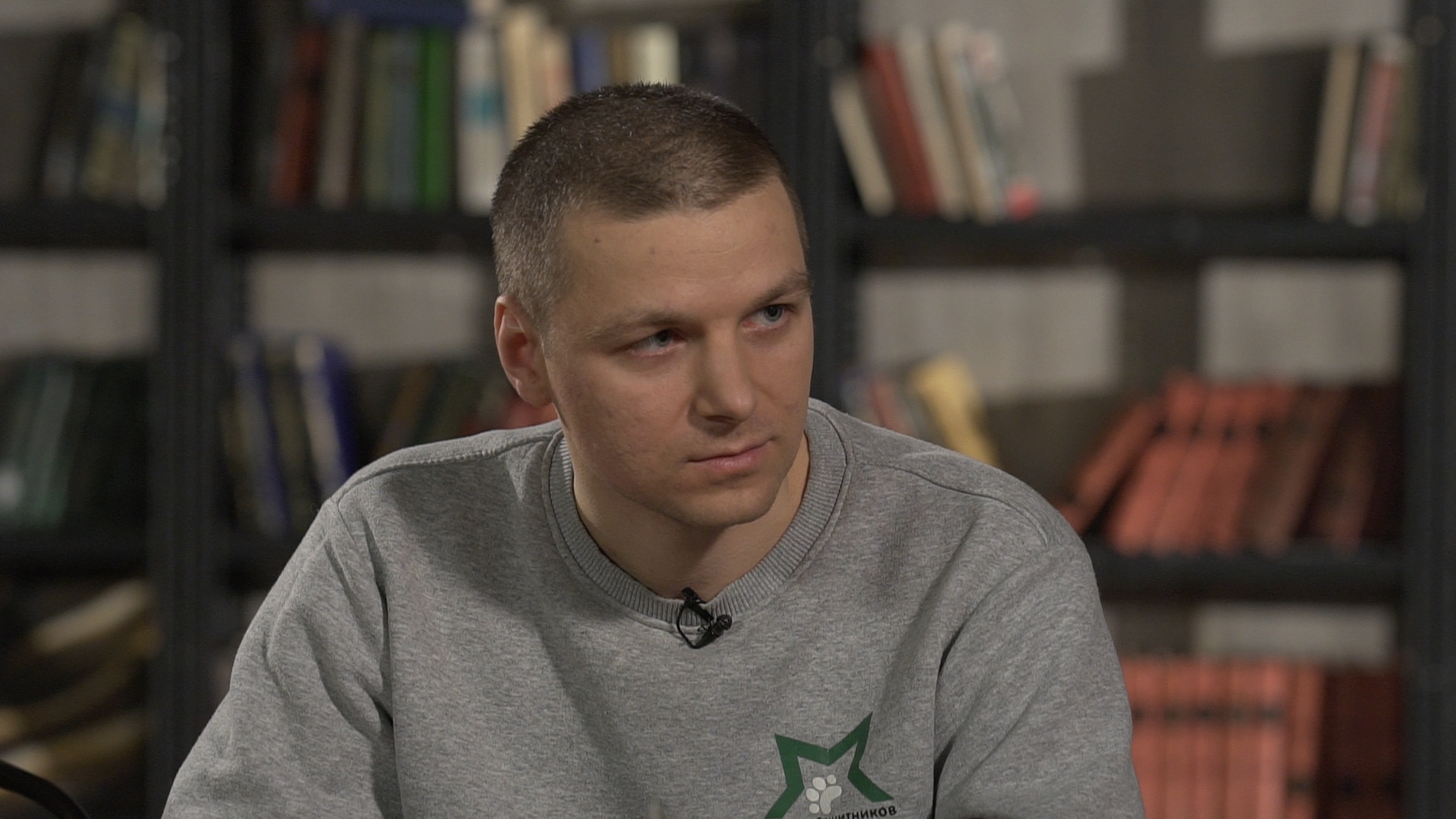
About how we look at animals - descending or equal, argues the chairman of the board of the organization "Alliance of the Defenders of Animals" Yuri Koretsky .
Yuri Koretskiy: We strive to ensure that the last cat -lane and the last farms for animals were closed in order to withdraw animals from the position of slaves who are subordinated to a person who has absolutely no right to life. They are only sources of meat, milk, some products. And this is wrong. These creatures experience large, vivid emotions, almost like a person, experience the whole gamut of feelings. They experience pain and suffering, affection for their children. And what we do with them is fundamentally wrong. Any person should think about it. We take a lot of steps so that people begin to perceive this topic so that it appears in the information space, so that they begin to talk and think about it: is it good that we hold a lot of chickens in a small cage, and their whole life passes behind bars, without sunlight, without grass? Of course, this is wrong. Is it right to keep the cows in the stalls, constantly fertilize them artificially and immediately pick up their children to pump milk? No. Milk for a calf, and people in adulthood do not need it.
I am sure that the day will come when humanity comes to understanding how inhuman, this process is immoral, just like we came to understanding slavery, the overcobean of this process. After all, even 100-150 years ago, it actively flourished in our country. But ethical progress changes very much. The twentieth century was a century of victories in the field of human rights, many important concepts of human rights and freedoms were implemented. And the 21st century has been predicted as an age of animal rights, two decades have already passed, and large steps have been taken in this direction.
My children did not try either meat or fish, and alive, so that we do not need meat
Victor Kosakovsky: A person’s population over 100 years has increased four times. Previously, people ate meat about once a week, but the urbanization and increase in the population went simultaneously and very sharply. The consumption of meat from 10 to 100 kilograms occurred almost imperceptibly, within about 100 years. This is absurd! I have never eaten meat from four years old. My children did not try either meat or fish, and alive, so that we do not need meat-this is a mistake.
Sergey Medvedev: Tell us about the role of Joaquin Phoenix in your film.
Victor Kosakovsky: I am a man from the old film school, came to the cinema at 17. In those days, before shooting, the directors made a motivational speech - why are we doing this, what is the meaning of life and so on. And I also do this for my young group from many countries of the world - from England, Scotland, Spain, Canada, Norway, Italy, Denmark. Suddenly, the Phoenix receives an Oscar, and my phone begins to burst: "Have you heard the speech of the Phoenix? He repeated word for word what you told us every morning!" We contacted the Phoenix, showed him the film, and he immediately called me a cry: "Finally, someone did it: he gave the floor to wordless animals, drew attention to their personality-not what we are, but what they are!"
Films now come out 50-60 thousand per year. You can make a film, we have learned to do it. But showing a film is another question. It is very difficult to get into the small number of films that people will see. And in this sense, Phoenix is madly helping me, because his authority in Hollywood is huge, everyone listens and monitor his movements. And if he decided that he would promote my film, then, of course, interest in this film increased.
Sergey Medvedev: Arseniy Khitrov , sociologist, graduate student of the University of Cambridge, connected to our conversation.
We said that the Gund pig is actually a person. What does science say about this: where is the point with which we can recognize the animal by a person?
Arseny Khitrov: The way we relate to the world and each other surrounding us and is very dependent on how we imagine these objects, how we classify them. An amazing paradox associated with animals is that we simultaneously put animals in several categories at once. The first is pets. We are touched by them, we care about them, attribute to them human qualities, we are anthropomorphic. But this is not the only category: we also put them in the food category, and here is a completely different set of practices and emotions. Here, many people are also very often positive, because food gives joy, and people photograph food, lay out on Instagram, share recipes, come up with new ones, discuss cooking. And animals are also involved in this process.
And the third category is clothes, things, furniture, bags, jackets, fur coats, hats and so on. Here, too, a certain set of practices and emotions arises. And the deep paradox of modern life is that we can simultaneously interact with these three types of categories. We can rush through the whole city to the veterinary hospital to treat our pet, and then go to the restaurant and order pizza with sausage, take a picture of it, put it on Instagram, and, wrapped in clothes made of animals, continue to continue our journey. Where does this border go in the mind between the animal as an object and animal as a subject? It is very difficult to answer this question, because the answer depends on what logic we consider this or that animal.
Sergey Medvedev: Konstantin, but there are already legal systems in which individual rights are recognized as animals.
Konstantin Sabinin: In German legislation, and in the Swiss, English, and in many other legislation, animal rights are concluded to one way or another, but there are nowhere, although there are certain acts on one or another disciplines in relation to experimental animals. By the way, Arseny did not mention the two important areas of the appeals of people with animals - these are experimental animals (more than 150 million a year) and animals for entertainment.
Sergey Medvedev: Including cinema, by the way.
Konstantin Sabinin: Yes, cinema, circus.
Sergey Medvedev: The same legendary cow from Andrei Rublev Tarkovsky ...
Konstantin Sabinin: He still has a horse from the steps and really breaks his legs on the air and, apparently, the spine, because he falls on his back.
Sergey Medvedev: And she was shot after that.
Konstantin Sabinin: This is very cruel! Even the extras in shock stops, stops playing and simply watches this hellish event. She poke her with a spear. From that moment on, Tarkovsky disappeared to me.
Sergey Medvedev: In India, the rights of personality are recognized for dolphins.
Konstantin Sabinin: The vegan movement is growing everywhere and develops with unprecedented power, more than ever, especially recently. The problem is not worth classifying animals as food. There are excellent ethical alternatives in all areas. Now there are vegan substitutes for meat, fish, sausages, cheese, milk, anything. Even the leading brands of the world, the same Nestle and Danon, were concerned about the development of vegan substitutes for dairy products. The largest manufacturers have as investors Bill Gates, Ilona Mask, Leonardo DiCaprio, they are involved in the development of artificial, vegetable meat, that is, an analogue of meat produced without the murder of animals. Есть прекрасные заменители меховой одежды, которые внешне порой выглядят даже лучше образцов меховых животных, и при этом они греют, а животный мех не греет. Порядка 38 стран отказались от тестов на животных. Зверофермы закрываются: здесь помог ковид, пандемия. Это хороший триггер для человечества.
Сергей Медведев: Была ужасная проблема с норками: чудовищные кадры, когда миллионы животных были убиты в одночасье.
Константин Сабинин: Их ежегодно убивают для шуб в количестве от 15 до 19 миллионов в той же Дании. А тут незадача – ковид помешал, и убили просто так, поэтому всем жалко. Это чистый фашизм, спесишизм .
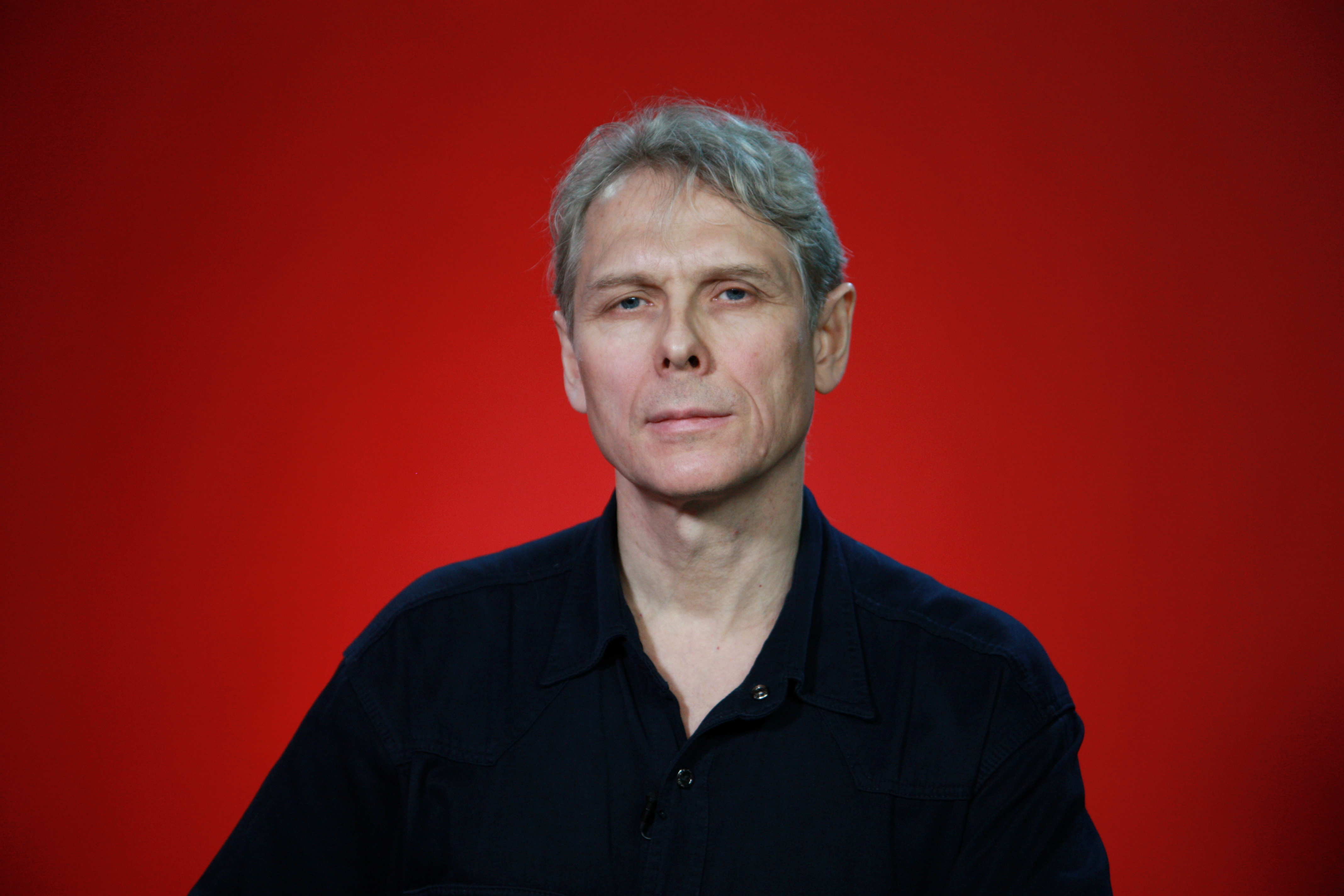
Виктор Косаковский: Почему Россия такая огромная страна? Как мы из Петербурга добрались до Владивостока? Если вы заглянете в бюджеты Российской империи, то узнаете, что одной из основных статей дохода была пушнина. Сейчас мы сидим на газе и нефти, а раньше тоже потребительски относились к природе: вместо того чтобы что-то делать, брали, что есть, нещадно убивали и продавали. Может быть, это наша психология такая – вместо того, чтобы создавать, просто убить и продать или украсть, как сейчас. Мы же не знаем, для чего в природе существуют нефть и газ: может быть, как раз для того, чтобы охлаждать землю. Мы уже пару сотен лет выкачиваем нефть из земли и не знаем, к чему это приведет.
В Индии за дельфинами признаны права личности
Сергей Медведев: Виктор, как Гунда взаимодействовала с людьми на съемочной площадке?
Виктор Косаковский: Я в свое время снимал ребенка, который никогда не видел зеркала: ему потребовалось 20 минут, чтобы понять, что это он сам. А свинье нужен один взгляд! И в Кембридже это доказали. В английском обществе, несмотря на то, что парламент там отстает, многое сделано. Например, англичане выкупают на скотобойнях животных, привозят их на свои земли и дают им право жить до конца. Это потрясающее явление сейчас распространяется по всей Европе. Я много ездил, пока искал все эти истории. Гунду я нашел сразу, а вот корову… Обратите внимание, как они чувствуют свободу. Помните, как коровы бегут – как будто танцуют! Корова никогда не видела траву, и она не ест ее, а вдыхает аромат. Огромный бык подошел к березе: он не ест листья, наслаждается запахом. Разве это не чудо?!
А мы все время говорим о том, что человек – самый важный. Человек придумал пытки, и до сих пор они есть и у нас, и в Америке, и в других странах. Человек придумал атомную бомбу, автомат "Калашников", оружие массового поражения, концентрационные лагеря, ГУЛАГ, "Новичок". Человек придумал охоту и теперь убивает животных, которые заключены в небольшое пространство, а потом фотографируется с ними, как герой с трофеями.
Сергей Медведев: Об этических дилеммах жизни человека и животных рассуждает Семен Баутин из движения Vegans for Animals.
Семен Баутин: Веганство можно назвать в какой-то степени философией, но я бы сказал, что это моральная позиция, так же, как моральная позиция, например, выступать против насилия над людьми. И тут скорее играет роль справедливость, нежели какие-то религиозные или другие побуждения. Веганство – это такой современный взгляд на отношение к животным, который отвечает на запросы современного технологического мира, позволяет нам перестать использовать и убивать миллиарды животных ради своего удовольствия и комфорта и наконец начать воспринимать их интересы всерьез.
Единственный способ помочь животным прямо сейчас – это, в первую очередь, отказаться от их эксплуатации напрямую, то есть перестать спонсировать и использовать продукты их убийства. Веганское движение положит конец использованию животных, так как на морально-этическом уровне это станет так же аморально, как использовать людей в рабстве и других сферах, где их эксплуатируют. И это будет экономически невыгодно, потому что если наша экономика переструктурируется на растениеводство и эффективное использование земель, то животноводство просто вытеснится этими сферами. Рано или поздно с точки зрения и экологии нам придется перейти на веганство, потому что мы не сможем больше выращивать такое огромное количество животных, не вредя при этом окружающей среде.
Я в веганстве уже пять лет. За это время рынок растительных продуктов для веганов вырос в несколько раз. В магазинах начали появляться по-настоящему доступные виды растительного молока "Здоровое меню". Наше российское производство запускает продукцию, вполне конкурентную по цене с коровьем молоком. Конечно, у этой отрасли нет государственных дотаций, как у животноводства, то есть в животноводство вкладывается огромное количество наших налогов, поэтому животные продукты стоят дешевле, чем растительные. Но с каждым годом ситуация становится все лучше.
Сергей Медведев: Арсений, вы исследовали другой схожий фильм – "Земляне" Шона Монсона. Там тоже ставилась этическая дилемма вегетарианства. Могут ли фильмы каким-то образом способствовать созданию такого рода атмосферы?
Арсений Хитров: Фильмы – это, конечно, очень серьезный аргумент в пользу веганства, потому что они показывают нам то, что мы не можем увидеть. Из-за разделения труда и индустриального производства мы очень многого не видим. Мы не видим, как организованы эти индустрии, как на самом деле обращаются с животными. И фильмы, особенно документальные, приоткрывают эту завесу. И фильм "Земляне", в котором тоже участвует Хоакин Феникс (его голос звучит за кадром), – это огромный серьезный аргумент в пользу веганства. На мой взгляд, фильмы обладают огромной силой и способны изменить отношение человека к этой проблеме.
Но одних фильмов недостаточно. Нужно воздействовать на экономические интересы, интересы корпораций, которые производят еду и другие продукты, сделанные из животных. Наверное, помимо поддержки производителей веганской еды и разных растительных альтернатив путем их покупки, важно инвестировать в такие компании. Сейчас активно обсуждается инвестиционный бум на Уолл-стрит поклонников компьютерных игр. Я думаю, можно так же объединяться людям и поддерживать, инвестировать в веганских производителей еды и других товаров.
Сергей Медведев: Да, в этом отношении мы вступаем в новую эпоху, когда возникают некие сетевые партизанские движения, когда простой инвестор, не используя крупные фонды, может влиять на большой фондовый рынок и, соответственно, какие-то этические программы могут перестраивать рыночные механизмы и сам способ устройства нашей жизни на земле.
Виктор, у вас есть в этом фильме некая этическая и политическая программа?
Бог не придумал барбекю, не придумал даже сковородку, не дал вам ни клыков, ни когтей
Виктор Косаковский: Это будет смотреть очень маленький сектор людей: примерно те же люди, которые приходят на Радио Свобода. Режиссер должен решить для себя, занимается ли он пропагандой, и тогда показывать фильм для тех людей, которые его понимают. Но как художник я не имею на это права. Я должен сделать фильм для всех людей: и для тех, кто меня понимает, ценит и не убивает животных, но я также должен иметь в виду тех, кто думает иначе. Я должен создать произведение искусства без пропаганды. Поэтому в фильме есть вещи, которые, если бы я хотел сделать пропаганду, я бы, видимо, удалил: например, эпизод, когда Гунда убивает одного своего поросенка, потому что он был слабый и явно не справился бы с жизнью. Я должен тронуть сердце любого человека: сначала сердце, а потом уже мозг.
There is another aspect. Сегодня миллиард людей на земле не имеет доступа к чистой воде. При этом у нас на земле полтора миллиарда коров, каждой из которых нужно в 10 раз больше воды, чем человеку, а иногда и в 30 раз, в зависимости от климата. Для того чтобы произвести продукты питания для коровы, напоить ее и вырастить все эти продукты питания, мы вырубаем лес. Половина диких лесов в Латинской Америке уже исчезли, такая же трагедия происходит в Сибири, а лес создает облака, то есть мы делаем абсурд. Вот всю эту массу: миллиард свиней, полмиллиарда коров, 50 миллиардов кур, а еще овцы, козы и так далее – надо все это убить, разрубить, заморозить, перевезти, упаковать в пластик, а потом продать и приготовить.
Кто-то говорит, что бог так придумал. Если вы верите в бога, имейте в виду, что бог не придумал барбекю, не придумал даже сковородку. Бог не дал вам ни клыков, ни когтей. Мы все делимся на две категории – на тех, кто верит в бога, и на тех, кто верит в эволюцию. Если вы верите в бога, то там написано – не убий. Если вы верите в эволюцию, есть такая же плохая новость для вас. Эволюция сегодня не остановится, она будет продолжаться. Может быть, завтра, послезавтра или через год появится другое существо. Не исключено, что оно будет умнее нас, а может быть, будет еще более жестоким, чем мы.
Сергей Медведев: И проявит к нам то же самое, что мы проявляем к животным. Круг насилия замкнут. Убивая животных, мы рано или поздно заканчиваем убийством людей. Потому что жизнь едина, и есть, как говорил Альберт Швейцер , благоговение перед жизнью, неважно, будь это жизнь человека, жизнь ребенка, жизнь старика, жизнь свиньи или жизнь маленького поросенка. И вот этому благоговению перед жизнью, состраданию учит фильм Виктора Косаковского. Когда он выйдет на экраны, я призываю всех пойти и посмотреть его: пускай не становиться веганом сразу, но хотя бы задуматься о тех этических проблемах, которые он ставит. А фильму желаю всяческого успеха на "Оскаре".