
Translated material
As a British royal family manage to get out of any scandals
Spoiler: Skillful work with the press
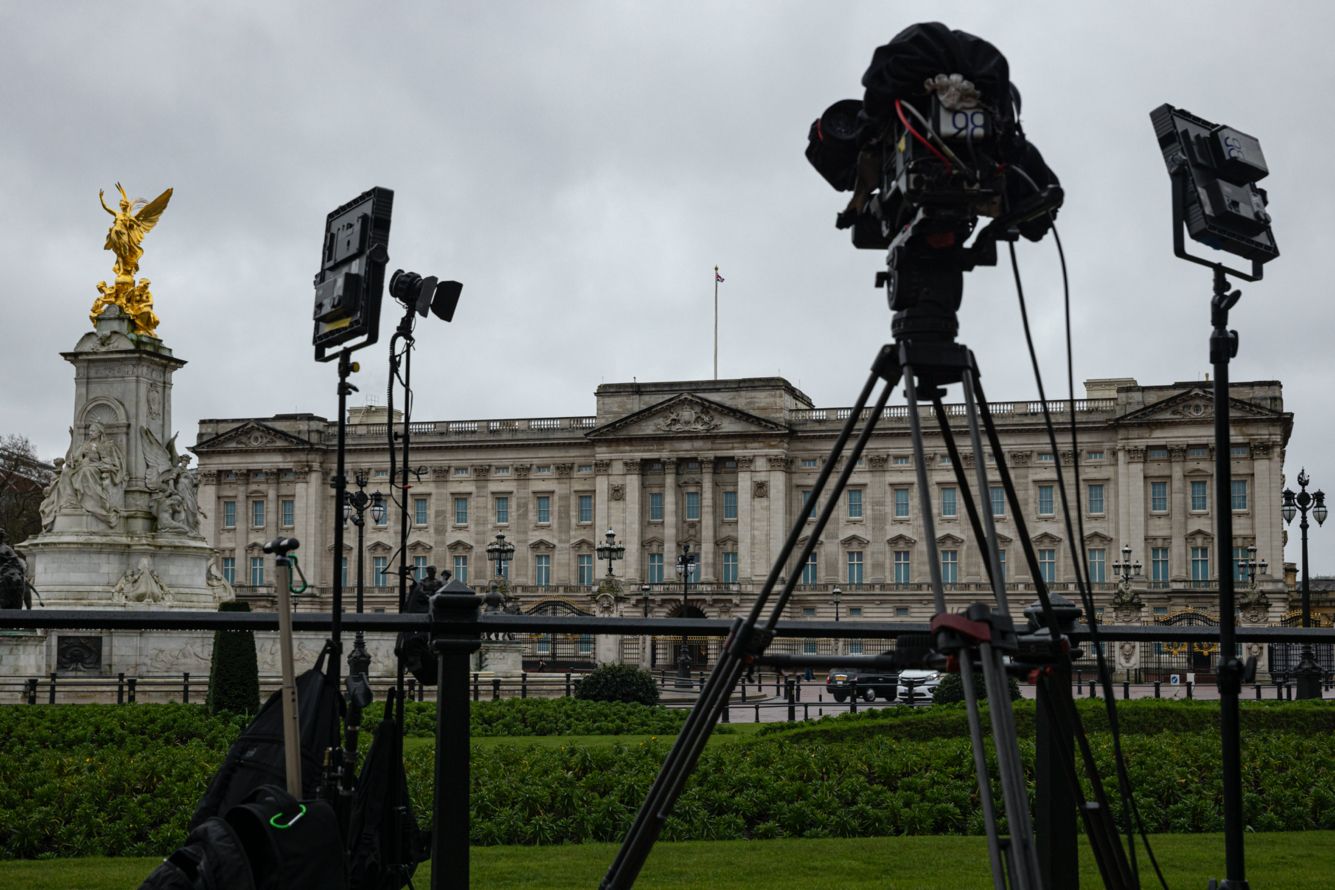
Buckingham Palace is experiencing another scandal. The wife of Prince Harry Meghan Markle told in an interview with the roller of Winfrey that some members of the royal family were worried about the skin color of her unborn child and did not allow specialists during depression (supposedly this would harm the reputation of the courtyard). The revelations of a married couple, in 2020 publicly abandoned their royal titles and duties and moved to the United States, had a huge effect; According to different Columnists, Megan and Harry inflicted the image of the royal family with a crushing blow, from which the queen would not recover. And even Prince William with his ideal family is unlikely to save his grandmother’s reputation. The scandals take place properly - but this does not affect the queen's ratings. At the request of Medusa, the author of the telegram channel about the British policy “Wheat Fields of Teresa May” Regina Kashapova explains how the relations between the press service of the court and the British media are arranged, which for many decades help the royal family to “help out” from any, seemingly irreparable PR catastrophe.
What does the Royal press service do?
To understand how many scandals, unexpected news and revelations have to deal with the royal press secretary, just look at the biography of one of the most famous assistants to Elizabeth II Michael Shi. He worked in this position for less than a decade, but almost for every year of his career there was a huge media scandal. In 1979, it turned out that the arts curator of the royal family Sir Anthony Blant turned out to be a spy and collaborated with Soviet intelligence. And in 1982, Michael Feigan, who had had to be distracted alone, until help arrived in the queen's bedroom, until help arrived.
In the past, the diplomat, Michael Shi, was a charming and sociable person-unlike the previous royal spokeswoman, the tacitudinal military Richard Collville-therefore he quickly found a common language with journalists. Thanks to his efforts, many potential scandals have not reached the first lanes of national newspapers, while others were forgotten without significant harm to the image of his customers. But during the engagement of Prince Charles and Lady Diana Spencer, even he even had to go into a decisive public counterattack. The paparazzi watched every step of the young couple and actually took the royal residences in the siege, causing the anger of Her Majesty.
In November 1981, the royal press secretary organized a meeting of Elizabeth II with the chief editors of the tabloids. The queen strongly asked them to leave Charles with Diana alone, but she was not successful - after a few months the pregnant Princess of Wales was photographed in one bikini. Then, through her press secretary, Michael Shi Elizabeth II handedthe message to reporters (in a very strict formulation, uncharacteristic for the usually restrained and diplomatic queen): “This is a manifestation of the most bad taste that you can imagine.” It was enough for the violators - the tabloids The Sun and The Daily Star - brought multi -page apologies.
Michael Shi resigned from his post after (but not the fact that as a result) of the scandal. Rumors of political disagreements between the Prime Minister Margaret Thatcher and the Queen, the source of which was believed to be the source of Shi himself, leaked into the press. After dismissal in 1987, the failed poet, successfully converted his experience with the media into a series of political thrillers and PR and political technology guidelines.
The next and, as it also seemed that the irreparable PR crisis fell to decide the next press secretary of Her Majesty Charles Enson, who worked with her at the most difficult time-from 1990 to 1997. It was then that the world followed the love triangle of Prince Charles, Princess Diana and Camille Parker Bowles. Anson, who had long left this position, nevertheless, was one of the first to come to the aid in a new scandal with his family, saying in an interview with the BBC, which is not at the court of racists, and Megan was always accepted with warmth and cordiality.
The current press service also tried to smooth out sharp corners: the official message of the Buckingham Palace says that the royal family was saddened by the story of the couple’s difficult life, worries about racist statements, and most importantly-continues to love Harry, Megan and little Archie. According to the critics, the queen managed to reserve the last word and prevent the further escalation of the conflict, even if it took more than a day to think about the answer.
What are the tabloids achieve?
Harry and Megan, in an interview with the Opher, said that there is a kind of symbiotic connection between the palace and the tabloids. The parties sign an unspoken contract: the monarchs give reporters the opportunity to observe their lives, providing accreditation and profitable places of photographers at royal weddings, funerals and other solemn events - and newspapers try to present them in gratitude in the best light.
However, there is always a risk that in pursuit of the audience, tabloids will violate these unwritten rules. It is enough to recall the loud business of the newspaper News of the World, the leading tabloid of Great Britain under the guidance of the famous media Magnate Rupert Murdok. Journalists were accused of illegally listening to mobile phones of famous people: politicians, athletes, show business stars and even members of the royal family. After the giant News of the World scandal, it closed forever in 2011.
In his book Flat Earth News, Columnist The Guardian and Mediacritic Nick Davis notes that British tabloids can easily create a person’s image and destroy it. About this happened to Megan. After the first release of the couple, the British press was initially careful in statements. However, it was worth the Duchess of Sussex to violate the royal protocol, the first -headed materials with the same headings began to appear in the newspapers: “Megan destroyed the friendship of William and Harry,” “Megan brought to tears the Duchess of Cambridge,” “Megan avoids communication with my father and its consolidated sister.” The media exposed her in a negative light, setting up the audience against an arrogant American, but praised British Katherine for modesty, cordiality and optimism.
It is worth noting that Harry and Megan themselves officially and publicly - that in itself a radical step that violates an unspoken agreement between the palace and tabloids - refused to cooperate with the largest newspapers Daily Mail, Daily Mirror, Daily Express and The Sun. And after their interviews, the newspapers answered that they did not show a drop of sympathy for a couple and completely sided with their relatives who remained in the Buckingham Palace. Daily Express put the queen in the first lane about the family and duty, and the Daily Mirror publication emphasized how much Prince Charles and Prince William were upset by the interview.
And the loyalty of the media once again worked for the benefit of the queen. According to the YouGov survey , 47% of British spectators considered an interview with Sussex inappropriate, 21% - appropriate, and another 31% could not decide. 36% of respondents began to empathize with the royal family.
"Working with the agenda" does not always lead to the desired results
Shortly before the release of Harry and Megan Opre on the air, The Times suddenly said that the Duchess of Sussex at one time was badly treated with her assistants. Allegedly, back in 2018, the secretary of the Kensington Palace Jason Knauf accused her of two press service employees of a bullying. According to the publication, Prince Harry met with Knauf and asked him not to betray the history. But the personal press secretary of the couple claims that there was no meeting. The Buckingham Palace promised to treat the accusations with all seriousness and begin the investigation.
This cannot be called the machinations of the tabloids - the official The Times does not apply to them. But why then a respected publication published such a dubious story? Some believe that it was a distracting maneuver from the Buckingham Palace itself. The PR service of the royal family allegedly tried to distract the attention of the public from the work of Prince Andrew, involved in the scandal with the American financier Jeffrey Epstein. Prior to this, Epstein was convicted of involving minors in prostitution, and in 2019 he committed suicide in a New York prison.
Then the son of Queen Elizabeth tried to make excuses independently. He gave an interview with BBC, in which he challenged the testimony of one of Epstein’s victims. According to Andrew, he did not know about the illegal activity of his friend and did not enter into sexual relations with a minor girl. The performance raised more questions than answers, and then the royal PR managers decided to hide the Duke of York. He resigned his royal powers and stopped appearing at official events - but continued to appear in the news and discussions on social networks every time the next news of the case and ties of Epstein was published. However, this time, the focus with the diversion of the public did not work and Sasserkhu failed to transfer attention to the Duchess. They remembered about the prince again - and they accused the royal court of double standards.
The Crown Must Always Win
Shortly before the interview with the interview with Winfrey Harry, he met with the TV presenter (and his close friend) James Corden on his show The Late Late Show. The conversation took place in a much more informal setting than the now legendary interview with American TV; The host and guest chatted at ease, rode on a two -story bus and drank tea. At some point, Harry admitted that it was easier for him to watch the series “Crown” than to read news about himself: plus the series is that he does not claim to be absolute reliability, but certainly does not like the tabloids.
And this is true: if in the series real events are embellished , then rather in favor of the royal family. Moreover, the creator of the series Peter Morgan was able to exactly convey the mood with which the Buckingham Palace reflects public scandals, with just one phrase. “The crown is always obliged to win” - such the main instruction gives Queen Maria to his granddaughter Elizabeth, who has just lost her father, the son of Maria, King George VI, - and automatically became the reigning queen.
The main thing for the royal family is not to drop yourself in the eyes of the public and not shake respect for the institution of the monarchy. So far, it was successful to do this: a survey conducted by the Daily Express newspaper in May 2020 showed that 60% of the British consider Queen Elizabeth a symbol of constancy and unity of the nation. How the scandal with Megan and Harry will show on her majesty, future surveys will show, but so far the most readable and influential British newspapers are entirely on the side of the royal court-and his press service.
Author: Regina Kashapova ( "Wheat Fields Teresa May" )
Editor: Alexey Kovalev