
Translated material
What did Putin see on the Internet?
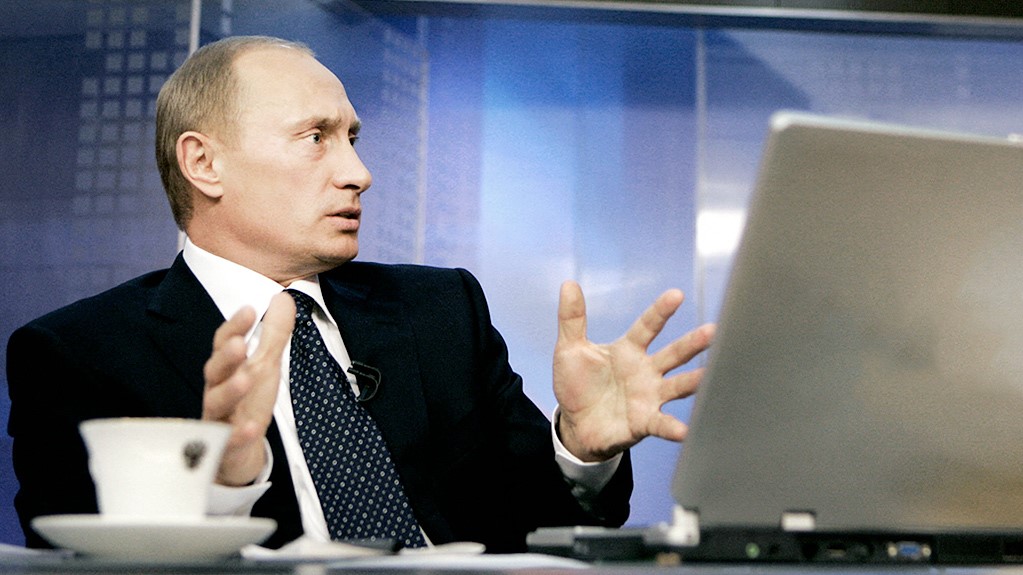
Roskomnadzor announced that he was starting to slow down the speed of Twitter in Russia. The department explained this by the fact that the social network does not delete illegitimate content: calls to suicide, extremist materials, as well as children's pornography. President Vladimir Putin twice spoke about the same and clearly made it clear: the Internet and social networks are a threat to the country's security.
Mumin Shakirov sums up the results of the 11th week of 2021 and discusses this and other topics with a political scientist, president of the Indem Foundation Georgy Satarov; With politician Vladimir Ryzhkov and with the Executive Director of the Association of Tour operators Maya Lomidze .
Video version of the program
"You will all be detained"
Mumin Shakirov: My guest is George Satarov . We wanted to talk about social networks, about how the government reacts to what is happening around them, but the entire script was broken by the police who threw the Forum of independent municipal deputies today, held at the Izmailovo hotel in Moscow.
According to the OVD-Info, at least 170 people were detained. Among them is the Executive Director of Open Russia Andrei Pivovarov, politicians of Vladimir Kara-Murza and Evgeny Roizman, municipal deputies Ilya Yashin and Julia Galyamin. Police officers broke into the Izmailovo hotel about 40 minutes after the start of the event. The reason, according to the security forces, was the fact that he was organized by an “unwanted” organization without specifying which one. The Russian authorities consider “open Russia” “undesirable”.

Width PX Height PX
The url has been copied to your clipboard
No Media Source Currently Available
0:00 0:01:18 Download the media fileMumin Shakirov: Georgy Aleksandrovich, do these personnel show that in Russia there is still an authoritarian regime or already military dictatorship?
Georgy Satarov: We live in a very interesting time - historical degradation. Back in 2005, the first absolutely scientific academic publications appeared that a model was formed in Russia, which is called Muscovite Economical Model in the institutional economy. This is a model of the economy, a model of its authorities of the times of Ivan the Terrible.
Mumin Shakirov: So there are guests. We saw them now.
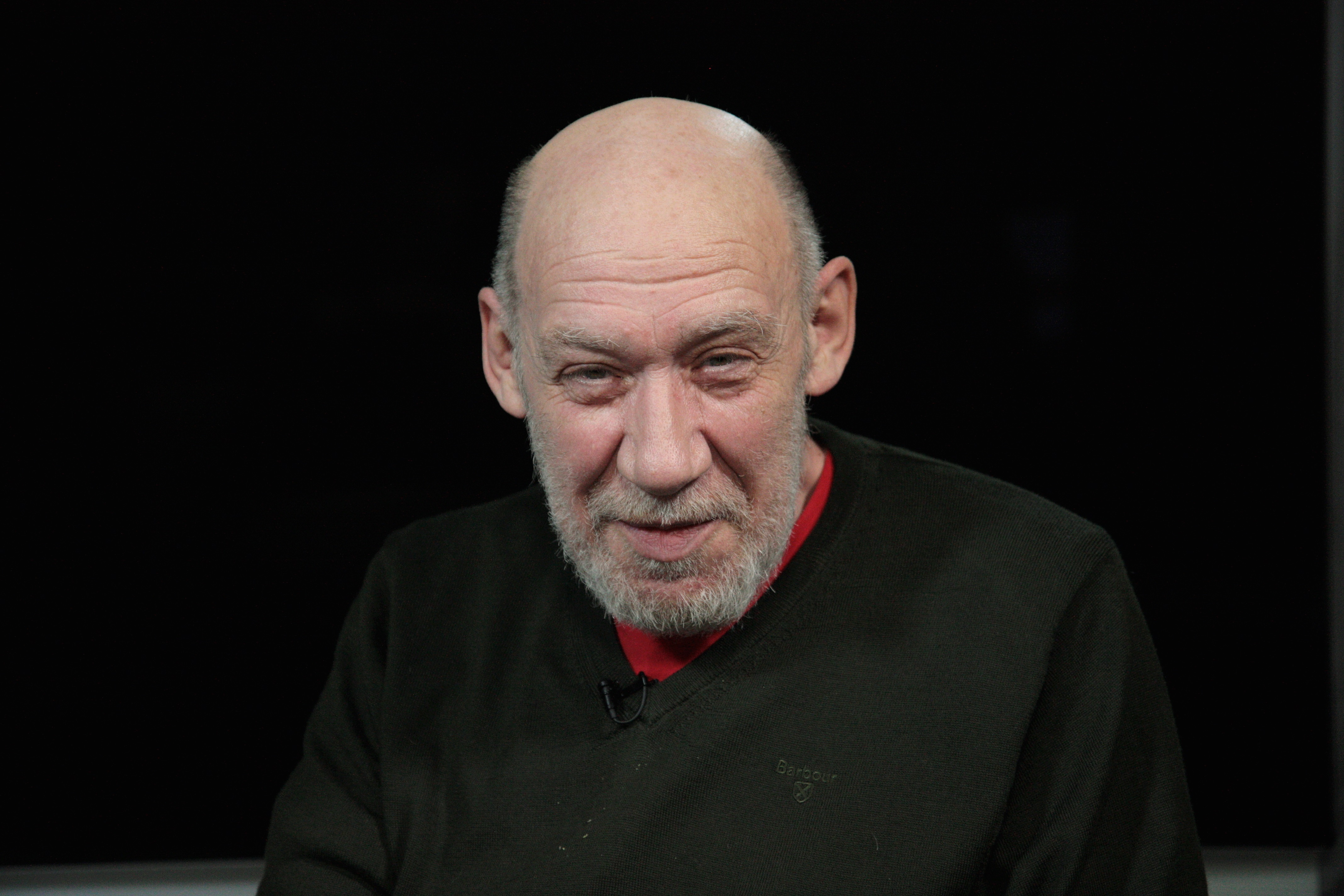
Georgy Satarov: No need to confuse two different processes. The first process is evolutionary development. The second process is evolutionary degradation. In this case, oil rent arose and the desire to control it, distribute and so on. And then they begin to degrade all institutions further under it, degrades the political regime, adjusting everything around this model of the late XVI - beginning of the 17th century. That's what we see STEP by Step now. And different plots are absolutely as if corresponding to this process.
Mumin Shakirov: Historical analogies are always beautiful, but they live a separate life. Still, there is already a military dictatorship or not yet?
Georgy Satarov: Of course, there is no military dictatorship.
Mumin Shakirov: with us on Skype Andrey Pivovarov , one of the organizers of this forum. Andrey, where are you? Are you free or not? And what are you worried about now?
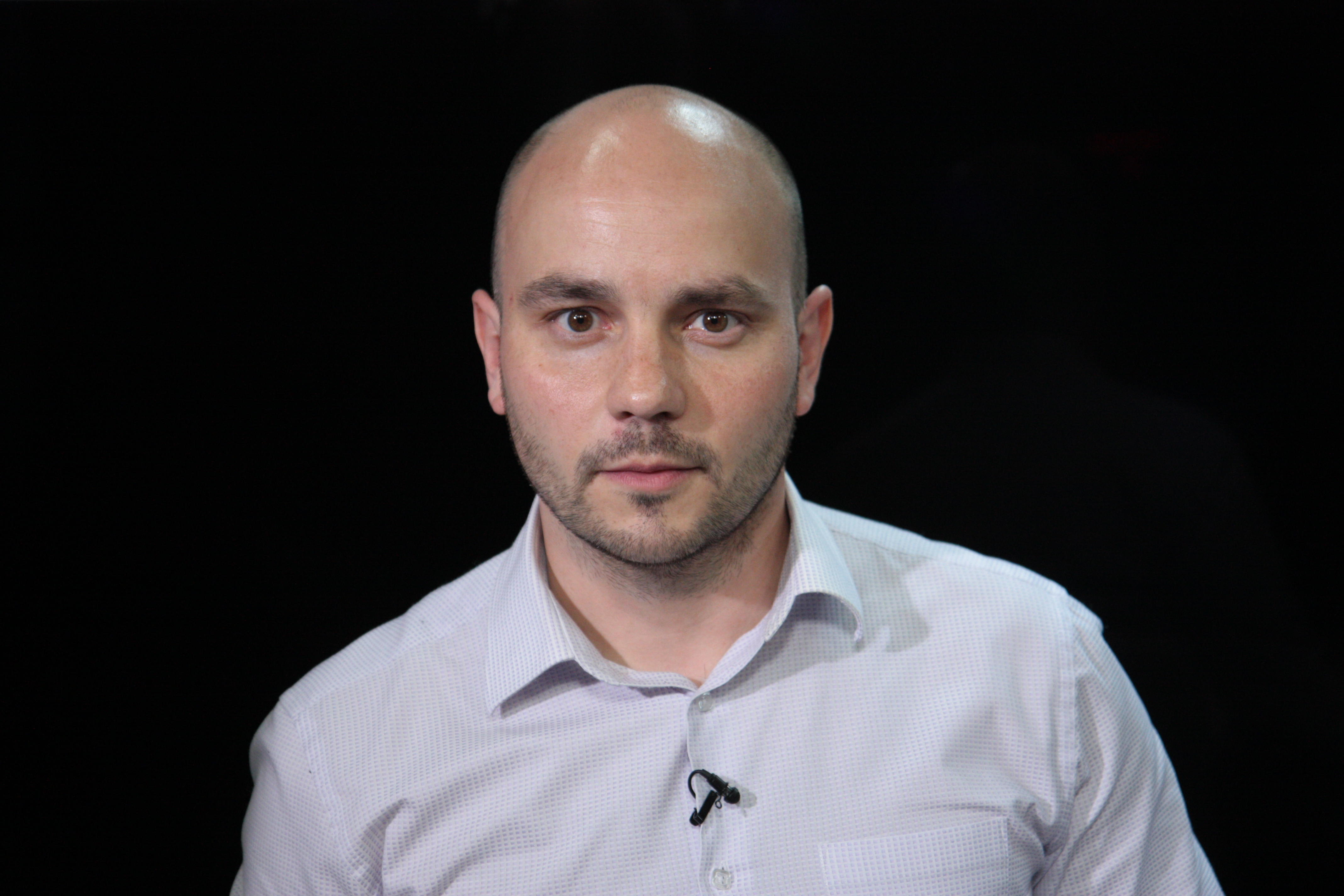
Andrey Pivovarov: I'm free. My colleagues and I left the ATS, we are waiting for about 40 more people who still stay there. In principle, they returned to where the forum was held. There are many guys from different regions, many delegates.
Mumin Shakirov: What threatens you - a criminal article or administrative?
Andrey Pivovarov: Administrative. We were accused of participating in the activities of an “unwanted” organization, they wrote out protocols under article 20.33 to all participants. This has never happened in history when 150-170 people, simultaneously detained, wrote out such protocols. It seems to me that a very demonstrative and lawless action has been committed.
Everything that, firstly, is incomprehensible, should be destroyed, and secondly, is poorly controlled
Mumin Shakirov: Recently there was the process of Anastasia Shevchenko , who was given conditionally for several years due to the fact that she was in contact with an “unwanted” organization. Do you even threaten you yet?
Andrey Pivovarov: No. This is in the case of a repeated violation, if two or more protocols are recruited, there is an opportunity to initiate a case under a criminal article. Apparently, such a threat was created specifically, because most people who participated in the forum are municipal deputies. There were regional and municipal deputies. There were more than a hundred of them. Apparently, in this way, the authorities decided to send a “black mark” to those who participate in the forum, because it is mainly independent municipal deputies, strong politicians. Thus, they wanted to warn them that they needed to refrain from some sharp actions in terms of politics. This is the threat that was sent by the presidential administration, security officials.
Mumin Shakirov: Do we still have an authoritarian regime or military dictatorship?
Andrei Pivovarov: So far, we have an authoritarian regime, but we quickly go to the Belarusian version, and there it will already be close to a military dictatorship.
Mumin Shakirov: a member of the Yabloko party and the famous policy of Lev Shlosberg, the story with municipal deputies reminded the acceleration and arrest of deputies of the Constituent Assembly by the Bolsheviks in January 18. This is to you, Georgy Alexandrovich, Alaverds for your historical analogies. It seems?
Georgy Satarov: In general, it seems. Of course, Oprichnina appeared - the Russian Guard and so on. But military dictatorship is a completely specific form of dictatorship. Pinochet ...
Mumin Shakirov: Putin - not yet kick.
Georgy Satarov: No, of course, does not kick. But the fact that he seems to be protected ...
Mumin Shakirov: Who is he protected from?
Georgy Satarov: From all. What is an oprichnina? This is a personal guard that protects you from everyone - from those who are from below, who are from the side, from the boyars. This design allows you to draw perfect analogies.
Mumin Shakirov: Political scientist Andrei Kolesnikov from the center of Carnegie says that the authorities perceive the mundops as a powerful opposition force. Is that so?
Georgy Satarov: This is not entirely true. What they usually did, constructed whom they pressed did not depend at all on the participation of these people in resistance to the political regime or claims to replace it through political mechanisms. It is enough to recall the attack on human rights activists. Everything that, firstly, is incomprehensible, should be destroyed, and secondly, is poorly controlled. It scares first of all.
Mumin Shakirov: Is it possible to say that Putin has crossed the red line and is now going to the complete destruction of the non -systemic opposition on all fronts? Or are some options possible?
Georgy Satarov: Today's action is close to this, because the point is not so much to intimidate them, but that it was possible to get a criminal article to them with repeated actions - and then they simply remove from the run.
Mumin Shakirov: First of all, they are removed from the elections to the State Duma.
Georgy Satarov: Yes.
Mumin Shakirov: Is it possible to say that the Duma campaign is in full swing, since they are planted by hundreds - we are talking about activists of the rally or march in support of Navalny? The detention of municipal deputies is the continuation of this story, and the Duma repressive machine works at full power.
Georgy Satarov: I do not think that she is already at full power. This is still ahead.
Mumin Shakirov: But all the associates of Navalny are either under house arrest, or abroad. Alexey Navalny himself is behind bars in a criminal article.
Georgy Satarov: Municipal deputies are closest to people. This means that in elections in majority districts they have a significant advantage over the proteges, for example, United Russia. Of course, they are dangerous. The blow to this danger is inflicted.
Putin attacks Twitter, in line of YouTube and others
Mumin Shakirov: Let us return to the scenario that was prepared from the very beginning - we are talking about Twitter. Twitter took the first blow to himself. Let's listen to what Putin said.
Putin is not concerned about the morality of Russian citizens and the problems of unfortunate children, but a political danger to this regime
Vladimir Putin: We come across on the Internet with child pornography, with children's prostitution, with advancement, with the spread of drugs, where children and adolescents are the target audience, with pulling out the same street in order to fuck and fight with the police, and then hide for the children, substituting them forward. This is the use of children as a tool to achieve someone's selfish goals. And it is always a source of use of children - as a source of profit.
Mumin Shakirov: No matter what he says about the Internet, everything boils down to suicide, children's porn, molestation of minors and prostitution. We do not see another rhetoric. But we understand that we write two, three in the mind. What did Vladimir Putin mean, speaking of one, and you thought about another?
Georgy Satarov: His protection of morality is absolutely not original. Say, in the United States in the late 90s, a law was generated, the name of which was translated something like this: about the protection of morality on the Internet. It was a sincere attempt. But the American courts repelled this case completely, because it is an attempt on the first amendment. How they wrote: the power of the Internet in the variety and chaos of various opinions, just like in the free press, and all this is protected by the first correction of the Constitution. Here Putin is clearly cunning, because everything he was talking about was a long time ago.
Mumin Shakirov: Is it possible to say that Alexey Navalny, showing a film about the palace in Gelendzhik, according to him, belonging to Putin, struck a powerful blow to the reputation of the President of Russia? And the story with this film served as the trigger of Putin's performance against the Internet.
Georgy Satarov: Yes, maybe this played the role of the last drop. Of course, Putin is not concerned about the morality of Russian citizens and the problems of unfortunate children, but a political danger to this regime.
Mumin Shakirov: You are YouTube blogger. You have several thousand subscribers. Have you strained when Roskomnadzor ran to Twitter?
Georgy Satarov: I have not been very tense. My subscribers were more tensed, who feared attacks on education in connection with the new law. I'm not sure that they dare to completely block the Internet. Otherwise, they cannot achieve anything.
Mumin Shakirov: politician Vladimir Ryzhkov can contrast you with his point of view. "The Kremlin is ready to go to radical measures to limit the Internet in Russia," said Vladimir Ryzhkov. He does not exclude that the Kremlin will follow the Chinese scenario.
The authorities, struggling with a free Internet, will still bomb their own economy
Vladimir Ryzhkov: The Chinese who have been living in this reality for 20 years have learned how to use proxy, VPN ... I think that the active part of Russian society will switch to technical methods for bypassing restrictions. Western services and social networks will also come up with some ways in order to facilitate citizens of authoritarian countries the opportunity to communicate and correspond. They will do something for this too. But I think that millions of people will not be able to use this, a pensioner in Barnaul and so on. She will be disconnected. They will tell her: "Listen, mom ..." - "May I not do it." They will cut off people from information, this is the goal, there will be a gigantic damage to the economy, service, hotels, online trade, public services. Because even today's Twitter exercises showed that as soon as Roskomnadzor began to slow down Twitter, the Kremlin’s sites, State Duma, the Federation Council and Roskomnadzor itself fell. They, excuse me, are needled. They will "bomb Voronezh", the whole country, like Voronezh. The authorities, struggling with a free Internet, will still bomb their own economy.
Georgy Satarov: China was walking from zero on the Internet, gradually opening, but controlling. Here the situation is opposite. Our Internet was completely open, and the process is in the opposite direction. And this is a completely different situation. People, first of all, young people, learned to live on this Internet, including children, the wives of those who are going to close the whole thing. They are not able to compensate for this with some of their own developments due to the adjective used by Volodya Ryzhkov. But they will strike at their own families, according to their interests, according to their expectations. And this is very dangerous. It's like a dry rubbish.
Mumin Shakirov: If this threatens Putin’s personal security, will he go to radical measures? After all, his political future is at stake.
Georgy Satarov: Putin psychologically does not really like dramatic solutions. He is ready to intimidate, to spot repression. But he is a very cautious person.
Mumin Shakirov: There is an opinion that the security forces have been intercepted the initiative now. Some foreign experts say that Putin is now a little grazing before the security forces. Do you believe in this version?
Georgy Satarov: I believe in this version. Let us recall 2007, when there was also a complete feeling that they intercepted, and then there was a distinct idea of which of the people in uniform would be the future president. Who became the president? ..
Mumin Shakirov: Now there is a great discussion around what can be shown that you cannot show on YouTube platform. Private business owners limit separate content. Suppose, we are talking about the film "Crimea. Way to Homeland." Does the Kremlin have the right to criticize Google and YouTube platform for the fact that they thereby limit the number of visits? Or is it not their dog business?
Georgy Satarov: Absolutely! The fact is that Google is part of society, not part of the authorities.
Mumin Shakirov: For whom?
Georgy Satarov: I'm for Google, for society.
Mumin Shakirov: But Google has a subjective point of view. He believes that this film is good and this is bad.
Georgy Satarov: Of course. But Google has its own subjective point of view, and other information distributors have a different point of view. And society has the opportunity, if society does not suit Google in this area, switch to others. And Google will be forced to react.
Mumin Shakirov: You are YouTube blogger, hang your videos, and there are unpleasant replicas to the authorities. If Google decides to disconnect you or some of your content, will you have no complaints about Google?
Georgy Satarov: No, of course.
Mumin Shakirov: So you will put up with this?
Georgy Satarov: Of course. Because society differs from power with a variety and variety of possibilities of access to information.
Mumin Shakirov: From Russian bloggers they want to get taxes. The Ministry of Digital Development believes that the budget does not receive money from advertising, and proposed to oblige the platforms (such as YouTube) to pay personal income tax for Russian bloggers earning on it.
Mumin Shakirov: Georgy Aleksandrovich, you, as a YouTube blogger, are you ready to pay personal income tax?
Georgy Satarov: Actually, I am obliged to pay taxes from any income. Then I see nothing supernatural.
Mumin Shakirov: Are these normal claims?
Georgy Satarov: If I do not pay, there will be normal claims. As for the channels, these are the problems of their relationship with this power. I have my own relationship with the authorities. I pay taxes here, since I am a Russian citizen. In any case, I must calculate at the end of the year how much I earned - five or $ 10. You yourself called the volume of the number of my subscribers. True, I am more worried about their quality than quantity, which is much more interesting. But I must do it one way or another. I do not see a problem.
Mumin Shakirov: Here we are only talking about money, nothing personal? Or is there a certain element of censorship and hitting social networks?
Georgy Satarov: There is an element of collision, of course. This is a general psychology. This is a little higher, the next level of power, to be distinguished. Everything is imbued with this.
Mumin Shakirov: I recently read the post of one of the journalists, experts who spoke about Alexei Navalny: "We are here, and at that time an absolutely innocent person is in prison, and it is not known whether he will survive or not." Will he survive?
Georgy Satarov: I hope yes. This is a strong person, firstly. And secondly, I do not think that Putin will risk it again.
Mumin Shakirov: We all perfectly understand that the court is a court, but this is the personal vendate of the President of Russia Navalny. Putin put him in jail through the judicial system because he accused him of trying to poison him, kill him? Or just for the fact that Navalny claims power and wanted to participate in the presidential election? What is more painful for Putin?
Georgy Satarov: I think a personal insult.
Mumin Shakirov: That is, when he accused him of almost murder.
Georgy Satarov: Yes, of course.
Mumin Shakirov: How Navalny arrived - direct broadcasts, millions of people who saw this - did it offend or hit the image of power? Or if he arrived quietly, with some inconspicuous flight, would sit at home, drank tea with his wife, would he still be in jail or not?
Georgy Satarov: I think that Navalny has no inconspicuous flights for a long time. And we know for what reasons. Of course, he is controlled completely frantically.
Mumin Shakirov: Why didn’t Putin sue Navalny when he accused him of trying to kill and poison?
Georgy Satarov: Because even our court is still a public trial. To sue Navalny on such a issue is to provide him with the site again.
Enlightenment under censorship?
Mumin Shakirov: the law on the ban on educational activity was held the second (main) reading in the State Duma. Scientists, popularizers of science and cultural figures opposed. They fear that if a document is adopted in Russia, it will become impossible to engage in any scientific activity without approval of the state. But how justified are these fears?
Мумин Шакиров: Насколько будет успешен этот законопроект, который откровенно предполагает цензуру в школах и вузах?
Георгий Сатаров: Действительно, это ограничено школами и вузами. Мой канал тоже имеет просветительскую компоненту существенную. И вроде бы ей пока ничто не угрожает. Но есть одна проблема в этом законе – это так называемые "бланкетные нормы", когда как бы регулирование переносится с закона на усмотрение некоего органа, в данном случае – правительства. То-то и то-то определяет правительство. Законы все-таки принимаются публично. А правительство издает свои постановления, решения в закрытом режиме. И это значит, что могут появляться какие-то ограничивающие нормы по усмотрению правительства, без всякого обсуждения, конкуренции. И главное, без информирования людей, которых это может затрагивать. И это опасно.
Мумин Шакиров: Возьмем наглядный пример. Вы – социолог, ученый, у вас большой политический опыт – вы работали в администрации президента Ельцина. Если какой-то вуз или школа захотят вас пригласить в качестве лектора, вы будете проходить цензурный барьер?
Георгий Сатаров: Видимо, да.
Мумин Шакиров: То есть добро должно дать Министерство просвещения?
Georgy Satarov: Yes.
Будут ли допущены выборам в Госдуму независимые политики, зависит не столько от Путина, сколько от нас
Мумин Шакиров: То, что делает эта власть, – это продолжение зачистки информационного поля с помощью таких законов? Или здесь есть какая-то другая фишка?
Георгий Сатаров: Это, бесспорно, продолжение...
Мумин Шакиров: Что выигрывает здесь власть?
Георгий Сатаров: Выигрывает ощущение защищенности...
Мумин Шакиров: Речь шла о том, что в каждой школе есть свой интернет, есть пароли. То есть некоторые сайты будут заблокированы в школе. Это лишит возможности учеников или студентов добывать информацию за пределами школы?
Георгий Сатаров: Нет, конечно.
Мумин Шакиров: Можно ли говорить, что количество "иностранных агентов" увеличивается, и это политика сегрегации Владимира Путина, чтобы изолировать тех людей, кого он причисляет к этой категории, от публичной жизни?
Георгий Сатаров: Но это ведь не удается. Эта стигматизация "иностранный агент" стала предметом гордости для многих. Сложилось представление о том, что если некто является "иностранным агентом", то к этому человеку надо прислушиваться и доверять ему.
Мумин Шакиров: Путин допустит к выборам в Госдуму хоть каких-то несистемных политиков? Или зачистит поле так, что туда попадут только те, кого он хочет?
Георгий Сатаров: Будут ли допущены выборам в Госдуму независимые политики, зависит не столько от Путина, сколько от нас.
Мумин Шакиров: То есть последнее слово за обществом?
Георгий Сатаров: Всегда!
Мумин Шакиров: Но оно запугано.
Георгий Сатаров: Оно запугано, конечно, пассивно, но это обратимый процесс, скажем так.
Путешествия: далеко – дорого, близко – сердито
Мумин Шакиров: Пандемии коронавируса исполнился год. 11 марта прошлого года Всемирная организация здравоохранения официально объявила о ее начале. Среди наиболее пострадавших отраслей от коронавируса и введенных ограничений – туризм. Возможности для путешествий по-прежнему ограничены, а авиабилеты за рубеж в среднем подорожали почти на 40%, сообщили сервисы по продаже билетов Biletix и Aviasales. Летать некуда – это одна из причин роста цен.
Мумин Шакиров: С нами на связи – Майя Ломидзе . Майя, скажите, мир теперь не будет прежним, как заявил герой репортажа Михаил Ширвиндт?
Майя Ломидзе: Я считаю, что это гадание на кофейной гуще. Можно с одинаковой долей вероятности утверждать как одно, так и другое.
Мумин Шакиров: Если откроется Европа, Америка, у всех будет возможность получать визы и ездить по прежним маршрутам, российский турист отвернется от внутреннего рынка? Или все-таки часть его останется?
Майя Ломидзе: Внутри России всегда, еще до COVID, путешествовало раза в полтора больше людей, чем за рубеж. Другой вопрос: доколе будут отдыхать в Турции, а не в Краснодарском крае? В Турции отдыхало пять миллионов, в Краснодарском крае – 15. Но все равно это "доколе" оставалось. Если границы откроют, конечно, некоторые люди снова начнут путешествовать по загранице. Но, по нашим предварительным оценкам, судя по тому, что происходит с внутренним спросом, примерно 20–25% туристов, впервые в 20-м году открывших для себя отдых внутри страны, захотят снова вернуться в те места, в которых они побывали. Это неплохая цифра.
Мумин Шакиров: Какой процент россиян выезжает за пределы страны? Часто называют цифру в 3%. Насколько корректна эта цифра?
Майя Ломидзе: Да, не более 3%. Только надо правильно понимать, что у нас общий объем выезжающих с туристическими целями по 19-му году – порядка 18–20 миллионов человек. То есть один человек мог совершить три-четыре поездки.
Мумин Шакиров: Кризис всегда чему-то учит. Чему научила пандемия туристов, туроператоров и тех людей, которые выдают путевки?
Майя Ломидзе: Самые ближайшие уроки, которые мы только-только извлекли, – невозможно планировать надолго и не надо этого делать. Не имеет смысла вспоминать о том, как было раньше, надо приноравливаться к действительности и развивать технологии, потому что это точно останется надолго. Возможность забронировать, выбрать онлайн, оплатить онлайн – это важнейший урок пандемии для туристической индустрии.
Мумин Шакиров: Многие отрасли пострадали во время пандемии. И государство частично кому-то возместило ущерб. Например, общепит что-то получил. Туриндустрия получила что-то от государства или вообще ни копейки?
Майя Ломидзе: Прямых финансовых вливаний в туроператорскую, турагентскую индустрию не было. Были общие меры, распространявшиеся на все предприятия Москвы, независимо от отрасли, – это льготы на кредиты, субсидии на зарплату в размере 12 тысяч рублей. И самое главное, самое большое подспорье, полученное индустрией от правительства, – это возможность отсрочки обязательств перед туристами, которые купили туры и не смогли ими воспользоваться, отсрочка до конца 2021 года. И одна из ярчайших мер, которую нельзя назвать прямой помощью только туриндустрии, скорее, туристы от этого выиграют: впервые за всю историю российского туризма была запущена акция кешбэка. Это возврат денег за приобретенные туры по территории России. И это очень крутая мера, которую сейчас туристы уже ждут.
Мумин Шакиров: Почему мало приезжают иностранцы, в чем здесь основная причина?
Майя Ломидзе: Пандемия убила въездной туризм, свела его на нет по совершенно понятным и очевидным причинам. То, что во всем мире имеется в виду под туризмом, то, по чему государства замеряют свою долю в мировой туристической индустрии, – это и есть въездной туризм. И сейчас его в России нет. Мы не имеем возможности принимать иностранных граждан, и непонятно, когда эта возможность у нас появится. Напрямую это увязано с международным авиасообщением во всем мире. Поэтому ответ на вопрос, почему их так мало: потому что такая у нас сейчас ситуация. И даже то невероятное новшество, которого 30 лет ждал рынок, – электронная виза российская – тоже было сведено на нет. Она должна была действовать с 1 января 21-го года, но отложена на неопределенный срок. Поэтому въездного туризма у нас пока нет. Индустрия ждет его с не меньшим нетерпением, чем выездной.
Мумин Шакиров: Узбекистан, например, в одностороннем порядке открыл свои границы для граждан Евросоюза. В Самарканд, Бухару люди поехали сотнями тысяч, увидели совершенно новое направление для себя. Почему Москва не откроет въездной режим для европейцев, которые могут потратить здесь деньги? Вы лоббируете эту ситуацию? Или это политика, и вы туда не лезете?
Майя Ломидзе: Конечно, мы лоббируем любую ситуацию, которая поможет выжить индустрии. Но мне интересно, из какой страны поехали в Узбекистан сотни тысяч.
Мумин Шакиров: Голландия, Германия, Дания... Я видел своими глазами. Когда я там был, я был удивлен и поражен. Это было весной позапрошлого года, до пандемии.
Майя Ломидзе: Сейчас мы общаемся с Узбекистаном, они говорят, что они готовы открывать границы для всех, в первую очередь для европейцев, а европейцы себя никак не выпускают... Вы имеете в виду безвизовый въезд?
Мумин Шакиров: Да, на три месяца открыли границы для Европы – пожалуйста, приезжайте. Взамен ничего не требуют, только приезжайте.
Майя Ломидзе: Это супер! Многие государства так делают. Грузия так делала для Европы и граждан Соединенных Штатов. У России, к сожалению, другое позиционирование в этом вопросе. И электронная виза – это максимальное послабление для граждан 54 стран, которое должно было быть введено с января 21-го года. Электронная виза – это возможность не ехать в консульство, не платить какие-то неадекватные деньги, а заполнить в электронном виде анкету и получить визу тоже в электронном виде. На мой взгляд, это круто. Дождаться, что мы в одностороннем порядке для кого-то отменим визу, – это из разряда абсолютной сказки.
Мумин Шакиров: Это политика.
Майя Ломидзе: Безусловно. Почти год шел процесс разработки электронной визы.
Мумин Шакиров: Когда-нибудь Сочи превратится в Анталию или нет?
Майя Ломидзе: В ближайшие пять лет – нет.
Subscribe to the telegram channel https://t.me/shakirov_itogi