
Translated material
Blue bird
RKN threatens to leave Russia without Twitter on the anniversary of the prohibition of Telegram
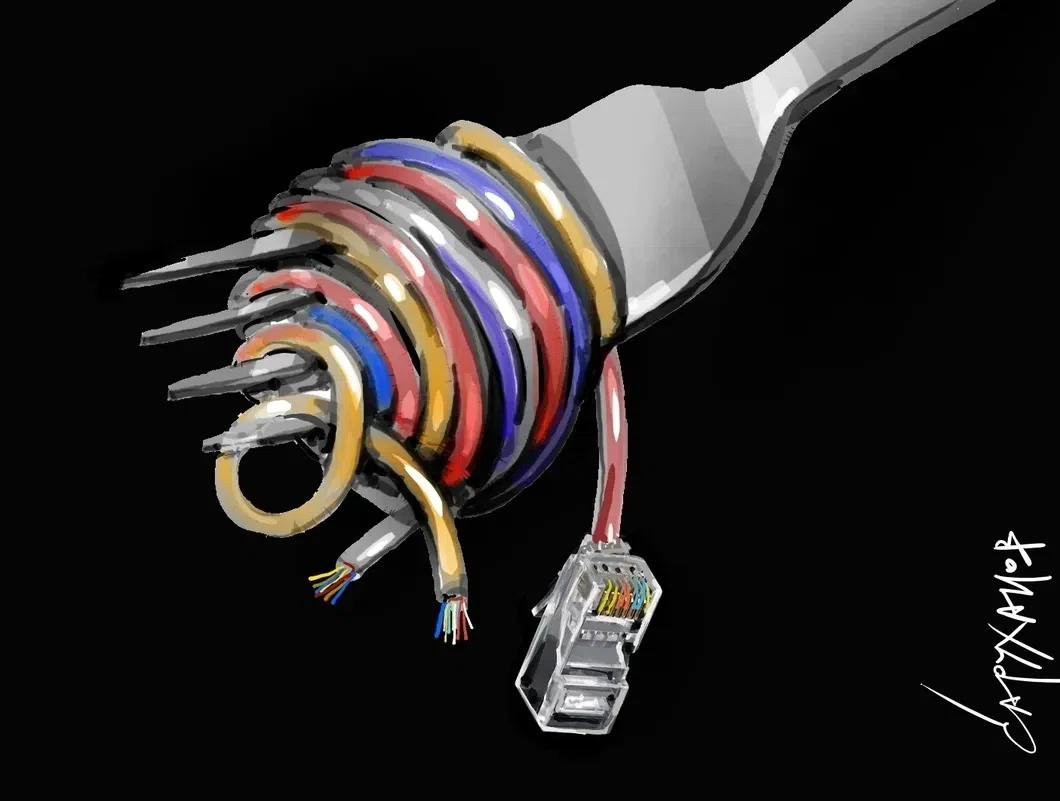
On Tuesday, March 16, the slowdown in Twitter, which Roskomnadzor (RKN) initiated last week, grew into a threat of blocking. According to the deputy head of the department, Vadim Subbotin, the social network has a month to delete all the forbidden information.
“Twitter does not properly respond to our requests, if the matter goes on, then in a month it will be blocked in an extrajudicial order,” Subbotin told Interfax. - Colleagues still have time to go to negotiations. Within a month we will observe and make a decision. ”
The war on the social network was declared a week ago: on March 10, RKN began to slow down Twitter's work on all mobile devices and 50% of stationary devices due to the fact that the social network did not remove more than three thousand materials with prohibited information. Speed change affected only photo and video content. At the same time, at the very moment of “slowdown”, the sites of state bodies began to face problems, in addition, users began to report the slow work of all sites with T.Co in the domain (the same official domain near the social network). The department denied the connection of these processes.
Without Twitter, residents of North Korea, China, Iran and Turkmenistan live.
“ICC Hour” for Twitter in Russia can break through April 16, exactly three years after the start of blocking the Telegram messenger. The correspondent of Novaya Gazeta found out from experts why they decided to finish so quickly as Twitter turned out to be the most convenient social network for blocking and how the ban would turn out for users and authorities.
Expert's opinion
Vladislav Zdolnikov, founder of Red Shield VPN and author of the telegram channel IT and SORMTest drive for RKN
- The introduction of an intermediate stage in the form of slowdown when blocking Twitter was justified exclusively by technical and political reasons. First of all, it was important Roskomnadzor to test how the process of slowing down on a new equipment established according to the Law on the “sovereign Internet” was working. In particular, how a slowdown works for a large number of users of a popular resource. Representatively such tests can be carried out only in real conditions. In addition, by slowing down, Roskomnadzor tried to force Twitter to delete certain materials.
Of course, in fact, this is not about child pornography or calls for suicide, to a greater extent RKN is interested in the operational removal of tweets with calls to [political] shares.
When the department saw that Twitter did not make concessions, they decided to block the social network.
Telegram blocking was a sad story for Roskomnadzor. The department thought that the messenger could be blocked with the help of the resources that RKN had in 2018, but, as we know, they did not succeed. So the decision on the centralized installation of equipment [deep analysis of Internet traffic packages] DPI (it is TSPU-“Technical means of counteract threats”) under the law on the “sovereign Internet” was political, so that its execution was monitored. As we see based on the results of a slowdown in Twitter, approximately 70% of Russian traffic now passes through TSPU equipment. I think that during the next year this equipment will be installed with absolutely all providers.
Unfortunately, the slowdown works, moreover, just as the RKN wants (as we see, pictures and videos are loaded for a long time). When they make a decision on blocking, Twitter will be blocked everywhere within fifteen minutes - this task was available before the implementation of the law on the “sovereign Internet”.
Why the choice of Roskomnadzor first of all fell on Twitter is not so difficult to understand. This is not a folk social network, so there will be no mass discontent about blocking Twitter. Only a few million people use Twitter in Russia ( according to Brand Analytics for 2020, on social networks only 690 thousand active authors. - Ed. ), This is a fairly politicized audience, a significant part of which will simply install the VPN and continue to twitter further. In 2018, the Telegram audience was much larger - this is a messenger who positioned himself as a platform for confidential communication. In addition, unlike Twitter, there was an extremely low level of censorship. So the Telegram blocking then hurt people very much. In any case, from the point of view of Roskomnadzor, blocking is still a political action aimed at Google, [literally a message]: "Look how we can."
In addition, this is a step towards YouTube. When the political situation is intensified in Russia even more, they will try to slow down it.
I do not think that Twitter will throw some big resources to defend the Russian audience. This is a very cost event, the same Telegram invested a huge amount of money in remaining in Russia (for Pavel Durov it was an important political story). To bypass locks, companies are needed by specialists, preparation of the server part and applications, constant work with locks of several people. On Twitter, no one understands how blocking is arranged in Russia and how to go around them. In addition, they have no resources to start doing it intentionally.
Mikhail Klimarev, director of the Internet Protection Society:
"Everyone laughs and turn on VPN"
- There is no particular difference between blocking and slowdown for Roskomnadzor. Now slowing on all mobile devices and half of stationary devices is carried out through TSPU, the resources for the construction of devices have already been spent. The slowdown mechanism acts as follows: Internet traffic packs have restrictions on the passage strip. The user requests a million Internet traffic packages, and he is provided only a thousand-the rest come with a delay. If the download goes long, the user will simply stop the connection. When blocking, all Internet traffic packs will simply be deleted. So from the point of view of costs will be the same.
To say how much Roskomnadzor pumped since 2018 is still difficult. It seems to me that hardly too much. In addition, as experience suggests, Roskomnadzor in 90% of cases fails of all its undertakings. It is clear that the RKN is then usually trying to catch up with everything, but this process is not a bad one and has an unpredictable result.
Roskomnadzor chose Twitter instead of YouTube for a very simple reason - this is a social network that has few users in Russia. In addition, Twitter has no special technological breakthroughs, and some critical infrastructure is not tied to it. This is different from the same Google, which owns the Android operating system. So, if we block the same YouTube, we block the whole Google, Android and a bunch of other services. All this is unpredictable and fraught with consequences. Twitter does not have third -party services, so it made an perfect candidate for beating. In addition, for the authorities, Twitter blocking will not turn out at all - even by blocking Telegram it was easier to collect community to arrange the same rally. Now no one will come to the rally. Everyone laughs and turn on VPN.
It is much more interesting to monitor the Twitter reaction to this story, because the actions of Roskomnadzor are precisely dependent on the answer of Jack Dorsie.
What can Twitter do in response to Roskomnadzor?
Accept the rules of the game RKN. I believe that this outcome is the least likely because the Twitter audience in Russia is less than a percent of its entire audience. Saving a Russian audience, he may lose a large world percentage of the global audience.
Sin. So far, Dorsie follows this path. In general, this path does not require any costs, Linkedin also arrived at one time. From the point of view of business, this is probably the most competent solution.
Make a political statement and take an active position in the negotiation process.
Digital resistance on the model of Telegram. Now it is clear how locks work, and the Twitter application can bypass them with the same success as Telegram. Since then, many technologies have been developed that do not allow the application to block.