
Translated material
Sonata No. 212, part 1 of the Criminal Code
The Novosibirsk pianist spoke at the concert in support of the political prisoners. Material "Taiga.info" as part of the Association "Syndicate-100"
In Novosibirsk, a concert of memory of the pianists of Vera Lotar-Shevchenko, who became a victim of Stalinist repressions, was held. One of the musicians opposed the current persecution of Russians for political reasons.
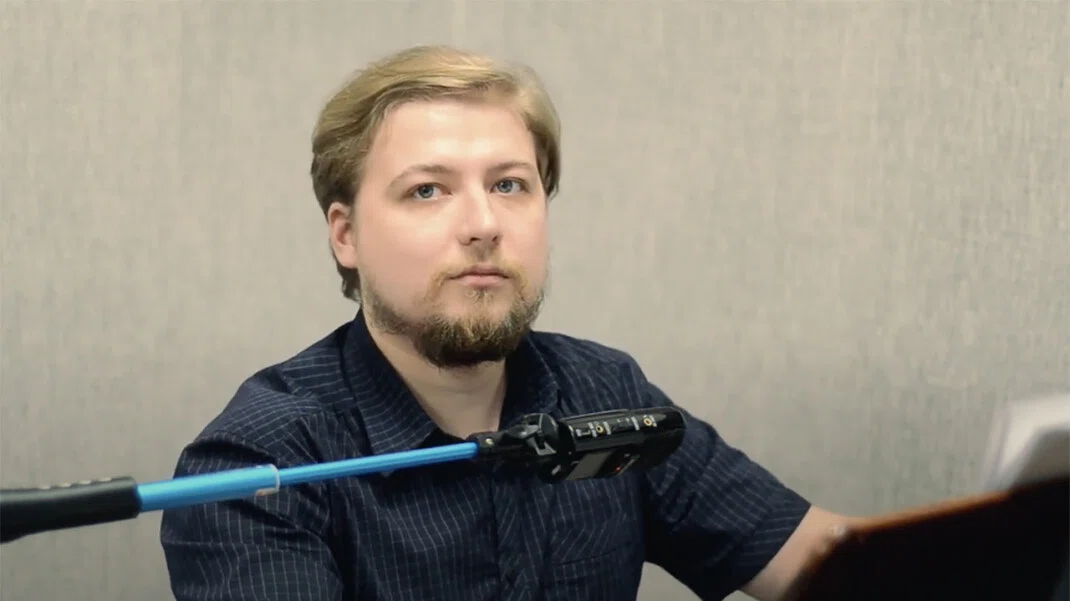
The concert by the 120th anniversary of the birth of Vera Lotar-Shevchenko was held in the Novosibirsk Philharmonic. After his speech, the famous pianist Timothy , after his speech, supported the Russian political prisoners and recalled the illegal persecution of citizens for their views.
“We condemn the repressive machine that breaks life. It seems to me quite logical that it is worth saying at such an event (and it is easiest to say this to me, because today I can’t imagine either the Philharmonic or any other organization) that the large-scale machine of political repression is currently operating in Russia, ”Kazantsev said (the video is published on the musician YouTube channel).
“There are 150 of us now in the hall. Just three days ago, the police came to the same hall and took everyone away, ”the musician reminded of massdetentions at the congress of independent municipal deputies in Moscow.
In addition, Timofei Kazantsev reminded the audience of the persecution of the Novosibirsk activist Yana Frostnoproka, who entered the actions in support of the arrested ex-governor of the Khabarovsk Territory Sergei Furgal.
“Of all the wheels of this repressive machine, there is special - Art. 212.1 of the Criminal Code of the Russian Federation (repeated violation of the law on rallies, “Dadinsky article”). It allows you to plant a person up to five years in three exits to the street, ”said Kazantsev. “Today, this article is trying to eat a resident of Novosibirsk Jan Forman Road.”
The musician suggested that everyone with signatures in defense of the fractional ship. They were planned to be transferred to the lawyer for submission in court, but the employees of the Philharmonic took appeals to the court and the City Council. The process of the mother of three children has already begun in the Central District Court of Novosibirsk, where the media are not allowed under the pretext of the pandemic.
In February 2021, the courtplaced a fractional ship under house arrest on the "Dadinskaya" article after the next picket in support of the protesting Khabarovsk residents. Later, the activist was sent to the pre -trial detention center for violating the conditions of preventive measure. She was not allowed to see her husband and minor child who came on a date, Taiga.info said .
After the concert, representatives of the Philharmonic decided to “apologize” for the performance of Kazantsev and say that “the Philharmonic has nothing to do”. In response, one of the spectators, who previously worked in the Philharmonic, asked why the leadership decided to “disown” the topic, because the concert itself is dedicated to Lotar-Shevchenko, who served eight years in the Stalinist camps. She was supported by the audience.
The pianist Vera Lotar-Shevchenko, in whose honor the concert was held, he herself became a victim of political repression. She was born in Italy, then her family moved to Paris, and she began to study music. Already at the age of 12, the girl performed with the orchestra, which was conducted by Arturo Tuscanini, then trained at the Vienna Music Academy, toured in Europe and America.
In 1936, Vera Lotar met with an employee of the Soviet trade mission Vladimir Shevchenko, who was engaged in the creation of string instruments. She married him and gave birth to a child. In 1938, in the midst of Stalinist repressions, the family came to Leningrad, Vera was taken by Soliist to the Philharmonic. And in 1941, Vladimir Shevchenko was arrested for 10 years "without the right to correspondence." Following him, the musician was sent to the camps for eight years. Their son died in the besieged Leningrad.
One of the investigators broke the hands of Lotar-Shevchenko, beating it with a pistol handle. After the Gulag, despite the incorrectly fused bones, she continued to play. Due to the defeat in rights, she could not live in regional centers, and in 1954 she got a job as a concertmaster in Nizhny Tagil. Already after I played in the regional philharmonic houses in Sverdlovsk and Barnaul, then moved to Novosibirsk, where she became a soloist of the Philharmonic.
The founder of the Novosibirsk Academgorodok Mikhail Lavrentiev was able to achieve the allocation of an apartment for the performer. She died in 1982 in Novosibirsk.
The fate and image of the faith of Lotar-Shevchenko formed the basis of several films and literary works. She received the opportunity to concert in Moscow and Leningrad only in the last years of her life.