
Translated material
"Do not read - kill!"
The memory of the last Tunguska shaman will remain in Europe, but not in his homeland. How the war with books began in Evenkia
In the Evenki district of the Krasnoyarsk Territory there is a geographical center of Russia - the very depth, they no longer knock on below. And here are the laws on “foreign agents” and the rhetoric on the machinations of the hostile abroad, finally reached both the deepest people, and Ivan Ivanovich Ivanov, who heads the Evenki culture department, now demands to return the book “Shaman Grandfather OGE” to his institutions subordinate to him and intends to “burn all the copies”.
More precisely, Ivanov proposed to the directors of the Library System of Evenkia, the director of the local history museum and the head of the museum branch in Vanavar to collect all the available books and storage into closed funds. As for the fire from the books, the people and employees of the very institutions say, the same Ivan Ivanovich himself told the “new” that they would have launched an official investigation about “Grandfather OGE” and the decision will be made by commission. For the directors, he so far suggested explaining: “whether the“ content of this book ”was agreed with them; “Whether the age qualification was taken into account”; From whom was the order for the presentation of the book received? In addition to: “Give a detailed assessment of the publication in relation to spelling, stylistic presentation, as well as compliance with folklore and Evenki culture.
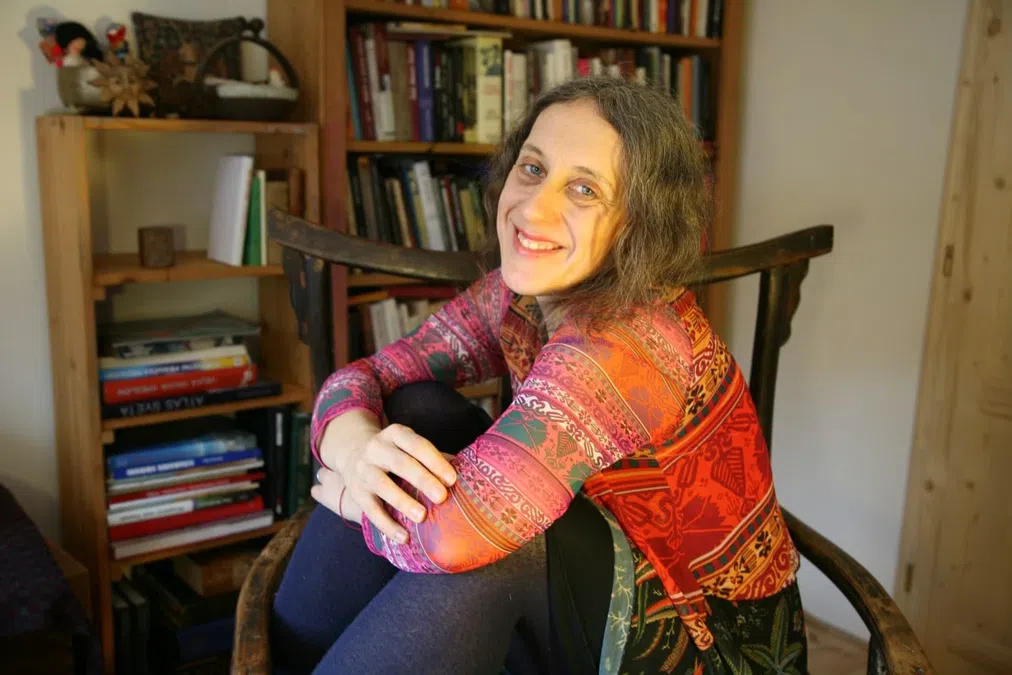
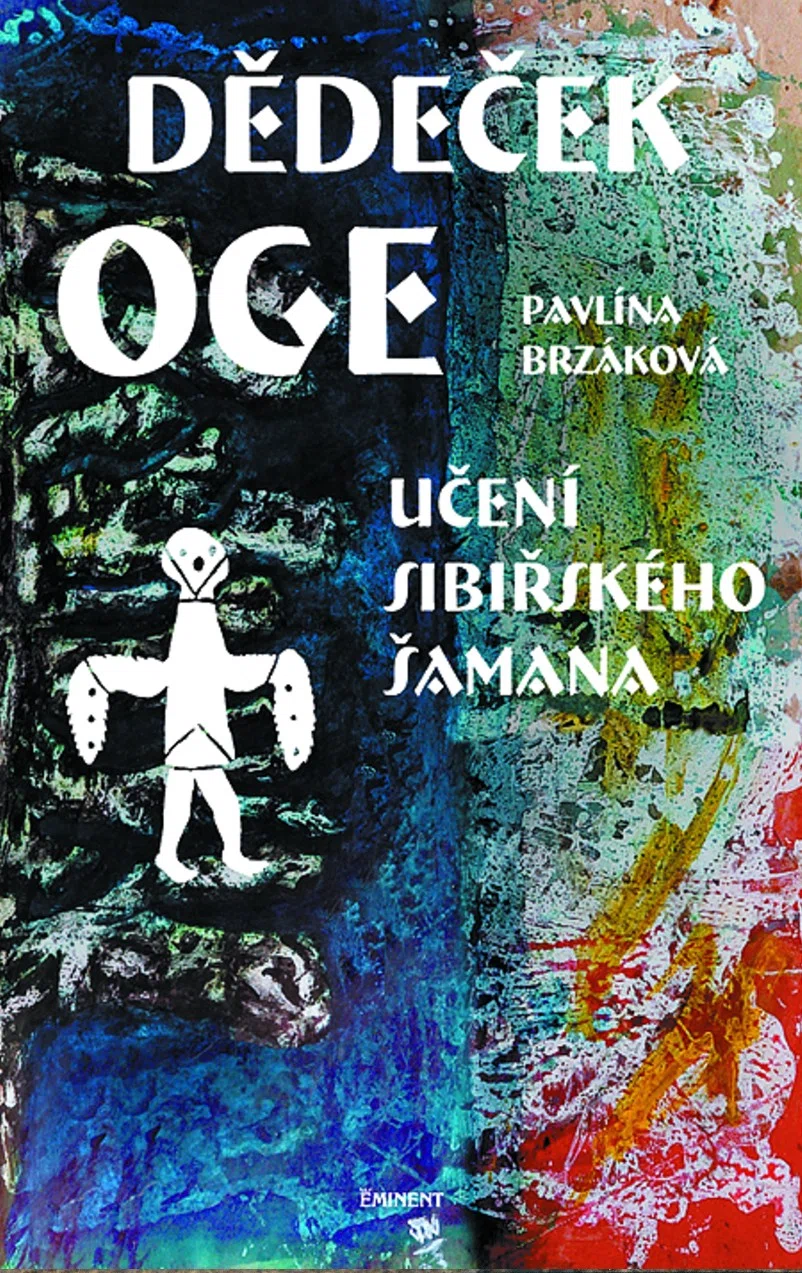
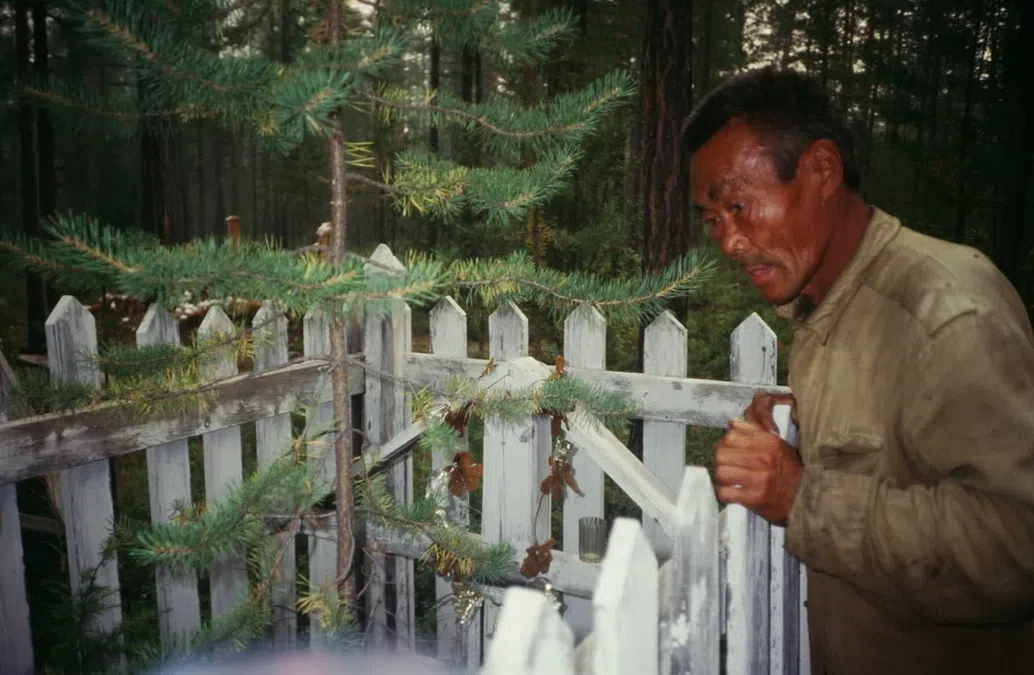
"Grandfather OGE" is a story from infancy before the departure of the last Tunguska shaman. Shaman is already without a tambourine - a khapta; The Communists destroyed the tambourine. The form corresponds to the content - magical realism, only northern, ruthless and inconsolable. The author is the Czech ethnographer Pavlin Brzakova. Since the beginning of the 90s, she came to Siberian autochthons and lived with them small lives. Seven lives, each for 4-5 months (then due to visa restrictions should be returned). As a result - books about forest and deer people. Scientific and artistic, highly exposed in Europe and the world.
Professor of the University of Zurich Tomash Glants, an outstanding Slavic philologist, writes Ivan Ivanovich-“Regarding the Reports expressed in connection with the book“ Shaman Grandfather OGE ”and indirectly in connection with the scientific and research activities of Pavlina Bzakova, Doctor of Ethnography of Prague Carlov University”: “P. Brzakova is one of the most outstanding and respected ethnologists of his generation, [...] the methodological level and depth of her research work is very highly valued, [...] her works are internationally known and make a significant contribution to scientific exchange and friendship between Czech and Russian peoples. The absolute honesty and truthfulness of the research of P. Brzakova became the reason for its great authority not only in academic circles, but also in Czech society, [...] reproaches or accusations formulated in connection with its book and its activities, may be exclusively the result of ignorance or misunderstanding. ”
Eminent director Peter Shtis writes to Ivan Ivanovich that he has published Brzakova’s books since 2000, she is the author of 15 books, 8 of them about Evenki, their culture. He writes about prestigious literature, about the author’s success and popularity, and finally: “For us it is a great joy that thanks to the book of the life of Grandfather’s life, OGE returns to the places where he lived, thanks to the recreated memories of his contemporaries, which are no longer between us.”
Roman formed the basis of the performance in the repertoire of the Prague Theater of KAMPA, and the director of the theater Ivet Dushkova writes to Ivan Ivanovich that this performance is one of the most popular: "The audience appreciates him for truthfulness, magic and wisdom."
Pavlina also writes to Ivan Ivanovich:
“With the release of the book, I felt absolutely happy that my perennial efforts were not in vain, that I was able to return to Evenkia stories that, in the process of my research, were handed over to eyewitnesses of events described in the book. [...]
I am very concerned about the information that came to me that all published specimens will be seized and destroyed. I don’t understand such a reaction with all my desire and I ask you to explain the situation. I was informed that the novel was mistakenly attributed to the category of children's books. However, no one ever imagined my novel as children's literature. [...] I heard that I was accused of some fictions of your review (for example, a comment on erotica in a bathhouse). This episode was not invented, the mother of an ethnographer-correspondent Vitaly Voronov from Vanavara, with whom I lived, told me about this. She came here when Vanavara had just begun to arise, along with her mother, from the south of the Krasnoyarsk Territory, where their family was dispossessed. We settled on the shore of the Podkamennaya Tunguska. At that time, the Evenks did not know what a bathhouse was. The aliens lured Evenki girls with gifts to the bathhouse. ”
Peacock calls who handed her his knowledge about the visions and intimate experiences of the shaman. Nona Tarpushonok, her father was a shaman, and she sang his songs to Pavlina.
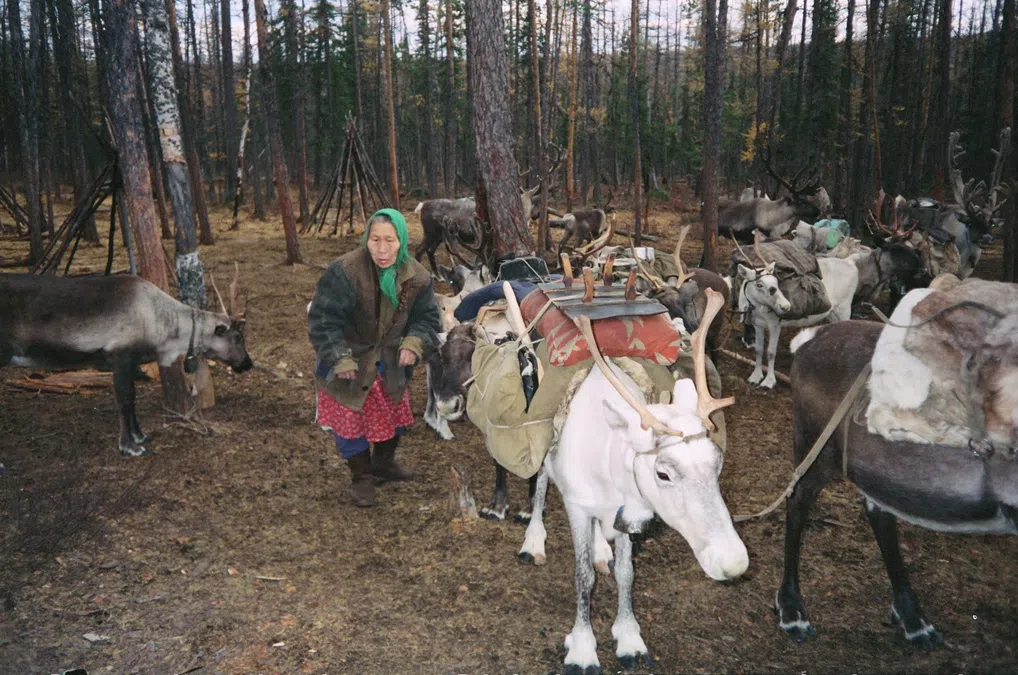
Mikhail Ayulchina, his mother was a shaman, and he shared what he experienced with OGE in childhood. “The book was thought out as a gift from me, written with love for the people of Evenkia. Please save it. The elimination of books is something from the Middle Ages! ”
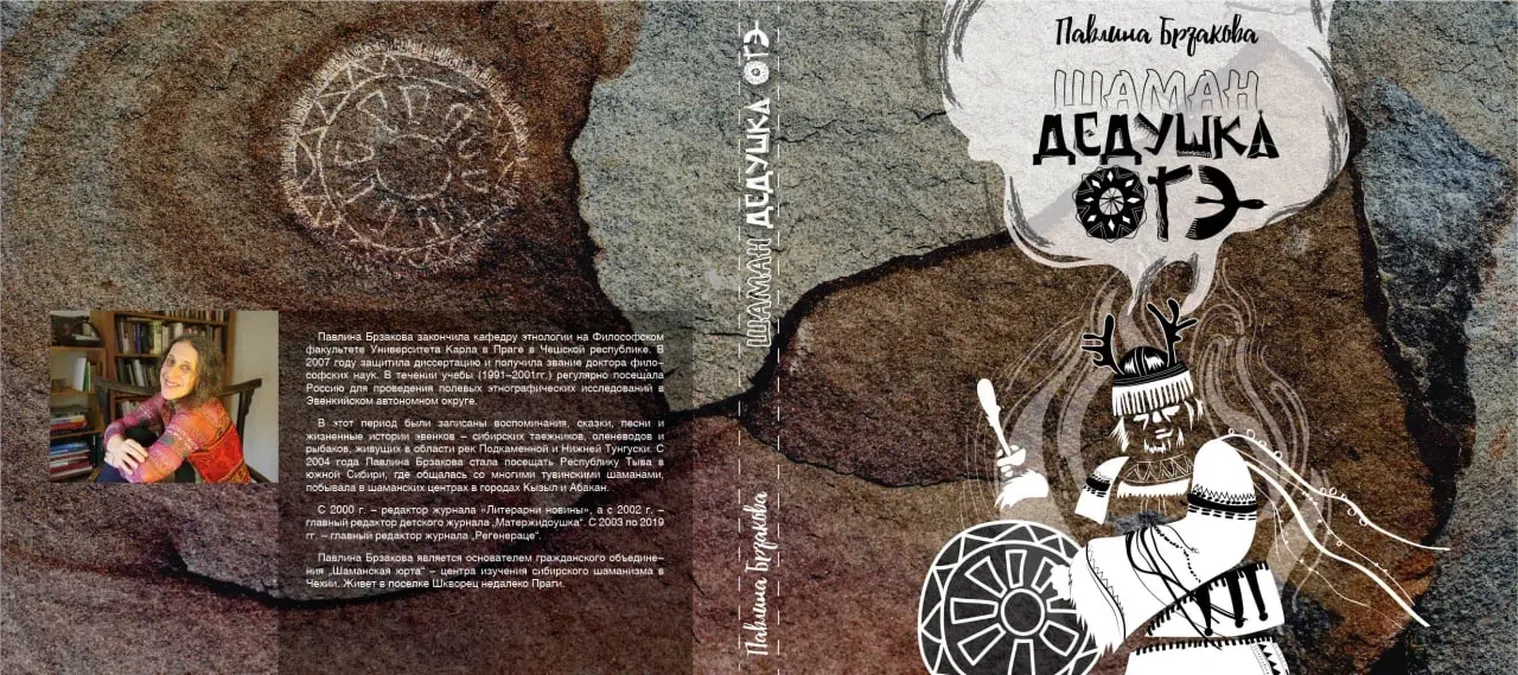
The book saw the light at the end of December. The transfer to the Russian peacock financed itself, and printed a book with direct official support and with the money of the Evenki Administration itself, the museums subordinate to it in the tour and Vanavar and, of course, the cultural department and its head of Ivanov. Moreover, here is Ivan Ivanovich (No. 284 dated November 19, 2020 to the decision) asks the head of the Association of the indigenous peoples of the north A. Gayulsky to help pay the translation of the novel already into the Evenki language - for audio books. And he calls the publication “Grandpa OGE” an event within the framework of the program “Culture of Evenkia”, approved by the resolution of the district administration.
The first book from the printed circulation was laid on the table Ivanov. The presentations in Vanavar and the tour were remarkable, all the involved were proud of the book and acquaintance with the Pavlin. The newspaper of the district administration wrote about the “great enthusiasm”, with whom the novels are accepted by residents, by namely transferred to the Evenki chiefs who visited “presentation events”. Regretfully states that the circulation is 300 copies. In response to this note, residents sent a collective letter (66 signatures) to the culture department, where a restrained bewilderment (in the Czech Republic was released in 2004 in the Czech Republic, since 2015 there is a performance with great success) and a request to spread the novel about the Evenki in the district library in order to finally read it.
And on the fourth day, a vigor falcon noted that there was no one wall in the house: in mid -February, Ivan Ivanovich found that the book from the first lines promotes suicide, there is a lot of alcohol and there is erotica. And it began.
The book really mentions suicides, alcohol, there is love. There is - about horror! - Even violence. It would be strange if the book about the life of all this was not.
It is difficult to comment on the discovery of Ivan Ivanovich without rolling into truisms, but is it really not clear: if life is reflected according to modern cops standards, then it will not be art, but a pinkopony. And the department itself, in which Ivan Ivanovich serves as the chief, will have to be reduced as unnecessary.
Here are the background, which caused a grin of the Cerberus, guarding reader virginity (and here I’m not talking about one Ivanov, but about the three cultural ladies teaching at the Humanitarian Institute of the Siberian Federal -Century, whose expert imprisonment is now trumped by the official of Evenkia, professor Kopsera, Vyamaraev and Kistov):
“The first to go to the next world, the brother of Oge Uludya. That day he tried to hang himself five times, five times he was found in time and removed from the tree. For the sixth time, he hid and made his plan. The second brother of Lyokha lived in the taiga with Baba Lolbicta. After she suddenly died in his arms, he ran out in horror what was from his hut and ran into the forest without boots with a stopped gaze. Strong frost hit just. In the spring, several of his bones were found, gnawed by the beast. Arthur, the youngest brother, was found with a broken skull for the village. The drunk brother Chirikan jumped his head down in shallow water and also died. Yokhor and Sergey were killed on one day. Who killed is still unknown.
In the same year, Father Bororcho, returning from fishing on the Teter River, died of a break in the heart. Mother Edarik survived her family briefly and soon died of falling misfortunes. So in two years, OGE was left without a family, one in the whole world. This happened in 1929. "
Tin? Any writing will tell you that the beginning should be shocking, take it by the throat. So that the modern reader does not switch.
“Of the 120 people who studied with me in a boarding school, only two are alive. Who shot himself, who was shot, someone drowned, who drowned. We do not fit into modern civilization, are uncompetitive, like a sore boat and a motor boat. ”
Ivan Ivanovich probably does not know. This is no longer Brzakov, this is the Evenki classic Abite Nemtushkin. He told me this when we passed on board the ship "Mikhail Geneko" past the mouth of Nizhny Tunguska in 1993. The ship went to Dudinka, and then it was 53 to Nemtushin. He talked about specific people that they were behind the then statistics: in the successful 80s of the Evenks, almost three times were reduced, the average life expectancy is less than the Central Russian by 18–20 years, etc.
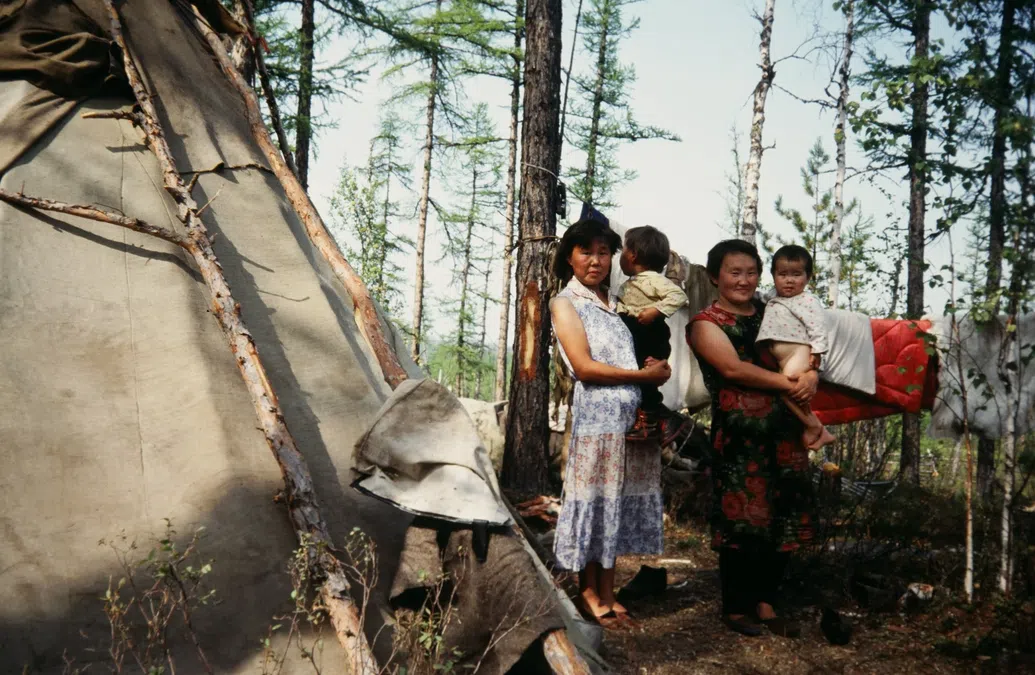
And "Grandfather OGE" - about more severe times.
I will refrain from quoting prose and poems by Nemtushkin. In order to avoid new discoveries and temptations at Ivan Ivanovich.
Mysterious entry into this story from the dark centuries of Krasnoyarsk scientific thought.
Now any district administration can request an examination of any book in order to ban it? Or only the one in which the action takes place in the territory subordinate to it?
Or just foreign? If so, it would be more logical to do this before printing the circulation?
Meanwhile, the consistent destruction of the humanities in Krasnoyarsk is affected: university teachers with dissertations on philosophy in the history of philosophy are followed by small officials and are taken to judge fiction, while demonstrating a very peculiar understanding of basic things. They bring brushwood to the book fire, saying: there is rough erotica, murder, suicide. And also prison sketches, criminal jargon (the only example - “soaked”) and non -normative vocabulary (vulgarisms are indeed three times). "There are motives of low vulgar content ethically unacceptable in the literature." (!) In addition, “the book cannot be considered close in content to folklore and the ethnography of the Evenks”: “Sometimes described in the publication directly diverges with ethnographic data.” And they even gave an example: "The story of burial in a grave dug in the ground."
Hello. As for the “ethically acceptable” I will leave this on the conscience of the reviewers, but if we are talking about the facts, then the experts, apparently, were never in Evenkia (unlike the author of the novel) and did not read anything about the northern burial rites, but the whole history of the last century passed them safely (the air type of burial successfully eradicated the tsarist administration, and the Bolsheviks and Bolsheviks and Bolsheviks and Bolsheviks and Bolsheviks and Bolsheviks and Bolsheviks and Bolshevik They did not ceremony at all).
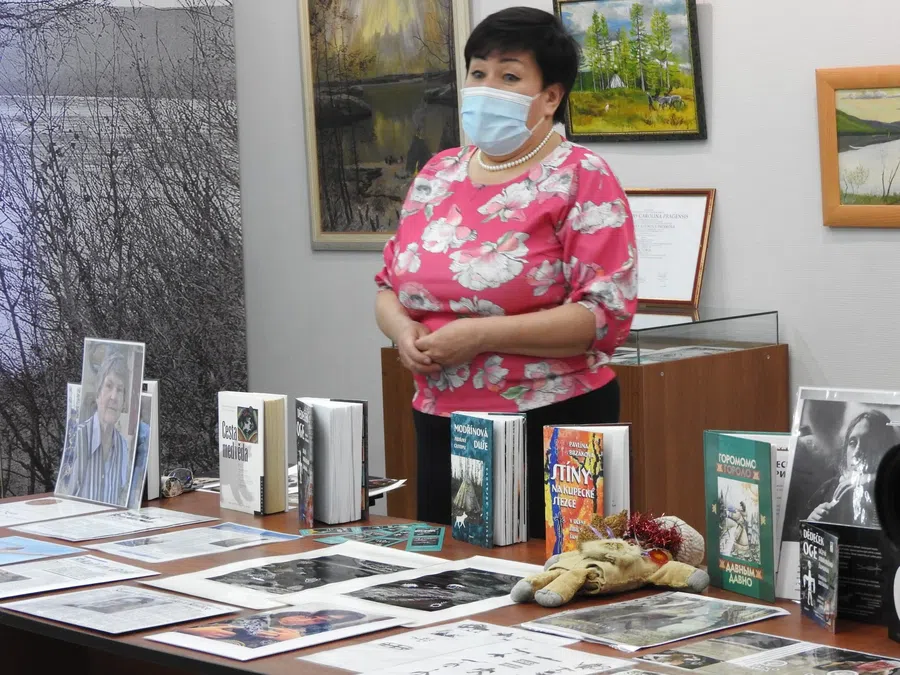
Here is what the “new” was said by the author of the project of the Russian -speaking publication Altynai Pankagir (at the end of the official investigation, the dismissal is threatened while she is the deputy head of the cultural department). Please note: here is about the type of burial and about financing the publication, because from it, there is no attitude to finances, they now require explanations on this score:
- The money was laid down in the budget for 2020 of the Evenki Museum of Local Lore for another book - in 1914-1915. The British anthropologist Maria Chaplitskaya reached the east of the Yenisei to the Chiriveda. Gathered a herbarium and 193 ethnographic objects stored all these years in the Pitt-Rivers museum (Oxford). Now her methods would have raised many questions - she just pulled out of the graves what they sent to the “lower world” were laid: kisetes, palm trees ( Siberian weapons - an annual knife with a shank fixed in a long one to 2, shaft. - Ed. ). Researcher Anna Glazer (she is in England, but ours, from Smolensk) went and looked at these exhibits - the exhibition was opened - and we agreed that she would make the report of Chaplitskaya and the second part in the book will go to the modernity of Evenkia, the one that is presented by the Chaplitskoy endangered, which comes to naught. We agreed with the museum that they will give us the vandal methods obtained by vandal methods, and in response we will give them the non -windows. But because of the coronavirus, the whole work of the Glazer group hung, as well as the money allocated for international cooperation. England did not let anyone in to his place, we could not publish anything without them. Year - to the end. And then Pavlina wrote off on the Internet with the head of the museum in Vanavar Rimma Pirogova. She helped the peacock, then still a student, get to the taiga, in the early 90s. Thanks to her, the first book of the peacock on the Russian Goromo Monolo (“A long ago”), published in Krasnoyarsk in 2000, appeared. So there was an idea to print the translation of her novel.
On February 16, 2021, the police officer received an appeal from Pankagir. She asked Ivanov to be held accountable: at the workplace he "shouted at her, threatened to dismiss and accused of security." That day she fell into the hospital for almost a month.
Perhaps in the printing house it really should be applied to the cover a note on age -related restrictions. But the book went to the libraries, and there they understand that it is not for children. Stick, in the end, an age qualification now. Why destroy it - with such a northern one, with such a calm Kafkian business efficiency?
The cops (in the broad sense) are commanded now and here.
Yes, and in the place of Comrade Ivanov, I would not reject the idea of burning on the move - nothing so effectively illuminates the immersion in the darkness, like flaming books. Although his doubts are clear. This is an indisputable fact that after the bookmer there is certainly a cranial, and after books, their readers are sent to the furnace. There are intermediate links-like the expulsion of Jews or their landing in camps, but in Evenkia Jews are not a deficit-acute deficiency. So we wish Ivan Ivanovich and his superiors to calculate everything correctly. There are no exaggerations about the furnace - this is a technology that is repeatedly tested, one entails another, it is a physical law, a medical fact.
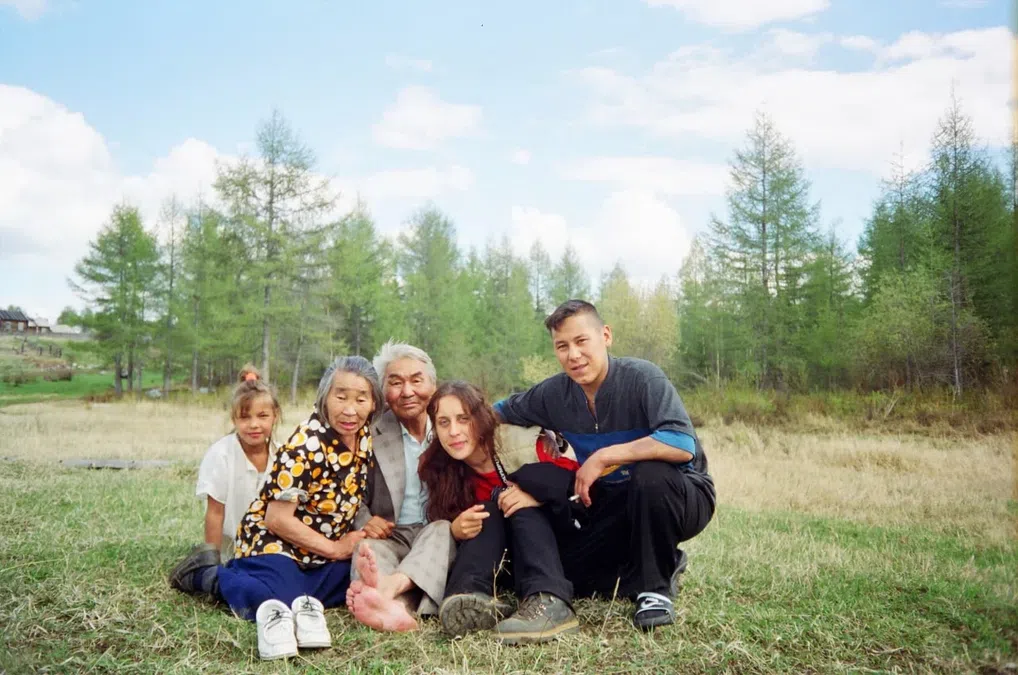
Pavlina Brzakova commented on the "new" recent events:
- The idea to write the book “Shaman Grandfather OGE” originated in 1994, when M.I. and I Ayulchin, in the Evenks known as Kuliso, made their way to the vast expanses of the taiga. We passed approximately 200 kilometers, adhering to the old path, along which Evenki, men and women once walked, from the Ayava River to the banks of Katanga, where merchants came. Then we wandered for a long time, and after four days we did not have a sip of water left. In that hot summer, all the streams dried up, besides, our path lay through the vast section of the taiga burnt to the black ash.The trail, which was laid by the ancient people, the ancestors of modern Evenks, has not yet been overgrown, which is indicated by the cuts on the trees carved by the Evenki palm trees. It is enough for a person to leave this path a little and you can stumble upon ancient burials. Disheated pieces of old skin, logs, sometimes small bones or the remains of a children's birch bark bed, in which a small body once lay ...
Where did those people who mastered the taiga disappear? The people who have been merged with her soul for centuries, irrevocably disappeared? I think not, since each person has his own inner memory ...On March 15, I suddenly received information that they want to eliminate the book “Shaman Grandfather OGE” for some reason. I don’t know the reason, no one explained anything to me. This is very disappointing. The information is informally reaching that the book is propaganda of violence. I don't understand this at all. Maybe someone mistakenly attributed her to the category of children's books?
The cruelty for which I am reproached is described in my book with a metaphorical language and reflects the character of really events. It was simply necessary to talk about this: without this it is impossible to convey the huge pain that many families of forest Evenks accompanies from the moment when they, for various reasons, lost their nomadic lifestyle. I completely shared this pain with them.
My opponents also argue that shamans are not divided into their experiences. But, in addition to direct questions, there are other ways to learn about shamans, their experiences, shamanistic songs. Такие моменты откровения возникают в дружественной атмосфере, рождаются постепенно, одновременно с возникающим доверием, когда делимся едой, вместе работаем или делаем что-то совсем нам не знакомое — в связи с различием в культурах... Или вместе окажемся в ситуации на грани жизни и смерти, когда, например, лодка перевернется, и вместе тонем в бурлящем потоке или защищаемся от нападения медведя. Признаю, в начале мне было трудно...
Все, с кем я разделила упомянутые в книге переживания, уже мертвы. Несмотря на это, чувствую к ним глубокое уважение, потому что подарили мне много ценного из своих жизней. Я здесь, чтобы вместо них передать миру их повествования о жизненной силе, которая находится в корнях, в традициях, в единстве. Нужно всегда помнить, что дух бессмертен и не исчезает... А традиции могут передаваться через воспоминания. Надеюсь, что тот, кто прочитает мою книгу сердцем, это поймет.
Боюсь, что те, кто сейчас об этой книге говорит плохо и обвиняет меня в пропаганде насилия, на самом деле книгу не читали. Или меня по разным причинам не поняли. Мне будет очень жаль, если книгу ликвидируют. Решительно не согласна с утверждением, что книга не имеет ценности, как кто-то пытается навязать эту идею людям. Не имею возможности вести открытый диалог в защиту книги, потому что никакой коммуникации на официальном уровне со мной нет.