
Translated material
And if the debate of Putin and Biden still took place, who would win?
Well, at least you can dream up!
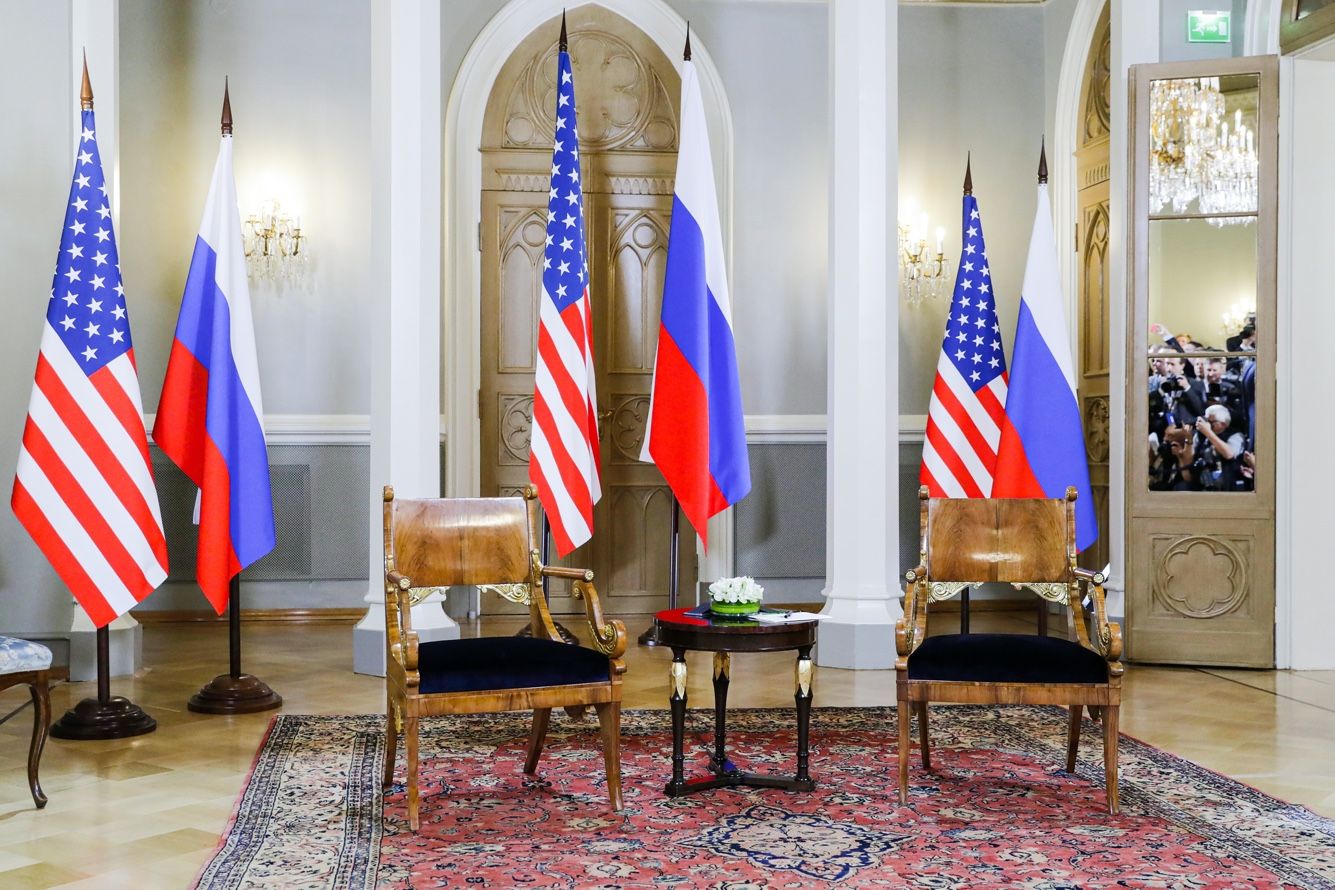
The Russian Foreign Ministry “with regret” stated that the “open conversation” between Vladimir Putin and Joe Biden would not take place. Putin invited Biden to meet on a kind of debate after the American leader called him a “killer” (though the Kremlin insists that they did not mean “debate”, but simply “communication”). "Medusa" decided to study which of the two presidents copes with public disputes better - and which of them would be a winner in such a discussion. And who, thus, lost more from the fact that there would be no dispute.
Are the leaders of states in general ever found on the debate?
From the point of view of the goals that the participants in the dispute, there are two main types of political debates:
- A presentation of positions and arguments for finding compromise solutions. The openness of such debate is not an end in itself, the main thing in them is the solution of problems. Therefore, closed diplomatic negotiations and open parliamentary discussions fall under this type. In the second case, publicity is not needed in itself, but in order for voters to know how their representative defends their interests.
- Competitive debate, aimed at persuading the audience to their side. In them, one of the main tasks of the debate is to assert themselves at the expense of the opponent and put it in an uncomfortable position. A classic example is the debate of presidential candidates and vice presidents of the United States.
Usually, the leaders of the countries participate in the first form of debate, trying to find compromise solutions. Open in this case is only the protocol part of the meetings, where the negotiation participants welcome each other.
Details of negotiations, if they become the public, then much later: say, in the United States, former presidents traditionally declassify archives (including the transcript of negotiations). Thanks to the opening of the archive of Bill Clinton, for example, we know some of the backstage details of the first year of the presidency of Vladimir Putin.
However, public competitive disputes between the heads of state and governments are still occasionally, but they happen. So, at the beginning of 2020, tough debates at the security conference in Munich were arranged by the President of Azerbaijan Ilham Aliyev and Prime Minister of Armenia Nikol Pashinyan. Naturally, Nagorno -Karabakh was discussed. The compromise did not work out (it seems that no one was looking for him). Six months after the debate, the issue was resolved by military force.
Putin wanted to quarrel with Bayden approximately like Aliyev and Pashinyan? Why did he suggest this?
It is characteristic that immediately after the inauguration of Biden in January 2021, Russia and the United States quickly resolved the only important issue, which, in principle, can now be the subject of negotiations between them, on the restriction of strategic offensive weapons. The expiring contract without any public debate was extended for five years. In all other issues, the compromise is hardly achievable without a radical - and unreal - breakthrough in the relations of the two countries.
If the President of Russia really counted on such a breakthrough through establishing ties with an American colleague, he would probably offer a personal meeting in the face. It was from the personal conversation of Mikhail Gorbachev and Ronald Reagan in 1985 that the way out of the Cold War began; The meeting of tete-a-tete Dmitry Medvedev and Barack Obama laid the foundation for the reboot of the relations of Russia and the USA in 2009. The key to the success of such negotiations is the establishment of trusting relations between leaders.
When Putin offered Biden public negotiations in the online format, he well understood that in this format of mutual trust (“chemistry”, which is often talked about in relation to the leaders of the countries). Obviously, he meant competitive debate. But, probably, Putin did not expect the opponent’s consent at all. It is unlikely that Biden in an interview actually called Putin a killer to discuss this again in front of millions of spectators around the world: according to one of the explanations , the US president made an undivided statement about Putin just to show that he was not interested in negotiations. Most likely, Putin used the proposal about the debate in this situation for the PR effect within Russia.
You can only guess if Putin’s proposal was more than political technology. The fact is that after the accession of Crimea, he performed several times with high -profile initiatives that, if they were adopted, could fundamentally change the formats of international policy - and return the status of a full -fledged partner of the West (and on its own conditions, and not within the framework of West -centric institutions like a “big seven”). So, in 2015, for a joint struggle with Islamists in Syria, he proposed creating a wide coalition like anti-Hitler, and in 2020 called for the summit of the Summit of the UN Security Council (it is characteristic that each of these initiatives was on the anniversary of the victory in the Second World War and referred to the images and results of the events). However, not one of these ideas was enthusiastically either in the USA or in Europe.
Who, in principle, is stronger in public discussions? Biden or Putin?
Bayden has vast experience in politics - much more than Putin’s: for the first time he became a senator in 1973, when the future Russian president was just studying at the law faculty of the University of Leningrad. Biden twice ran for vice-presidents of the United States, and in 2020 he participated in tough election debate with his competitor in the presidential election by Donald Trump.
True, at the same time, no one considers Biden a master of public disputes. He has long developed a reputation as “Machine for the Production of Bloopers” during public speaking. Even his victories were rarely unequivocal. In 2008, he won the debate of candidates for vice-presidents of the Governor of Alaska Saru Paylin. Actually, the observers called his main success that he did not make serious mistakes - Paylin was considered an outsider and not at all the best candidate for his position. However, she, even losing, according to voters, changed her opinion about herself for the better.
In 2012, Vice President Biden had to save the Barack Obama campaign, who lost his debate to the Republican candidate Mitt Romny. For the sake of this, Biden in the debate with Congressman Paul Ryan radically changed the image : he tried to “act like an alpha male”-mimicked the opponent, laughed, and interrupted. It seemed that he suppressed the opponent who defended himself with the help of phrases prepared in advance - but the voters decided that Biden went over with rudeness. Ryan won with a slight advantage.
In 2020, Baiden himself visited Ryan's shoes when he debated with Trump as a presidential candidate. The first debates were remembered that Trump told Biden that in 47 years he did nothing in politics - and lost (Bayden demanded that he “shut up”). The second - by the fact that Trump spent them, not having time to recover from the coronavirus. And againsuffered a defeat . Biden did not have to attach supervisor to win.
Vladimir Putin for 20 years consistently refused the debate and tried to avoid public disputes with equal opponents. His main tools with society were annual straight lines and large press conferences, as well as protocol reports on presidential everyday life. He has no public disputes with equal opponents.
Public disputes, however, did Putin still happen:
- In February 2003, the head of the oil company Yukos, Mikhail Khodorkovsky, at Putin’s meeting with large businessmen, accused the state -owned company of corruption, and the authorities of expanding the state of the state in the economy, which, in his opinion, undermines the development of the country. The president replied that Yukos underpayed taxes and corrupt officials. Six months later, Khodorkovsky was in prison.
- At a meeting with cultural figures in 2010, Putin (then-Prime Minister) entered into a dispute with the musician Yuri Shevchuk, who demanded attention from the head of the government to the participants of the "Marshmans of the Disagons". The leader of the DDT group said that on the eve of the meeting he was called from the government and asked not to ask sharp questions. Putin pretended not to recognize the musician, and asked his name. “Yura Shevchuk, musician,” Shevchuk answered. “Yura, this is a provocation,” the prime minister said. Then the musician and the prime minister argued whether the opposition marches should be dispersed. “You want to spend it where people want to go to the country on Friday, for example ... or on Sunday evening, return from the cottage. Yes, they will cover you with such matyuges there, ”Putin said, clarifying that the authorities, of course, should not“ create impossible conditions for the manifestation of freedom of speech ”.
- In 2015-at the beginning of a protracted economic crisis-Putin arranged a debate about the economic strategy with former deputy prime minister Alexei Kudrin, who left the government of Dmitry Medvedev due to disagreement with an increase in budget expenditures on the maintenance of the army and police. Kudrin said that "the old model of economic development has outlived itself, but the new one is not visible." Putin replied that Kudrin, working in the government, carried out the monetization of benefits, which caused an increase in budget expenditures, and admitted that during the years of high oil prices, the incomes of the population grew faster than labor productivity, which caused the devaluation of 2014. In addition, Kudrin, the president recalled, himself participated in writing the country's development program until 2020. So, in all problems there are him - Kudrin - guilt. The former Deputy Prime Minister said quietly that the program is not implemented.
- In 2017, Putin, at his press conference, argued with Presidential candidate Ksenia Sobchak about whether he was afraid of oppositionist Alexei Navalny (once again not mentioning his last name). “People understand that being an oppositionist in Russia means that either you will be killed, or you will be imprisoned or something will happen in this spirit. Why is this happening? Is the authorities afraid of honest competition? " - asked Sobchak. “The opposition should come out with a clear, understandable program of positive actions,” Putin moved into a counterattack. - What do you propose to solve the problems that are today? " “About the characters you mentioned. Do you want dozens of such Saakashvili to run in our squares? This is Saakashvili, only in the Russian edition. I am convinced that the absolutely vast majority of Russian citizens do not want this, ”the president said.
In all these “debate”, Putin used similar tactics: he showed that the status of the opponent did not allow him to argue on equal terms, and went into a counterattack, recalling his (and his associates) errors and faults. Probably, in response to possible accusations (it is likely to be straight and rather rude) by Biden in violation of human rights, repressions, the organization of political murders and attempts by Putin would answer the USA - for example, that America strives for world hegemony and export of liberalism.
If the debate still took place, who would win?
Judging by the experience of American presidential debate, much would depend on the positioning of each of the participants. The television debate of candidates in the United States has been regularly held since 1976, and judging by the surveys, as a rule, applicants defeat the current presidents. Accordingly, it would be beneficial for both participants to introduce themselves to the “oppositionist” who challenges the “system”. Probably, Putin, despite the fact that he himself has been led by the country for more than 20 years, it would be easier to do, especially taking into account the fact that Bayden could not be called a newcomer in politics. In the end, Russian propaganda of recent years is imprisoned precisely on US criticism.
In addition, if the debate took place, Putin could assert himself at the expense of the opponent, regardless of the course and results of the discussion. Such a conversation would mean that the United States actually consider Russia equal to itself.
And despite the fact that such debates, of course, would become a historical event, we must remember the limitations of their influence. Not all candidates for American presidents who won the controversy eventually won the election. Public “negotiations” would probably be reminded of last year's conversation by Aliyev and Pashinyan: it was unlikely that the world would have heard something new in this dispute-and the winner would end up in a discount at all in an open discussion.
But Biden did not accept the challenge - so he lost?
Not a fact at all. Of course, Russian official propaganda can use Putin’s proposal and Biden’s refusal as evidence of the strength of one and the weakness of the other. But again, it is important to realize the limitations of this propaganda course.
Firstly, this argument is easy to direct against Putin himself, who sequentially refuses to debate with his opponents within the country. Secondly, in the West, the proposal of the Russian president caused a rather sluggish reaction-that is, for the public sympathetic to him, this will probably serve as a new proof of his correctness in a dispute with the world establishment, but the majority will remain indifferent.
And finally, the experience of domestic Russian politics shows that one who refuses the debate does not risk almost anything. In the absence of such a tradition, this is not something out of the ordinary and is quickly forgotten.
Dmitry Kuznets with the participation of Dmitry Kartsev