
Translated material
"They will continue to dodge"
The government proposes to control the accounts of officials. Previously, this idea was promoted by Alexei Navalny. Explains Elena Panfilova

On Wednesday, it became known that the government introduced a bill to the State Duma, according to which the funds of officials convicted of corruption will be removed in favor of the state. The changes provide for prosecutorial verification of accounts open to the names of officials, their spouses and minor children. If the amounts received in accounts exceed their total income for three years by more than 10 thousand rubles, the “extra” funds will be seized in favor of the state.
The bill is the development of the UN Convention against Corruption, signed by Russia back in 2003. Her 20th article-“illegal enrichment”-was never ratified in our country: officials report on official income and property, but not about their expenses. In 2014, Alexei Navalny insisted on ratification of the Convention. Then his petition on the website of the Russian public initiative (swarm) collected 100 thousand signatures, but the initiative was recognized as inappropriate.
The correspondent of Novaya and discussed with the founder of the Russian branch of the International Organization of Transparency International (_ was inhabited by the Ministry of Justice of the Russian Federation in the register of "non -profit organizations performing the function of a foreign agent" _) Elena Panfilova, why the same law did not adopt earlier and how much its current version can be effective in Russia.

- What does the government’s initiative change in the current anti -corruption legislation?
- The proposal expands the norm that establishes the punishment for illegal enrichment. In Russia, it entered into force back in 2013 ( we are talking about the Law “On Monitoring the Compliance of the costs of persons replacing state debt and other persons for their income”, it began to be applied only in 2015-ed . ). According to the law, the property of an official exceeding the value of the income of three years that he declared in terms of value and members of his family is subject to confiscation. Now any financial resources are added to the property: money in bank accounts, or maybe they will begin to seize bitcoins.
- How does this echo with the UN Convention against Corruption?
-Russia has not yet ratified the 20th article of the Convention on illegal enrichment. The article explains how, through confiscation, it can be prosecuted officials who were not taken on a bribe with red -handed, but who have the results of corruption - illegal enrichment. According to the article, any official of any country that applies this convention should be brought to criminal liability if the assets of the person exceeds the income officially declared, and the person cannot substantiate these assets. At one time, Alexei Navalny and FBK ( performs the functions of a foreign agent, according to the decision of the Ministry of Justice . - Ed. ) Organized a large campaign to ratify this article. At the same time, our norm appeared, which sings this article. Now it is expanded.
-Why was the adoption of the 20th article of the UN Convention was so problematic in Russia?
- According to the official version, this article has problems with the presumption of innocence. <During her discussion> it was said that if Russia accepts such legislation, the burden of evidence of innocence will be entrusted to the accused: that is, the official will have to prove that his funds have a legal origin and explain where he came from. However, as we see now, the introduced law on confiscation of property somehow copes with this. I hope that in the case of expanding the norm, officials will have the opportunity to prove their innocence - life situations are still different.
In reality, it seems to me, the main problem with the adoption of this article was that in Russia there are a lot of cases of corruption, especially among the political elite. By the time of ratification of the Convention <in 2006>, we had many officials whose property did not at all glued with official income. So before the 20th article was not ratified for political reasons. In order not to create a source of the need to use it.
- As a result, the law on confiscation of property exceeding the cost of a declared income for three years closed the gaps in anti -corruption legislation?
- The already adopted law does not solve the problem. How about the property that was acquired earlier than in three years? We have a lot of cases when public officials and members of their families have some property that appeared with them before the start of declaring or the appearance of responsibility for this property. So we are talking about a very narrowed norm.
- You have already mentioned the project of Alexei Navalny. Is it possible to say that Navalny will lose one of the arguments in the political struggle with tightening anti -corruption legislation?
- I do not think that building a stable system to combat corruption should be an instrument of political struggle. The same ratification of the 20th article, it seems to me, initially lay not in the plane of the political struggle of Alexei Navalny, but in the anti-corruption plane. She became political later.
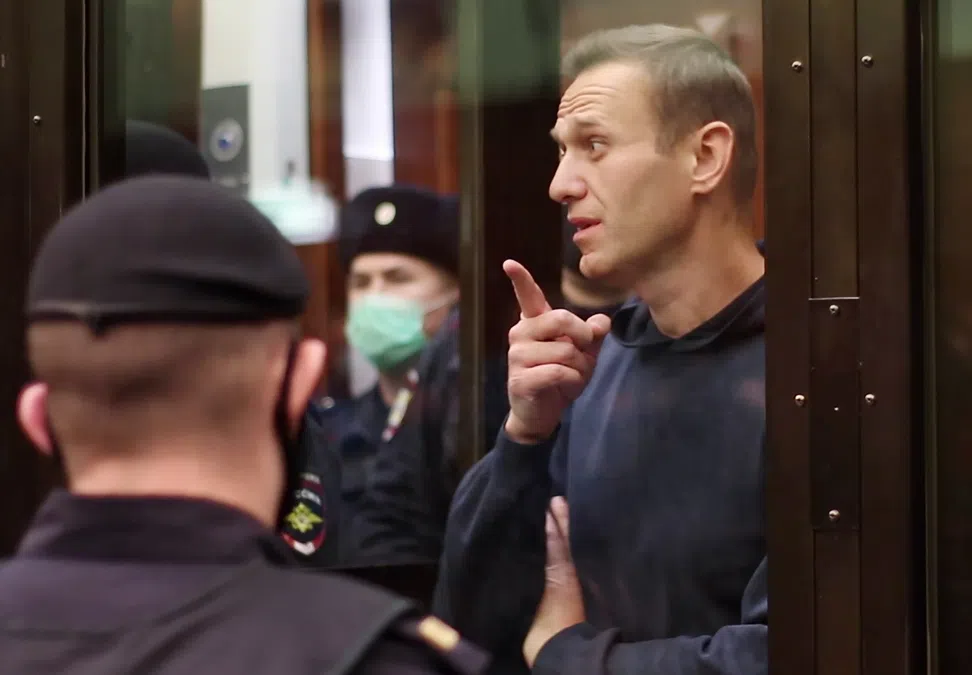
Nevertheless, Navalny still does not lose political glasses. Due to the rather decisive refusal to ratify the 20th article in the public consciousness, the image of the lack of justice has already developed. When people signed for the ratification of the 20th article of the Convention on the swarm, they wanted officials who declare three kopecks each, and live in palaces, began to answer for this before the law. In the public consciousness, this argument can no longer beg any replacing norms.
- Why do you think the initiative appeared right now?
- It is likely that for people who are engaged in opposition to corruption, they have developed a new, more convenient methodology. They have ways to track and set the amount of funds and their excess of declarations. Before that, their capabilities were limited. In addition, in Russia is an electoral year: in September, large elections are waiting for us, not only in the State Duma, but also elections at the regional and local levels.
The fight against corruption is always a winning topic. Not only with us, but in any country.
- The bill itself was developed by the government. Is it possible to see the connection with the past of the current Prime Minister Mikhail Mishustin, who led the Federal Tax Service for ten years?
- To a large extent yes. Since the tax authority also actively seeks out all sorts of “hidden money” for tax seizure, there may well be a connection regarding the appearance of technological capabilities.
- How is the government’s proposal consistent with the recent initiative to legalize “forced corruption”?
- The new norm is not consistent with this, and the very formulation of “legalization of forced corruption” is simply terrible, there is nothing about this in the law. The project has terrifying pitfalls, but only emergency situations are stipulated in it in this direction. Roughly speaking, we are talking about the fact that in the case of cataclysms, wars, tsunami, pandemium, etc. Officials have the opportunity to comply with the requirements of anti -corruption legislation in a different format. The “legalization of forced corruption” sounds as if they are allowed to take bribes and saw budgets. Of course, there is nothing of the kind in him.
- What problems then do the law on emergency circumstances?
- This has nothing to do with the proposal to control money on accounts. The underwater stones of this initiative are that for force majeure situations in which officials may submit declarations on income and property later than the deadline, according to another procedure or not to submit them at all, and restrictive measures established by state bodies, including foreign ones. If you look closely, you can see that sanctions fall under this definition. Therefore, officials who have fallen under sanctions can use this law in theory to submit their declarations otherwise. In turn, the sanctions are not any force majeure, so this is wrong.
- Let's get back to the proposal to track bank accounts of officials for excesses. What difficulties can arise in the execution of the law if it is still accepted?
- For those who want to fulfill the law, no difficulties will arise, including technological ones. However, the idea will be easy to implement only for lower -level officials and medium -level. As always, everything rests on senior officials - to find out what is really happening with them is extremely difficult. In addition, it is quite difficult to politically implement this. How is an ordinary law enforcement or an ordinary official who is responsible for such control will control the accounts of ministers, accounts of government members and the country's highest political leadership?

- How transparently will it be organized?
- Problems with transparency already arose with the law on confiscation of property. We practically do not know how it is performed.
Where are they confiscated? Who is confiscated? Why? Are they confiscated? All this turned out to be a very closed story for people. It is not clear to them how she works.
- Now the situation can be repeated?
- I'm afraid that a potential exhaust from the new law, which can show people that anti -corruption measures work, will be extremely compressed. In fact, people want to see that justice triumphs and that the official, I repeat, who declares three pennies, but lives in the palace, can answer for his actions. However, this will not happen if the company continues to report once a year that "we identified property for 74 million rubles, which do not correspond to income." We do not know anything else. Confiscated this property or not? Did the people who possessed this property have the opportunity to challenge the decision? What if there are mistakes? The lack of transparency in the implementation of such measures and their accountability to society is the biggest problem of such laws.
- What will be the procedure and who will fall under checks? How difficult is it to say now?
- In all departments, ministries and other institutions, there are commissions that are engaged in supervision of compliance with the requirements of anti -corruption legislation. Declarations are submitted there, they are collected and checked. In case of doubts about the honesty of the official, members of the commissions attract relevant law enforcement agencies. However, how the process of data aggregation works, how violations identify and what judicial practice in these cases exists is not told to society.
- Is there such a feeling that there will be no real action of the law? After all, no one stores corruption money in bank accounts now, much more popular are offshore stories and large cash. The same governor of the Penza region Ivan Belozertsev recently found half a billion rubles in cash during the search.
- So far it is not said anywhere that you can’t hunt for offshores, there is no clarification that we are only talking about bank accounts in rubles within the country. So it will be interesting to see who and why will hunt if the project will still be implemented. On the other hand, you are partly right. When for senior officials and a large category of officials and law enforcement officers there was a ban on possessing accounts abroad, they only have internal banking tools (if we talk about rubles). Perhaps that is why we periodically observe these homerically ridiculous paintings when, during the arrest, a pack of bills are scooped up from under the arrest from under the arrest. There is nowhere to put them-you will not put them in the bank. Money is also often placed on dummies, relatives, especially those who do not fall under declaration. So, your child is eighteen - put on his account as much as you want.

- Can we say that the law will rather serve to serve the control of the loyalty of officials? Step to the left - and we will begin to check you.
- About loyalty, everyone has already understood everything. This bill is not an additional restraint for the transfer of a message to the message to officials. This is just an expansion of existing norms. Moreover, those who work honestly will continue to work honestly. In turn, those who need to get out and hide their assets have learned to hide a thousand in one way. They, as they dodged, will continue to dodge.