
Translated material
Country of abandonment
Abkhazia is a Soviet azure coast. For 30 years, a subtropical pearl has been living without a owner: it is robbed by looters and destroy the habits of local residents
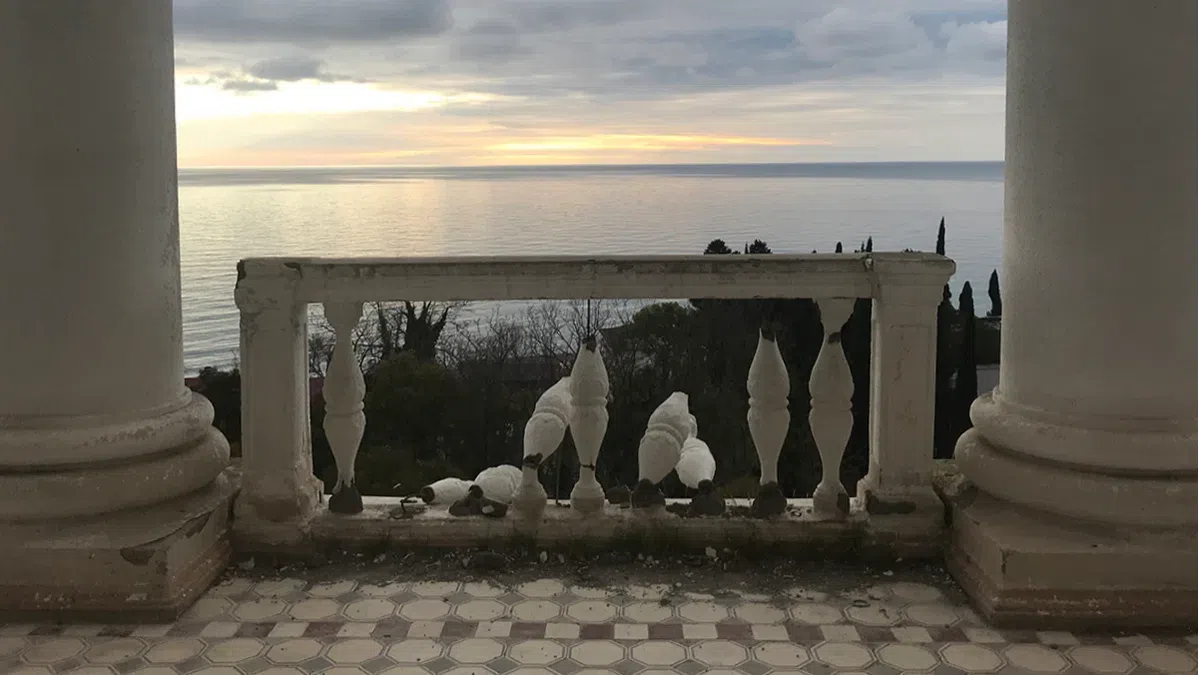
In Abkhazia there are deposits of oil, gas, stone coal, granite, marble, and various valuable fossils. Half of its area is suitable for agriculture, another half - forest lands. Huge by the standards of the country, the length of its mountain rivers creates potential for safe and cheap hydropower. On its territory there are subtropical zones and alpine, you can rest in ski resorts or lie on the beach. This is finally one of the most beautiful countries in the world. Why did Abkhazia turn into a country of continuous "abandonment"?
On the very first evening in Sukhumi, I bought a bank of Matsoni. Near the box office I read on the label that Matsoni was made in Karachay-Cherkessia. I asked the saleswoman if there was a local, not imported. The saleswoman explained that there are no dairy plants in Abkhazia. Not a single one, although cows walk the streets like dogs.
Abkhaz honey is considered almost the best in the world, but there is no industrial harvesting of honey. Any stick stuck into this land will be stuck and will begin to bear fruit, but there are no fake and oranges. And there is no confectionery factory. That is, it is, but abandoned. The mucomonomic plant, built in the 1960s, is abandoned. And the tea factory, which produced in Soviet times, Gruzinsky tea, II variety, was abandoned too. The meat is taken from the Krasnodar Territory, and the Sukhumsky plant is abandoned. Brilliant sanatoriums, which gave Abkhazia, turned into the ruins the glory of the Soviet azure coast. Private houses by the sea are abandoned and collapsed, no one lives in them.
All this in Abkhazia is simply called an abandonment. There is milk, there is a food, and here is an abandonment. There were many attempts to make an abandonment of so much abandoned in 30 years, new hotels and good asphalt appeared here. Investors tried to come here.
Just a landscape
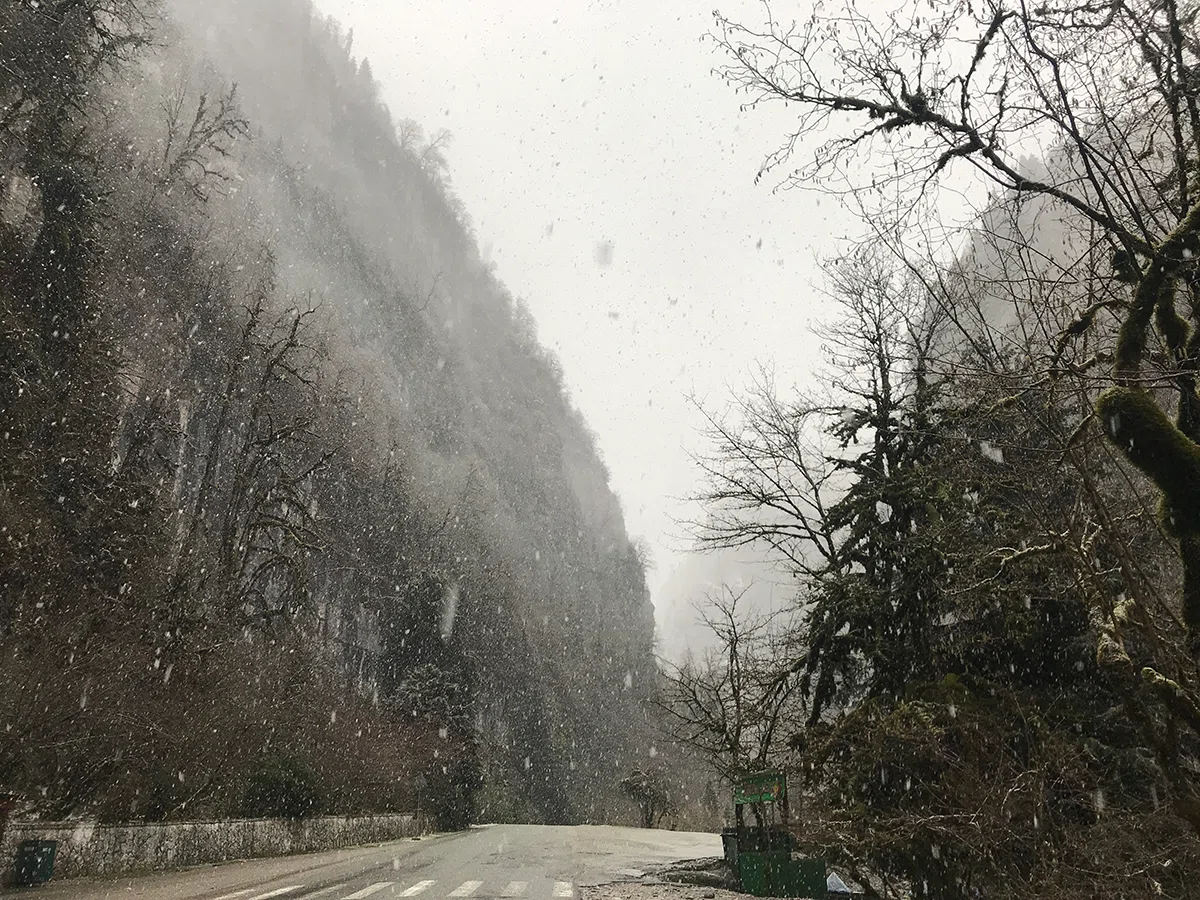
The road turned around the mountain, emerged from a tunnel, broken in a stone with some engineering genius, threatened to break into the gorge. Naked cliffs from behind the downpour seemed varnished. The trees on the slopes of the mountains went up and were lost in gray cotton wool scattered over the vertices. The Bzyb River rushed along the stones and hissing, in last year's grass, mountain violets hid, from under the green and present moss pulled heads on thin neck Red Book Caucasian snowdrops. I went to the Lake Ritsa in the mountains, in Abkhazia he was considered not the eighth miracle of light, but liter. I mean, even before the first.
The rain charged in the morning, the water lifted the paint from the signs “honey”, “tasting”, “cheese”. In some very last season, merchants set them to lure tourists, in the summer they on this road-you will not push through. Now they have left in early spring. They hide under the oilcloth, the sicke-fucked nailed to the planned supports. I was convinced to try home suluguni and grenade juice. The cheese and juice, bought according to the results of tasting, then had to be thrown away. They differed from probes as a tincture of hawthorn from Khvanchkara.
The road dived and twisted further. In front of my eyes, spring began to turn into winter, rain into snow. The mountains from all sides seemed to be crouched and became very low. This meant that I had already risen and soon I would see Ritsa. The lake is located at an altitude of a kilometer above sea level.
But the snow was no longer flashed, clicking on the road to death. Cars that managed to rise to this mark were skidding and miraculously, grunting for a long time on a narrow and slippery strip between two cliffs, unfolded.
I did not get to Lake Ritsa, but the road itself to him ... I don’t remember that I ever saw something stunningly beautiful and ... sorrowful.
In general, this is Abkhazia: the natural beauty, from which the spirit is breathtaking, and the vigorous homelessness of everything that is made by hands.
Spring day in Gagrakh
Rest here was a dream of a coordinator. They began to turn Abkhazia into the Soviet azure coast in the early 1920s, when the USSR had not yet recovered from hunger. Although the base has already been created for this. Alexander Oldenburg, Russian general, a member of the imperial family, the duke, in 1903 he built a restaurant with a hotel and his own castle in Gagrah. Later, the Life Medica mansion appeared, the house of governess-and it went: it became prestigious to have a cottage in Gagra, and merchants reached out here. They built orphans, hospitals, schools here. The resort bloomed very quickly, the place is paradise.
After 1917, the property of merchants, governesses and dukes began to master the Soviet one. In the castle of the Duke of Oldenburg, there was a rest house named after Stalin. For the party elite. Well, who else to relax on the prince's furniture? The former hospital became the sanatorium of the Narkomfin. And so on. By the beginning of the 1960s, only three dozen sanatoriums and holiday houses were already built in Gagrah only. Near the palaces that the party elite built for herself, the ducal castle seemed a modest summer cottage.
The GAGR star was the sanatorium "Georgia" . The striking beauty of the “Stalin Empire”, although it was built seven years after the death of the leader of the peoples. In places I had to cut a rock to enter a huge building into the mountains. The bathrooms in each room were finished with tiles in a blue flower. A stunning view of palm trees, cypresses, an endless sea was opened from the balconies ...
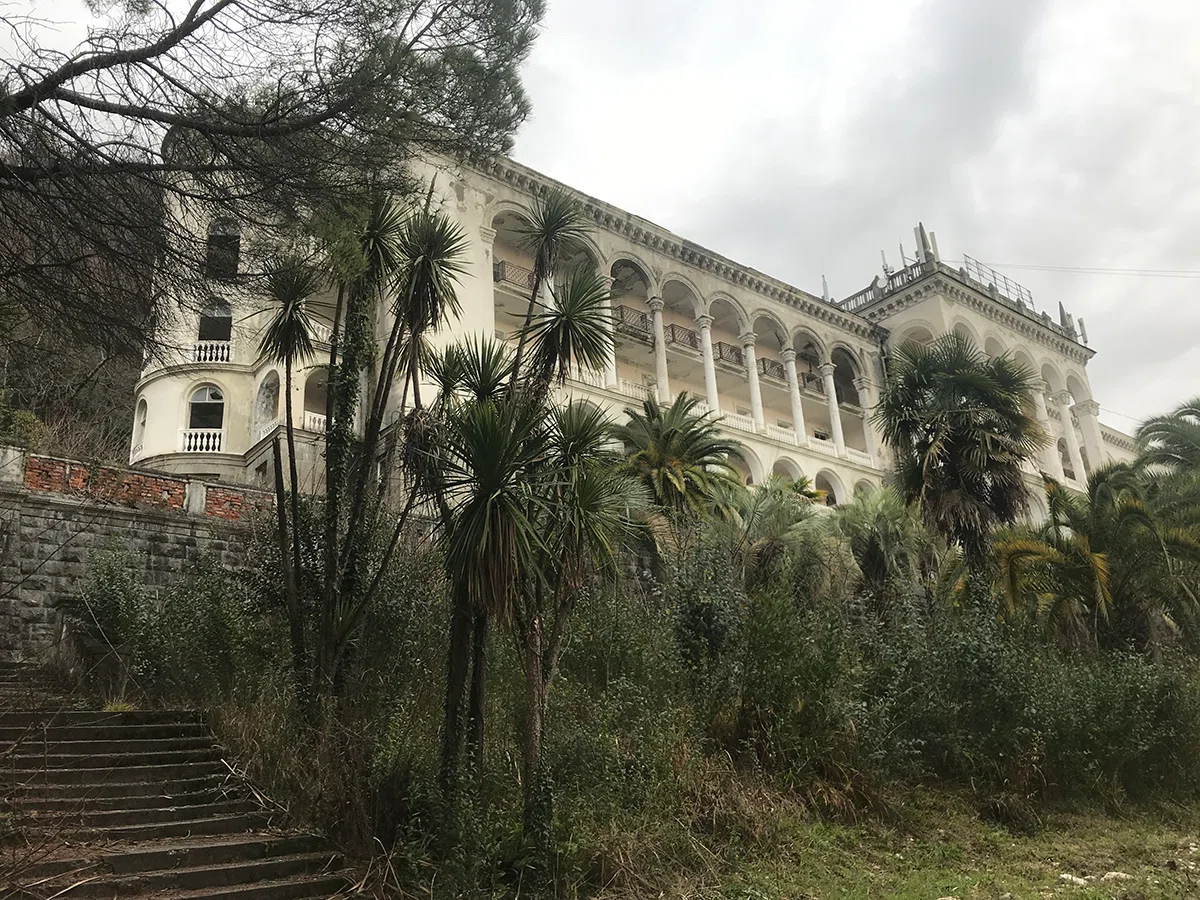
There is a tile today, the views can also be evaluated. The rest was gone in independent Abkhazia. Independence, I recall, she conquered from Georgia in 1993. Since then, the sanatorium has been abandoned, the balustrades have been destroyed, the windows are knocked out, the parquet is rotting under the stucco molding, which collapsed from the ceiling.
In recent years, Georgia has been surrounded by a fence. The gate says: Private property.
Seeing me, the watchman said, without waiting for the question: 100 rubles. This, apparently, is such a password in Gagra. An hour ago, the guard of the Gagripsh restaurant, where they shot scenes for the film “Winter Evening in Gagrakh”, also suggested watching the interiors for 100 rubles.
Gagripsh was the first to build the Duke of Oldenburg, about to make the Gagra resort-star. The restaurant is closed for the winter, it works in the summer, and only a ladder remained from the hotel that was attached to it.
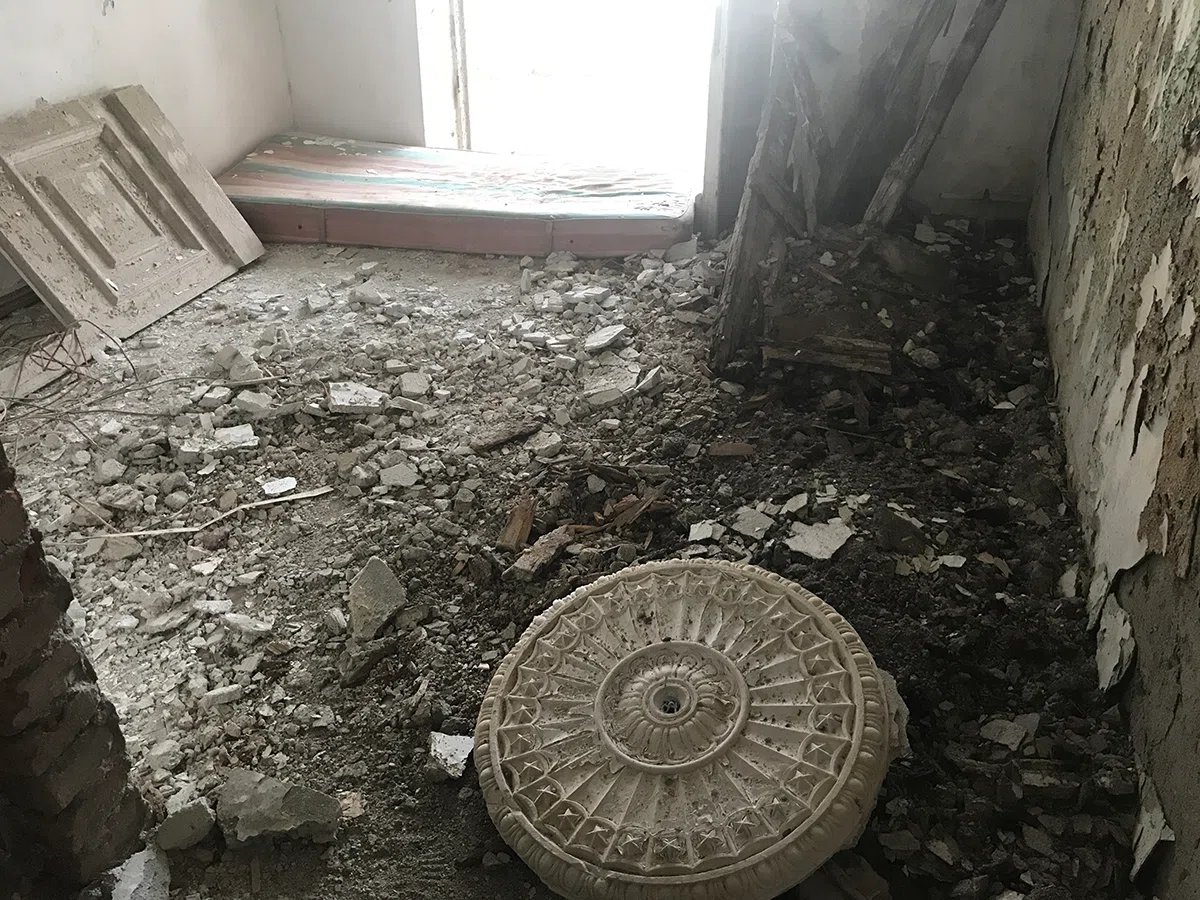
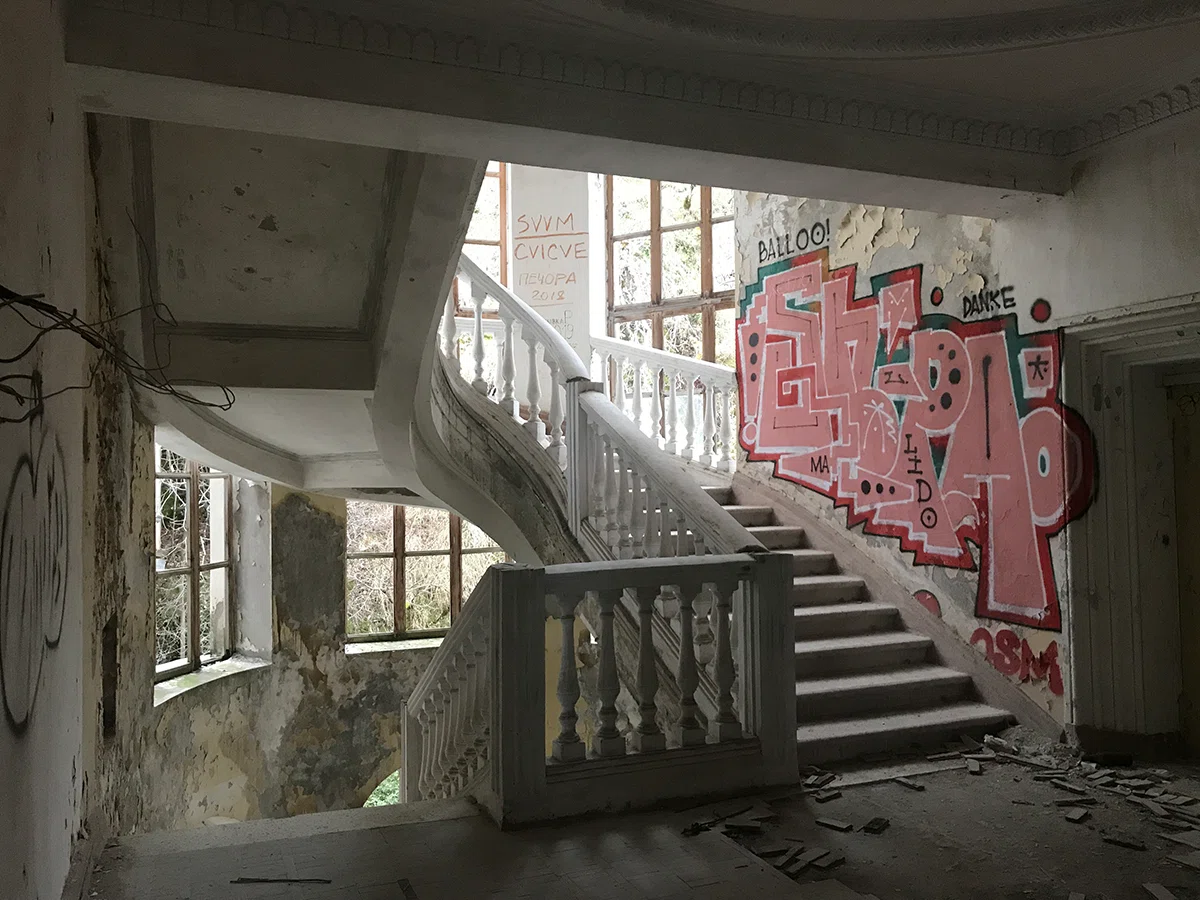
According to Georgia, closed to outsiders, they go whole excursions. With me, a young man in a red hat led a group of five on the floors of a group. He told tourists where the gramophones stood in the destroyed tea room, what were the stairs along which the members of the Central Committee went to the dining room, what baths stood in the luxury. And as "they built it under Stalin for conscience." At the same time, the young man did not confuse the year of construction, called the 1960th. The tourists nodded and asked what happened to the building when Stalin was gone.
“The war with Georgia,” the guide answered with a serious face. - Before the war, the sanatorium worked with Georgia, but it was very fired, destroyed and plundered.
The guide told me that he often leads tourists to look at the Abkhaz castle. So I heard this word here. An abandonment is any real estate object that there is no one to restore, nothing, and there seems to be no need. This is a suitcase without a pen. It just stands until it collapses. This is also full of us. But in Abkhazia, an abandonment is “lying” with what once glorified her.
The famous Winter Theater was built in 1953. On the contrary - the hallmark of GAGR, colonnade. The Winter Theater carries traces of its former beauty. There, and inside in some places, balustrades, stucco moldings, patterned beams and marble floor of the lobby were preserved. The windows are knocked out, the parquet is broken, plumbing is torn. But this theater still begins with a hanger. Some jokers dragged her to the entrance.
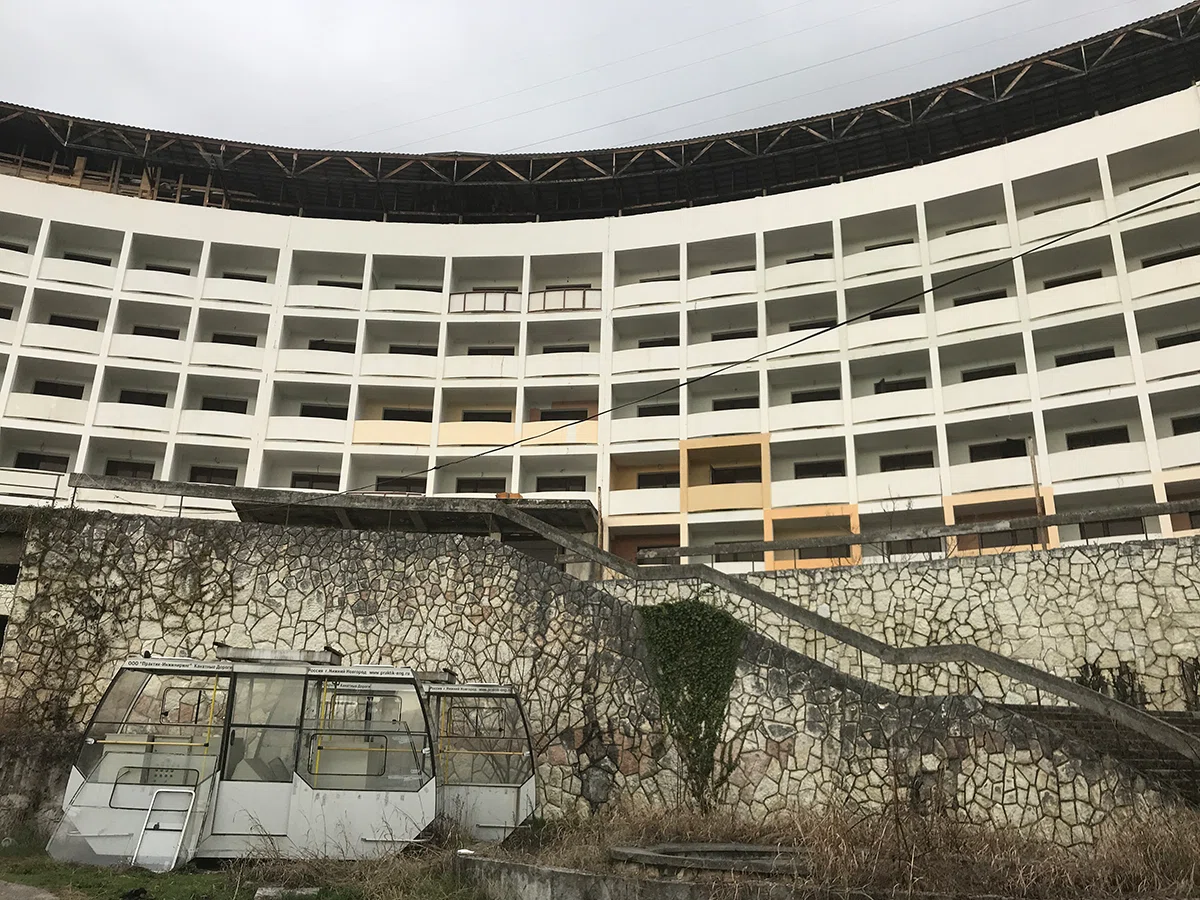
An elite cliff house "Rock" once turned into an abandonment. The main corps built under the Soviets, about ten years ago, some investor began to repair. I inserted the windows, brought the furniture. Everything stopped on this. Some say that his money ended, others - that Abkhaz partners “threw”.
The beauty of the “rocks” was not in a massive Soviet corps, but in the other three, pre -revolutionary, built by the Oldenburg. This is a former hospital, a governess outbuilding, a building of an orphanage established by the Duke. They are in ruins.
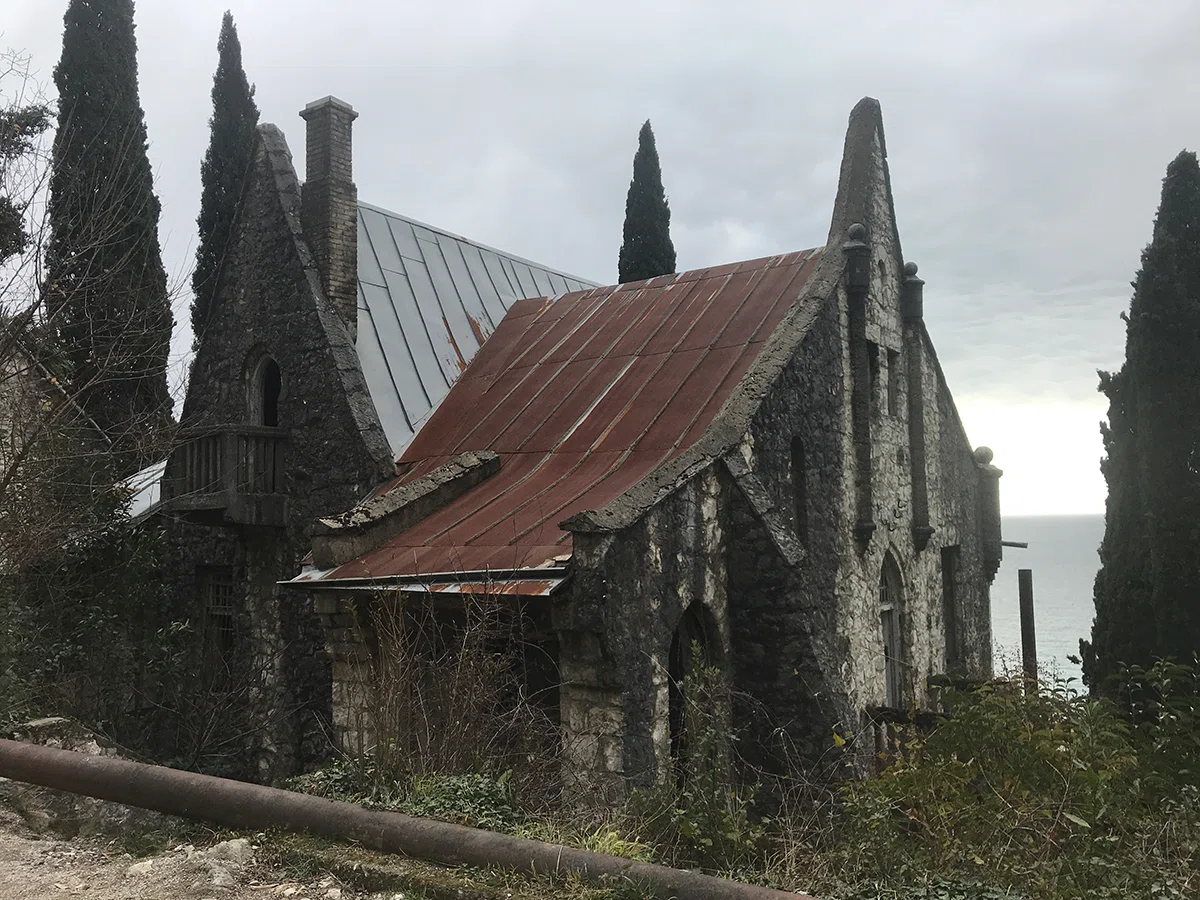
The former cottage of Nestor Lakoba , the first communist of Soviet Abkhazia and Stalin’s personal friend, became an abandonment. To Lakoba at the mansion, of course, there was another owner, but after the revolution the owner became the main Abkhaz revolutionary. After the death of Lakoba, the cottage was occupied by other party and Soviet figures. Since the time of independence by Abkhazia, the house has been abandoned.
Ask any Abkhaz how could all this splendor turn into an “abandonment”? He will breathe and say: war. In Gagra during the war, he will repeat, burned and plundered the castle of Oldenburg, destroyed “Georgia” ...
“In fact, the Gagra was not affected during the war,” says entrepreneur Kirill Bazilevsky. -Abkhazians managed to win the city by the fall of 1992.
In Georgia and other rest houses, everyone pulled the looters after the war. All these buildings were empty and were not guarded.
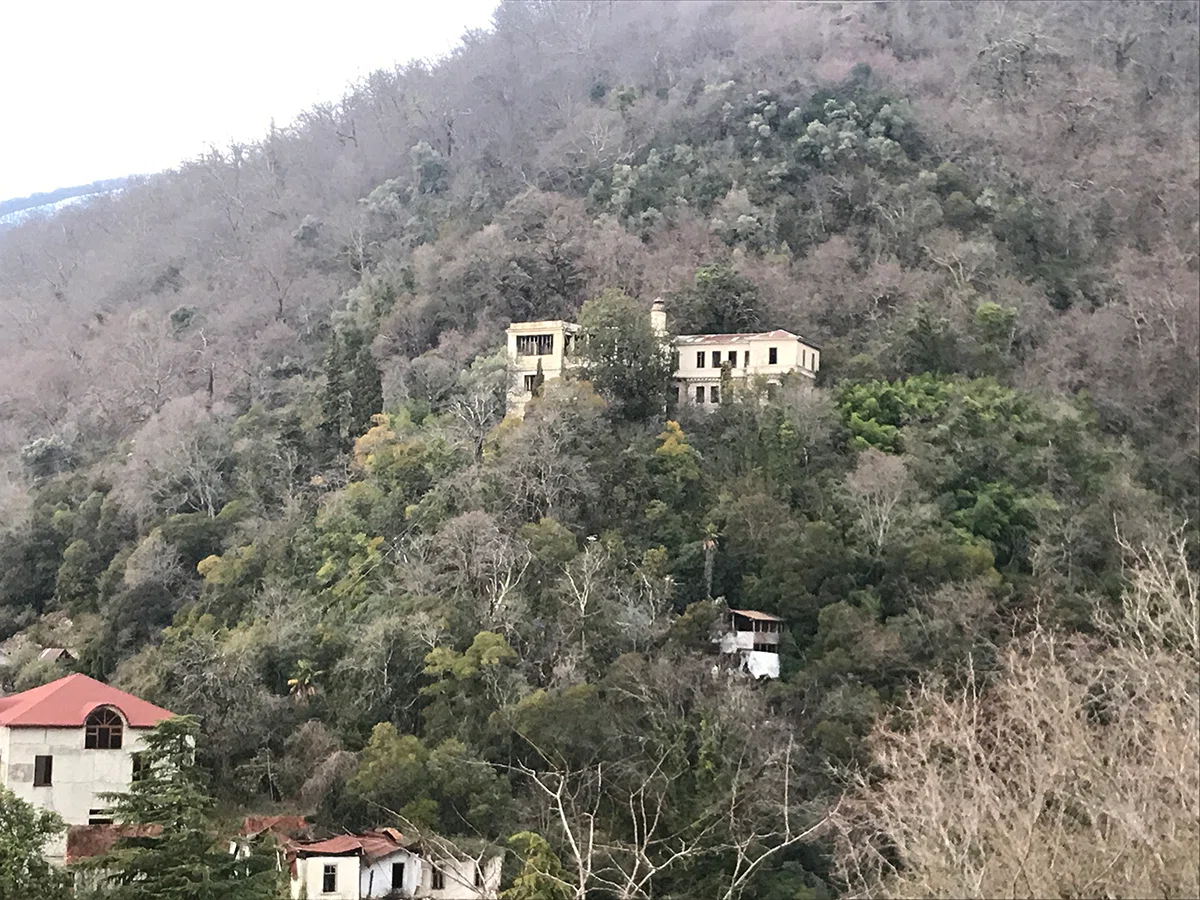
The fire in the Duke's castle happened before the war, they suspected arson, but did not prove. After the war, the castle and all other objects just remained empty. The authorities of the young republic simply did not reach them. But the “hands” reached the citizens. I would not dare to give any grades here. Having defeated the war, Abkhazia lived not just hard, but catastrophically. She not only lost thousands of young and strong men and the whole economy, but was also in the blockade.
“It was a very difficult time,” recalls the president of the Abkhaz Chamber of Commerce and Industry Tamila Mertskhulava. - And it left its mark. Men did not have the right to cross the border with Russia, this was allowed only to women. Complete devastation, enterprises did not work, in state institutions they gave food instead of money. And you have a family behind your back. Our women took the tangerines and dragged them to sell across the border on their hump. The family fed with this money.
These are abandoned holiday houses - architectural monuments, unearthly beauty and all that. There, for people, these were firewood, solid furniture, plumbing, dishes and a lot of other wealth.
Everyone could go to Georgia, spend his foot along the strings of the former piano. His gutted gut was not able to, apparently, to endure. It is lying near the assembly hall. One could consider the blue pattern on the tile and try to tear the tile to the souvenir. At the dacha, Lacobes lovers of ruins for a long time found even the remains of clothes in the closet. They could not take out a luxurious billiard table, it stands there.
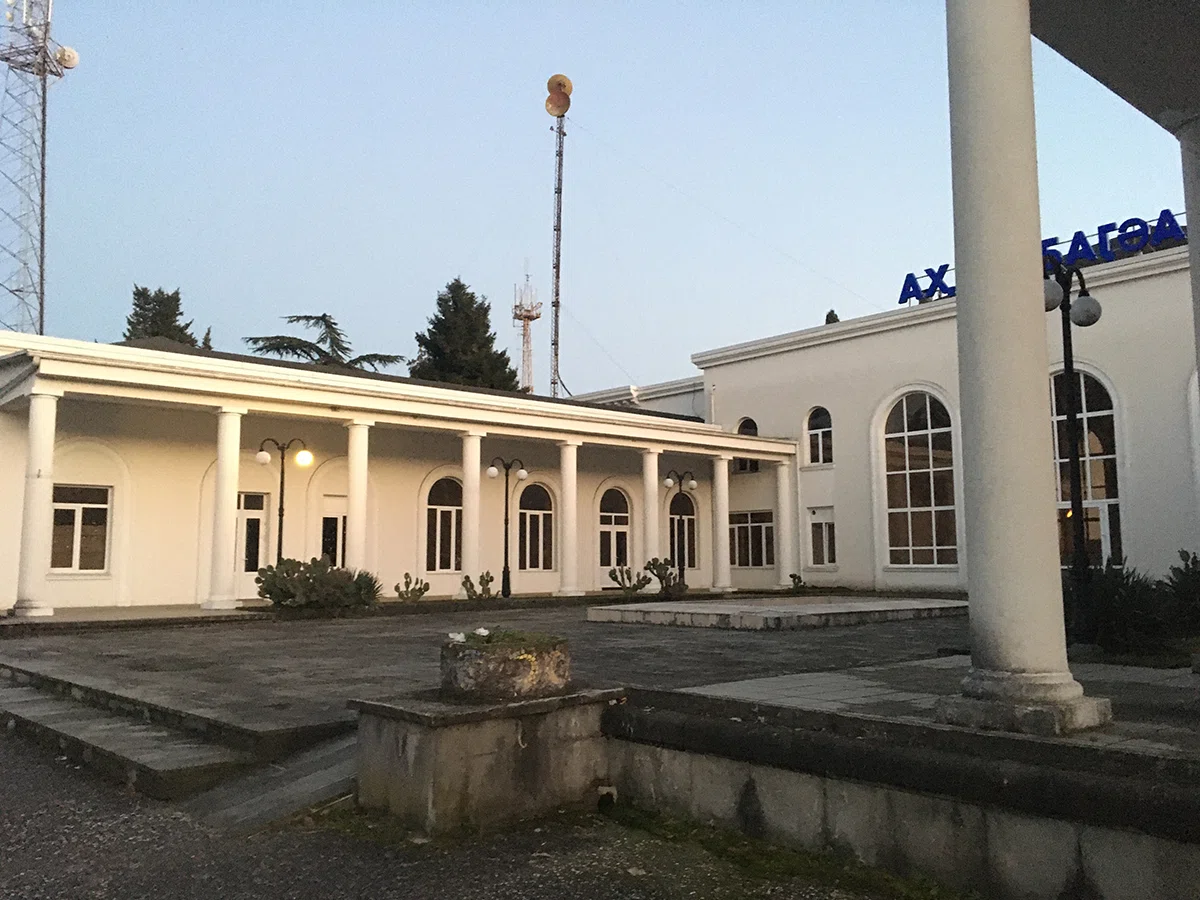
But an abandonment in Abkhazia is not only a sanatorium-water. An abandoned is the former Council of Commerce in the center of Sukhumi. From the train you go to the station station. Sukhum airport is also an abandonment, albeit recently repaired.
The republic is not recognized, and ICAO does not give permits for flights of its aviation. The airport is empty, but the freshly renovated building is at least closed. And only concrete walls remained near the hotel nearby.
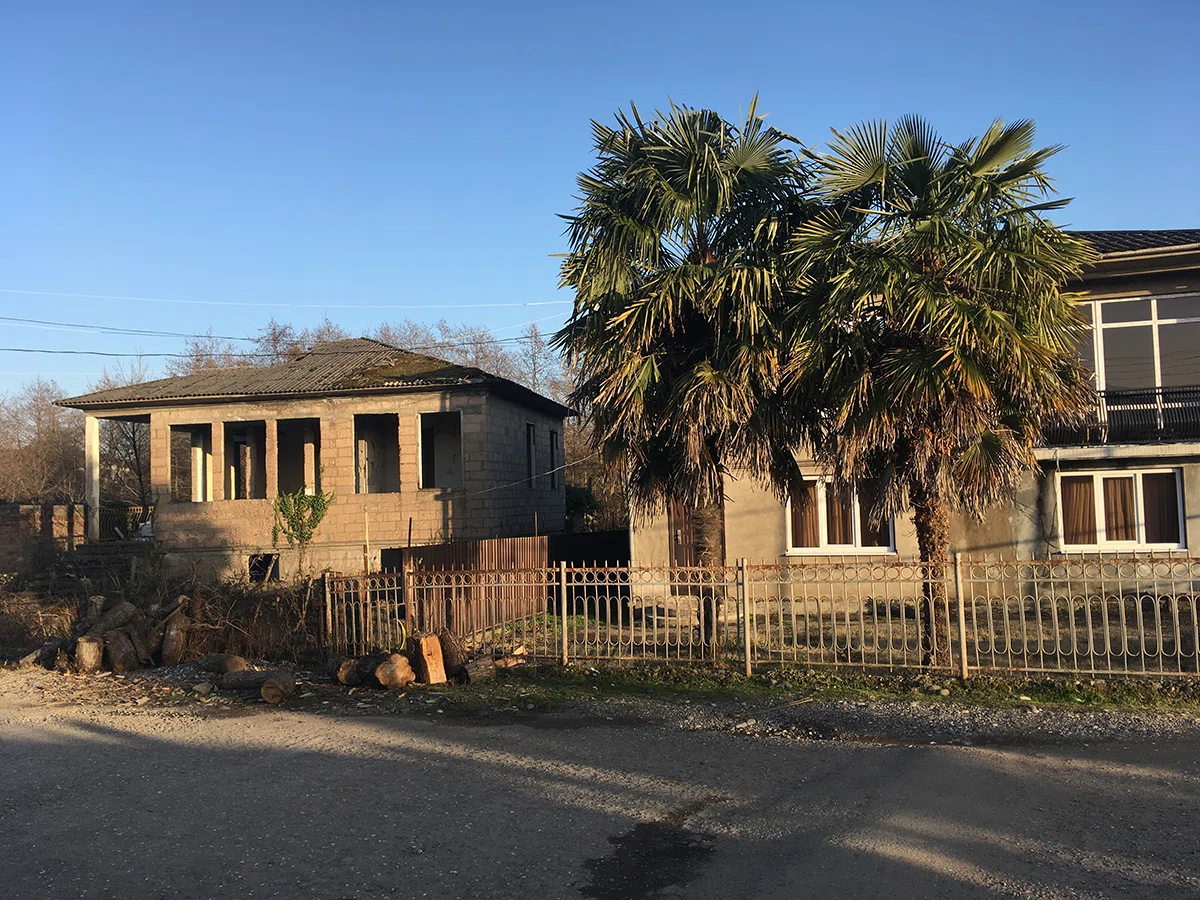
The most terrible abandonment in Abkhazia is former residential buildings. Especially when you know how they became an abandonment. They don’t have to look for them, they don’t have to go to them, they cut their eyes on almost any street of the capital, and the village simply consists of them. And these are not wooden collapses, as in the dead Russian villages, but strong once massive stone houses, which even now can say a lot about their former quite wealthy owners.
"Dead City"
Ochamchira is the last city of an independent republic on the eastern part of the Black Sea coast. The closest to Georgia. He used to be a famous resort too. Equally Gagr, but he had another potential.
“Ochamchira was the richest city in Abkhazia before the war (Georgian-Abkhaz 1992-1993.- I.T .) ,” says Kirill Bazilevsky. - Not a resort gagr, but a focus. It was a shopping center and a transport hub - a road, a railway, a port. It was in the Ochamchir that Soviet "workshops" worked. In the USSR, if you remember, they planted them. And then their products went to Armenia and Azerbaijan.
From Sukhumi, a highway with good asphalt leads here (repaired at the expense of Russian assistance). The last souvenir shop with clay dishes, the last shop with local wines for tourists, the last roadside tray with tangerines remained far behind, somewhere after the gulripsh.
The highway separates the lawn with muffle grass and a beach with gray pebbles from the sea. A spotted cow, similar to the old greyhound, runs along the side of the road. On the beach there are two people in warm jackets, hanging hoods on their face, sit motionless at the very edge of water with fishing rods. A palm tree with a burned crest grows on the lawn, next to a pillar with a rusty grate from under an advertising banner. Almost all advertising structures in Abkhazia are also an abandonment. If it is busy, it is either cigarettes, or cellular communications, or a bank. Or a portrait of the first president Vladislav Ardzinba. Or someone is preparing for the new elections.
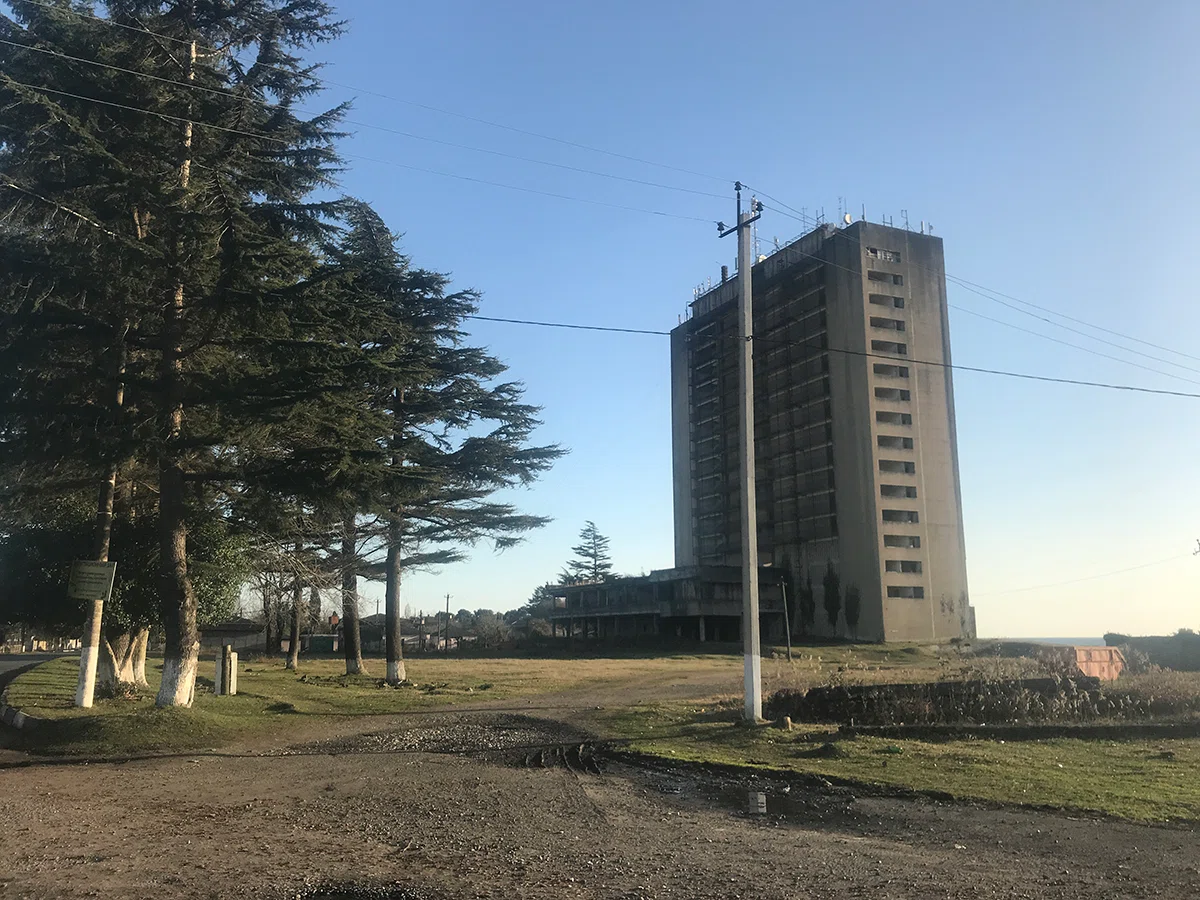
Ochamchira meets guests with an abandoned reinforced concrete community on 17 floors on the seashore. This is an almost completed, and then an abandoned Soviet rest house. The building is completely dead, only satellite antennas are on the roof. When did they put them? There is no one to ask. Not a soul on the street.
On a short street leading to the highway from the side of the sea,
Not a single living house. All destroyed, disassembled, everyone has windows and no roofs. Mandarins hang in the gardens on the trees.
But thanks to the dead silence reigning in the city, one can hear that life is still here. Somewhere they play the ball. I drove a car. The cow washes. The horse drove the cart. The tanks in the trash are crowded, the garbage fell out, the wind hits the asphalt with a plastic bottle. The garbage dumps look quite fresh. In the sense that there is someone to fill them. True, for some reason there is no one to clean.
On other streets of Ochamchira, there are also living houses. There are even new and outwardly very prosperous.
In the distance, a colony of high -rise buildings is visible. There are not all windows empty, the frames are preserved somewhere or white double-glazed windows sparkle. The sheets dry on the balconies. In one house, the first floor is barred, and on the door a sign: "The Ochamchir State District Archive." Reception of visitors is Monday, Wednesday, Friday. Uneven piles of brown leaflets are visible through the glass. Maybe the archivist really works three times a week. Now Saturday, the middle of the day, do not check.
A five -story building with hollowed windows ends with a playground with a dusty hill and motionless swings. A long blue pipe is stuck near the sand, the national flag of Abkhazia flutters on it. A rope is stretched along the pipe-flagshtok. The flag can be solemnly lifted in the morning.
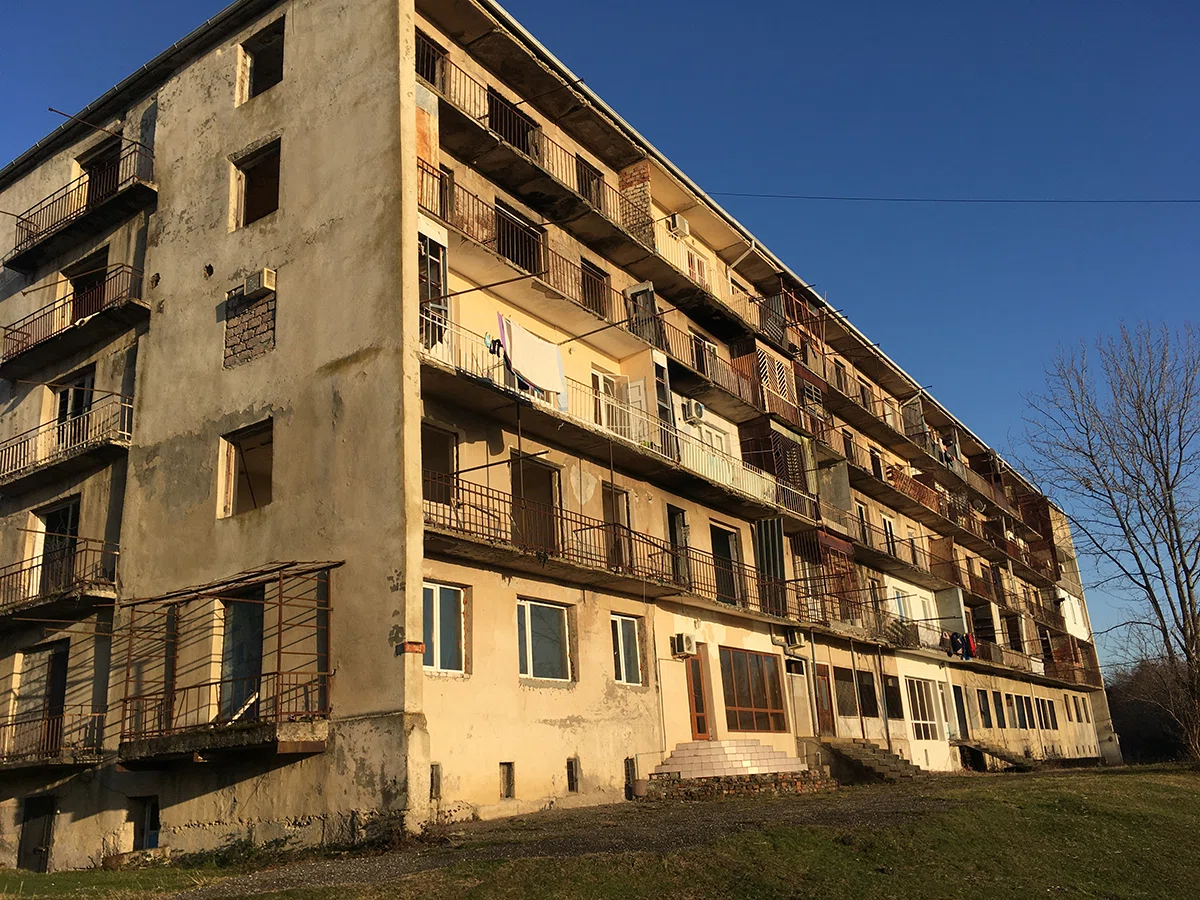
If desired, it is easy to walk along the houses and calculate which percentage of apartments is empty.
“Four fifths,” a gray -haired peasant tells me in a red jacket.
He is the only one I met on Saturday in the middle of the day in this city. He sat on some concrete piece at the garage gate and kneaded, as I photograph.
- Not afraid to walk alone? - The peasant squints, lighting. - We have wolves here, you know?
I know that wolves run around the Ochamchir. Local authorities are asking citizens to shoot them. What to shoot from - such nonsense in Abkhazia was not asked before, there are weapons in every family. And now a law has been adopted by which you can arm yourself from the age of 21.
A thousand rubles are promised for the wolf head. Two monthly pensions, by the way. Those who are lucky hang cut heads with a bared mouth on the fence.
The gray -haired peasant does not want to answer my questions.
“Nobody will talk to you here,” he gloomy Khabarik and leaves.
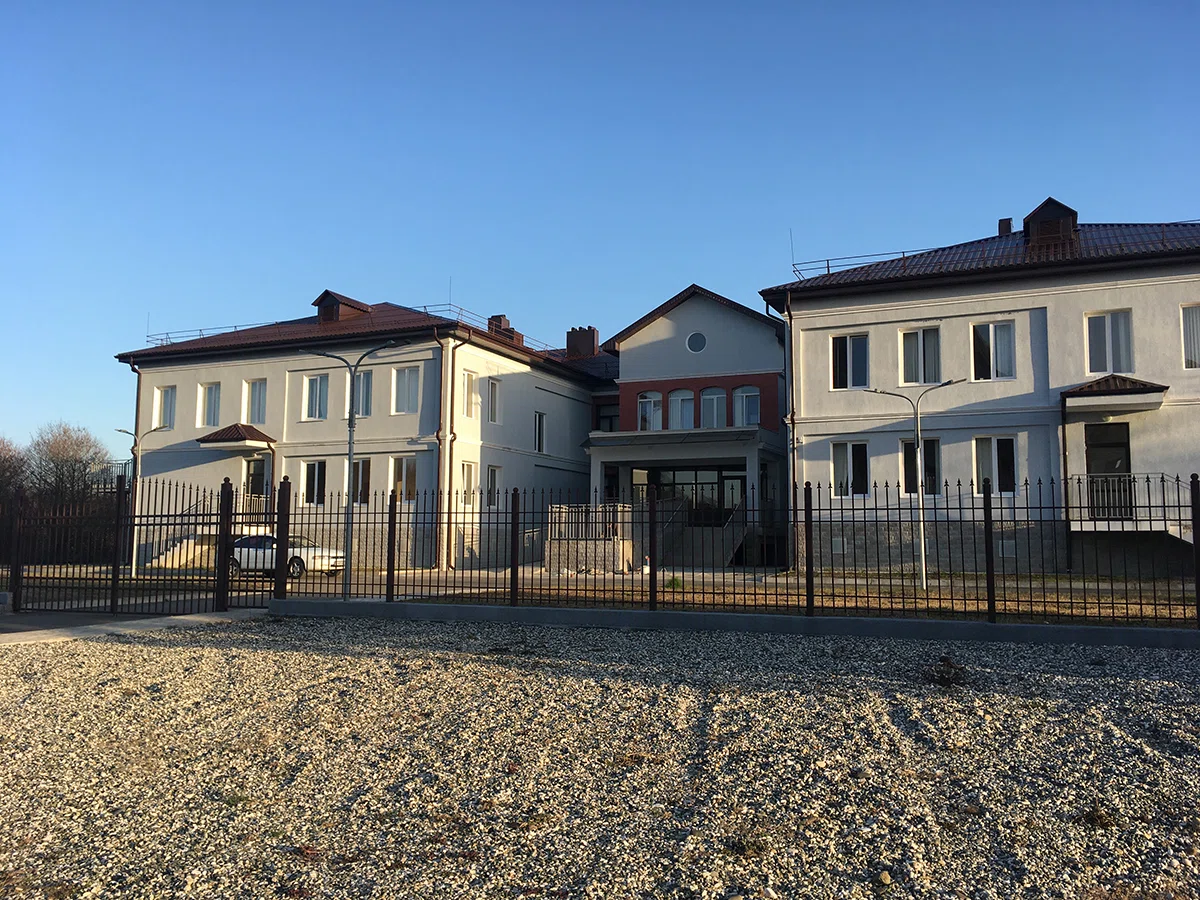
Behind the residential are one fifth, as I now know, an unexpected look opens up with houses: a neat courtyard, covered with gravel, fence and a new two -story mansion. This is a kindergarten for 200 places built for money allocated by Russia. It was laid in 2017 and were going to open in 2019. Did not meet on time. But the problem, judging by the statements of the Abkhazian authorities, was the most part: the old kindergarten was 80 seats, officials complained, catastrophically lacked four thousand Ochamchir families.
According to the census of the population of the USSR, in 1989, 20 thousand people lived in Ochamchir. Moreover, all the years of Soviet power, the population in a rich industrial city grew. After the war, the population decreased four times. According to the State Statistics Service of Abkhazia, the latest registration calculations were carried out in 2003, then 4,700 people were registered in Ochamchir. It really lived less, because there is nowhere to work. Another 19 thousand people counted in the area. Apparently, it is assumed that these families will carry children from villages to a new kindergarten built in the Dead City.
Alien dishes
“Okamichira looks like that because she suffered the most during the war,” the president of the Chamber of Commerce and Industry Tamila Mertskhulava explained to me. -If it weren’t for the war, everything would have been perceived differently.
Ochamchira, I repeat, the city closest to the border with Georgia. Of the 20 thousand people who inhabited him before the war, there were less than one fifth, 18 percent in Abkhazov. About the same amount of Russians and a little Armenians lived here. By the time the war with Georgia began, 60 percent of the population of the Okamichira amounted to ethnic Georgians.
— Значительных военных действий в Очамчире, по большому счету, не было, — говорит местный предприниматель, попросивший не публиковать его имени. — Грузия довольно долго контролировала город, он и был в основном грузинским. Власти в Очамчире поддерживали Тбилиси. Грузинская армия вошла в Абхазию в августе 1992-го и собиралась двигаться по железной дороге, но в Восточной Грузии подняли восстание звиадисты, они железную дорогу взорвали. Поэтому грузинам пришлось идти по шоссе. Они быстро проскочили Очамчиру и всю восточную часть Абхазии, сопротивление встретили только в Сухуме на Красном мосту. В Очамчире фронта как такового не было.
Иначе говоря, пустующие и разрушенные дома в большинстве опустошали и рушили не вражеские снаряды. Обе стороны той войны до сих пор обвиняют в зверствах исключительно друг друга.
Но обе стороны, признает теперь мой собеседник-абхаз, действовали одинаково.
— Грузины жгли абхазские дома, абхазы — грузинские, — продолжает он. — Взяв в конце войны Сухум, наши вышли на границу с Грузией за три дня, а никто не ожидал, что война примет такой оборот. Грузины бежали, бросая дома в спешке, часто не успевали взять элементарные вещи. Местные власти бежали первыми, потому что боялись, что им припомнят поддержку грузинской администрации. Начался массовый исход беженцев. Наши вошли в практически пустую Очамчиру. В некоторых деревнях начались партизанские действия, и там дома пострадали. Но в основном они остались пустыми потому, что грузины бежали. Их дома соседи или разбирали, или просто занимали.
Вот так Очамчира, самый близкий — в разных смыслах — Грузии город, и стала зваться «мертвой». Беженцы оставили не только дома, но и рабочие места. Занять их было некому. Предприятия были брошены точно так же, как жилье.
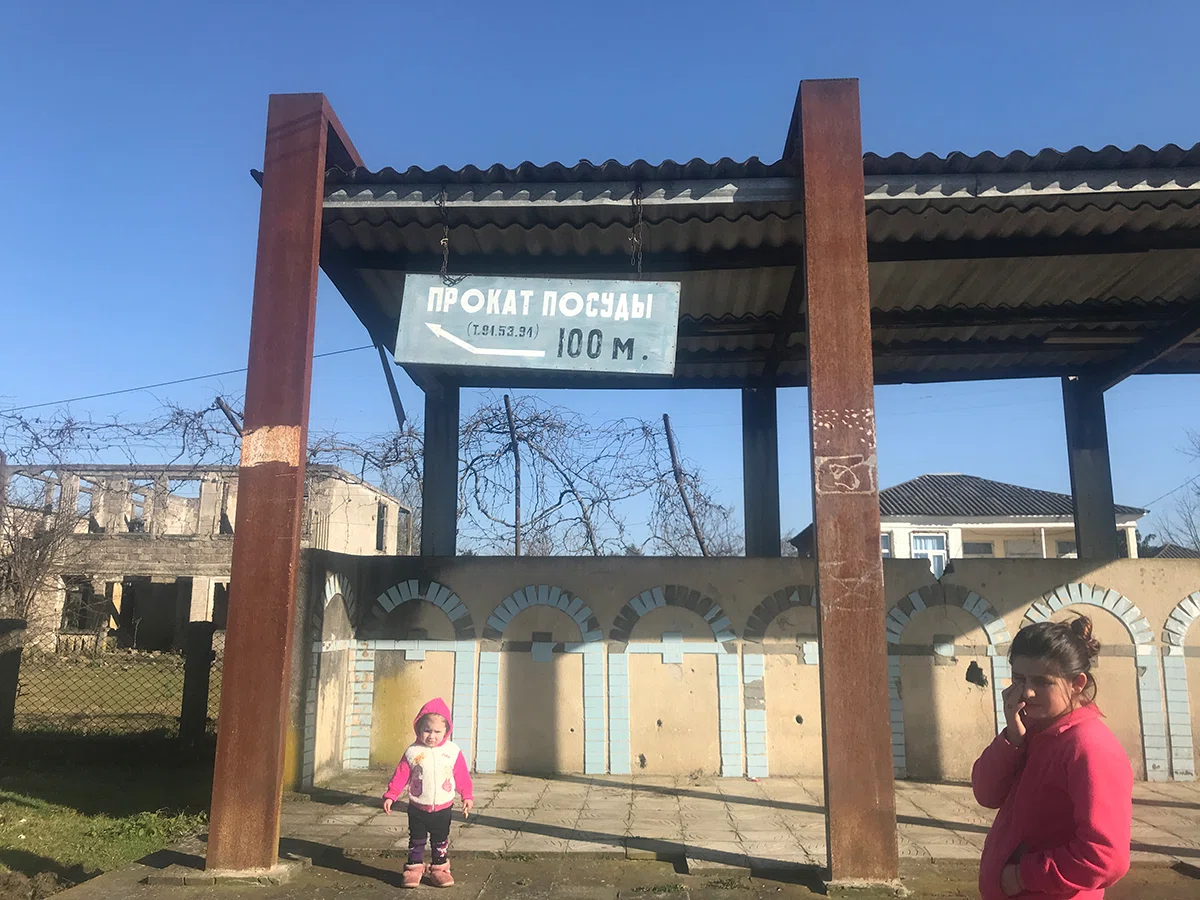
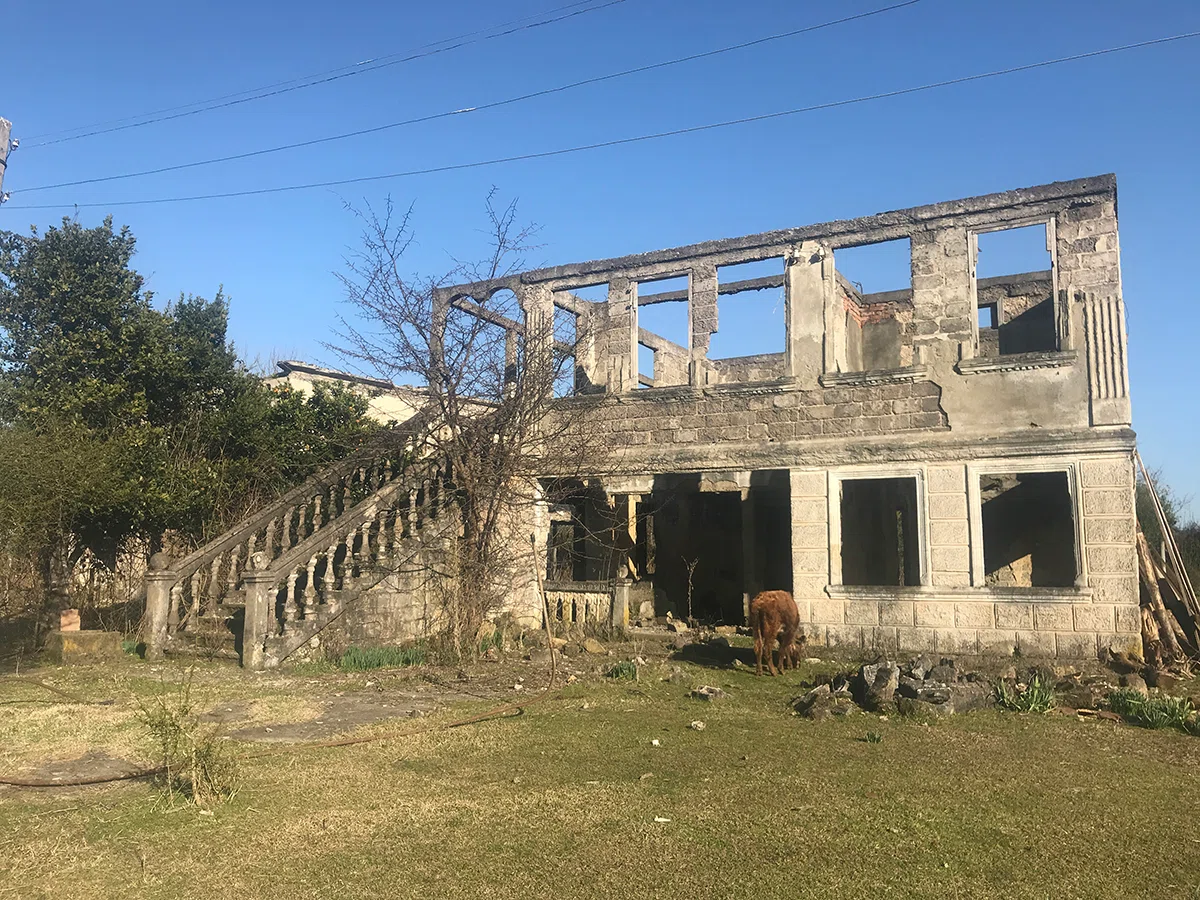
Возле одного пустого дома под Очамчирой я остановилась. Каменный, добротный, со следами красоты, с длинной лестницей, он приковывал внимание. Но зацепил меня не дом, а автобусная остановка перед ним. К ее крыше была проволокой прикручена табличка: «Прокат посуды». Номер телефона и стрелочка, куда за посудой идти. Я видела такое в Абхазии не раз.
Возле остановки гуляли две девочки. Старшая на вид казалась школьницей, я не сразу поняла что младшая — ее дочка. Я спросила, что означает объявление.
— Ну, надо вам посуду, не хватает, например, идете и просите на время, что непонятно, — неприветливо ответила маленькая мама.
На самом деле денег на посуду в обычной жизни людям хватает. В абхазской деревне сейчас живут все больше натуральным хозяйством, уж на тарелку-то с ложкой наскребут.
— Это нужно для похорон, а хоронят у нас часто, — объяснил мне журналист Антон Кривенюк. — В деревнях много родственников, каждый раз на похороны накрывают большие столы. И есть конторки, которые привезут посуду, надо только сказать, когда у вас «плаканье». «Плаканья» часто проходят, потому что людей умирает очень много. Здесь мужчины редко доживают до 65 лет. Я смотрю на мое поколение, 35–45 лет: один спился, другой скололся, третий утонул, четвертый суициднул, пятый под машину попал… Больше половины моих сверстников уже на том свете. Вы просто не представляете, какая в Абхазии гуманитарная катастрофа.
Я еще видела в Абхазии табличку «Прокат курток». Правда, только один раз, в Новом Афоне. Тогда уже стемнело, спросить, что это значит, было не у кого. Я предположила, что куртки берут туристы, чтоб не мерзнуть в летней одежде в Новоафонской пещере.
— Думаю, что так и есть, — согласился Антон. — Хотя не так давно у нас были люди, у которых все брали одежду, например, на свадьбу. Скажем, нужны туфли или костюм — идешь к нему. Но и это в деревенских семьях, в городах такого все-таки не было.
Это все мне Антон объяснит потом. А пока я стояла рядом с неулыбчивой юной мамой и рассматривала красивые руины у нее за спиной.
— Дом продается, — оживилась девушка, отследив мой взгляд.
"Novel!" — крикнула она, не дожидаясь моего ответа, и из соседнего двора вышел парень в военной форме. Брат, как я поняла. Он позвал маму. И меня повели осматривать дом. Внутри некоторые части стен были целы. Остальное разобрано практически полностью, не представляю, как это можно восстановить.
Зато — пять минут езды до моря, убеждал меня Роман. За дом они хотели 400 тысяч рублей. Ну ладно, согласился Роман, пусть триста.
«Занято»
Я все ждала, что эти милые люди что-нибудь скажут об оформлении купли-продажи. Потому что в Абхазии иностранцы не могут купить жилую недвижимость. Но продавцы молчали. Тогда я просто спросила. Женщина запнулась. Но тут же пообещала, что все оформит.
— И оформили бы, — смеялся потом Антон Кривенюк, слушая мой рассказ. — Нашли бы двоюродных-троюродных родственников, какие-нибудь липовые документы вам сделали.
Кирилл Базилевский назвал это словом «классика».
— Меня часто россияне спрашивают, как бы купить квартирку в Сухуме или в Гагре, больно дешевое здесь жилье, — объяснил он. — Теперь прикиньте. Вы заплатили за дом 400 тысяч. Поскольку сами вы быть собственником не можете, оформляете на абхазца. В лучшем случае под расписку. Чтобы жить в этом доме, вам надо вложить еще миллиона три.
А потом приходит формальный хозяин и говорит, что знать вас не знает.
На оформлении бумаг между тем разговор с очамчирской семьей не кончился. Слово за слово выяснилось, что дом и им не принадлежит. Сами они живут в соседнем (он сильно проще и беднее, зато целый). А из этого дома соседи уехали много-много лет назад.
— Это называлось словом «занято», — рассказывает Кирилл Базилевский. — Когда грузины бежали, соседи заселялись в их дома, а на воротах просто писали: «Занято». Такой недвижимости, которая никак не оформлена, в Абхазии полно. Создать кадастр здесь пытаются лет десять, но почему-то не могут.
Близкие к властям люди смотрят на эту проблему по-разному.
— Да, есть такое, после войны кто-то уехал и оставил дом соседям, близким, — признавала в разговоре со мной президент Торгово-промышленной палаты Тамила Мерцхулава. — Испугались и уехали. Но никто же не запрещает им вернуться! За исключением, конечно, граждан Грузии. Которые принимали участие в войне и уехали.
Бывший абхазский чиновник, участник войны, высказался иначе (имени попросил не называть).
— К сожалению, наше население после войны получило некоторые плохие привычки, — считает он.
— Во время войны, когда грузины бежали, освободились не только деревенские дома, но и много городских квартир. Их заняли сельские жители, они перебрались в города, получив бесплатно хорошее жилье и бытовую технику. Тогда начала пустеть наша деревня. Хотя не только деревня, тогда же опустела и Очамчира. Но самое страшное, что от этого у людей появилась страсть к «халяве». Со временем это бы прошло. Но вернула привычку, к сожалению, Россия, когда на Абхазию вдруг посыпались «халявные» деньги.
О «заброшке» в абхазской экономике, о том, что дала ей российская помощь, как молодая республика живет с этой помощью, — в следующем репортаже нашего корреспондента.