
Translated material
Institution or death
Question for the discussion: where is the line for which self -preservation goes into servility? Read and vote
I can imagine how this happens. Several good people, who are managers with something important and significant, are discussing plans. And someone says:
“Here, look, we definitely need it - both on the topic is suitable, and the performers are beautiful, and let's take this person at all.”
And in response, someone is also good, but cautious, says:
“Still, this event is some kind of, you know, with a hint. For some reason they play with fire, somehow stick out their protest. And these people that you are going to hire - you only look that they write in social networks! And we already have so much wonderful planned - necessary for people, educational! The participation of these people will put all this under the blow. Both excellent plans and workplaces of our employees, who, by the way, need to be fed. And in general, here we have important for society - especially in his today's non -free position - an institution. We cannot put a valuable institution under blow. ”
Or so. Plans have already been drawn up, people have been hired - and then a call is heard. And an affectionate (or not so) voice from the tube says:
“Are you going to cooperate with such and such? This thing is planned for you, right? Well, you know what .... Decide for yourself. "
Most often, good people themselves decide to abandon all this “dubious”. Because you can’t put an institution under attack. She lives, operates, offers enlightenment, help, and a platform for interaction in one way or another, and some too demonstrative step, too obvious disagreement with the system can destroy the enterprise working as a whole for a public good.
My favorite modern domestic intellectual said once that he needs principles so as not to rack his head in each individual case.
But the problem of a thinking person in today's Russia is precisely that it is very difficult to have solid principles and consistently apply them.
That is, to do this, of course, it is possible, but not at all the result will be socially useful and working for the goals that we, so fundamental, are pursuing.
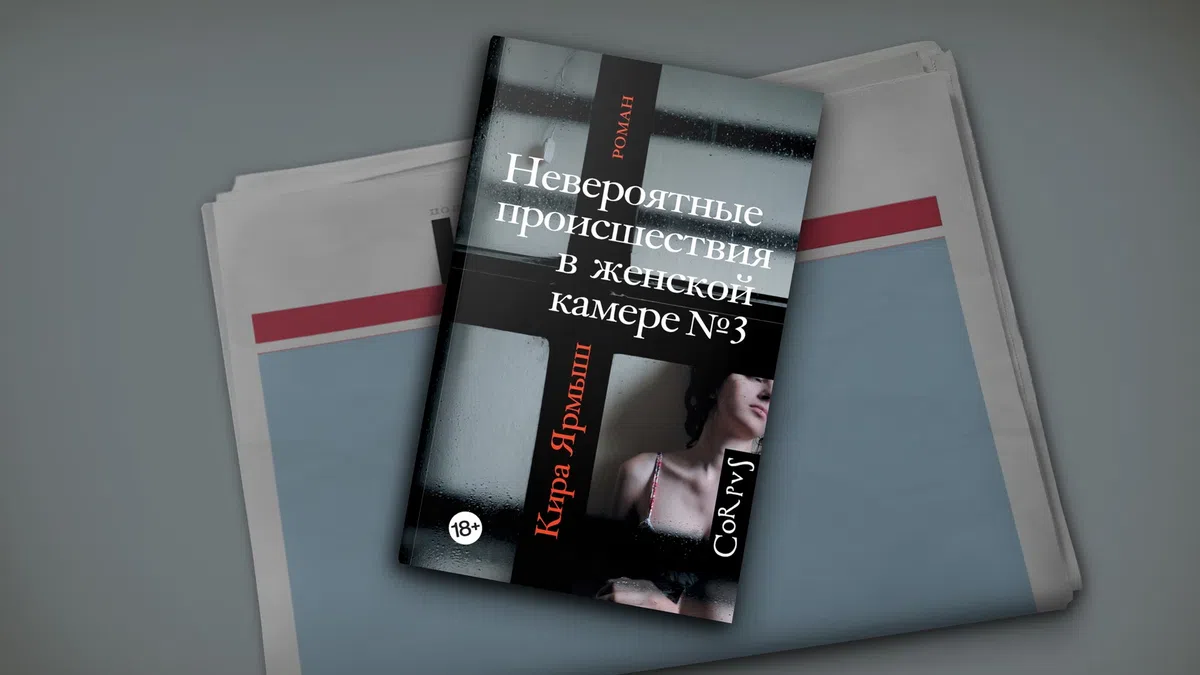
After the book fair Non/Fiction canceled the presentation of the book of Kira Yarmysh (Kira is now under house arrest in connection with the so -called "sanitary business"), the editor -in -chief of Corpus Publishing House Varvara Grozostaeva wrote on her Facebook page:
Varvara Gornostaeva, editor -in -chief of Corpus:
“Eternal argument: we must save the fair at all costs, and the performance of the opposition, and even the press secretary of Alexei Navalny, puts the existence of a fair, an important cultural institution, at risk. I am convinced that such compromises - that is, calling a spade a spade, censorship - is the main danger to any cultural institution. ”
Gornostaeva is one of the most noble and at the same time sane (rare combination) people that I know, and I often agree with her. I agree with her now, but consent is some kind of theoretical. The fair passed, there were many books on it, talking about freedom and democracy, and people talking about the same.
And so assumed hypothetically that one such presentation would cost us the existence of the fair itself, would we have better?
And if her authorities, whom we are so dissatisfied with so dissatisfied, will be replaced by another and central part of the fair will occupy something like the FSB publishing house (do they have a publishing house?), And the theme of the Fair instead of something like “Science”, as this year, will become “patriotic education”? Then it would be?
It is clear that Non/Fiction is only an example here - this is exactly the most cultural and educational institutions and those people who are related to them are now experiencing. And then two questions arise: theoretical and practical.
The theoretical question is this: are we ready to take a position “the worse - the better”?
Can we say that no fair is better than the one that prohibits such a presentation? Better no theater than the one who shoots from the site a photo of the unwanted authorities of the actress? Better no museum than the one that does not dare to cooperate with the organization called the "foreign agent"?
The answer is clear: of course not. Even incomplete freedom is better than the lack of freedom in general.
To the question of the practical answer is much more difficult. He is:
Where is that line, that line, after which self -censorship and compromise of the institutions burn out of them all the benefits, all the possibility of freedom?
It is clear (if you return for example non/fiction) that, having canceled one presentation, the fair still does not lose itself. And having canceled, let’s say, four such “doubtful” events from a political point of view - loses? And if he declares the topic the same patriotic education (well, they will perform on a separate scene, it's okay) - then?
I have an answer to these questions: I don't know.
I do not know how to find this border. I do not know when self -preservation goes into service. I don’t know when freedom “with shortcomings” passes into lack of freedom with purely decorative excesses.
And I don't know if it is possible to know.
From the editorial office
We offer readers to answer these questions right now.