Date
Author
Анна Алексеева, Юлия Любимова, Алена Змиенко
Source

Preserved copy
Translated material
"I am often mistaken for a drunk"
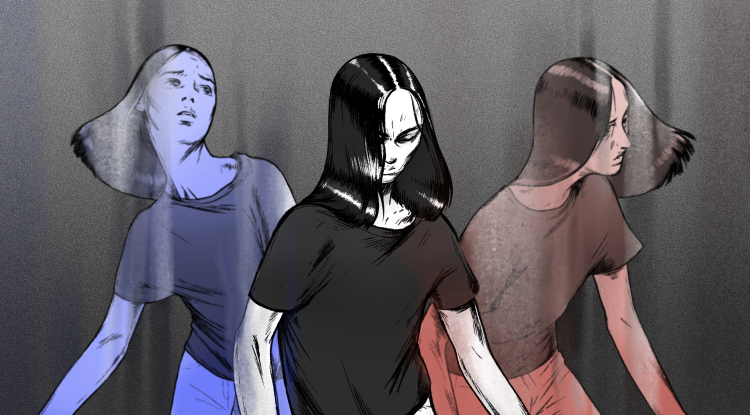
People with a rare ataxia disease - about their lives
According to the estimates of American scientists, 100 thousand children account for 26 with ataxia -an incurable neurodegenerative disease, due to which coordination of movements is disturbed, and problems with fine motor skills and speech may also occur. Ataxia can be either hereditary or acquired (for example, to occur against a background of a stroke, infections, poisoning, traumatic brain injuries, and also to be a symptom of other diseases). Especially for the “cold”, Anna Alekseeva talked with people, sick ataxia, about their life, about the adoption of the inevitable and social stigma.
In order not to miss the main materials of the "cold", subscribe to our Instagram and telegram .
"The design of disability seemed to take away from me the hope of recovery"
Elena, 38 years old
The first symptoms of ataxia began to appear in 2015 - three years after the birth of a second child, daughter. The son was then 10 years old. At first, weakness appeared throughout the body. I wrote her off for fatigue and lack of vitamins. Then my legs stopped obeying: I could not cross the threshold or curb, step over the puddle. The handwriting deteriorated. About a year later, I turned to the doctors. At first I was suggested by multiple sclerosis , but this diagnosis was not confirmed. I was most afraid that it was a cancer tumor in the brain, but there were no neoplasms on the MRI. A few months later, the doctors diagnosed me - cerebellar ataxia and prescribed vitamins. I did not take the diagnosis seriously. My first question was whether I can walk in heels now. I climbed on the Internet, began to read about ataxia. Then she thought: “Yes, you all go! It cannot be with me. I'm just tired. " Moreover, the mother -in -law said: “What is ataxia? You are smart, studied well. What are your problems with the cerebellum? ” I began to perform exercises, I was engaged in an exercise bike, but there was no sense. When I began to stagger me stronger, I bought sticks for Scandinavian walk and went to the street with my daughter. Alkashi approached me in one of these walks and began to shoot a trifle - they took it for their own. But I explained that I barely go due to illness.
In 2017, my parents died: first father, then, two months later, mother. My condition has worsened. If after the death of my father I could still walk on my own, then after the death of my mother - only with support. Therefore, on the street I began to appear rarely. Once, my daughter and my husband and I went for groceries. I stayed on the street to wait, leaned on the handrail so as not to fall, and they went into the store. Then Domchkin’s scooter rolled away. Grandmother passed by. I say: "Granny, give a scooter, please." And even then I had a slow speech. Grandma measured me with a look, they say, it was here, she got drunk so that the scooter could not raise it herself - and passed by. Then it was a shame. But then a boy of about six to seven years old helped me.
In 2019, I was finally confirmed by the diagnosis. Doctors immediately said: do not wait for improvements, the main thing is that there is no progression. They discharged vitamins again, said to lead a healthy lifestyle and to visit the fresh air. I was asked if I would arrange a disability. I refused, although I already understood the seriousness of my disease. The design of disability seemed to take me hope for recovery or at least an improvement in condition. And I hoped that I would drink a bunch of pills and would definitely stand on my feet, that everything would be as before. My son led me out of the doctor’s office, I talked a little. The son began to reassure: "Mom, I am with you, do not cry, we can handle it." In the same year, I found VKontakte a group where people with ataxia and their relatives communicated, and realized that the disease is incurable and that there are much more serious forms than mine. I can at least say, and some are deprived of this. Not everyone can stand it: someone goes into himself, and someone ends up with him. And I have nowhere to go, my daughter needs to be raised.
Friends gradually disappeared from my life. Three friends remained, but one moved to another country, the second was killed, and with the third I recently stopped communicating, because she envied me: “Here, I have been working on three works, but you live - you don’t know troubles. You do nothing and get a pension! ” Now I communicate only in a thematic chat in WhatsApp dedicated to ataxia. People in the chat supported me very much, and not only morally, but also financially when our family was left without money in the pandemic. I have not yet issued a pension, and the company where my husband worked was closed for the duration of the pandemic. By the way, people from the chat pushed me to the design of disability. This step was given to me very hard, it roared a lot. In September 2020, the first group was set for me, and I seemed to even feel worse. But now I get a pension.
Now I live with my husband and a nine -year -old daughter. The husband cooks food - and that’s all, he doesn’t care about me. He just eats. We live together like neighbors. Who needs a sick wife? The son (he was 19) has been living separately for three years, in the apartment that he got from my parents. Learns, works and visits me every day. He is my support and support, wash the dishes, vacuum, bedding will change. Sometimes he will take a walk in a wheelchair. I also accustomed my daughter to independence: she was washed (I can’t help her already - when I stand for a long time, her legs start shaking and her lower back is sick), my ship can take in the room in the morning. I'm only afraid that I will not have time to grow it, put it on my feet. While the brain works, I do lessons every day with it. Lessons are sacred. My daughter is an excellent student.
Our apartment is small. At home I can move down the wall. When I am nervous, my head starts to shake. I try to calm down myself, without medicine. I do not drink strong sedatives, because they are addictive. I rarely visit the street: this year I was two or three times. The daughter asks: “Mom, when will we go for a walk? It became warm. " But here little depends on me - when my son takes out in a stroller, then let's go.
"I'm tired of life and waiting for death"
Anastasia, 32 years old
Among the Yakuts, spinocerebellar ataxia of the first type (SCA1) is common . The prevalence level of SCA1 in some years reached 46 cases per 100 thousand of the population of the republic.
I live in Yakutia. At the age of 21, according to the results of DNA analysis, I was diagnosed with spinoc observation ataxia of the first type. This disease was transmitted to me from my mother, and to her - from her father. Four of the nine children of my grandmother, including my mother, died of this disease, not having lived to 40 years. Nobody made an exact diagnosis to them, but the symptoms were similar. Mom, as I later understood, turned to geneticists and knew her diagnosis, but hid him from all.
My mother died at 34. She was sick for a long time and heavily: she had heart problems, she walked badly (and then completely fell down) and constantly coughed, we even thought that it was tuberculosis, but the diagnosis was not confirmed. A few years before his death, my mother asked my father to take her to her homeland, to a small Yakut village to die there - he did so. He left his mother’s grandmother, and he returned to the city, to my brother and I. My father was a shaman. He could not help his mother, but he felt that he would die soon, told us about it and asked us not to cry. After some time, his father began to have problems with business, he seriously washed down and died in 1999: he suddenly became ill, he got into intensive care and died there. I was 10 years old.
After the death of my father, my grandmother came after us, and we went to my mother, who very hard to bear the news about his death. At that time, she no longer got out of bed. I had to take care of her. Once my mother asked me to go somewhere, but I did not go, because I had a headache. Then she said that I would understand her when I myself became ill and suffer like her. I did not understand how serious this disease was, I thought that it was pretense: there are no arms, and they simply did not use them. Mom envied her brother, who was ill in a mild form and died quickly, almost without suffering. The last days before her death, she was very tormented, so I was even glad when she died - death saved her from suffering. By the way, I still do not know if she died of illness or because she specially took more tablets than she needed. I was then 12 years old. After the death of my mother, my grandmother raised my brother and my brother.
I grew up and went to study in the city. The symptoms of ataxia began to manifest itself closer to the age of 20, when I studied at a medical college. I began to sway when walking, there were problems with breathing, with swallowing, sometimes I choked. Doctors said that it was vegetovascular dystonia or Vilyuish encephalitis .
At 20, I gave birth to a daughter. After childbirth, I lost a sharp weight, almost 20 kg. I did not sit on maternity leave for long - I began to look for work and found a vacancy of a nurse in the medical center. At a medical examination, I told the doctors that my mother was sick for a long time and died at 34, but from what illness, I do not know. I was sent to geneticists. It was then that I found out that my mother turned to them, made a test because they had our genealogical tree.
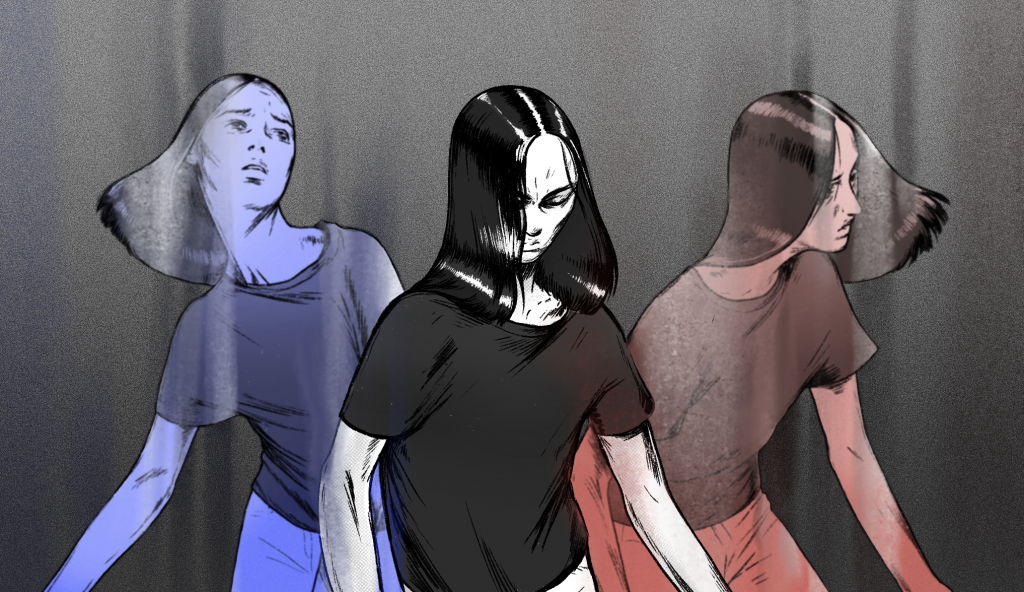
Seeing my outpatient card with confirmed ataxia, the employer refused to hire me. After that, I did not tell anyone about my illness for a long time. I pulled out a page with a diagnosis from the map and soon got a nurse in the department of newborns. Usually, for the discharge of mothers and newborn, relatives brought the medical staff champagne. I drank just a sip and stagger me stronger. When I came home, my husband thought I was drunk and beat me.
Having worked for several years, I quit because the disease progressed. Then I earned a lot of where, but usually I did not linger anywhere for a long time. The last time she got a job as a cleaner to work with her husband. Then I already had a second group of disability. Another woman came instead of me, but I worked for her. Otherwise, they would not have taken me to work because of my diagnosis.
When I went to work, I was constantly taken for a drunk, especially cops. I bought a folding cane, but she prevented me from walking, so I did not use it. On the bus, I immediately tried to take their free space, and people often looked at me askance: we settled down, impudent, is not inferior to the elderly. For them, young means healthy. It enraged me.
Once my daughter forgot a physical education form. I went to school to transfer her uniform, but there a school guard grabbed me by the scruff of the scruff: “Woman, where are you in this state?!” I did not answer and went home. It was a shame to tears.
For a medical and social examination, I was driving in a stroller to obtain the first group of disability. Imagine, there was no ramp at the entrance to the building! And he should be there. My husband had to drag me on the stairs.
However, I cannot say that my husband and I have a good relationship. We quarrel every day. I do not want to live with him, but I have nowhere to go. When we go somewhere together and I stumble out of the blue, he says that I do it on purpose. I now have a very slurred speech, sometimes I have to yell to understand me. My husband constantly mimicrates me. The daughter understands my speech the best. She is now 12 years old. She knows that I am sick and will die soon, and she is ready for this. I hope ataxia will not be transmitted to her. But it will definitely be possible to find out only after its adulthood, when the disease usually manifests itself. The chances are 50/50, because my brother is healthy. By that time I will probably die.
I sleep badly, I go badly (I can only move at home at home), I constantly give me food, it’s hard to endure even an ordinary cold (I can’t lie because of coughing and shortness of breath). On the street I try not to appear. I'm tired of life and waiting for death, I'm afraid only torment.
Recently, my grandmother died from a heart attack. I went to the funeral. Of the nine of her children, only two are alive - the eldest son and youngest daughter. I asked them, where does ataxia come from in our family? To which the eldest son replied that this is a curse of the shaman. I hope that the disease will not go further, because I am the only disease of the 20 grandchildren of my grandmother. If my daughter does not get sick, then the shaman curse will end on me.
"There is nothing to do drunk here"
Maria, 53 years old
At 44, I began to stagger me slightly. At first this happened only when I went down to the subway. Then it became difficult for me to leave the tram: it was difficult to keep balance, I wanted someone to support under the elbow. Over time, I began to stagger me stronger, and just when I walked along the street. Two years later, when the symptoms became more noticeable, I went to the doctor. The clinic decided that I had problems with the vessels, and assigned droppers. There was no sense in them. Then I was sent to the professor who looked at my MRI-Gneck and said that it was ataxia. But which one, he could not say, and transferred me to a neurologist to the Central City Hospital. In February 2014, I was diagnosed with Spinocerebellar ataxia . By this time, I was already swinging well.
I came home and immediately climbed to the Internet to read about this disease. I read that it progresses and usually after the manifestation of symptoms a person lives another 15-20 years. I was in shock. The course of the disease also depends on whether it is hereditary or acquired. And in my family, no one was ill. At first I was hoping that an osteopath would cure me. Then I went to several doctors, some did not know about ataxia at all - and this is in St. Petersburg! And how to live sick in the regions ...
I have been sick for nine years, but I still have a slight case: there are no problems with speech, I go without support, although I stagger. Other people in two or three years sit in a stroller. It’s difficult to walk around the apartment: in a narrow space, I am staggering stronger, knocking on all the corners, constantly bruises on my arms and legs. When walking, the legs are convulsed: I walk like a bear, raking my feet inside. The neurologist appointed me the injections of Botox to relax the small muscles because of which he takes his feet. But in order to remove spastics from large femoral muscles, it is necessary to put a baclophen pump . Then I at least be able to walk, not clubfoot.
In February, I handed over a large neurological panel (we have about 35 thousand rubles in St. Petersburg) to understand whether ataxia will be transmitted to my children and grandson. The result of the study needs to wait for three months. I hope that everything will cost.
I often hear from passers -by addressed to me: “Oh, I have been gone! Already ready! ” Maybe if I walked with a stick, they wouldn’t say that. But it is more convenient for me without a stick. I am not offended by passers -by, I think if I saw such a person on the street, I would have taken him for a drunk. You will not explain to everyone that this is ataxia. But I did not encounter frank rudeness.
I communicate on a network with people with the same disease. Some say that their security does not let in shopping centers, they say, there is nothing drunk here. They are terribly offended. And there are those who walk badly, but can calmly drive a car. But here is the problem: usually places for disabled people in the parking lot are busy with healthy people. But some are very difficult for some even a couple of extra meters to reach the entrance.
Someone has a disease in adolescence or youth. And I managed to put the children on my feet before getting sick. Now I’m with my grandson. I have a third group of disability. You can get the second, but for this you need to go to the hospital for examination. Ataxia, albeit slowly, but progresses, and although I have a relatively light form, the disease still prevents me from living.
"Doctors said that if I reach at least up to 40 years, it is already good"
Anastasia, 31 years old
I have been living with cerebellar ataxia for nine years. The first symptoms appeared when I became pregnant. I felt weak in my legs. Then my speech slowed down a bit, handwriting deteriorated, headaches and arrhythmia appeared. I attributed everything to stress and fatigue. Plus, during pregnancy, I had low hemoglobin. After giving birth, he normalized, but my condition continued to deteriorate.
A few months after the birth of my son, I turned to the doctors. At first I was supposed to be multiple sclerosis, but the MRI did not confirm the disease. Then they said that I had angiodistonia ( violation of blood vessels. - approx. "Cold" ). They prescribed drugs, but the treatment did not help. A few months later I was sent to the diagnostic center, where the consultation of doctors diagnosed me - cerebellar ataxia. In total, it took about two years to make a diagnosis. Moreover, the doctors said that the disease is hereditary, although neither my husband and my husband had this in the family. The son was born healthy, but I am very afraid that ataxia can be transmitted to him.
When my son was three years old, I issued a disability. Doctors said that if I reach at least up to 40 years, it is already good. The first couple of years after the diagnosis, I was in a serious depressed state, constantly cried and did not want to believe that she was sick. Yes, even now I do not believe it to the end.
My illness is about loneliness. Some of the friends disappeared over time from my life: these were close people whom I helped at one time. I pulled away from others myself, because I am ashamed of my condition. I began to dress worse, although I always had a lot of clothes. And why all this, if you can’t go beautifully? Now I try to take care of myself, but sometimes you can do some household chores-and there is no longer enough strength. I have become more nervous, because now I can’t do much that I could: hang the curtains, glue wallpaper, clean potatoes or carrots - I have a fine motorcycle. Sometimes, when it happens completely sickening, I can drink a sedative.
Two years ago, my husband and son and I moved from the city to the village: there are fewer cars, and it’s not so dangerous for me to walk with my child. Да и людей тут меньше, все друг друга знают. В городе меня часто принимали за пьяную или наркоманку. Я могла обратиться к прохожему с вопросом, а меня в ответ пихали и говорили грубости. В селе ко мне привыкли и уже почти не обращают внимания на мои особенности. Только сыну (ему сейчас восемь лет) в школе дети говорят, что его мать — алкашка. Сын меня защищает и бьет обидчиков. Учителя потом на него жалуются. Обидно, конечно, но я стараюсь не зацикливаться на таких моментах.
Дома я передвигаюсь по стенке. На улицу выхожу, опираясь на мужа. Но иногда надо выйти куда-то, а муж на работе. Тогда я беру палку. Ходить с ней мне тяжело — ну а что делать? Разговариваю я плохо, зрение тоже портиться начало. Пью витамины и сосудорасширяющее препараты, делаю гимнастику — вот и все лечение.
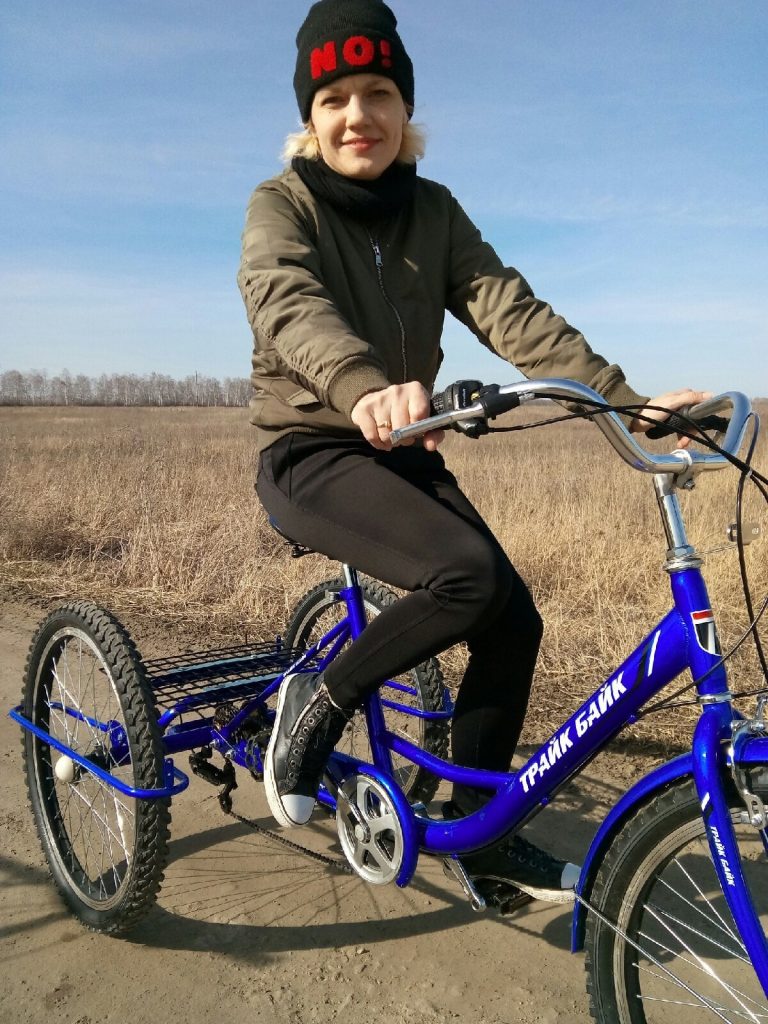
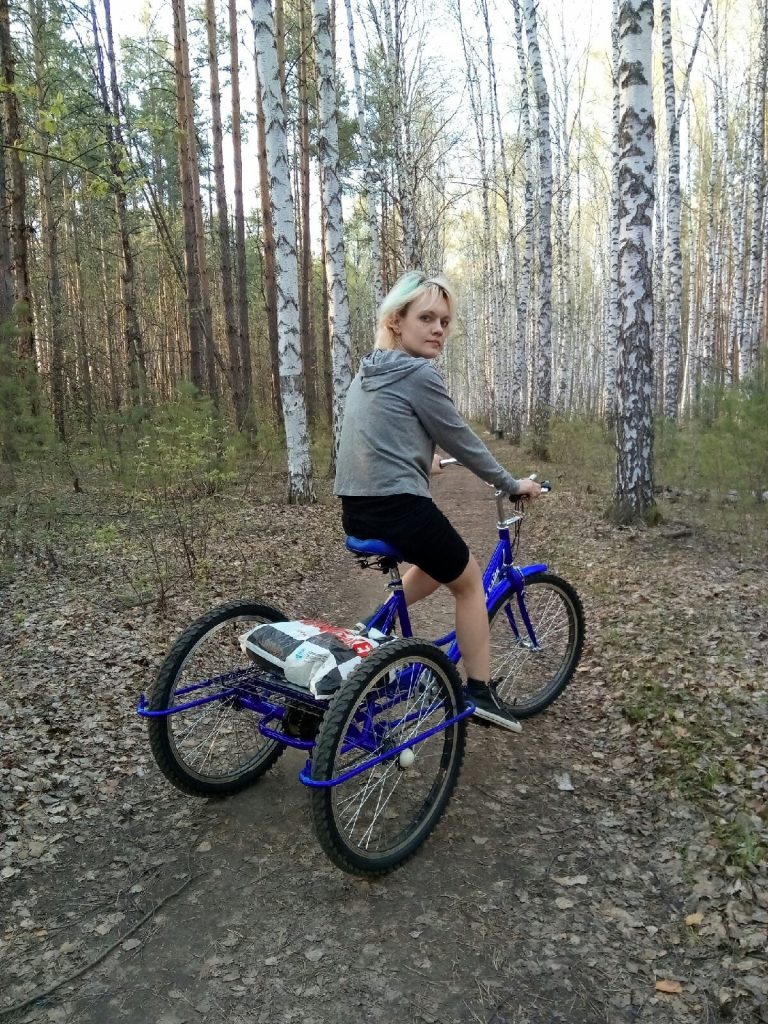
Болезнь прогрессирует. Но я стараюсь не сдаваться и жить обычной жизнью, насколько это возможно в моем положении. Летом мы всей семьей выезжаем в лес за ягодами и грибами. Я катаюсь на трайке — специальном трехколесном велосипеде. Стараюсь не тратить жизнь на нытье. Главная моя мечта — увидеть и понянчить внуков.