
Translated material
The loneliness of Russia
How to quarrel with everyone and be alone with China
Calling a spade a spade, in recent years, Russia has been addicted to almost everything that it went to it as starting capital in the early 90s of the last century as a young state that abandoned communist ideology and shared the norms and values of Western democracy.
Both in the world and in Russia itself, many perceived such a turn as irreversible. Under it, which declared his return to the trunk path of the civilizational development of Russia, a hitherto unheard of international trust and goodwill was issued. This loan provided the country with entry into the G7, the informal club of the largest democracies in the world; the actual recognition by the international community of its leading role in the CIS; a friendly “understanding” of the power resolution of the conflict of the two branches of the Russian authorities in the fall of 1993 and the operation to pacify Chechnya in 1994; The recognition of the unobvious results of the 1996 presidential elections and the complacency of some foreign policy forms like a stupid “throwing at a prison” in the summer of 1999.
Well, then, following a sharp jump in oil prices, Russia picked up a certain political variety of “Dutch illness”: yesterday, the poor country suddenly had, in fact, unprofitable petrodollars and confidence in their own “greatness”.
In combination with the almost classic “Weimar syndrome”, this quickly led Russia to the “good old” revenge.
His first signs were manifested in attempts to interfere with the bloodless “color” revolutions in Georgia in 2003 and in Ukraine in 2004, in a shameful “hunt” for Georgians, arranged by the Russian authorities in 2006, and in some ways still absurd. In 2007, President Putin's program speech in Munich took place, in which he almost openly set out his new-old vision of the world. In 2008, Russia moved from words to business, unleashing the "coercion of Georgia to the world." For a number of reasons, this extremely doubtful from the point of view of international law and morality military operation actually got away with Russia.
The non -inflated war with Georgia turned out to be fleeting and did not end in the overthrow of its president, although his Russian colleague threatened to do it. In addition, the rejection of part of the Georgian territory - Abkhazia and South Ossetia - under the pretext of protecting ethnic minorities living there, purely formally, did not lead to their annexation, and therefore had some similarity with the NATO operation in Kosovo. In fact, there was no resemblance at all: in fact, having established a protectorate over Abkhazia and South Ossetia, Russia acted in their own imperial purposes, while the NATO saved Kosovars from the genocide mainly from purely humanitarian motives.
The main thing, however, is different: the credit of the trust received by Russia in the early 90s has not yet been exhausted. But, when, inspired by the Euro-Atlantic non-resistance of its “Georgian” adventure, Russia entered into a conflict with Ukraine, capturing Crimea and unleashing a war in the Donbass, the patience of the “Westerners” burst, and the remains of a loan of confidence were melted like smoke. Russia was expelled from the G8, as with flags they were imposed by sanctions and began to openly cut as an outcast.
In response, “offended” Russia, just like in unkind Soviet times, aimed its white, gray and black propaganda to Ukraine and the “hostile” West. Introduced response sanctions against offenders. And now she was still drawn into the burdensome race of missile-nuclear weapons and geopolitical rivalry with the United States.
The USSR, if anyone remembers, did not survive such exercises, and Russia is immeasurably weaker than him in everything except unbridled propaganda.
The intermediate result of the Russian foreign policy adventures is deplorable: the military-patriotic hysteria is rampant inside the country, relations with the West fluctuate in the range from confrontation to deaf hostility, the largest post-Soviet state-Ukraine-lost for a long, if not forever, diplomatic relations with Georgia are torn, all other post-Soviet states, even as they are typologically similar Russia, gradually looking for protection from it on the side. The CIS project is actually completed.
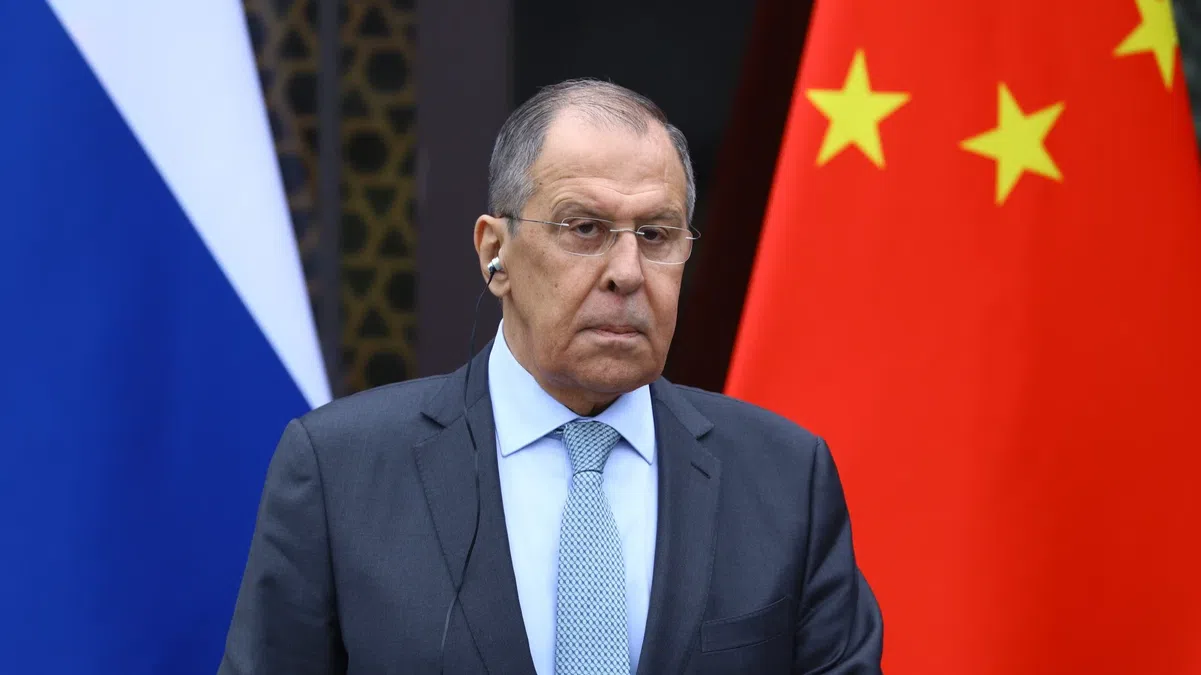
Today's Russia has enough powerful and influential enemies, even more ill -wishers, but almost no friends and no allies at all. There are only unreliable situational fellow travelers and dubious customers from among world outcasts collected by the residual basis. In such, frankly, the restrained circumstances of Russia were no one to turn to, except China. But does China need Russia as an ally?