
Translated material
The video will not help
The largest spontaneous protest rally was held in Moscow due to the deportation of the defender of the rights of visitors to Tajikistan. Labor migrants for the first time loudly stated political requirements
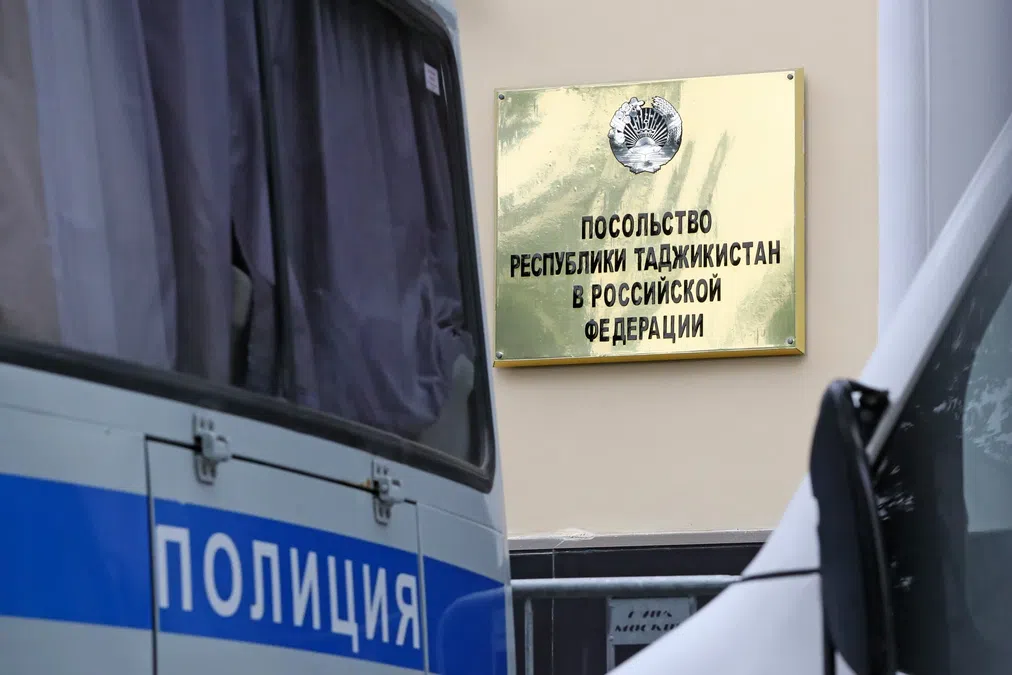
On April 2, more than 400 people went to a rally at the Tajik Embassy in Moscow to express support to the activist and human rights activist from Amon, whom the Russian side deported to Tajikistan at the end of March, where he was imprisoned in a pre -trial detention center, accusing him of fraud. After the rally, according to the OTD-Info, about 120 of its participants were detained. Together with Russian human rights defenders and representatives of the Tajik diapxor, the Novaya correspondent corresponding to who was spose Amon, why he was deported and why labor migrants are ready to go outside for their rights.
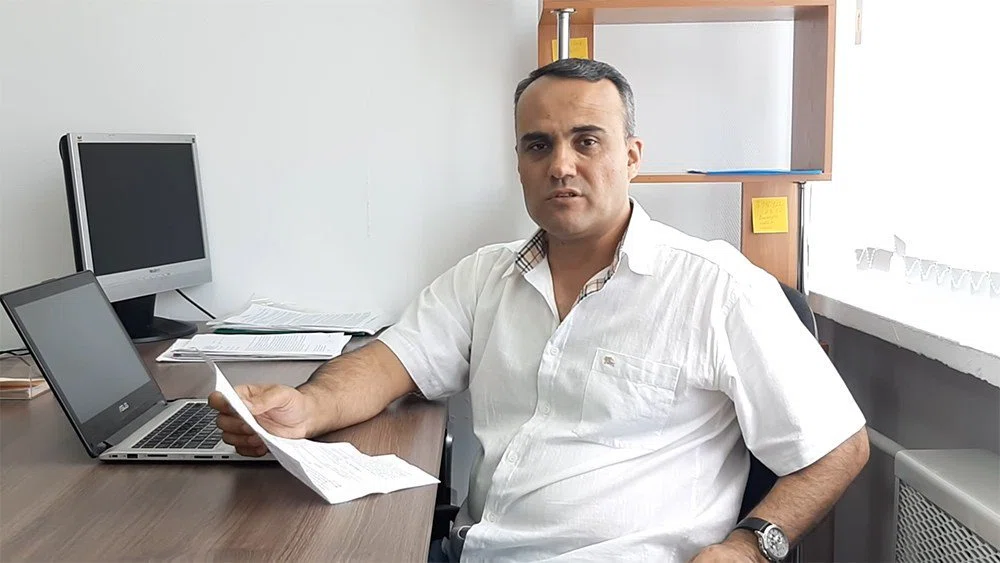
Amon (Izatullo Kholov) was a well-known Russian-Tajik human rights activist in the midst of labor migrants, led the Moscow Center of Toggikon. The main type of activity is assistance to people with documents, searching for work and housing. In 2019, Amon decided to try himself in a political field and announced the creation of a party of labor migrants in Russia “Changes, Reforms and Development”. Amon gained immense popularity in 2020, when during the pandemia he raised funds to help migrants left without work and money.
Impatus Amon disappeared on March 25 this year. On that day, he only managed to call his associate and report that he was delayed. Relatives and friends of Amon were engaged in the search for a human rights activist for several days. Shortly before the direct detention, Amon complained that he was monitoring him. He even recorded a video message to President Putin and asked his comrades to publish him when he was detained, and he apparently had no doubt that the detention would happen.
In the video message, the human rights activist talks about how he received Russian citizenship in 1996, studied at the Russian Diplomatic Academy of the Russian Foreign Ministry and in the RANEPA. Amon also says that he began to criticize the Tajik government and the Tajik consulate in Russia for the fact that the latter allegedly sold fake documents to their compatriots. It was this criticism and activities of the Togikon Center, according to Amon, that caused him that the last six months had been monitored. In the same video, which was recorded on March 23, Amon says that his passport of a citizen of the Russian Federation was canceled by order of Tajik law enforcement agencies.
“Dear Vladimir Vladimirovich, if you are watching this video, it means that I am no longer in Russia. Since they are chasing me, I am more than sure that they will take me away, because these people paid a huge amount of money. Representatives of the Tajik authorities, together with the special services of the Russian Federation, want to send me to the Republic of Tajikistan, where they will put me in prison for criticizing the actions of the authorities, ” - with such words, Amon finishes her video message to Putin, which was watched at YouTube for almost half a million people.
His relatives accidentally discovered information about the whereabouts of the human rights activist on the website of the Tver District Court of Moscow, which talked about the expulsion of Amon from Russia
In connection with the “illegal implementation by a foreign citizen or stateless person in the Russian Federation” (Article 18.10 of the Administrative Code of the Russian Federation).
On March 27, Amon’s message also appeared on the website of the Ministry of Internal Affairs of Tajikistan, which also said that a criminal case was opened against him for committing fraud (part 4 of article 247 of the Criminal Code of the Republic of Tajikistan).
“Kholov Izatullo Amonovich <...> was detained in the city of Dushanbe and is at a preliminary conclusion. It should be noted that Kholov I.A. In the territory of the Russian Federation, under the pretext of protecting the rights of citizens of Tajikistan and labor migrants, he received huge money from dozens of people, which he then appropriated, ”the Tajik Ministry of Internal Affairs reports.
Why did people go outside in support of Amon?
Izatullo and Said Abdulloev - two brothers, both live in Russia. In their opinion, the situation that occurred with Amon concerns them directly. “The whole Tajik diaspora as a human rights activist of migrants knows him. In 2020, during quarantine, he organized a charity event: he collected money from wealthy migrants and distributed food products throughout Russia. Not a single Tajik in Russia will say that Amon was a bad person. He did nothing selfish. He was a man educated, religious. He was a lawyer, was a democrat, helped my brothers, ”Said Abdulloev characterizes Amon.
For a large number of immigrants from Tajikistan, Amon is an "migrant who was able to." In their eyes, a person who managed to overcome Russian bureaucratic restrictions, get an education in Moscow, open his own business, while also helping his compatriots, was an example.
As soon as it became known about the detention of Amon, the citizens of Tajikistan began to write massively about their discontent on social networks. The Tajik Opposition Political Organization “Group 24” every day carried out streams in which she talked about the fate of Amon. These videos gained dozens, or even hundreds of thousands of views on video hosting. All comments under them are approximately the same content: “Freedom to Amon”, “Out of Amon is our president”, “The video will not help, we must go out into the streets.”
Members of Group 24 say that they did not participate in the organization of the rally, people were simply self -organized. On April 2, after Friday prayer in one of the Moscow mosques, several hundred young people headed for the embassy of Tajikistan. The audience wanted the ambassador and consul of the republic to come to them, but they did not wait for this. But police officers, autozaks began to tighten to the embassy, and detention began.
Several young people who participated in the action of the embassy told the “new” that all the audience considered the main reason why Amon was deported in Dushanbe, the fact that he took responsibility for the assistance of labor migrants who fell into a difficult financial situation against the background of pandemic.
The representative of Group 24 in Russia Rakhmatzhon Mahmadzhon agrees with this: “They decided to take him to Tajikistan, because during the pandemic, when from the Tajik government, he was not assisted by citizens who were already in Russia, who had nothing to pay for the apartment, he took all these difficulties for himself and began to help the people.”
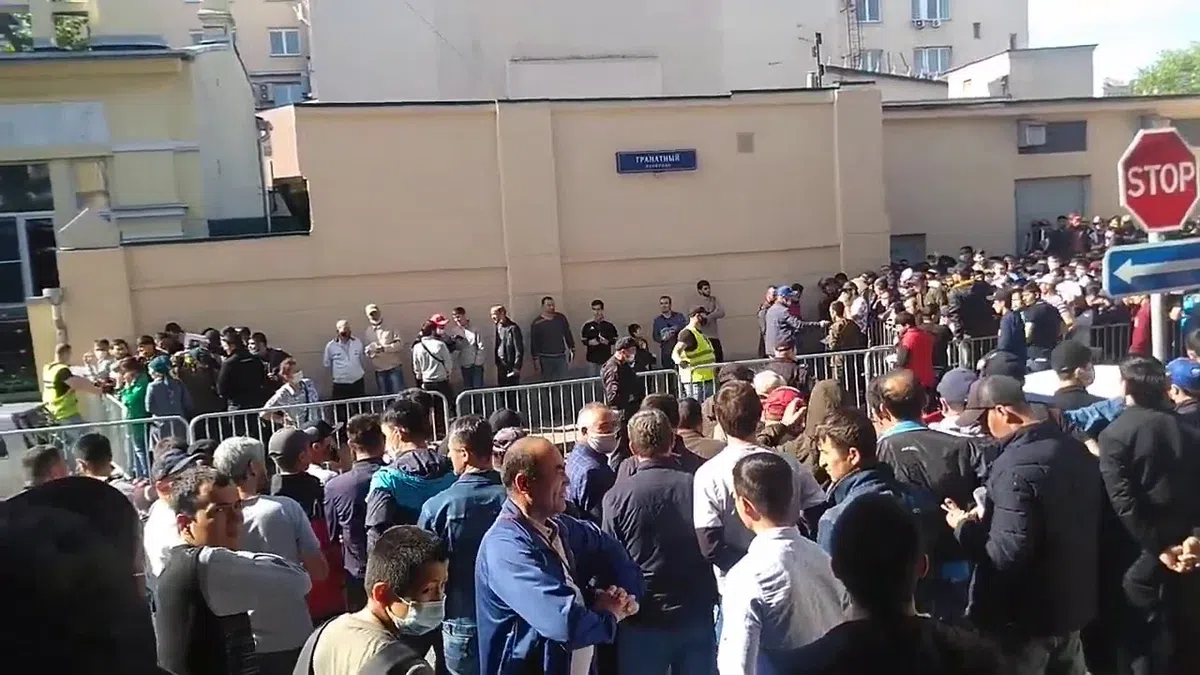
Some participants in the rally reported that in relation to them, police and the Russian Guard used special equipment. On the night of April 4, most of the detainees were released, some have already passed the courts, which, according to Group 24, were fined five thousand rubles. When asked why labor migrants were not afraid to reach a rally in a non -native country, local Tajiks as one reply that they were "tired of being afraid."
Izatullo and Said Abdulloevs were considered guilty of the abduction and subsequent arrest of Amon directly considered the President of Tajikistan Emomali Rahmon, who has been led by the republic since 1994.
“There is not a single family in Tajikistan in which no one would work in Russia except the surroundings of Rahmon. The people trust Amon, he has a high rating, and Rahmon sees it. People in Tajikistan are now announcing their president of Amon now as Tikhanovskaya in Belarus. We do not consider this Rahmon to be president, he terrorizes us. He uses the Russian police so that Tajikov is pressed everywhere. If you are a Tajik, then you have no right to express your opinion anywhere. This is the policy of today's Rahmon, ”Said Abdulloev complains.
But at the same time, both brothers consider the rally a rally by the embassy:
“It was necessary to go to the FSB, SK, the State Duma, to ask them why the Russian citizen, the ethnic Tajik was deported, deprived of citizenship ( there is no official confirmation of the existence of Russian citizenship from the sprout of Amon. - Ed .). Rahmon is to blame for all this. He does not like when migrants want to be literate, he wants to just work migrant workers who would send money and sit here quietly. Here Tajik can be crushed, like a cat, because when something happens to us, the Tajik power does not stand up for us. ”
The other side of Amon
If, for part of the Tajik diaspora, Amon was a fighter for migrant rights, then for some human rights activists he is a fraudster who bred his own compatriots for money. So thinks, for example, the head of the non -profit organization of assistance to migrants Valentin Chupik, a citizen of Uzbekistan.
“He has never been a human rights activist, although everyone is called that now. He traded fictitious migration accounting. He promised people that he would make them citizenship, took money for it, but in fact did not help with anything. He also tried to create a political party of migrants, and the political activity of foreigners in Russia is prohibited. He tried to gather a thousands of people who would be deported, and it cannot be said that he did not know this. We have repeatedly warned him that he was substituting people. For what I was really doing, he repeatedly threatened me with the FSB, calling the names of specific employees of the Federal Security Service, ”says Valentin Chupik about his attitude to Amon.
According to Chupik, Russia is not the country in which the political activity of foreigners is possible: “According to Article 31 of the Constitution of the Russian Federation, citizens have the right to gather peacefully. This is only related to Russian citizens. Accordingly, foreign citizens do not have the right to participate in mass events, especially in the so -called illegal mass events. This is too risky, and even before the adoption of all these laws on foreign agents, I asked people not to engage in politics here, because it would end for them FSB and, at best, a lifelong ban on entry. ”
The Russian human rights activist and the head of the Migration and Law network, Svetlana Gannushkina, is convinced that the detention and deportation of the extension of Amon became only the reason for the spontaneous rally of Tajiks, and the real reason lies that people "ended with the general disgrace in which migrants live."
“This is not the first person with whom such things happen. They grab someone endlessly, they put drugs to someone, someone is sent completely incomprehensible why and why, leaving their wives and children here,
citizens of Russia. And this disgrace can lead to an explosion. There comes a moment when people stop being afraid, ”says Svetlana Gannushkina.
The case of Amon is really not the only one. There were a lot of examples when Russia's activists and critics of Tajikistan, or when Russian law enforcement agencies passed them to the Tajik security officials.
In 2015, Moscow was detained in Moscow, the leader of the organization “Youth for the Renaissance of Tajikistan” by the Maksuda Ibragimov, who was a citizen of the Russian Federation, created in Russia. A few days after the detention, it turned out that he was expelled to Tajikistan, where the activist was sentenced to 13 years in prison.
In December 2016, the Tajik human rights activist, the ex-leader of the All-Russian Tajik Migrants Migrants, was deprived of Russian citizenship and deported in Dushanbe, Karomat Sharipov, who was never even a Tajik citizen.
In 2020, a member of the opposition movement “Group 24” Shobudin Badalov was detained in Nizhny Novgorod. According to members of Group 24, he was extradited to Tajikistan, but the Ministry of Internal Affairs of the republic denies this. At the moment, nothing is known about his whereabouts.
And with all this, foreign citizens who are in Russia do not have the right to enter peaceful meetings in order to defend their rights. Svetlana Gannushkina considers this to be a violation of international conventions: “Our constitutional law contradicts the international legislation to which we have joined, because in fact, <to leave and defend our rights> is the right of any person, and not just a citizen of this country. The only decision for migrants is now a European court, but soon we will lose this. Already Russia stated that our laws are higher than international, that is simply absolute absurdity! How can our laws be higher than international documents that we have joined? ”
Another problem that, according to Gannushkina, is faced with people from other countries, forced to live and work in Russia, is the reluctance of our officials to bring visitors to a legal field. For example, Tajikistan is the only state with which Russia has a double citizenship, but even this does not help many migrants from Tajikistan get official right to live in our country: “There is one trait from our official-for some reason he thinks that when he refuses a person in citizenship, he protects the state with this. But it all feeds corruption. When I told one prosecutor that this situation leads to the fact that illegal migrants have to pay every police officer, he answered me: “Well, they feed our guys.” The police generally already believe that bribes from migrants are their legal income. ”
From Russia there is an issue
Tajikistan is not the only state where Russia at the request of local special services deport activists and critics of the authorities. So, in early September 2018, the Azerbaijani court issued an absentee decision on the arrest of Farahddin Aboszoda-a scientist, leader of the Talysh national movement, chairman of the parliament of the self-proclaimed Talysh-Mugansk Autonomous Republic. Azerbaijan accused the aboszod that it did not allow the Talyshas of autonomy and did not allow the official level to declare the Talysh language to the second state.At the moment when the Baku court decided to arrest the scientist, the aboszoda was in Russia. Upon learning of the held meeting, he himself appeared in the police station of the city of Kotelniki near Moscow, where he was subsequently arrested for four months.
Human rights activists, including Svetlana Gannushkina, called for Russia not to deport Fahurddin to Azerbaijan to the Aboszode, since the scientist was accused there under an article that is not in the Russian Criminal Code, which indicates the impossibility of issuing it. Proponents of the activist also warned that in Azerbaijan he could face death. However, despite all this, on February 28, 2019, Abaszoda was already in the investigative isolation ward in Azerbaijan. In Baku, he was sentenced to 16 years in prison under three articles: 274 (“state treason”), 281.2 (“Public calls for violent seizure of power, committed repeatedly and a group of persons”) and 283.1 (“Actions aimed at initiating national, racial or religious enmity”). The human rights organization of Amnesty International also opposed this sentence.
At the end of September 2020, the aboszoda informed his lawyer that they were going to kill him, and on November 9, the Aboszoda family reported his death, the official reason was suicide.
Another similar case occurred in early March of this year. Having posted a video message to Putin, the Turkmen opposition activist Rozgelda Choliyev asked not to deport him from Russia, where he has a wife and a child, to Turkmenistan, since there could threaten political persecution there.
Since 2018, the activist studied at Karachay-Cherkess University. The Memorial to the human rights center ( recognized as a Ministry of Justice in the agent. - Ed. ) Choliyev said that because of the video in which he critically spoke about the regime of the President of Turkmenistan Gurbanguly Berdimuhamedov, he was under pressure from the university administration and from the FSB officers, they tried to force him to remove these videos from YouTube.
Since the beginning of March, Choliyev tried to get refugee status in Russia, but the border guards refused to accept a statement from him for a long time. In a conversation with the Mediazone, the activist claimed that he was refused asylum due to the intervention of the Turkmen side and a former employee of the Turkmen special services of Maksat Saparmuradov, who is associated with the embassy in Russia
On March 23, the blogger received a notification, which said that he was denied refugee status. The document published on the Memorial website noted that the refusal may be appealed within a month. However, on the same day, Choliyev recorded the video how he was led to a plane flying to Istanbul.
Respective situations when the authorities of the CIS countries are deported to Russia by political activists wanted here is also not uncommon. The defendant in Moscow case Nikita Chirtsov was detained at a protest campaign in Moscow on July 27, 2019. In the same month he was a fine of 12 thousand rubles under an article on violation of the rules of mass events (part 5 of article 20.2 of the Administrative Code of the Russian Federation).
After the trial, Chirtsov left for Belarus. A month later he was detained in Minsk. The security forces informed the activist that in Russia he was put on the wanted list for the action on July 27. Никиту Чирцова экстрадировали в Москву, где ему предъявили обвинение в применении насилия к представителю власти (ч. 1 ст. 318 УК). Впоследствии активист провел 11 месяцев в колонии общего режима.
Фариза Дударова / «Новая газета»
Безграничное сотрудничество
Отсутствие границы между Беларусью и Россией одни используют для бегства, другие — для похищений и тайных вывозов на соседнюю территорию.
«Коридор» с недавних пор закрылся. Пока у двух государств не было общих списков невыездных, граждане обеих стран, которым нужно было срочно скрыться, ехали на машине, а то и на автобусе в соседнюю страну, а оттуда улетали за границу. Но осенью прошлого года у пограничников появились общие списки, и легкое бегство стало невозможным. Зато для спецслужб не изменилось ничего. Граница между государствами по-прежнему отсутствует, и КГБ с ФСБ, как и раньше, оказывают друг другу небольшие взаимные услуги.
Самым громким похищением, после которого стал ясен механизм этого сотрудничества, была история белорусского анархиста Игоря Олиневича. Его взяли в Москве и вывезли в Беларусь без всяких документов об экстрадиции. В Беларуси Игоря осудили на 8 лет лишения свободы. (Сейчас он снова в СИЗО.) Свою историю он описал в книге «Еду в Магадан»:
FRAGMENT
“November 28, 2010, Moscow, cafe of the Gorbushka shopping center, 14.45 on the clock. We leave the complex, four shadows darted from all sides, grabbing by the arms. One of the people in black calms: "We help yours." Hmm, these "ours" are not ours. Bracelets clicked, pushed into the car, pockets, mobile, wallet, player. A hat on the eyes, one car, then another, people in black do not talk among themselves, write the text on the phone and pass on to each other. A couple of stops to the toilet, you look at the field, the forest, and it seems that this is a dream ...The border with Belarus. The head is “scrollful” on the floor, which means that the operation is illegal. Local transfer to bead. Moscow says: "More ... (garbage) do not throw it away." «Конечно, за нами долг, мужики», — отвечают тутэйшыя. Трогаемся».
Подозреваю, что «долг» был отдан в 2017 году, когда украинского гражданина Павла Гриба выманили в Гомель якобы для встречи с жительницей Сочи Татьяной Ершовой, с которой он познакомился в интернете. 24 августа Гриба задержали на гомельском автовокзале, увезли в Россию и обвинили в подготовке теракта. Позже на суде оперативники утверждали, будто задержали Гриба в Смоленской области, на вокзале в Ярцево, из-за того, что он «подозрительно выглядел». А потом узнали, что он в федеральном розыске. В деле Игоря Олиневича и вовсе было написано, что он задержан в Минске, а не в Москве. И, заметьте, бумага до сих пор все терпит.
Впрочем, далеко не всегда спецслужбы обеих стран затрудняют себя даже враньем на бумаге. Можно вспомнить юриста ФБК* Владлена Лося, гражданина Беларуси, которого в январе после трех суток ареста за неповиновение полиции просто вывезли с мешком на голове на белорусскую территорию и шлепнули в паспорт штамп о запрете на въезд в Россию. Можно вспомнить бывшего следователя Партизанского райотдела СК Андрея Остаповича, который сразу после начала августовских протестов в Беларуси уволился в знак протеста — его очень быстро обнаружили в Псковской области и вывезли на территорию Беларуси. Можно, наконец, вспомнить российскую гражданку Луизу Дудуркаеву, которую задержали в минском аэропорту в 2017 году, когда она пыталась сесть в самолет до Хельсинки (дома, в Аргуне, ей грозила расправа). Луиза уже прошла пограничный контроль, когда к ней подошли представители белорусских спецслужб, вывели из зала ожидания и передали родственникам, прилетевшим из Чечни.
So, perhaps everything. Человека могут просто перебросить с территории одной страны на территорию другой — с мешком на голове или без мешка, по заказу коллег, по просьбе чеченских родственников, по звонку друга. Границ нет — в прямом и в переносном смысле.
Irina Khalip
*организация включена Минюстом в перечень НКО, выполняющих функцию иностранного агента