
Translated material
"There was no historical optimism, but there was a feeling that nothing was over."
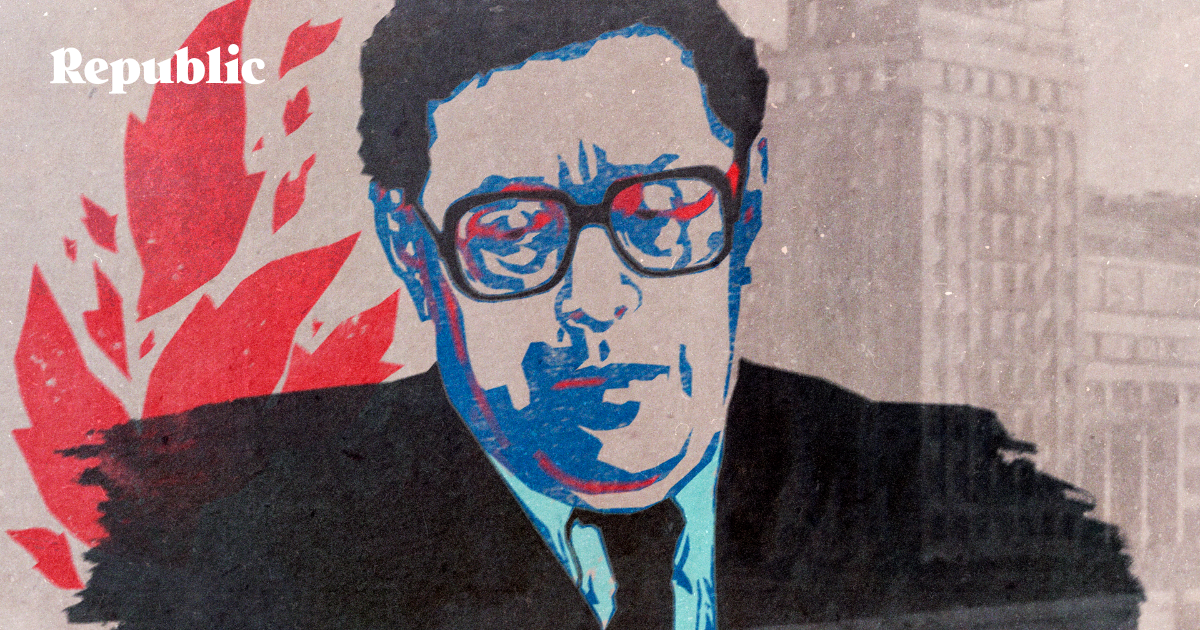
On March 28, forty years since the death of Yuri Valentinovich Trifonov , the author of the “House on the Embankment” and, possibly, the most underestimated Russian prose writer of the Soviet period. On the anniversary of his death, Oleg Kashin talked about him with the researcher of his work, the iconic literary critic of the eighties, and now the deputy editor -in -chief of the magazine "Banner" Natalya Ivanova .
Oleg Kashin: You remember this day, the day of his death, when he died, as you learned ...
Natalya Ivanova: Yes, I remember, I remember how I found out, it was like a thunder among the clear sky, someone from the editorial office called me, they said that Trifonov died, I asked-how? What? Because a person was still in power and normal age. I was told that it was an operation, that it was the kidneys. But this is not the point, the next day he came to his senses, everything was good, and, apparently, a thrombus broke off. And from this he died instantly, not understanding that he was dying.
Oleg Kashin: Has he died at home or in the hospital?
Natalya Ivanova: In the hospital, it seems, No. 70, but I can be mistaken. I was goodbye to Trifonov in the restaurant of the House of Writers, an oak hall, it was all cleaned of tables, the coffin with a body was placed under a stained glass window on several tables. There were a lot of people, it was impossible to go in, it was difficult to go out, the people swirled, then 150 people were left in this hall when farewell began. Farewell was half formal, half informal. I remember very well the speech of Anatoly Rybakov, who was friends with Trifonov, converged a little, diverged, but always loved him very much; He said that Trifonov was a real Russian writer, and died as a Russian writer on a hospital bed in a simple hospital. His voice trembled, the voices of other people trembled, official words passed me by, but, I think, they passed by many others. There was a feeling of terrible loss.
And I remember the day when I met him - I met in the same house of writers, when his Moscow novels were discussed - “preliminary results” and “exchange”. There was a great meeting of critics, literary critics and some people close to Trifonov. Closed, as always, because you will not go to the house of writers either to the funeral, or for the commemoration, or the discussion, this is 50 years ago. Trifonov was 47–49, something like that. Our wonderful intelligentsia, so half -liter, scolded him, said that he portrays it not like it deserves that he would need to take a clearer position, to protect intellectuals more, and not to portray their life and everyday life, as he did - critically.
I then studied in graduate school, I went out-I was allowed to say that it was completely unusual for me, I was nobody and there was no way to call me, but I was familiar with someone who worked in the house of writers, and they missed me. I undertook to protect him. Then he came up to me and met, I remember this well. My first acquaintance, the first meeting with Trifonov, and farewell to Trifonov - all this was in the house of writers.
Oleg Kashin: We’ll talk about your acquaintance. It’s funny (or sadly rather) that it had to protect it posthumously not only from non-publication, from censorship, but just from those people who considered it, especially in the 90s, probably too Soviet writer-why should we publish Trifonov in the 95th year, when he was about those times, he lived, worked under censors, we loved dissidents or aesthetes (conventionally, Sasha Sokolova). Well, Trifonov stayed there in Soviet times. Was that a problem? The problem of his posthumous salvation from this oblivion.
Natalya Ivanova: Yes, it was a problem because he is really a very big writer. I call him, Iskander and some of the other “big Russian writer of the Soviet era,” but he was never the fact that the “Soviet writer” can be called. What you are talking about was quite common, somehow it was moved away, not to publish, not to publish-we didn’t think about it at all, we were passionate about the publications of Nabokov and Sasha Sokolov, anyone, Sinyavsky to reissue, the publishing house probably did not reach the Publonies, I don’t know that. But every time the name of Trifonov arose, it arose in some kind of pleasant context of truly Soviet literature that could be said to me. Although they understood that the level was completely different, this compromise by the fact that he was a legalized Soviet writer, and even the laureate of the Stalin Prize, though not the first, but the second or third degree, but nevertheless. Of course, he endlessly in these times, starting from the 85th year, and even earlier, too, all the time they made him a claim that he wrote these unfortunate “students”. And how he later “a house on the embankment” ate the plot of “students”, redid it - he tried to wash himself, and some said. But in fact, there was none of this, he simply rewritten the same plot in a new way, he spoke about this in his notes, memories and interviews.
He was not understood with the “gleam of the fire”, which was printed in the 65th year in the magazine “Banner”, where I am working now. Because they thought that the “gleam of the fire” was the praise of the revolution ...
Oleg Kashin: Yes, of course, of course.
Natalya Ivanova: And this was completely different. He understood everything very early. Trifonov as a writer was distinguished by the fact that he did not use any loud words, he has little pathos, he has practically no word “Stalin”.
Oleg Kashin: He is just about silence, more importantly what he does not talk about, and not what he is talking about.
Natalya Ivanova: He said, he said, it was necessary to decrypt, he had such an agreement with the reader, it was such a complex language, not a direct prose, it was a complex language, the reader needed to understand some allusions, hints, it was an Aezopov language of the second, the third degree of complexity, but it was clear that the revolutionaries themselves and Trifonov himself wrote about this one of the first. He was a man in this regard completely independent, so he further developed his thoughts as he wanted. But to present him some admiration for Lenin, to the Lenin idea, before the Bolshevism, to say that the same commissars in the dusty helmets that Okudzhava have, he had no, no! Trifonov did not have this, starting with the “gleam of the fire”, maybe in his first novel “Students” of 51–52, there was something against those who were branded as cosmopolitans, but if we re-read it now (and I re-read it not so long ago), I saw that there are much more accurate things than it seems at first glance. He hid a lot in the second, in the third way.
Oleg Kashin: But his most political book, in my opinion, is “impatience”-and this is an allually mysterious phenomenon, the series “Fiery Revolutionaries”, in which writers of the liberal region of Soviet literature wrote, but wrote about the old Bolsheviks or Narodnaya Volya, referring to obviously something modern.
Subscribe to read the whole
Make a subscription Redefine.media to read Republic
Subscribe [you can pay for a Russian or foreign card. The subscription is extended automatically. You can unsubscribe at any time.]
Where are the money subscribers going