
Translated material
Unconditional term
So the criminal policy in the Russian Federation is determined by Professor Bastrykin
Cases of incidents related to unauthorized rallies on January 23 and 31 began to enter the courts. On shares in the country, 9.7 thousand participants were detained (according to the OVD-Info), which means that there will be dozens or hundreds of such cases under Part 1 of Article 318 of the Criminal Code of the Russian Federation (“the use of violence that is not dangerous for life or health”), in different cities.
Part 1 of Art. 318 provides for a penalty of up to 200 thousand rubles to imprisonment for up to 5 years, judges can also use the mechanism of conditional imprisonment with a trial period. Landants for judicial practice are important here, and fundamentally, who will set the bar.
On April 5, the Oktyabrsky District Court of St. Petersburg examined in a special manner (without evaluating evaluating the guilty of guilty) the case of the driver of the dump truck Artem Popov, who, according to the prosecution, kicked one policeman on the leg and sent him to 1.5 years in prison with a test period of 2 years. On April 7, the Tver court of Moscow sentenced the driver of the taxi Valery Yesin, who “threw a metal fence towards the policeman” by 2 years of real term. His case was also considered in a special order, and the defense indicated mitigating circumstances: the presence of two young children.
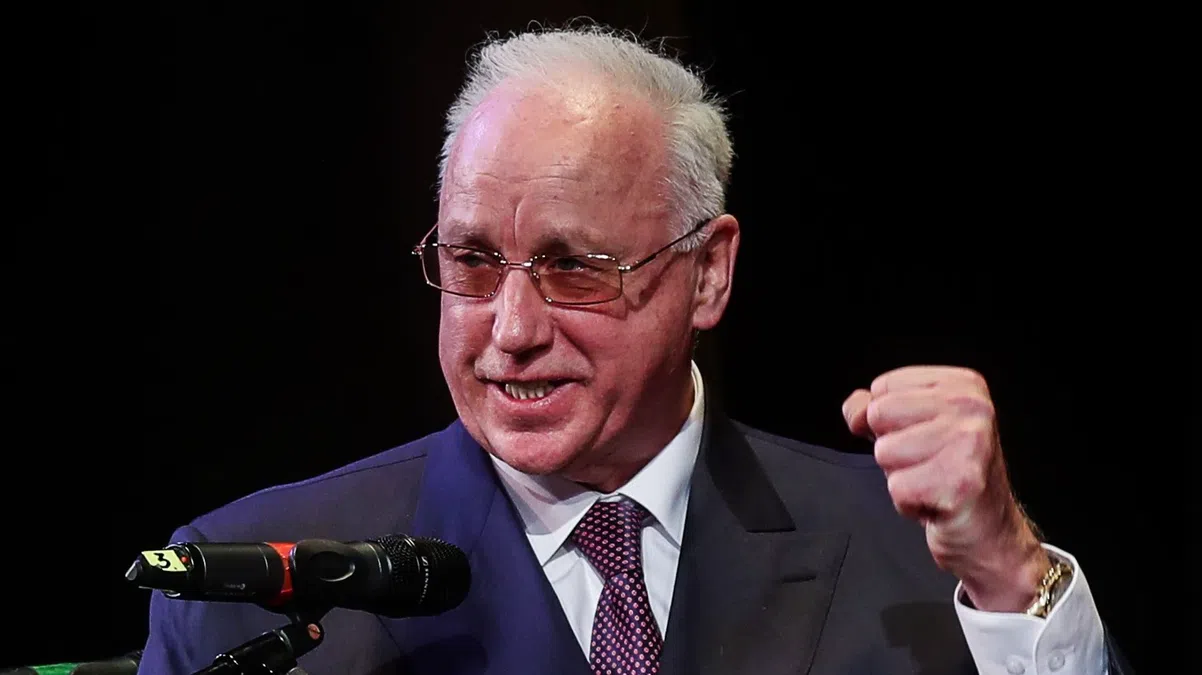
Moscow courts are traditionally tougher in such cases, but the difference is still striking. Where did she get so fast? On April 6, information appeared on the website of the RF IC that Alexander Bastrykin remained dissatisfied with the verdict issued in St. Petersburg and “instructed his subordinates to analyze the contents of the court decision and the completeness of the reflection of his (defendant) illegal actions ... and submit a report on the availability of grounds for considering the issue of initiating a verdict”. “It is possible,” the site says, apparently, from the words of Bastrykin, “that
Such a practice can give rise to doubts about the preventive meaning of punishment, without interfering with new such precedents "
(This is not for you to write poetry!).
Alexander Bastrykin taught the criminal process at the Law Faculty of Leningrad State University and in other specialized universities since 1980, in 1987 he defended his doctoral dissertation, and headed the departments. Of course, he explained to students and graduate students that, both of the Soviet and later Russian criminal-procedure law, the investigating authorities conduct only a preliminary investigation, the conclusions of which should be confirmed during the judicial investigation in the conditions of the adversaries of the parties. The judge, and not the investigator, stands at the top of the Pyramid of Justice, and the prosecutor supports the state prosecution in court, but not an investigator who, after transferring the indictment to the prosecutor's office, has nothing to do with the case, although it can be summoned to the court in connection with the violations committed during the investigation.
So in any textbook it is written. And from an academic point of view, the investigator-which, with all his regalia, remains Bastrykin-to give this kind of actual instructions to judges (including regional, and even world)-it is like in places of imprisonment to call someone a “goat”. For this “according to concepts”, an urgent “response” should have followed. After all, this is what Bastrykin actually declared in public:
“I am determining the criminal policy in the Russian Federation, it is we, investigators, interpret the principle of saving criminal repression, this is my professor, and you <...>”.
But the former deputy deputy of Bastrykin, Prosecutor General Igor Krasnov, on whose authority the former boss directly encroach, said both the Supreme Court Chairman Vyacheslav Lebedev, and in other cases the chairman of the Constitutional Court of the Russian Federation, Professor Zorkin. To themselves, they probably answer another question so far: did someone instruct Bastrykin to ask and proclaim this new bar of repression or is it his personal initiative?
Experts are afraid that the UK intends to lobby for changes to the Code of Criminal Procedure, allowing investigators to bypass state accusation directly to intervene in the lawsuit. In practice, this is already happening, but from the point of view of theory it is impossible to justify this. Really, Alexander Ivanovich, better than poems!