
Translated material
Prince Philip came to the USSR in 1973. He was carefully prepared for this visit: they explained what to wear and say. That's how it was
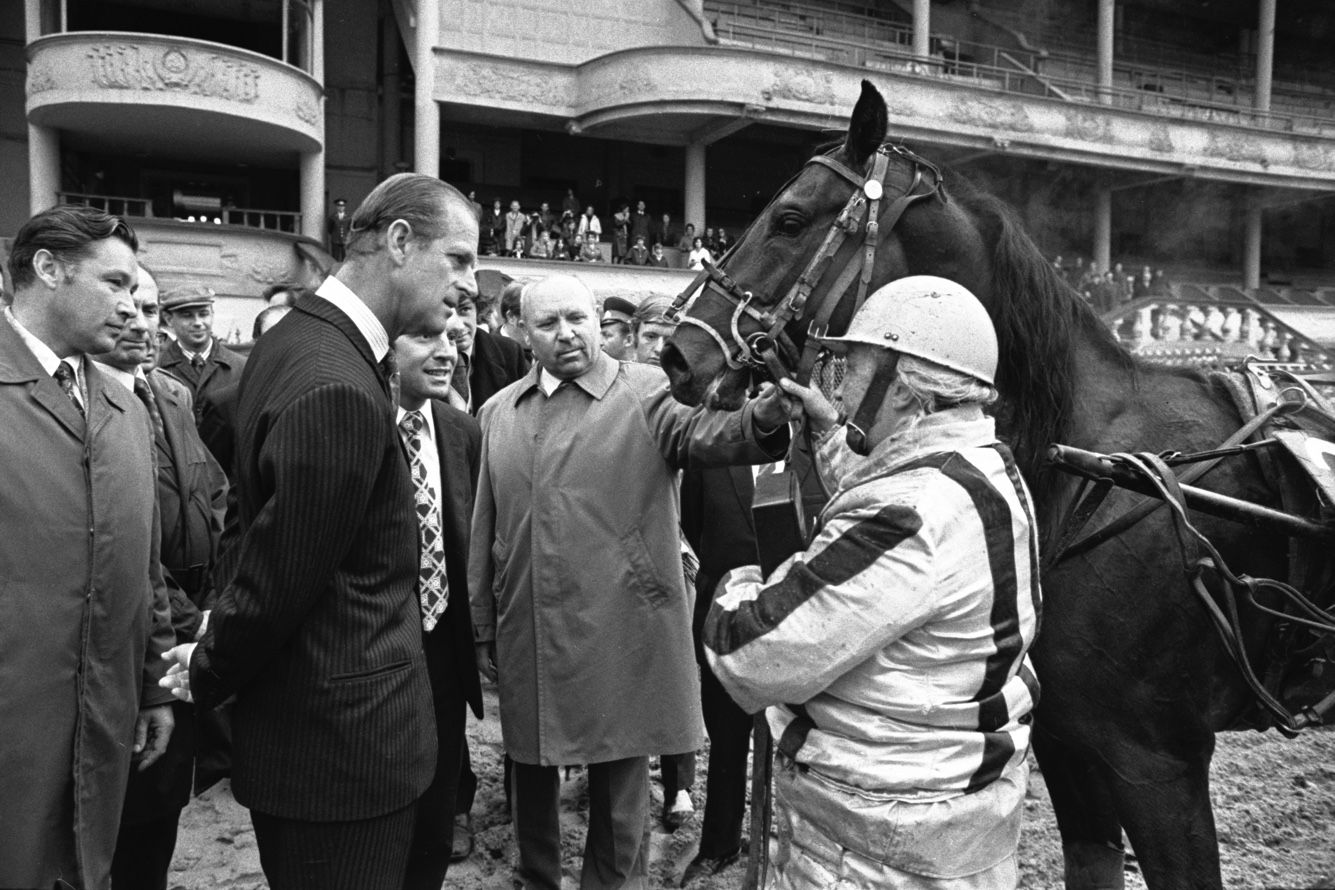
Prince Philip was several times in Russia. Many will recall his only official visit with Queen Elizabeth II after the fall of the Soviet Union in 1994, but 20 years before, the prince with a daughter, Princess Anna, visited the USSR as part of the delegation of the International Cavalry Federation. Then the British newspapers limited themselves only to stingy protocol notes, but in 2004 the British Ministry of Foreign Affairs declared a number of documents related to this trip. In particular, among the published documents there were detailed instructions for the prince, known for his tactlessness and a specific sense of humor, how to behave with the receiving side. The Guardian wrote about these instructions and previously unknown details of this trip of Prince Philip. Here is a brief retelling of this article.
During his three -day trip to the USSR, Prince Philip was adopted by the Soviet side on the highest category as the President of the International Cavalry Federation. Since the murder of the Bolsheviks of the Imperial family of the Romanovs, a member of the British court for the first time visited the Soviet Union, and the country's authorities expected that the arrival of Philip will bring the Queen’s state visit.
Prince Philip was going to Kyiv Troeborye competitions in September 1973. The British royal court would gladly limit the agenda of this trip to equestrian sports, but the program compiled by the Soviet side included a meeting with the chairman of the Presidium of the Supreme Council of the USSR Nikolai Podgorni, a solemn dinner with members of the Supreme Council of the Ukrainian SSR, as well as an inspection of the achievements of communism in space and industry.
Therefore, for the prince, known for his sharp language, they made a list of those who should be avoided in conversations with the host. The fate of the Russian imperial family was crowned by this list. Mentioning Stalin, Khrushchev or other Soviet leaders of the past was also not recommended.
Instead of discussing the fate of Soviet Jews and dissidents or recent invasion of Czechoslovakia to Prince Philip, specialists of the British diplomatic service recommended praising the successes of the USSR national team at the last Olympiad, the achievements in space and the prospects of the Soviet Concord, the Supersonic Liner Tu-144. It was not forbidden to affect the Second World War, but the prince was advised not to wait for gratitude from the owners for the “Arctic escort” and prepare for criticism for British slowness in the opening of the second front against Hitler.
Preparations for the visit of Prince Philip in the USSR affected the smallest household details. For example, the authors of the prince instructions requested the following information at the British embassy in Moscow: is it really not a tuxedo in Russia and whether the guest should be limited to a regular jacket pair at all events.
In communication with the host, the prince balanced on the verge. So in a telegram to London, one of the episodes was described by the British embassy in the USSR: “Philip <...> asked Mazur ( probably refers to Kirill Mazurov, the first deputy chairman of the Council of Ministers of the USSR - approx. Medusa ), whether he is aware of the importance of the recent anniversary . [Nikolai] Lunkov [Soviet ambassador to the UK], not bewildered, replied that the Second World War began on this day. To which Prince Philip retorted that it began for us [the British], but not for them [the USSR], and we thought in vain that we were fighting for the freedom of Poland. ” However, the prince fascinated the Soviet masters with his endurance when his daughter Princess Anna, a participant in the British team, fell from a horse on the second barrier. The prince only briefly asked if she had received serious injuries, and returned to his place.
The problems began when the guests found out that a certain A.A. Gresko, who shortly before that sent from London as one of 105 Soviet intelligence officers. At first, the British embassy in Moscow tried to maintain a straightforward silence - because if the press found out about this, British diplomats could accuse that they did not actively resist the attempts of the USSR to defiantly put an exposed spy to the prince. And only after Gresko tried to publicly impose his company to the prince for the entire trip to Moscow and Kyiv, did the British side declared the Soviet formal protest. Gresko was removed from the encirclement of Prince Philip, but for this it was necessary to sacrifice two British intelligence officers who were hoped under the pretext of the royal visit to Moscow.
But how the British embassy in Moscow described the work of the KGB during the visit of Philip: “It is impossible not to evaluate the widest powers that they use, their self -confidence, as well as the contempt that they experience in relation to ordinary mortals.”
In addition, the prince Philip was conveyed by the characteristics of the Soviet leaders, with whom he could have fallen a chance to meet. Secretary General Leonid Brezhnev was described as follows: “An energetic person emitting confidence and professionalism, but not distinguished by outstanding mental abilities. A flowering look, but, they say, survived more than one heart attack. Loves football, hunting and cars. He doesn’t speak English. ” And the second most important person in the USSR, Alexei Kosygin, the chairman of the Council of Ministers - "a pleasant and easy person in business communication, has an attractive sense of humor, despite the ever -dull expression of the face."
Retold Alexei Kovalev