
Translated material
Gagarin's genuine story
Yuri Baturin tells how humanity has gone to a new round
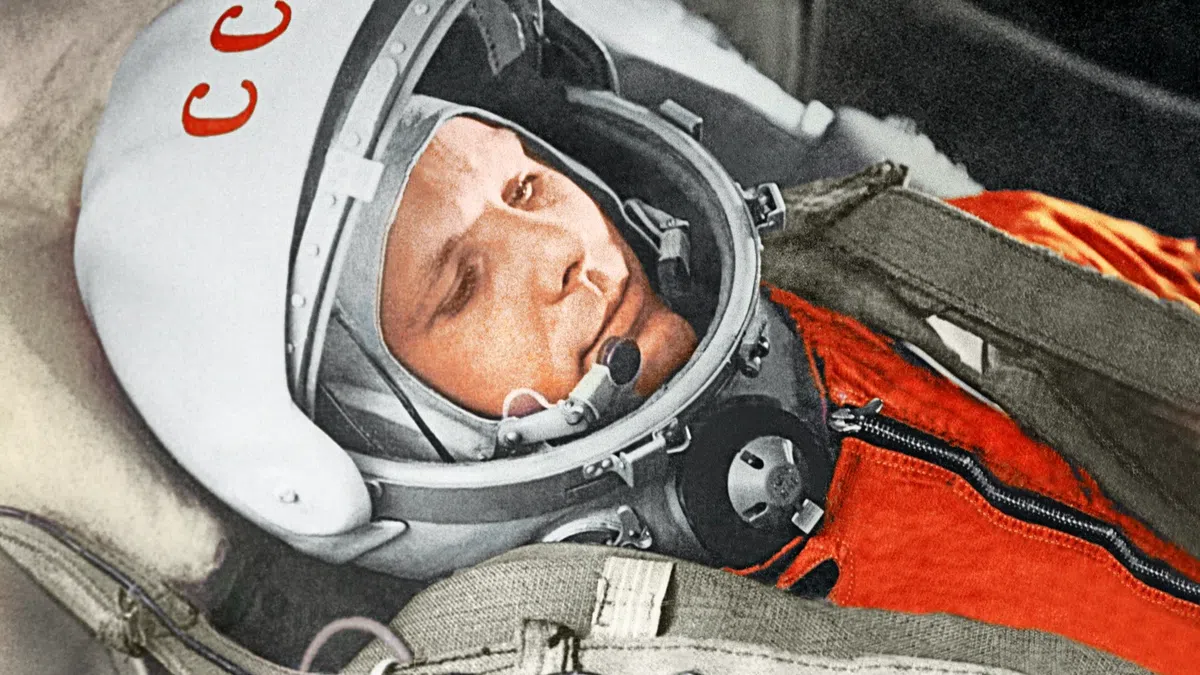
On April 12, 1961, the flight of Yuri Gagarin completely changed the consciousness of mankind. The cosmic era began - something incredible for the era, in which people were still alive, who remembered the world without aircraft and almost without cars. But today, from a distance of 60 years, this epoch -making historical event seems quite simple (just one round!) And easily performed. Few (especially from the young generation) knows how this round passed in reality. We publish the chapter from the book of our observer Yuri Baturin “The Lord of Infinity. The astronaut about the profession and fate ”, the second edition of which has just been published in the publishing house of Alpina Plisher. Especially for the "new" author added little -known details to it.
"Without risk, the space is not to master"
From the diary of General N.P. Kamanin, assistant commander of the Air Force at the Cosmos:
“On January 5, 1961, there are a lot of malfunctions. There are few tests ... Printed in all of all.January 18. These days, I often had questions: “Which of the six will go down in history as the first person who made a space flight? Who is the first of them, perhaps, will pay with life for this impudent attempt?
February 3. The missile fell due to the refusal of the control system, and this could happen due to the breakdown of the hatch of the second stage. The hatch was torn at the time of the start, since it was fixed with only two bolts instead of eight ... The reason for the gyroscope refusal on the royal rocket was installed: in the device bearing a metal chip was found up to a millimeter long.
February 27. Without risk, the space is not to master, but to be afraid of risk and possible sacrifices means to slow down flights into space. ”
Autonomous tests of the Vostok ship took place from March 27 to 30. 20 defects were identified, 52 comments were made and 48 improvements were carried out. The tests of the launch vehicle in a technical position continued from March 30 to April 6. During this period, 48 more improvements were carried out, of which six serious, and a number of comments on the design of the product, on the motor installation and control system were eliminated.
March 31, 1961 S.P. Korolev signed the “Spacecraft Project”-all volumes, with the exception of the first. (Only on July 30, 1961, before the flight of G.S. Titov, the first volume of S.P. Korolev was signed.)
According to calculations, the probability of the successful completion of the flight of the manned ship was 0.875, and the probability of saving the astronaut’s life, even if it was unsuccessful, taking into account the emergency salvation system, was already 0.94. The then requirements for reliability were 0.95. But it was a calculation of "schematic" reliability. In real conditions of preparation for the start of the reliability of the manned space complex, it changed. So, until the last premium day, the proposed technical changes were made, which partially reduced the reliability of the complex.
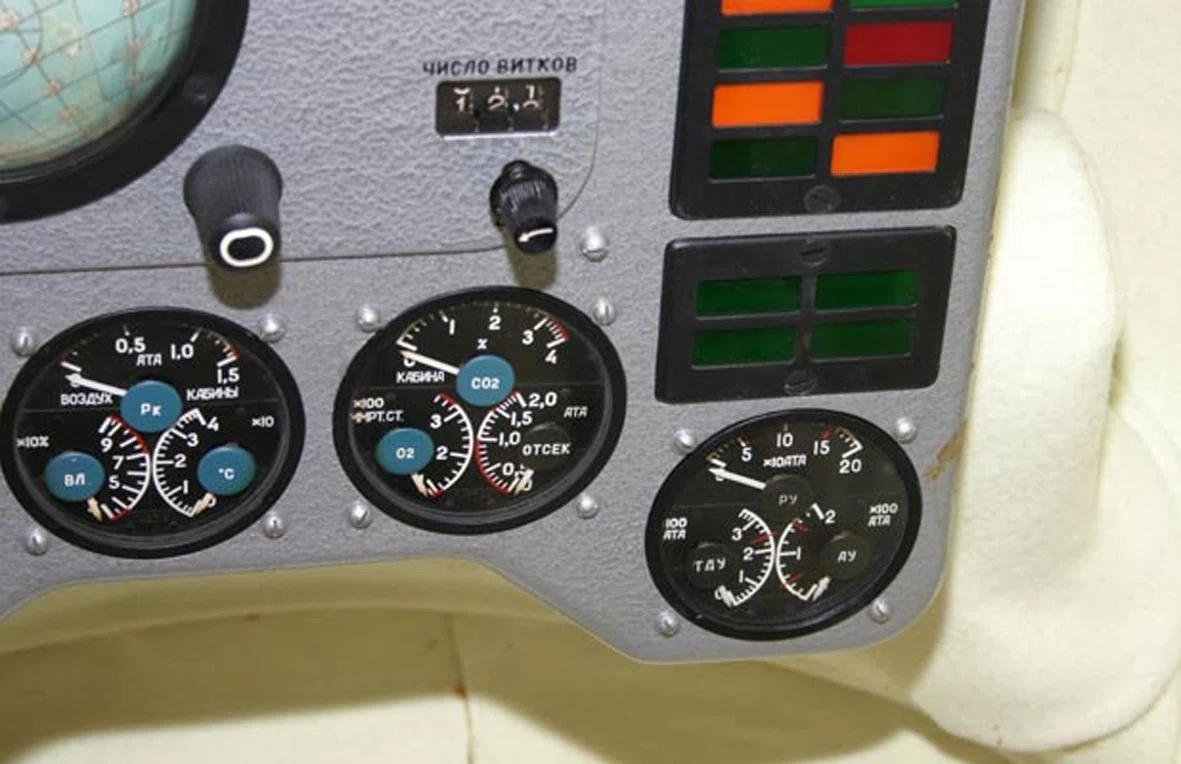
At the Vostok ship, all vital systems were duplicated, except for the brake motor installation (TDU), therefore, an orbit was selected for the possibility of emergency descent in the event of a refusal of the brake engine, which provided the ship’s existence in space from 2 to 7 days. Thus, the reserve regime of descent was natural braking in the atmosphere.
But there was practically no possibility of saving the astronaut at the start. There was no emergency salvation then.
Nevertheless, measures to ensure the security of the pilot were searched and found. In the case of an abnormal situation on a refueling rocket or fire when launching, before the rocket exit from the starting device, it was possible to emergency catapulting of the astronaut at a speed of 48 m/s through a specially made cutout in the head fairing and a service farm in an armchair, which allows the pilot to raise the pilot to a height, from which safe parachuting is possible. In order to avoid getting there, an astronaut was covered with a steel large -large mesh with a cell size of 40 x 40 cm in order to avoid getting there. The grid could only go along the cells of the cells. Below at a depth of 42 meters - a fire tray, where gases go from operating missile engines. Slogged - you fail.
But how to remove the astronaut from this grid? An ordinary galvanized trough was bought in a household for washing linen and attached a strong rope to it. The rescue calculation consisted of three people. They even conducted several training with a wrestling mannequin in the trough.
Thank God, an abnormal situation in the first seconds did not happen! Everyone would have died - both the astronaut and rescuers. When, after many years, lady officers talked about this method of evacuation of the missile cosmonaut-2 g. Titov, he laughed to tears, and then very seriously said: "How good that we did not know that!"
On April 5, 1961, Soviet cosmonauts and specialists flew to the training ground. There was no ship at the cosmodrome yet, and S.P. Korolev was very nervous in connection with this. It turned out that during the last before sending the ship to the testing landfill, a short circuit occurred in the electrical wiring. They dismantled almost half the ship, but a short circuit disappeared. Therefore, in order not to take risks, they decided to replace the entire tract, and send the ship to Tyura-Tam in parts (this was especially excited by S.P. Korolev). The first to send the dash-agency compartment. During his tests at the landfill, when testing the work of orientation engines, the fuzzy work of one of the valves that controls the gas consumption was found. It had to be replaced. The descent device was delivered late for two days.
During the test of the launch vehicle, one of the relay refused. It was replaced, but when checking the power grid, a minus was suddenly discovered on the case. The search for a contact location is very difficult due to limited access to equipment inside the rocket. The consequence may be the abolition of the start. But someone remembered that the engines, in order to avoid dust entering the electric connectors, cover them with improvised means. Maybe it is these emergencies that give a “minus” on the case? The assumption was confirmed. The entire cable network was not required. S.P. The queen was reported: "There is no need to repeat the tests." But Sergey Pavlovich remained gloomy. The story with the “minus” on the case caused his painful memories. During one of the first launches of the R-7 rocket, he did not take into account the appearance of such a “minus” on the case. This led to an accident. This time it was necessary to let a ship with a man!
On April 9, 1961, the control of the cosmonaut with the chair showed the excess of the weight of the payload over the calculated value. In the afternoon, the problem was solved in Russian: they cut electric bundles with connectors that provide a system of emergency undermining of the unmanned machine and not involved on a manned ship; But this was done on a product that passed a full cycle of electrical tests and prepared for docking with a launch vehicle. Since the work was carried out in a hurry, without an analysis of the on -board network, at the same time, as it turned out, they cut off one pressure and temperature sensor. True, they were reserved. It was worse that as a result, a “parasitic” galvanic connection of ground tires with the body of the descent apparatus appeared. She was noticed only the next day.
April 10, 1961 Yu.A. Gagarin writes a letter to the family, known as the “Testament of Gagarin” and released only in 1991:
“I believe in technology completely. She shouldn't let it down. But it happens that in an even place a person falls and breaks his neck. Something can happen here too. ”
The day before
On April 11, a launch vehicle with a spacecraft was taken to a starting position. Pre -trial inspections began. In the middle of the day Yu.A. Gagarin at the “zero mark” of the start met with combat calculation, preparing a rocket and a ship to launch. At this time, it was found that the technological tire of power supply, with the help of which all tests were carried out, is associated with the ship’s hull. This connection appeared as a result of the weight loss. With tight installation of equipment in the launched device and in conditions when the rocket is at the start, it was not possible to find a defect. The situation was complicated by the fact that this tire provided not only a spaceship, but also a launch vehicle with technological power supply. The engineers were looking for a solution and found it by night: disconnect from the generator motor and provide food using batteries. Korolev approved this decision, and during the night a new scheme was collected and verified.
It is curious that even local signs were taken into account in the effort to ensure success. So, they noticed that when the “flight task” was printed on Finnish coated paper, the launches were emergency. When the domestic, giving yellowness was used, the launch of proteins and arrows passed perfectly. Then again they used coated paper - again emergency launches. In March 1961, Finnish paper ended, and again the launches were successful. When preparing a “flight task” for the first manned start, they took this “statistics” and did not take risks.
On the night of April 12, the following happened.
As we recall, the reserve regime of descent was natural braking in the atmosphere. However, in this case, the orbit is gradually turning into a circular with the equally conventional capture of the ship in any area of the orbit, and it falls into a non -calculated point under the flight route. He got into the ocean, the search service would hardly have found it, and the astronaut, having completed the task, would have died on Earth. Until the last, they continued to look for a way of landing an astronaut on the territory of the Soviet Union.
And so the idea came to use aerodynamic asymmetry. The ballistic coefficient of the ship differed one and a half times depending on its orientation. If with the help of a manual orientation system to pass the periger with a “nose” of the ship forward, providing a minimum of resistance, and the apogee - across the stream with a maximum of resistance, then, according to the laws of celestial mechanics, the ellipticity of the orbit can be preserved. Then, choosing the areas of braking, it is possible to move Perige so that the capture of the spaceship atmosphere takes place in the right area of the orbit, and it would land on the current territory. The astronaut simply should have given out the program of the ship’s turn, ensuring its landing in our territory.
The program was written on April 11! The telegram was sent about this S.P. The queen on the landfill. There was no answer. S.P. Korolev was exhausted and left to rest. They did not want to bother him. The bosses were eliminated. Then the author of the decision of O.V. Gurko got angry: "A person flies into space for the first time, and any chance to escape for him is extremely important." I decided to call the secretary S.P. Queen, but Sergey Pavlovich himself unexpectedly picked up the phone. O.V. Gurko introduced himself (they were familiar) and reported to the situation. S.P. Korolev literally exploded: “Why don't such telegrams report to me ?? Well, I'll give them now! " And he arranged a variety. A group was urgently created.
Gagarin did not wake Gagarin, but before the start of S.P. Korolev gave him the calculations of the turn and instructed about the new method of descent (this is in Gagarin's memoirs). Subsequently, this method was officially accepted for use and the astronauts passed the exam on it. As for O.V. Gurko, then, as we have, he received a penalty and was deprived of a quarterly bonus for being engaged in non -planned work.
"Contact did not press"
It came on April 12, 1961. At 5.30 local time, the astronauts woke up. At 6.00 the pre -launch meeting of the State Commission (there were no comments).
The following Moscow time is indicated (the difference with the local - 2 hours).
"Cedar" - call sign Yu.A. Gagarin.
"Dawn" is a call sign.
When Yu.A. Gagarin put on a spacesuit, someone noticed: “What if an unlimited landing in someone else's territory? It is necessary to identify the citizenship of the astronaut. " They immediately found paint, a brush and on the helmet of Gagarin wrote four letters - the USSR.
At 8.50, astronauts arrived at the start. Two hours before the start of Yu.A. Gagarin takes a place in the ship. Negotiation:
7.10. "Cedar": How do you hear me?
“Zarya-1” (Kamanin): I hear well. How do you hear me?
"Cedar": I hear you well.
Zarya-1 (Kamanin): Start checking the spacesuit. How did you understand me?
7.11. "Cedar": I realized: to start checking the spacesuit. After 3 minutes. Now busy.
<...>
07.44. “Zarya-1” (Korolev): Everything is going well with us. How do you feel?
"Cedar": I understood. Everything is going well for me, well -being is good, now they will close the hatch No. 1.
When the landing hatch is closed due to inaccurate regulation, the “hatch closed” of one of the three hatch sensors that signal the cover of the lid to the hatch signal.
07.58. “Zarya-1” (Korolev): “Cedar”, I “Zarya-1”. Yuri Alekseevich, it happened to us: after the closing of the hatch, it seemed to have no contact that he pressed. Therefore, we will probably now take off the hatch and then put it again. How did you understand me?
"Cedar": I understood you correctly. The hatch is open. Check the alarm.
At the direction of S.P. The queen, who received data from telemetry, was opened. To do this, I had to unscrew 32 nuts. After the contact was adjusted, 32 nuts were twisted again. I had to work at a frantic pace, but they managed ...
8.05. “Zarya-1” (Kamanin): “Cedar”, I “Zarya-1”. The readiness of the sentry is declared. Continue the equipment inspection.
8.25. “Zarya-1” (Korolev): They checked the tightness-everything is normal, in perfect order. How did you understand?
"Cedar": I realized: tightness is in order. I hear and observe: the tightness was checked. They knock something there a little.
<...>
8.35. Zarya-1 (Kamanin): Now the installer will be removed. As I understand?
"Cedar": I realized: the installer will be assigned.
8.37. “Zarya-1” (Kamanin): The installer’s arrow moved normally. How did you understand?
“Cedar”: I understood you: the installer’s arrow moved normally.
8.40. “Zarya-1” (Korolev): Yuri Alekseevich, we now transfer this negotiation point from here, from the start, to the bunker. So you will have a five -minute pause, and Nikolai Petrovich (Kamanin) and Pavel Romanovich (Popovich) go to the bunker. I stay here until a five -minute readiness. But they will broadcast what I will say. Did you understand me?
“Cedar”: I understood you: now they go from the start to the bunker, a minute break, then you will be transmitted through them.
8.41. “Zarya-1” (Kamanin): I hear you perfectly. You have 64 pulse, breathing 24. Everything is going fine.
"I wanted to help these people ..."
From the diary of N.P. Kamanina:
"April 4. There is no and will never be “one hundred percent” confidence in the success of space flight, especially the first.April 5. It is difficult to decide who to send to certain death, and it is just as difficult to decide which of the two or three worthy to make the world famous and forever preserve his name in the history of mankind. ”
Can I start with a joke after such terrible words?
Of course, S.P. Korolev and his comrades and the entire starting team were very worried about Gagarin. In the fall of 1961, Yuri Alekseevich recalled: “I wanted to somehow help these people, to somehow dump the great tension that they had. And when the engines turned on, when the rocket began to rise from the starting table, I tried to say such a vigorous, ordinary voice to say: “Let's go!”
Pavel Popovich recalled: the astronauts at the training ground in one of the nights before the start "they did not sleep for a long time, talked about flight, joked, and jokes told." One of the jokes was this: “Two fleas come out of the restaurant. One asks: "Well, what will we take the dog or on foot?" Then some dog runs past. Fleas-Jump: "I got it! .."
Everyone knows how sometimes in a conversation the interlocutor resembles a well -known joke with a word or phrase. Gagarin was worried about those who were worried about him, and wanted to, of course, not to amuse them, but to make them smile. And what an accurate metaphor he picked up!
P.R. Popovich, to whom S.P. Korolev instructed to communicate with Yu.A. Gagarin, recalled:
“Did Gagarin have a sense of fear of flight? It was probably. Because this feeling is inherent in every normal person. Imagine: there is a huge colossus, a rocket about 50 meters high, and somewhere at the very top you sit. Her power is 20 million horsepower! And you know that if she bursts, nothing will remain of you. ”
And such a joke at the time of mortal risk! A man is really like a flea compared to a mighty rocket.
But, on the other hand, this power was created by a person with his mind!
Breeding into orbit
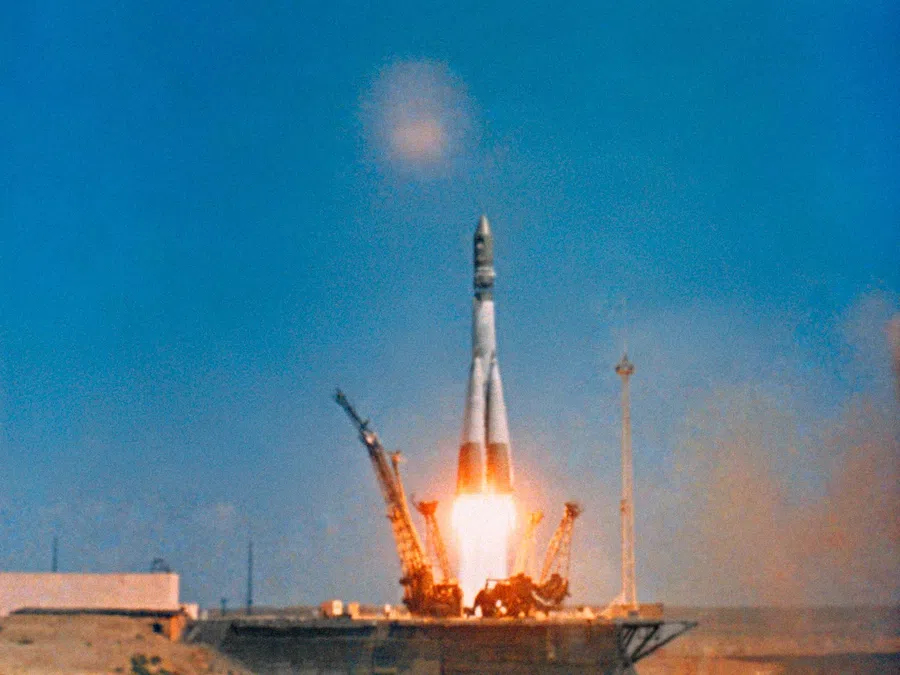
The ship started on April 12, 1961 at 9.07. The rocket from the start left standard. The first, most dangerous seconds, for which they invented an exotic scheme for saving with a steel grid, flew by safely.
But emergency situations began already at the stage of excretion. At the 156th second of excretion, there was a refusal to power supply of the antennas of the radio control system of the central unit. The engine did not pass to turn off the engine, it turned off 0.46 seconds later than the reserve option-by the temporary mark of the control system of the launch vehicle. As a result, the execution of the preliminary command was delayed by 0.51 seconds to turn off the motor unit of the central unit. As a result, the second stage gained speed of 22.0 m/s above the calculated. The engine of the third stage also worked 2.4 seconds longer than the estimated time. The total overstation of the speed of the carrier was 25.43 m/s. As a result, the ship reached a higher orbit. The apogee of the orbit turned out to be 327 km instead of the estimated 230 km. This immediately canceled the reserve regime of return - the time of the ship’s existence in this orbit before the descent due to natural braking was about 30 days. By this time, the astronaut would have died. It was hoped that the brake motor installation would work normally.
9.18. "Cedar": there was a separation with the carrier ...
In orbit
After led to orbit, the ship slowly rotated (the ship’s disturbances after separation with the step of the launch vehicle were not provided) with an angular speed of 2-3 degrees per second.
"Cedar": the object rotates somewhat to the right. Fine! Beauty! Health is good. I continue the flight. Everything goes well.
Five (!) Computing centers were involved in trajectory measurements: VC-5 (NII-4, in fact, the world's first flight management center), VC-1 (Ministry of Defense) (Ministry of Defense), VC-2 (computing center of the USSR Academy of Sciences), VC-3 (Department of Applied Mathematics of the USSR Academy of Sciences), Central Executive Committee (Moscow State University). But to quickly accept and process measurements had the opportunity not all involved computing centers. In some of them, measuring information in the form of punch from VC-5 was delivered by vehicles.
In the telecontrol flight of the ship Yu.A. Gagarin was involved in all eastern stationary control and measuring points (Kipa-Sary-Shagan, Kolpashevsky, Yenisei and Elizovsky), as well as marine measuring points. It was necessary to quickly accept all the measurements, determine the orbit by measurements from at least two measuring points, to fix the fact of the output of the spacecraft into orbit and through the KIP-6 measuring point located in Kamchatka, before the ship’s exit outside the territory of the USSR, inform Yu.A. Gagarin about his exit to a regular orbit. Then it was planned to clarify the orbit and transfer its parameters to TASS, thereby confirming the fact of the flight of a spacecraft with a person on board, and use data to correct the descent route, determine the landing point of the astronaut, as well as to respond to possible non -standard situations.
When the spacecraft is transition from the visibility zone of the Sarah-Shagagan kip to the visibility zone of Kolpashevsky Kip (Novosibirsk), a short-term break in the S.P. Queen with astronaut.
9.49 (adopted in Khabarovsk). "Cedar": *I do not hear the earth. I am in the shade. *
9.51. The construction of an orientation for moving from orbit began.
9.55.10. Orientation is built.
Attempts to clarify the orbit parameters after data with KIP-2 and KIP-4 were complicated, since the measurements were not received with KIP-3. The decisions of other computing centers were very different from them, but since the VC-5 managed to process the measurements of the KIP-4 radar duplicate, the orbit parameters obtained in VC-5, it was decided to take for the main ones. The regional group of management in Kamchatka Kip, headed by the future cosmonaut A.A. Leonov, did not receive a connection with Yu.A. Gagarin information from the coordination and computing center in Moscow about the actual orbit of the East flight. The trajectory measurements of the Kamchatka Kip did not correspond to the majority of the piles due to the use of the signals of the Japanese station for the binding of the single time system, and not the state reference station, which was not heard due to strong interference. Then A.A. Leonov, in order not to worry Gagarin, he took responsibility to inform him of the VHF, that everything is fine.
9.54. The Khabarovsk radio center handed over to Gagarin the information that is not true that the orbit is estimated.
The operator of the Kamchatka Kipu command station issued a one-time team of inclusion of a software and temporal device (PVA) to the spacecraft without taking into account the deviation of the actual orbit from the calculated one. This difference was unknown then. This meant that the parameters of the orbit calculated by the measurement, on which Gagarin’s ship reached, could be very inaccurate, which in turn created uncertainty in the issuance of a brake impulse of the necessary duration, that is, complicated the return.
Job
Gagarin dictated on a tape recorder and made notes in the flight journal. Soon, he sailed a pencil in zero gravity, and there was nothing to write. (From the post -flight report: “The ear was fired to the pencil with a screw, but it was apparently either to put it on glue or wrap it out more. This screw turned out and the pencil flew away. He turned the flight journey and put it in his pocket. It wouldn’t come in handy, there’s nothing to write.” ) Then the film ended. Gagarin manually rewound it, so there is no information about the middle of the flight (from 09.27 to 10.03) on the film.
Yuri Gagarin conducted a report: “A very beautiful sight. I am now watching the star in the right porthole. It passes from left to right along the porthole. Asterisk left to the right ... What a grief! .. "
9.57. "Cedar": The mood is cheerful, I continue the flight, I am over America.
10.04. "Cedar": I am in the apogee. “The descent-1 works, solar orientation works (the ship was held in the apogee Cape Horn).
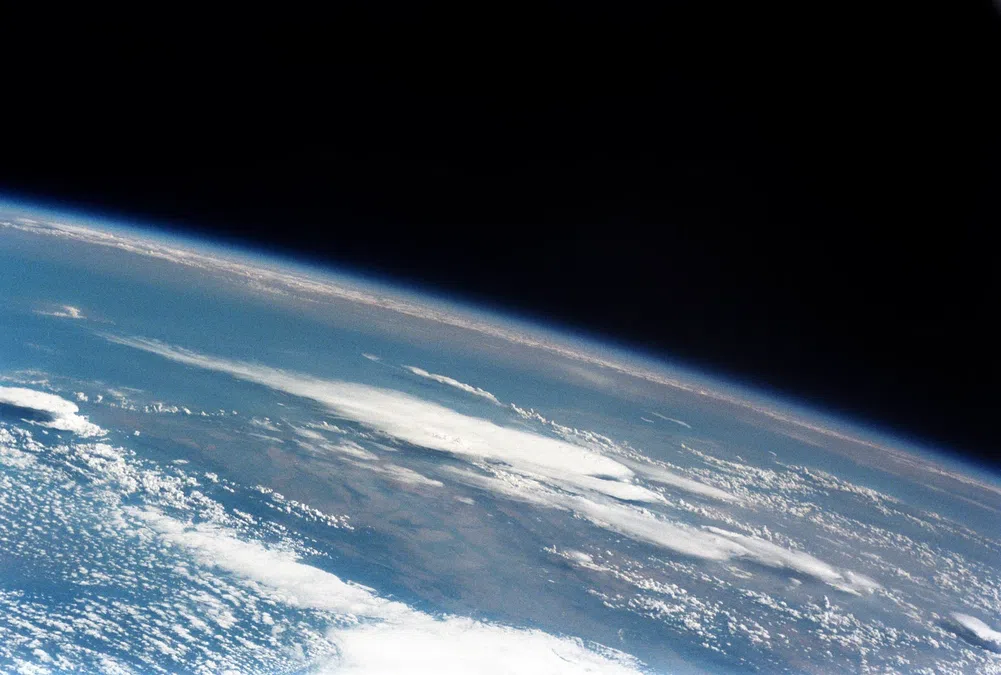
10.07. "Cedar": some cloudy is closed ... I see the horizon of the earth. A very beautiful halo. First, the rainbow from the very surface of the earth and down. Very beautiful! Everything went through the right porthole.
09/10/15. "Cedar": I came out of the shadow of the earth ... I fly over the sea ...
Until the next emergency situation, Gagarin remained to work 16 minutes 33 seconds.
Descent
At 10.25.04, the brake motor installation (TDU) turned off at 10.25.48, less than 1 second earlier than the calculated time. An abnormal situation caused a number of unpleasant consequences. For Yu.A. Gagarin came the most difficult and dangerous area of flight ...
The first 2 seconds TDu worked normally. When the working pressure appeared in the combustion chamber, the checkpoint valve (OKNI) was to be closed. However, the valve was not completely closed, as a result of which the fuel after the turbine unit was regularly entered in the combustion chamber and abnormally through the unnecessed window into the cavity of the “dividing bag” (is needed for preliminary boost) of the fuel tank. The fuel that fell into the “dividing bag” could not be used to develop a brake impulse, that is, there was a non -calculated loss of fuel. He was not enough for the development of a regular traction impulse. The cessation of normal engine operation occurred after 40.1 seconds, that is, less than a second before the main command (Civil Code) to turn off the engine. The main team for turning off the TDU did not pass. Accordingly, the “Separation” cycle did not start. Now it remained to wait for the implementation of the reserve regime of separation into thermal attitters. The consequence of this incomplete second was a flight of 600 km and landing in a non -calculated area.
Thermals are located on the dash-agency compartment and are triggered when the case is heated to 150 degrees. It is believed that this occurs at an altitude of 100-110 km. Реально разделение произошло на высоте 150–170 км. Следовательно, нагрев корпуса до 150 градусов произошел быстрее расчетного времени.
But that's not all. После того как ГК не прошла, арматура ТДУ осталась открытой. По открытым трактам газ наддува и окислитель под давлением 60 атмосфер продолжали поступать в камеру сгорания и в рулевые сопла по тангажу, крену и рысканью. The process was arbitrary and uncontrolled. Результирующее возмущающее воздействие на космический корабль привело к его закрутке вокруг центра масс корабля со скоростью 30 градусов в секунду.
Гагарин в послеполетном докладе: «Получился «кордебалет»: голова-ноги, голова-ноги с очень большой скоростью вращения. Everything was spinning. I see Africa, then the horizon, then the sky. He only managed to close from the sun so that the light would not fall into the eyes. I put my legs to the porthole, but did not close the curtains. I was interested in what was happening. "
Штатная циклограмма спуска нарушилась. Команда на автоматическое разделение спускаемого аппарата и приборного отсека не прошла.
Гагарин: «Я ждал момент разделения. There is no separation ... "
10.36. Отсеки разделились по резервному варианту от термодатчиков на высоте 130 км (с задержкой от штатной циклограммы на 10 минут) над Средиземным морем.
Команда на отстрел кабель-мачты поступила от термодатчиков одновременно с командой на отстрел четырех стальных лент, соединяющих спускаемый аппарат и приборный отсек. Ленты отстрелились нормально, однако отстрел кабель-мачты не прошел. Причина была в том, что цепи кабелей запитки пиропатронов отстрела кабель-мачты ошибочно были проложены через пироножи лент, которые перерубали кабели лент и кабели пиропатронов отстрела кабель-мачты до прохождения команды на пиропатроны гермоплаты, которая шла с задержкой по отношению к команде «Отстрел лент». The same thing happened with two previous launches of unmanned ships. Однако эта ситуация угрозы безопасности космонавту не создавала, и С.П. Королев запретил проводить какие-либо доработки системы разделения, боясь, что переделки внесут опасность новых сбоев.
From the report by Yu.A. Gagarin on April 13, 1961, Kuibyshev: “I was waiting for separation. There is no separation. Положено 10–12 секунд, но по моим ощущениям больше прошло. I looked at the device, “prepare for the catapulting” does not light up, the separation does not happen ... Well, here I think a little like that: “Something is wrong!” I estimated that TDU worked correctly, which means that I would still sit somewhere, do not raise a noise. He reported that the division did not happen, but it seemed to me that the situation was not emergency, I reported to the telegraph with the telegraph: “VN” - everything is fine. ”
Finally, the descent device entered the atmosphere. По рассказу Гагарина,
«за иллюминатором бушует пламя, корабль корежит, трещит, подумал: все».
И из его отчета 13 апреля: «Я думаю: «Гори, гори, я подожду пока»… Был такой момент, примерно секунды 2–3: в глазах начали расплываться приборы». Подобные нарушения зрения связаны с кратковременным перерывом в кровоснабжении головного мозга и сетчатки глаза, возникающим при воздействии перегрузки 12 g (по расчетам, штатная перегрузка не должна была превысить 9 g; по ощущениям космонавта, перегрузка составляла 10 g, несколько секунд перегрузка достигала 12 g).
Return
В 10.48 обзорный радиолокатор радиотехнического пункта наведения аэродрома г. Энгельса зафиксировал цель в юго-западном направлении на высоте 8 км и на удалении 33 км. Это был спускаемый аппарат «Востока» с Ю.А. Гагариным.
В 10.49, после завершения торможения в верхних слоях атмосферы, на высоте 7 км, над весенним разливом Волги произошло катапультирование кресла с космонавтом из спускаемого аппарата и ввелся тормозной парашют. Через 50 секунд на высоте примерно 4 км ввелся основной парашют, одновременно произошел сход пилота с кресла. На высоте 3 км ввелся дополнительно запасной парашют. At first he fell out, not opening, but when the clouds pass from the wind gust of wind, the spare parachute was filled, and from that moment the astronaut descended on two parachutes. But two parachutes are the danger of twisting their slings. Nevertheless, everything worked out.
Во время спуска на парашюте Ю.А. Гагарин около 6 минут пытался открыть дыхательный клапан скафандра. When putting on a spacesuit before the start of the exhaust, the valve opening cable fell under the shell of the spacesuit and was additionally pressed with a tie -tied belt. Опасности для жизни ситуация не представляла, однако условия в скафандре возникли дискомфортные.
The astronaut realized that there was a landing to the water, pulled out a knife fixed on the spacesuit and cut the sling, on which a worn emergency supply weighing 43 kg was fixed. Thus increasing the range of parachute, he landed on land. Сильный западный ветер на этих высотах способствовал горизонтальному перемещению снижающихся на парашютах пилота и спускаемого аппарата и помог им не попасть в воду.
Yu.A. Гагарин приземлился на парашюте в районе деревни Смеловка Энгельсского района. Спускаемый аппарат приземлился раньше космонавта и ближе к берегу Волги на 1–2 км. Возвращение произошло со значительным перелетом по сравнению с расчетным: не в Волгоградской, а в Саратовской области.
All reference books and encyclopedias indicate the duration of the flight of Yu.A. Gagarina - 108 minutes. But this is wrong. The FAI commissar present at the landing site was reported to register the world record. Когда же данные были уточнены, изменять их советская делегация в FAI не хотела, чтобы избежать лишних споров об обстоятельствах посадки (раздельное парашютирование космонавта и спускаемого аппарата). But in fact, the flight lasted 106 minutes, as was indicated in the flight mission.
Такова подлинная история рождения профессии «космонавт».