
Translated material
Medusoid generation
Ten facts from Julie Berwald's book "spineless"
Medusa is a rare example of harmony of shape and content. They do not just look surprising and mysterious - their existence is really surrounded by numerous secrets. Even the cycle of their life has not yet been thoroughly studied, since the polyps from which millions and billions of jellyfish appear are managed to hide from the eyes and devices of scientists. It is not surprising that once having become interested in the world of Medus, you can lose your head once and for all. Something about this happened with the Oceanologist Julie Berwald, who became literally obsessed with these incredible creatures. That is why her book contains a huge number of personal notes and is filled with experiences and different lyrics. But there are plenty of scientific facts in it - within the framework of the joint project “Gorky” and the Enlightener Prize, Ivan Kozlov chose ten of them.Julie Berevald. Spineless. The science of jellyfish and the art of gaining an internal rod. Minsk: Discourse, 2021. Translation from English Egor Pozdnyakov. Content
 1. Meduss accidentally simulated a military coup in the Philippines
Meduses give humanity a lot of troubles, and the further, the more. Researchers are not enough to understand whether the activity of the jellyfish with global changes in the ecosystem has increased over the past half a century or we are talking about ordinary cycles, but the fact remains: hordes of jellyfish began to appear where they were not, and spoil everything. For example, earlier the coast of Namibia was considered one of the richest places on Earth, but in 1963, jellyfish appeared there and literally devastated coastal waters. In 2009, an incredible cluster of giant jellyfish arose off the coast of Japan, which also negatively affected the local ecosystem and economics. But most of all, Medusa loved to paralyze the work of power plants - in the same Japan they are called the second global threat to energy after earthquakes. They easily penetrate any filters and clog their weights and water conduits. Sometimes this caused excesses not only of a technogenic, but also a social plan:
“In the Philippines, the cooling system of the largest power plant in the country was out of order due to jellyfish pipe. This led to a massive shutdown of light, which some residents accepted for the beginning of the military coup. ”
2. Meduses became part of the mass poll thanks to the stories about Sherlock Holmes
What Julie Berevald calls “a minute of fame for floating intestinal”, occurred at the end of the 19th century due to the spread of the theory of evolution, in which their place seemed more than mysterious. Meduses fascinated everyone:
“Even the persons of royal blood found Medus entertaining. Prince Monaco Albert I convinced Charles Riche to study the poison of the Portuguese boat. In 1913, Riche received the Nobel Prize for the opening of anaphylaxia. The emperor of Japan Hirohito was completely obsessed with jellyfish. His main hobby was to find and describe their new species. Such enthusiasts came to the conclusion that jellyfish, these jelly -like creatures with a primitive structure of the body, were the missing link between the simplest unicellular organisms and the multicellular by us. ”
Interest in jellyfish did not fall throughout the twentieth century. Moreover, by its first decade, the mysterious image of these creatures was reflected in mass culture. In this context, Julie Berevald recalls the famous naturalist Ernst Haeckel, who created the book “Beauty of Forms in Nature”, which remains popular for a century-Haeckel has drawn a jellyfish in the Art Deco style and, since then, few have depicted them in such an aesthetically attractive vein. “But the most significant evidence of the popularity of Medus,” said Berwald, “was the story“ Lion Gryve ”from the Cycle about Sherlock Holmes Sir Arthur Conan Doyle, in which a hairy cyanei appears as a killer.”
3. Majest bars could make a revolution in the healthy food market
One of the most dramatic moments of the book is the detailed and emotional story of Julie about his first attempt to prepare a salty jellyfish, spontaneously bought in one of Austin's supermarkets. Generally speaking, she went to the Asian food supermarket at random-hoping to buy chips from a jellyfish or something like that. But instead, she was given a weighty (and rather unpleasant look) gray-brown bar of the flesh in some kind of brine. It was required to be washed repeatedly in order to get rid of alum, then soak for ten hours, boil and cut into a salad. According to the author’s observation, at most of the stages of this process, the jellyfish stink and looked extremely unpresentable, but Julie gave strength to the knowledge that Medusa was quite successfully consumed many centuries ago:
“Although these days, jellyfish are not found in the menu of Western countries, they were once considered a delicacy or at least something edible. In the Stories of Animals, Aristotle wrote about their culinary features: “Akalef” have two types: some are smaller and more edible, others (which are also found near Chalkida) are large and tough. In winter, the meat is dense, because they are caught and eaten, but in the summer they die: they are blurred and, if touched, they immediately disintegrate, so that they cannot be pulled out whole. ”
As a result, the jellyfish was not nasty, but not that tasty - she almost did not have her own taste as such. However, Julie Berwald seemed to be completely arranged, because in the end it turned almost into a propagandist of medical diarrhea and even considered the benefits of such a diet. So, if we imagine an energy bar from a jellyfish for 200 calories, it will contain as many as 48 grams of protein in the complete absence of fat.
4. One of the stages of the development of the jellyfish looks like a fluffy drame "Tick-Tak"
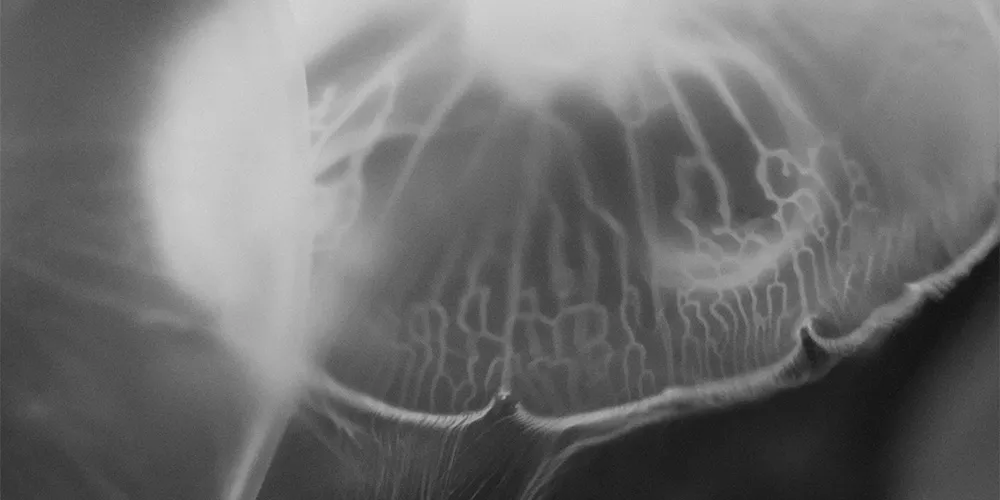
Strictly speaking, “Medusa” is the name of not the entire living creature, but only a certain phase of life, also called the “medical generation”. All other stages preceding the appearance of an adult are not studied. Only the general course of the process is well known. To begin with, a larva called “planning” grows from a fertilized egg. Bergwald cites the words of one of his interlocutors, who described the planula as “fluffy“ tick-tak ”: in the role of“ fluff ”, she acts external cilia-players, which are called cylings. Planel goes into swimming, the ultimate goal of which is the search for a site for fixing. Having implemented this, she begins to change:
“The larva is stretched, acquires the shape of a tube and grows thin tentacles. In the middle of these tentacles, a mouth appears, from which the digestive tract passes through the entire tube. Now our creature must be called polyp. And this is not a short -term stage of development (like childhood in a person) through which a jellyfish passes. A polyp is a fully functioning organism. ”
Bergwald writes that the stage of the polyp can significantly exceed the stage of Medusa in time of life - sometimes, depending on the species, it lasts years and even for decades.
5. No one in the world understands where the polyps are hiding
Everything is extremely curious with the polyps in general-we know almost nothing about them, because scientists simply cannot catch them. Until now, they have been able to study and observe in a natural environment only for a small number of polyps of certain types.
“Aurelia is the most common jellyfish in the world - the exception to the general rule. Certificates of underwater parts of the berths covered with polyps appear regularly. But the polyps of giant jellyfish nomura found in nature can be counted on the fingers, although Japan's coastal waters are teeming with millions of adults ”
For example, many visitors to the beaches of Australia are well aware of cubeons who leave quite strong burns, but no one has ever met their polyps in a natural environment. This is true for the spotted Australian and for several species of jellyfish - looking at their millionth swarms, it is difficult to believe that humanity is unable to track where all these creatures came from. Moreover, the matter is not only in a small size - polyps are elusive for research methods that are not related to visual examination. In a number of studies, scientists did not even give anything to the use of DNA markers.
“We regularly encounter a large number of adult jellyfish of various types, which means that polyps exist. But their location remains one of the greatest scientific riddles. And even if we find them, this will not reveal all the secrets enveloping the vital activity of polyps in a natural environment. <...> Every time I see the sea, I am no longer captured by its brilliance or the power of its waves. Instead, the question immediately comes to mind: "Where can all these polyps be?" Unknown. And from this it becomes uneasy. ”
6. Medus can be likened to the ghosts of the Eden garden
The question of what the ancient jellyfish eaten is one of the most difficult for any researcher of these creatures. In itself, it may seem prosaic, but there is a nuance. The fact is that the diet of modern jellyfish consists mainly of fish caviar and small crustaceans. But by the time that all this appeared on Earth, Medusa existed at least fifty million years. However, studies of fossils were not found in the stomachs of the most ancients of the Medus known to us at all. This fact prompted Julie Berwald to think that in ancient times they may not at all ate, absorbing everything necessary for life directly from the environment. This completely reasonable conclusion of Berwald with its characteristic enthusiasm for everything related to jellyfish develops to an exalted concept, within the framework of which the ancestors of the jellyfish turn into the inhabitants of a more friendly world, which has not yet known violence:
“About half a billion years ago, living organisms began to bury in the sand, destroying cyanobacterial mats. Their mouth cavities gradually hardened, jaws formed, teeth grew. The era of hunters began. <...> Most of the soft jadry creatures that lived during the ancestors of the jellyfish did not survive in the new hostile environment. Mass extinction happened about 555 million years ago, destroying almost all primitive creatures. But the Grebneviks and Medusa survived. <...> Therefore, jellyfish and touch us for the living at some deep subconscious level that has survived from the time when there was no violence, cruelty, aggression. Perhaps Medusa is a living reminder of the best past, the ghosts of a real Eden garden. ”
7. ordered by the military Rombedusa enriched our knowledge about the world of animals
Julie Berwald talks about Professor-College Professor Jack Costello and Shone Colin from the University of Roger Williams, who specialized in studying the ways of moving animals at sea. It is these two scientists that owe the appearance of the first robotic jellyfish. They inspired the project, of course, the military:
“The fleet needs devices that can be hidden in sea bays for months. After all, this is how real jellyfish behave. They are able to provide themselves for a long time even in hard -to -reach areas. From a technical point of view, their swimming skills are somewhat limited, but the structure allows you to achieve greater efficiency. So, these robots will be able to be autonomous and used for naval intelligence. ”
The first prototype, the view of which was copied from the Aurelia jellyfish, consisted of a dome printed on a 3D printer, filled with silicone and eight blades from a special alloy. When connecting electricity, the whole design moved in the very least, but the indicators left much to be desired. Then one of the participants in the project attached silicone flaps to the outer edge of the dome, after which the speed and maneuverability of the jellyfish increased by an order of magnitude. It was then that their main purpose became clear. This part of the body of the jellyfish was called the “passive border”, and further studies have shown that many other types of creatures that can swim or fly have analogues of such a border - in birds, fish and insects.
8. Deep -sea inhabitants prefer red camouflage
The author of the book says that one of the consultants of the team of the creators of the cartoon “In Search of Nemo” was Zenke Yonsen from the University of Duke. That is why the cartoon turned out to be so bright and plausible: Yonsen was immersed several dozen times in the bathyscaphe to a depth, inaccessible to the sunlight, and knew very well how the inhabitants of the sea depths looked and how the inhabitants of the sea. This is how he described his typical immersion:
“As you go down lower than you, the light around fades. At the mark of 14 meters, the water molecules absorb rays of the red spectrum. If you suddenly paint your nails red and look at them at that moment, they will look completely black. At the mark of 45 meters, the yellow color disappears, and the blondes turn into brunettes - and you don’t even need to repaint the hair. After another 9 meters, almost all of the green color disappears. At 73 meters it will seem to you that the world is highlighted exclusively in the blue spectrum. ”
The philistine perception tells us that, as it dives around, it will just gradually get dark and that’s all. But the situation is completely different, and the sea residents understand this perfectly (more precisely, they do not “understand”, of course, but this factor is taken into account evolutionarily). That is why many animals at a depth have a bright red color (for example, Grebneviks or large Tiburonia Granrojo jellyfish). Where there is no red spectrum, red camouflage is in no way inferior to black - both of them and the other color equally effectively mask its owner, but it is the red pigment in invertebrates that is easier.
9. "Cosmic Medusa" is not a heading of a fantastic book, but reality
Indeed, at the end of May 1991, more than two and a half thousand newborn jellyfish and polyps were in space. The launch took place at Cape Canveral: on board the shuttle, who went on flight that day, was Dorothy Spangenberg - a specialist in jellyfish from the Medical School of East Virginia. Julie Bernwald notes that the very idea of a medical expedition Medusia seems rather outstanding, but NASA, of course, agreed to her, not without reason. The purpose of this adventure was an attempt to get to the bottom of the causes of the “space disease” - an ailment that, in symptoms, was similar to the “marine disease” and caused astronauts malaise and nausea.
“Until now, no one really understands what exactly is its cause. The main suspect is considered to be microgravity. The signals from the parts of our ear responsible for propriocasculation change along with a decrease in gravity. But it is not so easy to climb a person in the ear, so they decided to use the jellyfish as understudy in NASA. ”
As a result, this idea was unsuccessful by some obvious success, since the budget was cut, and Medusa flights had to be stopped into space. The only experience was not enough to identify the causes of “space disease”, but it turned out to be useful in terms of observing animal behavior. The jellyfish, who took part in the expedition, endlessly swam in circles (their brothers in similar conditions on Earth moved only up and down), were rebounded and did not return to their usual behavior even after the end of the flight.
10. About two million species of the inhabitants of the ocean have not yet been discovered
For comparison: so far, scientists have managed to describe only about a quarter of a million species - that is, we can say that we have discovered eight times less oceanic creatures than we still have to open. Julie Berwald reinforces these figures with a reference to 2015 research, and it is by no means easy for her to come to terms with the result of these studies. Typically, reasoning of this kind is accompanied by eloquent comparisons with space research, and this technique looks even somewhat populist. Bergwald also does not hold from him, but we must pay tribute: not wanting to remain unfounded, it gives specific numbers, and these numbers are impressive. According to 2013, the financing of space research was 150 times exceeding the amount of funds allocated to study the oceans - and it is easy to assume that over the past years this gap has only increased. And another bright comparison: so far only three people descended into the Mariana cavity. Cosmos, which has already visited more than five hundred people, compared to it just a passing yard.
“We need NASA to research the ocean,” said Eddie [Widder] at the end of her speech at the TED conference, where she talked about the search for a giant squid. Then she continued: “More than 90 % - as many as 99 %! - The ocean occupies a suitable space on our planet. This magic place is filled with exciting light shows, bizarre and outlandish creatures, extraterrestrial forms of life. But in order to see them, you do not have to fly to another planet. ”