
Translated material
Kiberataka for centrifuges
Israel attacked the Iranian nuclear object on the eve of the visit of Sergei Lavrov to Tehran. How to understand this to Russia?
Hot news from the fronts of the Israeli hybrid war with Iran: at dawn on Sunday, as a result of cyber attacks, the Iranian nuclear facility at the landfill in Natanze south of Tehran was disabled. The brand new, from a needle, centrifuges for the production of enriched Uranus on Saturday were solemnly, on the air, launched by Iranian President Hassan Rouhani. And on Sunday, as a result of external intervention on the energy systems of a nuclear facility, an explosion occurred.

Iran officially accused Israel of attacking a nuclear facility in Natanze. Iranian Foreign Minister Mohammad Javad Zarif, speaking on the air of the state channel, emphasized that now it is especially important for the country to “not fall into the trap placed in Israel”: “The Israelites want to take revenge because we have achieved progress in lifting sanctions. They publicly stated that they would not allow it. But we will take revenge on them. <...> The enemy is mistaken if he thinks that the incident will weaken our positions in nuclear negotiations in Vienna. <...> The assembly in Natanze will strengthen Tehran’s position in the negotiations. ”
Recent negotiations in Vienna between Iran and the United States as part of the resumption of the nuclear transaction of 2015, which the United States refused the Trump administration in 2018, became the background of an attack on the nuclear facility in Natanze, and Iran already stated that he did not intend to comply with the terms of the transaction. The Biden administration again returned to negotiations with Iran, reinforcing this dialogue with promises to relieve sanctions.
As part of a nuclear transaction, Iran was allowed to release and store a limited amount of enriched uranium for fuel production for power plants. However, Israel interpreted the launch of new centrifuges as a violation of the transaction, since the facility’s capacities in Natanze allowed to enrich uranium to such an extent that it could be used as a charge for nuclear warheads.
Repeatedly over the past days, the Israelis stated that Iran was going to violate the deal. And in the end, the centrifuge did not work out for a day.
The head of the Iranian atomic energy organization Ali Akbar Salekh said that “Iran reserves the right to take measures against the perpetrators”: “Conducting this vile step, the Islamic Republic of Iran emphasizes that the international community and the International Atomic Energy Agency [Magate] fight this nuclear terrorism.”
Magate, for his part, reported that he knew about the incident, but no comments followed.
In an interesting situation, apparently, the Russian Foreign Minister Sergei Lavrov will be, whose official visit to Iran begins on Tuesday. The subjects for discussion during the visit indicate the “situation in the region”, a nuclear transaction and the signing of an Iran-Russian cooperation agreement. Recently, the delegation of the Lebanese Hezbollah, and this is the armed Shiite guard of Iran, directly on the threshold of Israel, near the Israeli border itself, visited the official visit. Moreover, the main goal of Hezbollah, as follows from its authorized documents, is the destruction of the Israeli state. After the delegation returned from Moscow in the Iranian media, the topic of opening the representative office of a combat group in Moscow was extended. Moscow did not support these speculations, but Tehran’s diplomatic message is clear here: Iran is trying to lean against Russia not the simplest times for itself. But Russia has its own plans in the region, which, obviously, does not include the support of Israeli’s enemies.
The official Israel does not comment on the incident in Natanze, however, the Israeli media, including state -owned ones, rejoice, reporting with references to Mossad, which was precisely the result of the Israeli cyber attack.
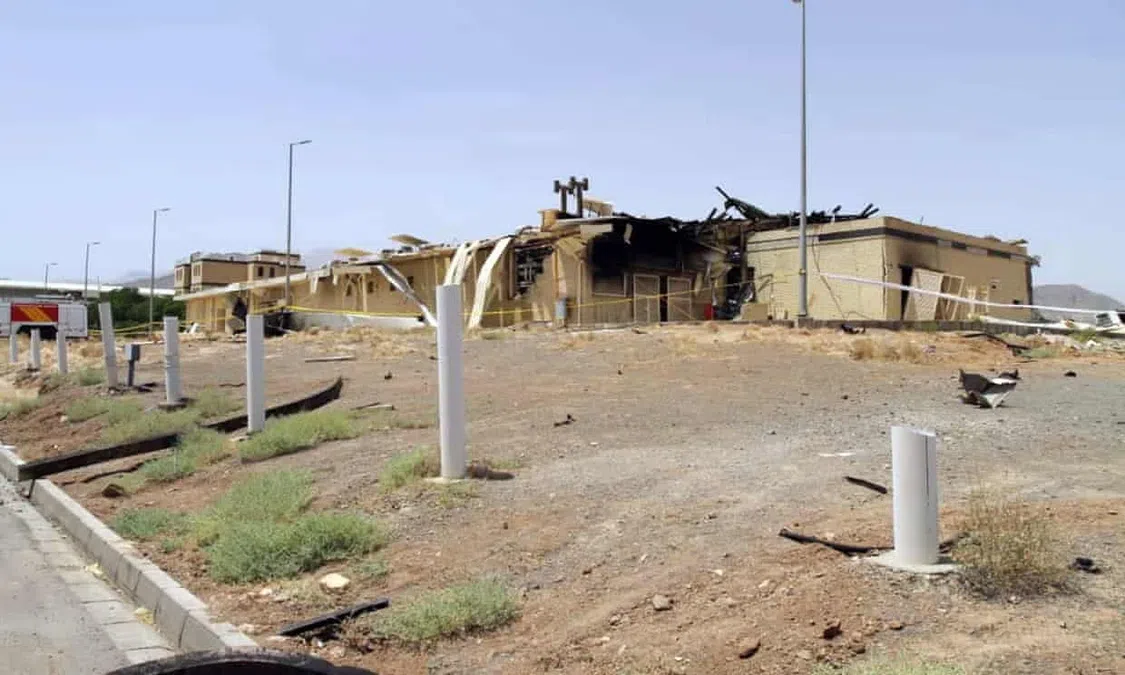
The attack in Natanze is by no means the first time that Israel hits the nuclear objects of the countries hostile to him. In July 2020, the landfill in Natanze was already subjected to Israeli cyberataka. And in November 2020, Mossad liquidated the leading Iranian nuclear scientist and officer of the “Corps of the Guardians of the Islamic Revolution” by Mochsen Fakhrizade. He was killed on the territory of Iran, using in units the machine gun imported into the country. The Israelites did not even think to hide their own involvement in this murder, they even wrote about him in newspapers. Mokhsen Fakhrizade was tracked by a group of more than 20 agents, including Israeli and Iranian citizens. The surveillance lasted 8 months, after which the physics was ambushed.
He has already become a fifth scientist from the Iranian nuclear program, which has been killed over the past ten years.
Israeli reconnaissance capabilities are great, in foreign special operations he is not used to looking back at anyone and acting boldly.
The whole world found out about this back in 1981, when Israeli aviation destroyed the Osirac nuclear reactor. The blow was struck by eight F-16 fighters accompanied by six F-15. The Iraqi Air Force at that moment was passionate about the war with Iran, besides, Iran had a large air jacket, which disabled a large number of Iraqi aircraft, shortly before. Taking this opportunity, the Israelis, heavily loaded with fuel, flew over Jordan and Saudi Arabia and were not seen by Iraqi air defense until the attack. Having broken the target, the Israelis did not suffer losses, but ten soldiers and one French engineer died from Iraq.
In relation to Iran, such an operation would be almost impossible-due to a great distance that would require refueling in the air, which, in turn, would increase the risk of aircraft loss. In addition, the open, not virtual act of aggression could cause a full -scale war with Israel both on the Lebanese and Syrian fronts. But in the yard of the XXI century, and in war all the means are still good.