
Translated material
"Wash from the years of indifference"
Participants in the local history cell “Gang” return their historical appearance to the St. Petersburg ceremonial. Thousands of houses built shortly before the revolution and abundantly decorated with major and stained glasses, under numerous layers of paint, still store traces of former splendor. “The salvation of St. Petersburg is the work of the Petersburgers themselves” - such a slogan could become the motto of activists
The profitable house of the Zakharovs on Klinsky Prospekt is a magnificent representative of the Northern Art Nouveau. Outside it was restored recently: the house looks like new, standing out against the backdrop of neighbors with bright ceramic jewelry. A boring gray metal door leads to the ceremonial lobby. If you open it, the sun's rays immediately break through and on the tile peacocks decorating a semicircular stove, a gold glaze lights up.
This radiance returned only a few weeks ago, after the participants in Gangs completed the washing work. Previously, the furnace, made based on the paintings of Mikhail Vrubel at the plant of Peter Vaulin , stood under layers of paint and dust. The peacocks faded and dusted, some Mayolic jewelry were painted over utility bills, and graffiti was covered by the stove itself. Residents did not pay much attention to the masterpiece in the corner of the front door, and the recent restoration did not affect the interior decoration.
Kirill Mikhailov, one of the Genga volunteers, says that initially there was a wooden entrance group with stained glass windows that missed street light in the front door. The stove was constantly shining in the daytime. All the windows overlooking the stairs to the courtyard were also decorated with stained glass windows, but now there are only rare multi -colored patterns in the upper part of several frames. In some places they are broken, but after a hundred years they still look better than dull glass inserted in the remaining parts of the windows.
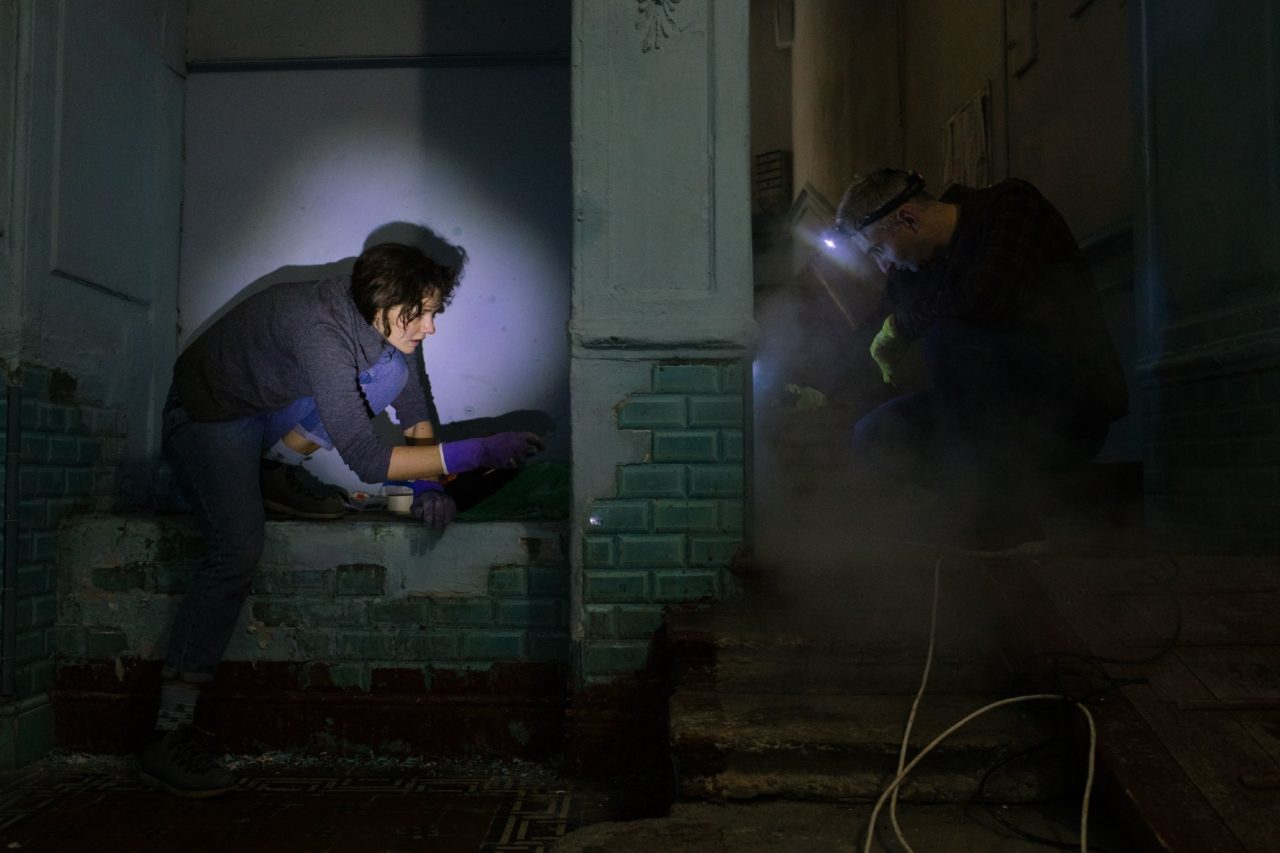 Inna and Cyril clean the tile in the front house on the Vasilyevsky Island photo: Ksenia Ivanova for TD
Most of the St. Petersburg stained -glass windows, which generously decorated the houses of the “construction boom” at the junction of the 19th and 20th centuries, survived both the revolution and the blockade. They were replaced during major repairs in the sixties. They did not pay any attention to the internal decor then - they simply painted everything with paint. This is what modern management companies do, for which the main thing is cleanliness and monotony. Stoves or tile jewelry of walls that are not under the protection of the state is not their business.
“We wash the stoves, rather, from years of indifference than from paint,” says Ksenia Sidorina, one of the creators of Geng.
"Crazy proposal"
Four local historians united in Ganging (from the English Gang-gang) two years ago, because "tired of nagging in social networks about how everything is destroyed." Ksenia Sidorina , Maria Tychinina work in the library. Mayakovsky. Alexey Shishkin is a guide, and Maxim Kosmin professionally selects apartments in the old fund. All of them lead blogs on Instagram on historical topics. With the technology of cleaning the team, Alexander Bulgarov, a professional restorer, helps the team.
 Ksenia Sidorina, participant of the Ganging Association Photo: Ksenia Ivanova for TD
Kirill Mikhailov, one of the permanent volunteers, works in the subway and repair the cars. “I was just fond of the history of the city, a photograph, and at one time I saw a post, they say, we will wash the stove on the tenth Soviet who wants to come. It seemed such a crazy proposal that it was impossible to refuse! " He talks about his acquaintance with Gang.
Forty volunteers came to the first washing about which Cyril spoke. Then at one time it was possible to work at once at three facilities. The most famous of them was a white tile furnace with a sweeping graffiti Gogh. Since then, the volunteers have laundered 22 ceremonial ones - in two years, several hundred people took part in the shares.
Almost every time on Instagram, activists get skeptical comments that their work is useless, all the same, they will colorize everything again and sign it. Only this is not happening for some reason.
 After removing the upper layers, the tile is cleaned with hot steam photo: Ksenia Ivanova for TD
“Last week I went through all the addresses, starting from our first front -line. As we cleared, everything remains. This indicates how important it is to show beauty, ”explains Kirill Mikhailov. - Many residents simply do not notice furnaces, stained glasses, they merge with the background for them. When they are so dirty, shabby, no one pays attention to them. When we clear them, the attitude towards this is changing. ”
"On personal connections"
The Goga stove is not only the first, but also the most pirate object of Geng. They found the stove quite by accident, noticing the ajar door to the front line, which the chopped piece of historical tile tiles propped up. They laundered the "gog" without any coordination. Residents eventually supported the idea, and KGIOP (the Committee on State Control, the use and Protection of History and Culture Monuments) learned about this after the action, the media willingly wrote about a new initiative.
 Margarita, participant of the Ganging Association Photo: Ksenia Ivanova for TD
“If the media had not begun to write, Kgiop would never have known that we are doing something at all,” says Ksenia Sidorina. - Then I succumbed to the universal idea that nothing can be agreed with them. We worked on the monument without coordination, and in just a week later, when we held the local history festival “Kraikon” , Sergey Makarov, the head of KGIOP, came to it. He literally piled me out of the crowd, said: “Ay-ah-ah, not good.” They were ready, in principle, to be fined us, but they decided: okay, let's go - let's look at them live. ”
It was still possible to establish interaction with KGIOP Geng. He agreed on all further shares with the committee and never received a refusal, although he had to work mainly on monument houses, which, for example, include the Zakharov house on Klinsky with a stove made based on the painting of Vrubel.
In the application for the work that they submit through the electronic reception of the administration of St. Petersburg, activists indicate the materials and technologies that they intend to use. Depending on the type of work, they use special solvents, steam generators or building hair dryers, which allow you to carefully and carefully get rid of the old paint.
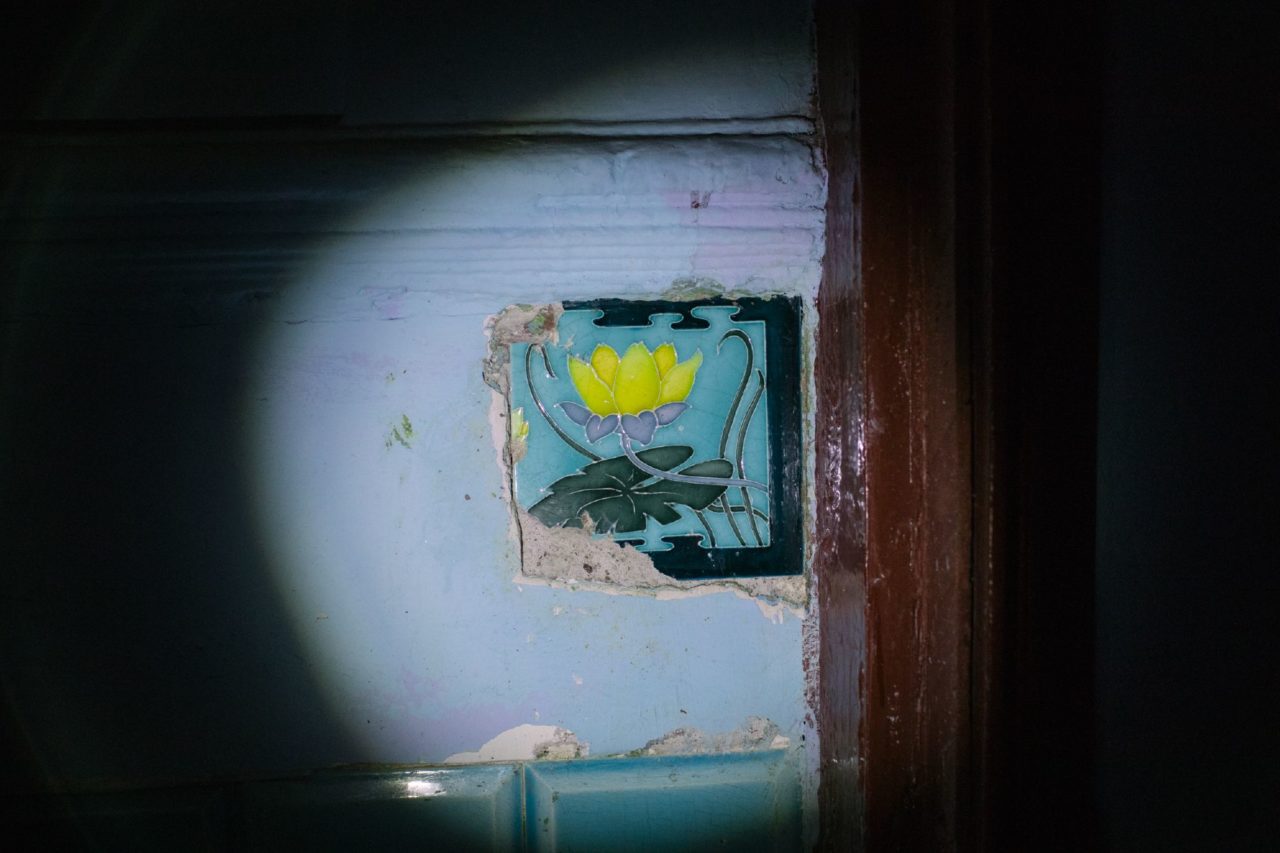 Cleaned tiles in the house on Vasilyevsky Island photo: Ksenia Ivanova for TD
Ksenia Sidorina, who helps other activists in communicating with KGIOP, is responsible for the documentary part in Geng. She says that it is not easy to draw up the application correctly, for example, there should not be the word “restoration”, which implies a more complex coordination, but it is still realistic to achieve the legalization of your activity. “Nothing to coordinate is a path to nowhere, ” Ksenia Sidorina is sure. -Because someone knows what to do, does not agree on anything and nothing breaks in the process. And someone, for example, does not know, does not coordinate the technology, and everything can be spoiled. ”
In personal blogs with tens of thousands of subscribers, Genga participants are trying to popularize their experience. They willingly share work technologies and introduce volunteers from other cities with each other. So, in the comments, under one of the posts of Ksenia, volunteers from Kharkov found each other, and then, using the Genga technologies, they washed the historical ceremonial. True, without any consultations with the authorities. They would have managed to get such an approval - the question is open, because not everyone succeeds in St. Petersburg.
 Anna, participant of the Ganging Association Photo: Ksenia Ivanova for TD
“Once I asked the familiar girl to test our way of applying for consultations in KGIOP, to see what would answer her, ” says Ksenia Sidorina, “ she refused. It turns out that everything is tied to personal connections. Although in the end, she still washed the arch at the entrance to the house, did not make it worse, and no one fined it. ”
"Why do we need these scenery?"
The most difficult object for Gang was the terracotta stove in house 45 on Lenin Street. It took its cleaning for five months, as they painted the stove at least eleven times. It was very difficult to remove all layers with a solvent. Other defects were discovered under the paint. “There were so many colors that under it it was no longer possible to distinguish between embossed patterns resembling peacock feathers. Meanwhile, they gave the name of this model of the “Pavliy Eye” furnace. The firebox is roughly covered with cement, there are no two upper tiles. The corners are broken, ”says Ksenia Sidorina.
As a result, I had to fill up the lost parts with mastic, finish the tiles, and shut up excess cement on the furnace. The local historians reached the historical olive color of the furnace, picked up an analogue in modern paint, developed the option of painting of embossed tiles, relying on preserved analogues.
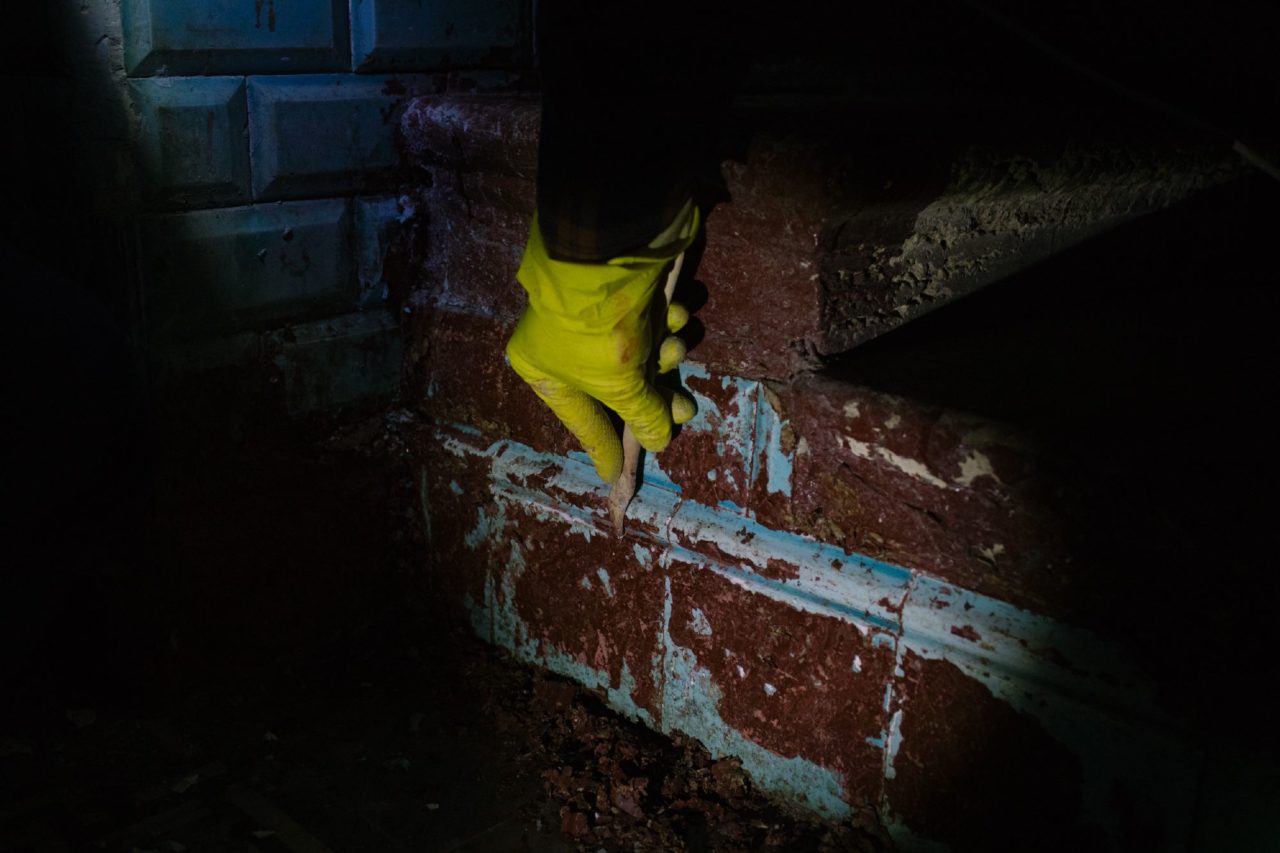 Cyril removes the upper layer of paint from tiles with a wooden spatula : Ksenia Ivanova for TD
This project turned out to be the longest and most costly in the history of Geng, but the result of the work surprised both the residents and the volunteers themselves. “It took a lot of time for this stove, but of course it became such a beauty! We came almost every day and spent several hours with this stove. I even celebrated my birthday there! " - says activist Anna Volkova.
“I remember, already closer to the end of the work, the man comes with some of his girlfriends:“ Here, look what my stove is in the front door! ” Before that, he went: "What are you doing, why?" And then he led to show, ”adds Anna.
But not always the reaction of the residents is adequate and positive. For example, during the cleaning of the Vaulin furnace with peacocks, Geng stole all consumables, their volunteers left them at night with a special note: “Please do not take it, we need it.” And once the eldest in front of the front door did not at all start starting work in a chic lobby with a stove and tiles on the walls.
 Kirill, participant in the Ganging Association Photo: Ksenia Ivanova for TD
“She says:“ I will allow you to make a stove if you make me pipes, a sewer. ” Like, why do we need all these scenery? Can you remove water from the basement instead? - Laughs the activist Rita Chernova, an architect by education. - We explain that we are not engaged in water, we do not know how. We would be happy, but no. ”
“People, when they see us, do not understand that we are just volunteers,” adds Anna Volkova. “But the residents themselves can tighten their parade, they can turn to the management company and do something.”
"Artemy Lebedev I say:" Here's the card number ""
The work of Geng is often called restoration, but in fact it is not it, because volunteers do not restore lost elements, but work with what is. It is rather akin to archeology: under many years of layering, they discover the artifacts of the bygone era and make them visible.
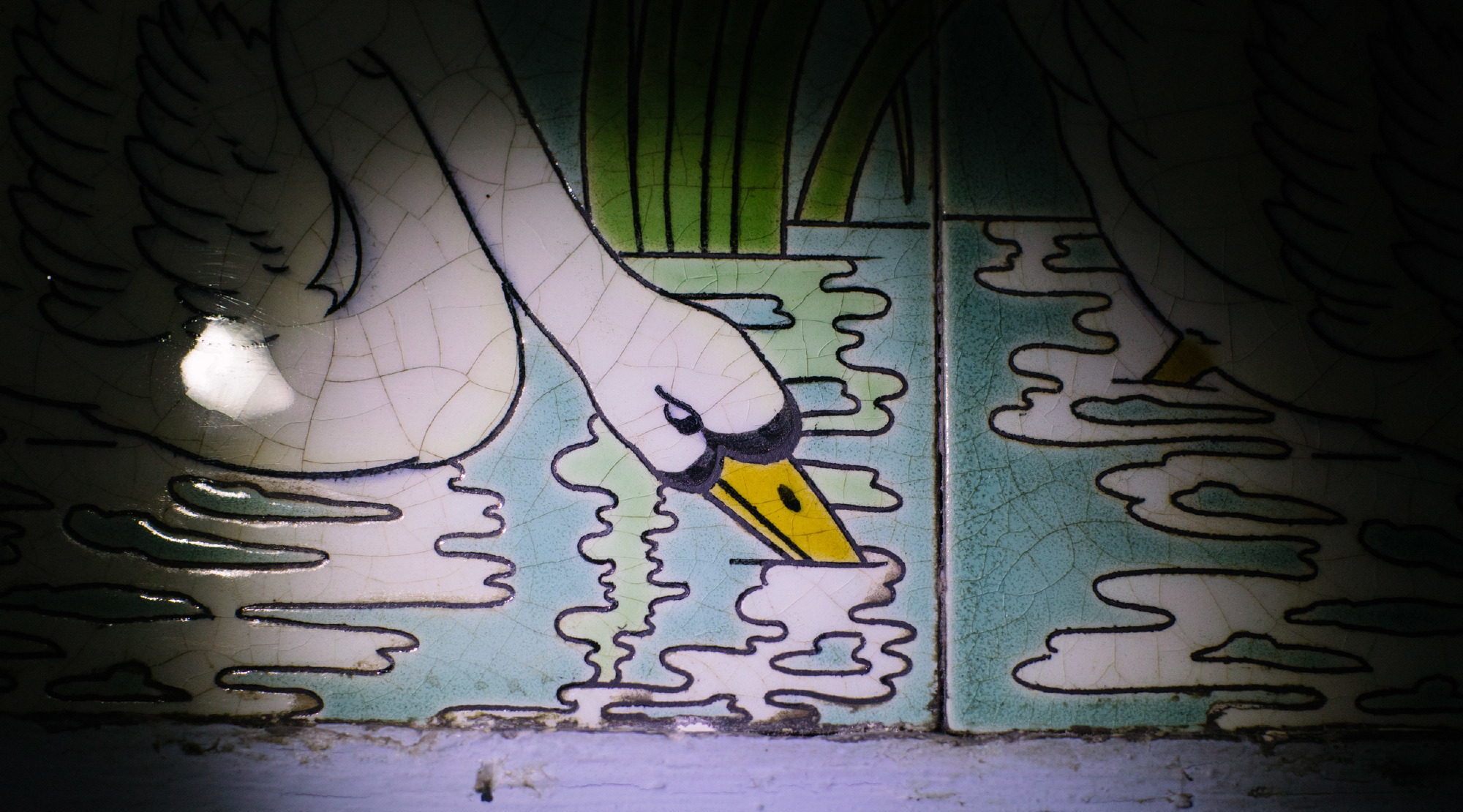
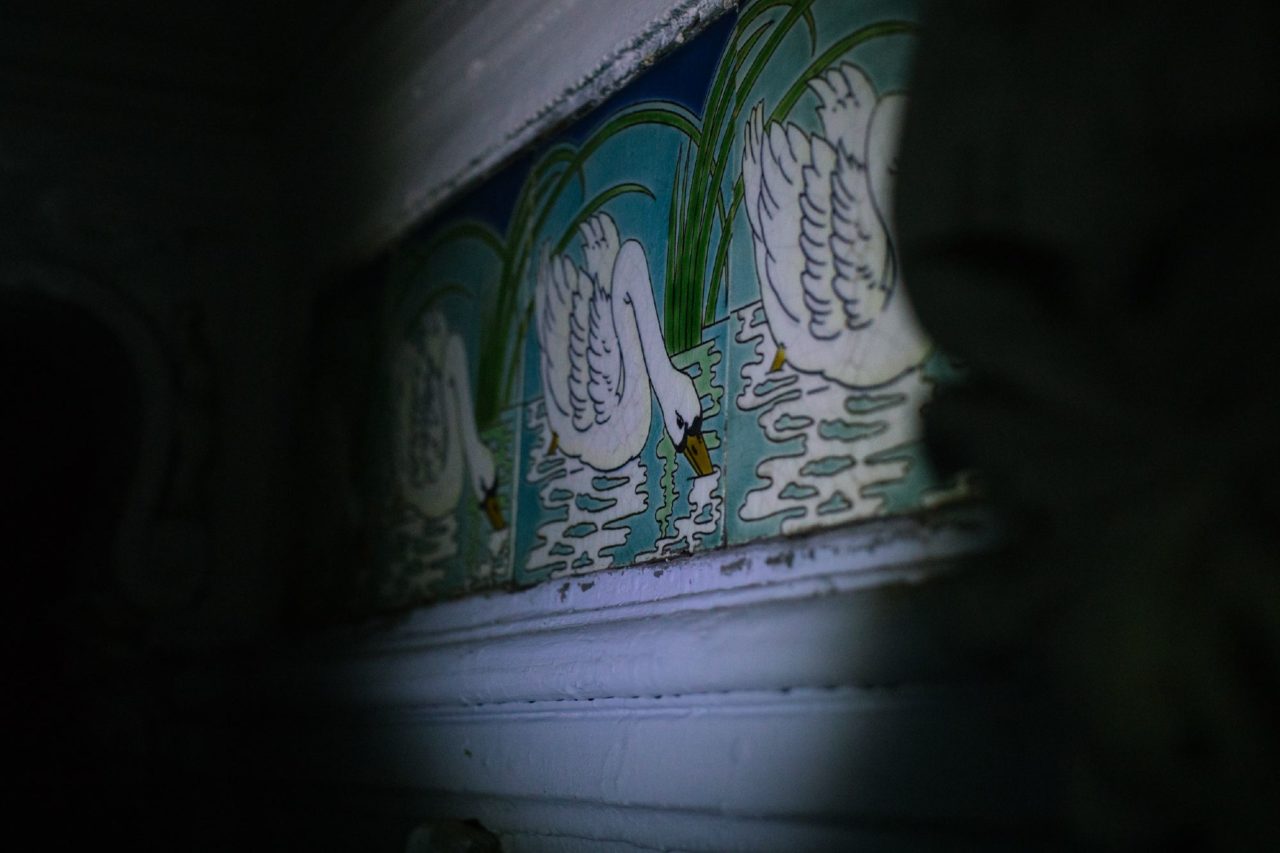 Cleaned tiles with swans in the house on Vasilyevsky Island photo: Ksenia Ivanova for TD
Special knowledge for such work is practically not required, financial costs, according to Ksenia Sidorina, are also not too large. If a full restoration of a hundred -year -old tile furnace can cost hundreds of thousands of rubles, then, for example, about fifteen thousand on Vaulin’s stove Vaulin. This is despite the fact that some consumables are also useful for further work. Volunteers most often take off their money for their purchase, although many subscribers persistently offer financial assistance.
“They often offer money, but in most cases I refuse, because I think that people who want to give money for culture will most likely take it out of their last money,” says Ksenia Sidorina. “But if I see what Artemy Lebedev offers, then Artemy Lebedev I say:“ Here is the card number for you ”.”
Artemy Lebedev, indeed, twice donated a hundred thousand rubles to the work of Gang, which were enough for several projects. Ksenia urges ordinary Russians not to send funds, but to take care of their own ceremonial and entrances. According to her, even in the historical center, volunteers are hardly threatening fines for carrying out such work, in addition, Ganging is always ready to help activists with the approval of the project.
 Cleaned element with a vase on Klinsky Prospekt photo: Ksenia Ivanova for TD
“If there are many such guys, if everyone washes at home, then we will not be needed, we will be able to go into a more difficult restoration,” explains Ksenia Sidorina. “But for now, the idea that we just give an example does not work very much, we rather work as a show.”
"This is not European repair and it is beautiful"
In fact, Gang has already become an example for other volunteers who launched their projects. Over the past few years alone, residents in St. Petersburg have restored several historical ceremonial ones, the inhabitants of the Buck house have united to preserve the remaining interior items, and private apartments are restored.
In one of these apartments, Genga participants implemented their first commercial project: they restored the tile stove and earned several thousand rubles for a construction hair dryer.
This is the only time in two years when local historians were paid for work, but they are still accused of taking bread from restorers. Ksenia Sidorina explains why this is not so: “In reality, few can afford restoration work. For the most part, people in the center are engaged in survival, they do not have hundreds of thousands of rubles necessary for the restoration of a common space. ”
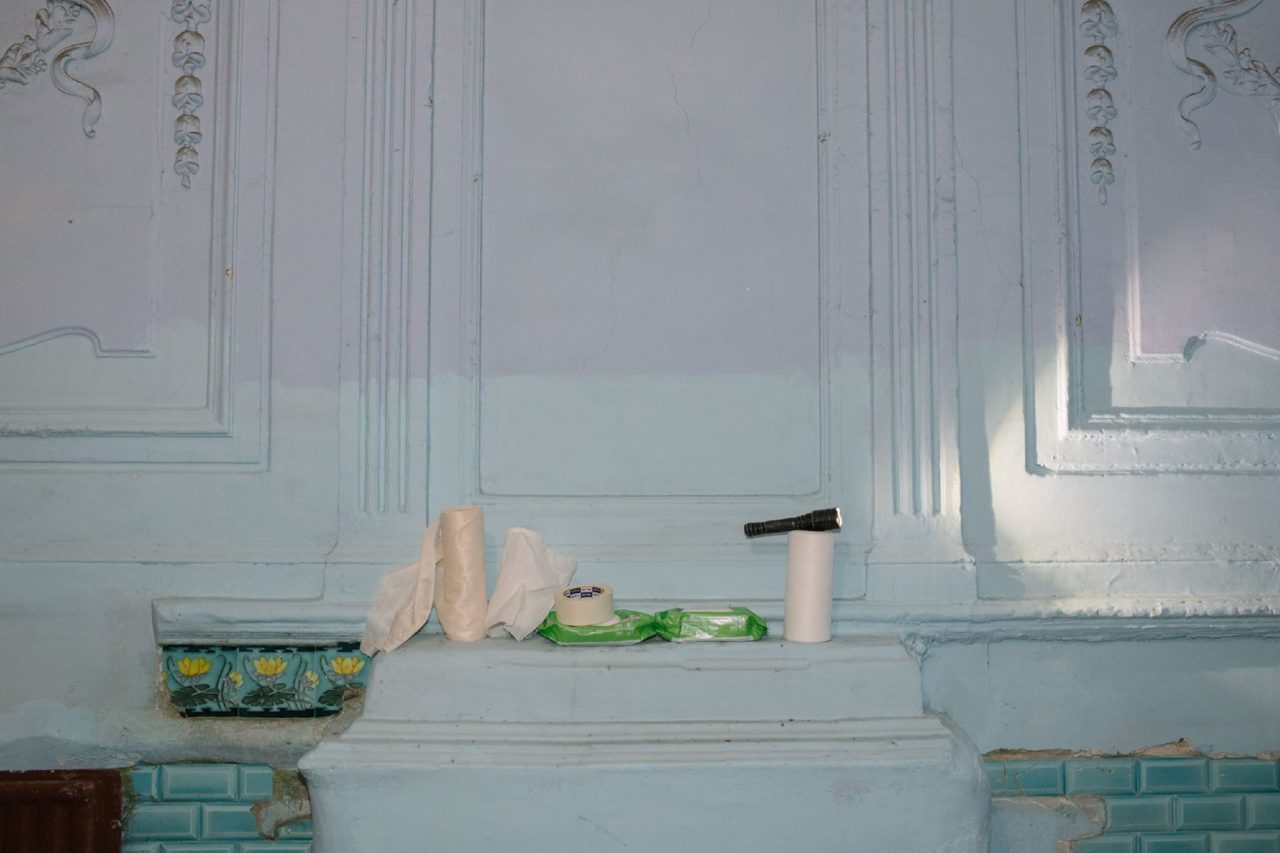 Front Hall on Vasilyevsky Island during restoration photos: Ksenia Ivanova for TD
“To make a restoration with the restoration of lost elements is quite expensive,” adds Kirill Mikhailov, “but now there has been a fashion for an authentic situation, an understanding, a vision of this beauty come. There are more cases when residents themselves pay for the project. ”
“Loyal attitude to imperiality” - as activist Rita Chernova says about this fashion. “If earlier it was believed that this is inaccurate, it is necessary to leve, paint, paste it, so that it was as if they put tiles yesterday, now in a different way,” says Rita. -The old tile, which is one hundred or two years, cannot be perfect, cannot be the same color, without chips, without cracks. This is not European repair. And it's beautiful. "
The material was created with the support of the Fund of Presidential Grants
The material uses links to publications of social networks Instagram and Facebook, as well as their names are mentioned. These web resources belong to Meta Platforms Inc. - It is recognized in Russia as an extremist organization and is prohibited.
The material uses links to publications of social networks Instagram and Facebook, as well as their names are mentioned. These web resources belong to Meta Platforms Inc. - It is recognized in Russia as an extremist organization and is prohibited.
Volunteers Restoration Preservation of cultural heritage