
Translated material
Supreme Court: not only officers, but the state should also compensate for the damage to the families of soldiers brought to suicide
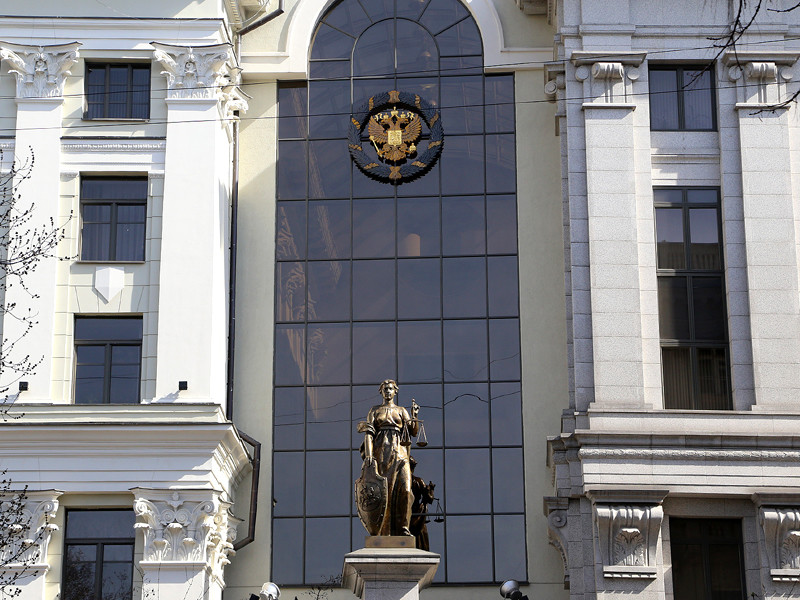
The Supreme Court (Armed Forces) recognized that the state should compensate for moral damage to the families of soldiers who committed suicide in the army. It is reported by Kommersant .
The court considered the cassation appeal of Svetlana Latyuk - the mother of the Soldier Soldier Stanislav Kuzem, who died in the Ussuri military unit. Latyuk wanted the Ministry of Defense to pay moral damage to the family of a deceased soldier.
The courts in the previous instances refused her, believing that a specific officer who mocked the cousem should compensate for the damage.
The Armed Forces recognized that it is the state, and not a specific soldier, to compensate for non -pecuniary damage. The court recalled that the harm caused as a result of illegal actions of officials and other employees of state bodies is reimbursed at the expense of the treasury.
The case was sent for a new consideration to the Ussuri garrison military court. Simultaneously with the decision of the Armed Forces, the European Court of Human Rights (ECHR) Communized Latyuk's complaint.
Stanislav Kuzem was drafted into the army from Magnitogorsk of the Chelyabinsk region in November 2018. And on March 30, 2019, the body of an 18-year-old soldier was found in the forest near the military unit N 39255. According to investigators, Kuzem committed suicide.
SK initiated the case of excess of official powers (paragraphs "A", "B" Part 3 of Article 286 of the Criminal Code of the Russian Federation). Then, after the prosecutor’s verification and the readings of colleagues, another thing was opened - under Part 1 of Art. 110 of the Criminal Code of the Russian Federation ("Bringing a person to suicide or to an attempt on suicide through threats, abuse"). Both affairs united in one production, wrote the news agency "Magsity74" .
According to the colleagues, Stanislav Kuzem performed a large amount of paper work for his bosses. This information was then confirmed by officers. For each mistake, the platoon commander beat Kuzem. The investigation became known at least two or three facts of beatings only for March. In addition, the SLI was tortured with insomnia.
Kuzem's colleagues testified against the 36-year-old commander and provided an audio recording of the conflict with a conscript. On March 29, the officer called the soldier and began to threaten him.
An important role in bringing the guilty to justice was played by the readings of colleagues. “I express my great gratitude to my son’s colleagues for testing, otherwise there would be no criminal case,” said Svetlana Latyuk, the mother of Stanislav.
As a result, senior lieutenant Yevgeny Khomyakov was sentenced to six years in a colony. 2.1 million rubles of compensation were also collected from the military and deprived him of the title of an officer. The military courts argued that the unlawful actions of the convict were not due to the "direct implementation of his combat missions" and he acted "not on the instructions of the command of the military unit."
After the verdict, the family of the deceased soldier filed a lawsuit with a demand for payment of moral damage in the amount of 9 million rubles.
"The tragedy was provoked by the head of the deceased with the connivance of the command, who preferred to turn a blind eye to what was happening," said the lawyer of the victims Alexander Poruk. He considers the decision of the Armed Forces of the Russian Federation a precedent.
Human rights activists note that the current practice of considering criminal cases regarding not only death, but also injuries received by the military is vicious and does not take into account the current norms of the law. “In such cases, it should be enough of Art. 1069 of the Civil Code, which directly says that the state is responsible for the harm caused by officials. But for some reason the courts often considered it differently,” said Anton Shcherbak, coordinator of the rights to the rights of military personnel of St. Petersburg Soldiers' Mothers.