
Translated material
Do not fit - they will put
Why do we believe that confectionery poppy in the country should be prohibited
The Central District Court of Barnaul is preparing to be sentenced to entrepreneur Sergey Serenko, the owner of several rural grocery shops, as well as his two sellers. He is charged with heavy “narcotic” articles of the Criminal Code - smuggling and sales of drugs committed by a group.
Of course, such a major business should be a noticeable milestone in the fight against the drugstation of the country, let's look at it more closely.
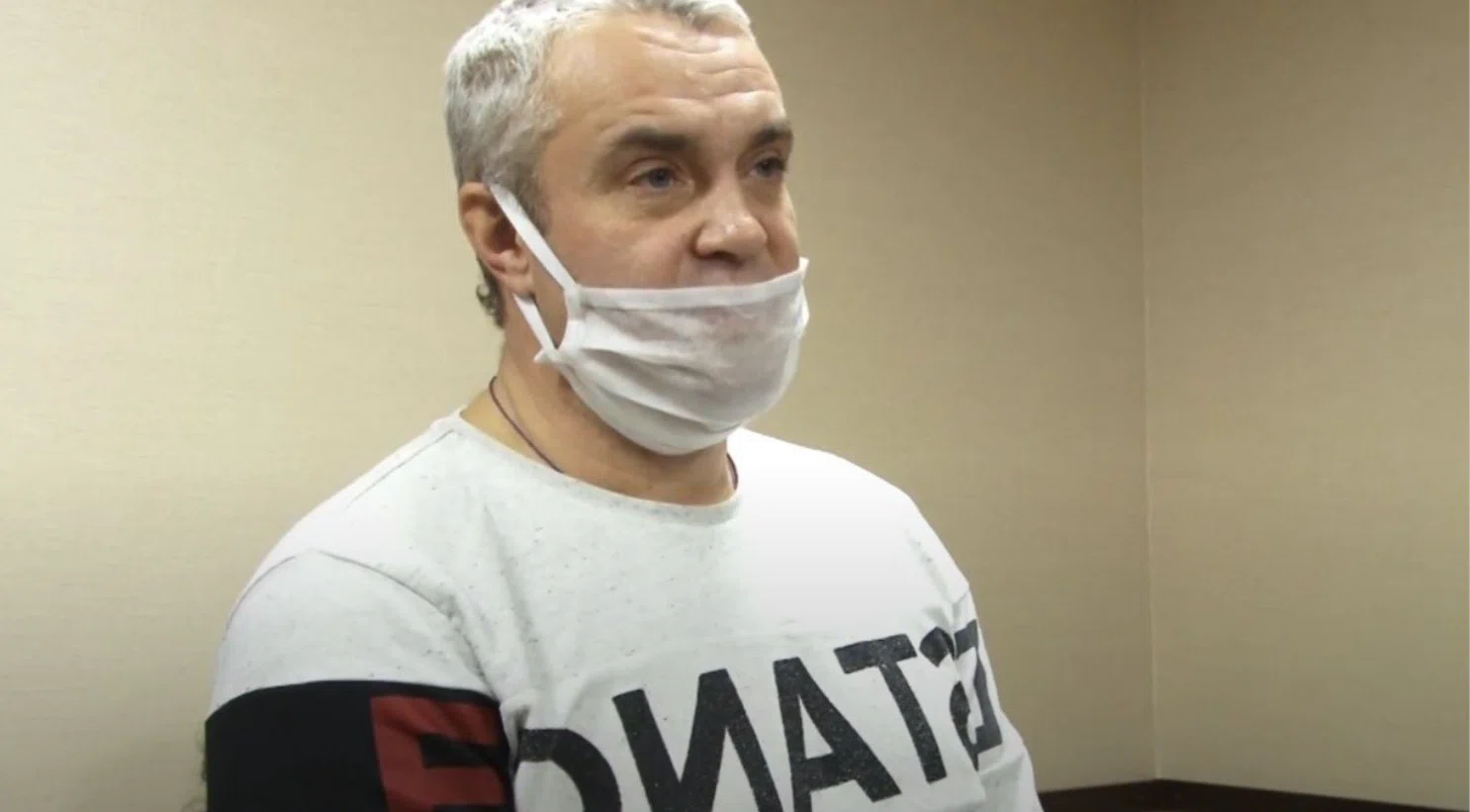
Sergey Serenko had a food business: in several villages of the Altai Territory, he held small grocery shops that traded in Kazakhstani products: sausage, canned food, and grocery products. This is generally a fairly common practice for those places: products from Kazakhstan at a price quite comparable to Russian -made goods are often better. In addition, products from Kazakhstan are simply closer and cheaper to carry than from the same central Russia.
In January 2019, the entrepreneur was detained after the crossing of the Border point "Veseloyarsk". His truck, packed with a Kazakhstan west under the eyeballs, was driven to the site, where they began to unload. Among other products, the police found 272 50-gram packs with confectionery poppy, and a month later, having searched a frequent truck, which stood unprintable for all this time-another 148 packs.
The confectionery poppy in our country is not produced, all demand is closed with imports. In order to bring a non -phase poppy to the country, it is necessary to submit samples from the imported party to the Rosselkhoznadzor. The Rosselkhoznadzor, after checking the samples for compliance with the requirements established in the Russian Federation, allows the batch import - or prohibits. Also, customs can also arrange additional inspections, sometimes it also sends the goods to re -export: it simply returns the supplier as inappropriate to the requirements established in Russia. The supplier is then free to sell this product to some other country, not in all countries such high requirements for the purity of poppy are established.
Packed poppy is also imported into Russia with the condition of its permits.
Why such strictness? The fact is that the plant “MAC”, whose seeds go to confectionery products, are by their nature narcotic, the MAK MAK contain opium alkaloids. There are no milky juice in the grains themselves, but in the process of extracting from the boxes, fragments of boxes, tiny pieces of stems, seeds of other plants, soil particles and other sides can also come to the seeds. The absence of confectionery poppy is strictly regulated by the legislator. Mac manufacturers are cleaned carefully - however, this does not cancel its drug nature. And in your blood, after you eat a bun with poppy seeds, the presence of opium alkaloids will invariably reveal. And, of course, opium alkaloids are always found on poppy grains when they are examined on special equipment. It is often found in such an insignificant quantity that it is impossible to even establish a mass of substance - however, this does not affect the essence of the matter.
Opi Alkaloids in the country are prohibited, and therefore, the Mack, in which they are immanently present,, if desired, easily forms us the builder.
The Mac, who imported Serenko, was purchased from a large and famous Kazakh manufacturer, had all the proper documentation. The examination, subsequently carried out in the framework of the initiated criminal case, showed its absolute compliance with the purification standards established in Russia.
In parallel with the arrest of a truck, at home, two of his saleswriters (one of which had a long time to quit) was a search. One of the saleswomen in the kitchen found a well -founded jar of confectionery poppy, 319 grams - this episode entered the indictment as “preparation for sales”.
The investigation also attracted witnesses typical of such situations: several drug users who confirmed that they managed to make acetylated opium from the poppy supplied by Serenko.
Nobody checked their recipe. As the investigator explained in court, these episodes in the case are described “from the words of drug addicts”. In court meetings, only one witness from among these drug addicts took part as a “classified person”.
The processes similar to this were in great fashion in the 2010s, when the federal drug control service in the country was the main agent for the fight against potion in the country.
Then the department launched the widest campaign for landings of everyone who has at least some kind of concern for the purchase and sale of confectionery poppy. They planted suppliers of this poppy, owners of grocery stores, sellers, storekeepers ... I wrote a lot about these affairs, and I know that by no means the fight against narcoting was the ultimate goal of the FSKN. Often, rummaging deeper in the case, I came across mercantile motifs.
In 2015, the service, which in many delayed such cases in the country, was liquidated. Its functions are redistributed between other law enforcement agencies. And the wave of poppy landings came to naught. The operative of the dissolved FSKN once told me that for everyone else, there was a certain centralized indication: to stop, not to initiate more of these delusional affairs.
The poppy business in Barnaul is the first time when the FSKN’s vicious recipe took the police.
I do not know what this case is specifically inspired, and whether there is a second bottom in it. Serenko himself assumes that in this way his small product company is squeezed by networkers - but to understand the essence of what is happening to us, this does not matter. Another thing is important to us: the acreset, possibly given to law enforcement officers, does not guarantee any protection to people who work with confectionery poppy. Now the police, using all the same casuistic methods as the FSKN, can continue to stamp poppy affairs, which actually have nothing to do with the genuine struggle with drugs.
All attempts by people who suffered from “poppy seeds” to legislatively consolidate the legality of confectionery poppy, stumble upon the wall: this is not interesting to deputies.
Or maybe it’s scary to get into a narcotic field, and it’s hard to understand all this. The only official who fights for convicts on “poppying affairs” is Tatyana Moskalkova, an authorized person for human rights in the Russian Federation. But its point efforts are not enough to disrupt the systematic nature of this practice.
In this situation, it would be more honest to prohibit all this confectionery poppy to the damn mother. And then the “poppy affairs”, excited even by the police, at least customs, would gain legitimacy, and the state’s position on this issue would not look so hypocritical.
Maybe it's time to start the petition?