
Translated material
"Mirror to infringe on the Americans economically." Chronicles of hospitalism
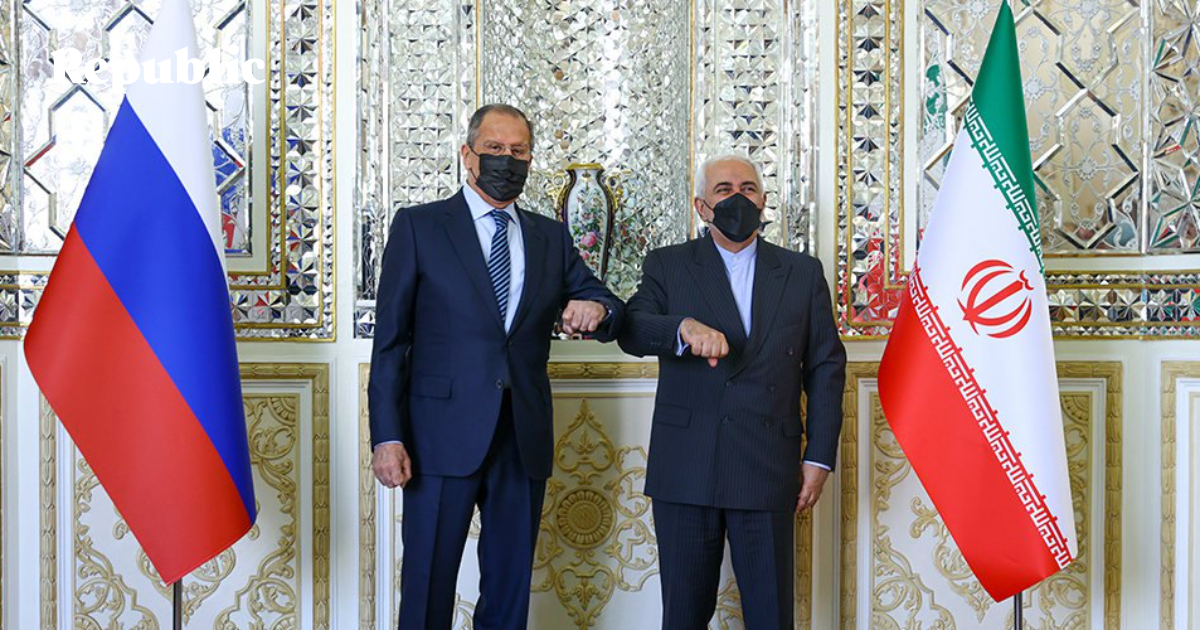
The news background of the past week remained mostly negative. At the same time, its main event should no longer be considered the dynamics of the conflict in Donbas, the risks of the escalation of which are nevertheless high, and American sanctions against the Russian Federation are the first significant sanctions imposed by the administration of Joe Biden. The most painful measure - in comparison with the almost routine expulsion of diplomats and point sanctions against a number of legal entities and individuals - was the restriction on the purchase of US debt issued by the Russian government, the Central Bank and the Ministry of Finance.
However, the devil, as always in details: American institutional investors will soon be forbidden to buy bonds of the Russian Federation only with initial placement - previous emissions and secondary market restrictions are still affected.
“If the United States imposed sanctions on the whole public debt,” summed up the head of Sberbank German Gref, “then these would be sanctions not against the Russian state, but against their own investors. Therefore, the sanctions were introduced only against a new duty that a rather rational move, since otherwise there would be a panic and foreign investors would begin to sell the papers. And for Russian investors, in this case, a good opportunity to buy them with a big discount would have appeared ”( the last remark needs a reservation: the buying out of the Russian state debt of the State Bank and so succeeded. In the February review of the risks of financial markets of the Central Bank, he said that the“ relatively high concentration of investments ”is noted in the OFZ sector, and the share of their largest holder - presumably, presumably Sberbank - accounts for 17.7% of the total ) / Russian banks will be able to replace foreign investors, said the head of VTB Andrei Kostin:. “This is absolutely possible. This is our market, we know it well. Therefore, we do not see large risks, our public finance system is very stable. ”
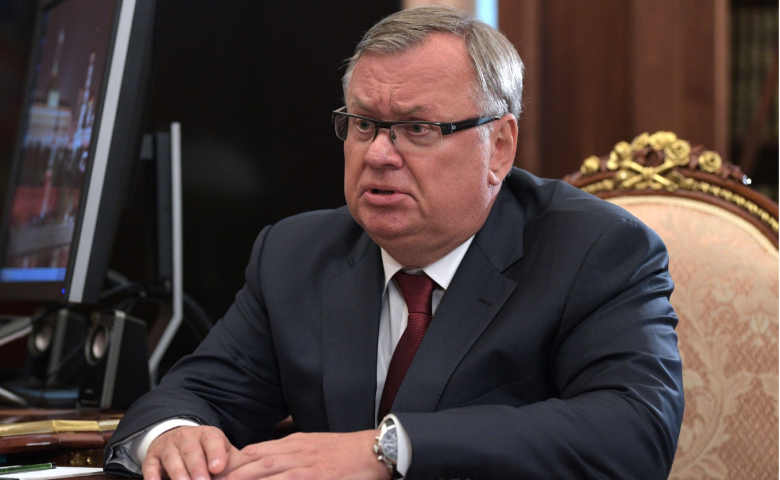 Kremlin.ru
The blow, as expected, turned out to be softer than his previous rhetoric. And the interests of American financial institutions, no matter how the Minister of Finance Anton Siluanov regrets their lost benefit, should not suffer significantly. $ 41 billion, in which the Russian Central Bank estimates the sovereign debt at the disposal of non -residents, The New York Times rightly considered a drop in the sea of global financial markets (for comparison: in the first three months of this year, the US treasury produced a state plan of $ 274 billion). At the same time, the Americans, according to the London Oxford Economics, own only 7% of Russian state debt nominated in rubles.
Of course, sanctions can be expanded on the next round of exacerbation of Russia's relations with the collective West - and in the case of the Kremlin, the probability that this will happen in the next 24 hours, is invariably high, not lower than 50%. As Bloomberg said on Saturday with reference to his sources, in the White House it evaluates the effect of measures taken so that, if necessary, in the future to block the transactions of American financial institutions with ruble OFZ already in the secondary market. In addition, according to Reuters, the US authorities are engaged in investigating the possible ties of dozens of Russian companies with special services designed for several months, but having the ultimate goal of giving the Ministry of Trade more information for further actions (a month ago the US Trada announced the intention to expand export in the Russian Federation in order to “prevent Russian technologies that may be used for its malicious chemical activity in the field of chemical weapons ").
However, it is difficult to say that the main fact of risk is here: the determination of the US leadership to increase sanctions pressure on Russia or the unpredictability of the Russian side in the development of retaliatory measures, which, according to the current tradition, promise to hit primarily in Russian markets, business and consumers. In his last righteous anger, a statement of the Russian Ministry of Foreign Affairs emphasized that not the entire arsenal of counter -sanctions used. Restrictions in the work of American diplomasses are just flowers:
“These steps are only part of the capabilities at our disposal <...> not a single sanctions“ wave ”will remain unpunished. <...> There are other options. Of course, we understand the limitations of our capabilities to mirror “infringing” the Americans economically. But a certain resource is present in this regard, and it will also be involved if Washington prefer to move along the sanctions spiral. ”
The head of the department, Sergei Lavrov, in turn, added that the Russian Federation “has the opportunity to take measures for American business,” and while she holds them “in reserve”:
“For obvious reasons, there are no comparable levers of influence on the United States of this scale, although this scale is actually our specialists are evaluated as absolutely on the shoulder of our economy, and I think it will be so.”
What are we talking about? What is the "scale"? What is the "certain resource"? What kind of "painful measures"? From official statements, this is strongly impossible to understand. On the other hand, at our disposal an extensive background of the issue.
Three years ago, we recall, the State Duma plunged with the head into the development of a bill on the response actions "on the anti -Russian policy of the United States and their allies." The ban on the import of American services and goods was discussed: from hi-tech to whiskey, as well as restriction of cooperation in high-tech industries-in particular, aircraft industry. Boeing was expected to be one of the first companies in the United States that sounded in the warlike speeches of Russian parliamentarians. For example, Senator Sergei Ryabukhin noted the dependence of the Boeing technological cycle on Russian titanium, covering a third of its needs in metal:
“If we do not supply the titanium, then they [in Boeing] will be forced to stop the conveyors until the concern finds a new partner.”
The Ural supplier of the aircraft construction corporation immediately reacted to these words. “A violation of cooperative ties, unfulfilled business companies can take our company out of a dynamically developing titanium market for a long time,” the VSMPO -Avisma, exporting half of their products in the United States. Airoflot, which actively purchases Boeing in the park of its airlines, was also alarmed.
First Deputy Chairman of the Committee of the SF Budget and Financial Markets Sergey Ryabukhin / Council.gov.ru
The idea was also expressed in the consumer market - alcohol, tobacco, food and catering under American brands. “Why can't we impose sanctions on the purchase of Pepsico, Coca-Cola, McDonald's in Russia? These are American companies, ” they were perplexed in the State Duma.
After unusually long and hot discussions, the bill was adopted as a result, but in its final version there was no “hawk” assumptions, including the most scandalous ones, to limit the import of drugs from the United States and prohibit the work of foreign experts in Russia. The law did not apply to vital goods whose analogues are not produced in Russia, as well as to goods imported by citizens for personal use. “Generally common sense,” Anatoly Chubais appreciated the result, at that time the head of Rusnano.
Meanwhile, we see how the feverish search for the potential vulnerability of the Americans in the Russian economy - the incommensurably smaller size, structurally primitive and imported - again bring antisancation rhetoric to a new circle. What options here are possible in principle? What to wait? In fresh chronicles of hospitalism :
Gosborne. "Refusal of the use of international payment systems controlled by the West"
Subscribe to read the whole
Make a subscription Redefine.media to read Republic
Subscribe [you can pay for a Russian or foreign card. The subscription is extended automatically. You can unsubscribe at any time.]
Where are the money subscribers going