
Translated material
RAS: The number of scientists leaving Russia has grown five times since 2012
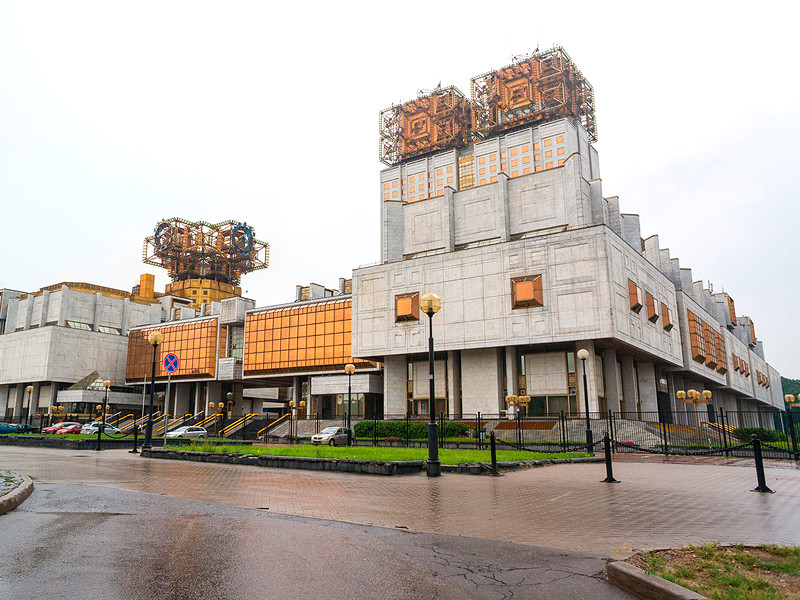
The number of scientists and highly qualified specialists leaving Russia has increased five times since 2012. This was stated by the chief scientist of the Russian Academy of Sciences (RAS) Nikolai Dolgushkin during the general meeting of the Academy.
According to him, the number of specialists annually went abroad increased from 14 thousand in 2012 to almost 70 thousand people at present.
"Russia today is the only one of the developed countries where several decades in a row are reducing the number of scientists employed in the research field. Since 1990, when Russia has occupied first place in the world in this indicator, the number of researchers has decreased from 992 thousand to 348 thousand. That is, by 65%, we lost two -thirds over three decades," Dolgushkin said.
If three years ago Russia was in fourth place in the world in terms of the number of researchers, today it is in sixth place in this indicator, said the chief scientific secretary of the Russian Academy of Sciences. According to him, during this time the number of researchers in the country decreased by 30 thousand people.
“Over the years, we had to increase the number of researchers by 35 thousand. It turned out exactly the opposite,” Dolgushkin said. As a result, Russia cannot fulfill the indicators of the National Project "Science", which set the task of increasing the number of specialists, Kommersant writes. Among the risks for Russian scientists, Dolgushkin called the lack of financing of science and backward infrastructure. The most important risk for the development of science was called the low level of "personnel, intellectual potential."
According to the goals of the National Project "Science", the number of scientists in Russia for three years was supposed to increase by 35 thousand people.
In February, President Vladimir Putin asked to deal with the salaries of scientists in the regions. One of their scientists from Novosibirsk Anastasia Proskurina complained to the head of state that her salary is 25 thousand rubles, and along with the allowances she receives 32 thousand rubles. The President demanded from the Minister of Finance and the head of the Ministry of Education and Science to check the execution of his decree on bringing the salaries of scientists up to 200% of the average in the region. As a result, the security forces, who were interested in, “who taught” her to make an unplanned statement about problems in science, came to Proskurina. Investigators brought a woman to tears.
The general meeting of members of the Russian Academy of Sciences (RAS) is held on April 20-21 in a mixed online and offline format.
The fact that Russian fundamental science is in a catastrophic state, scientists warned the country's leadership 12 years ago, when the socio-economic and political situation looked more prosperous. "The regression continues, the scale and habitat of the danger of this process is underestimated. The level of financing of Russian science contrasts sharply with the relevant indicators of developed countries. A massive outflow of scientists abroad has been and remains a huge problem for Russia," the open letter addressed to the then President of the Russian Federation Dmitry Medvedev said.
In February 2017, Prime Minister Dmitry Medvedev at the Sochi Investment Forum called the unacceptable “intellect export” from Russia: “Today we export oil, gas and, unfortunately, intelligence. But if the Russian budget receives money in the first two positions, then the intelligence leaves the country and freely and for free.”
As the reasons for “pushing” Russians from the country, most of the participants in one of the surveys called “a noticeable change in the economic situation after 2014, leading to difficulties in the labor market, reducing salaries, reducing the opportunities for career development”. At the same time, for a quarter of those who went to the first place among such factors, "the political situation, disappointment after the 2012 elections and especially the events of 2014,". Recall that in 2014, the Ukrainian Crimea was attached to Russia and hostilities began in the Donbass with the participation of pro -Russian armed groups. The international community accused Russia of pursuing an aggressive policy, after which the process of gradual isolation of the Russian Federation and the introduction of more and more stringent sanctions against it began.