Date
Author
Татьяна Васильчук, Дарья Козлова
Source

Preserved copy
Translated material
Magistral payments
What money did Putin give to people? Economists comment on
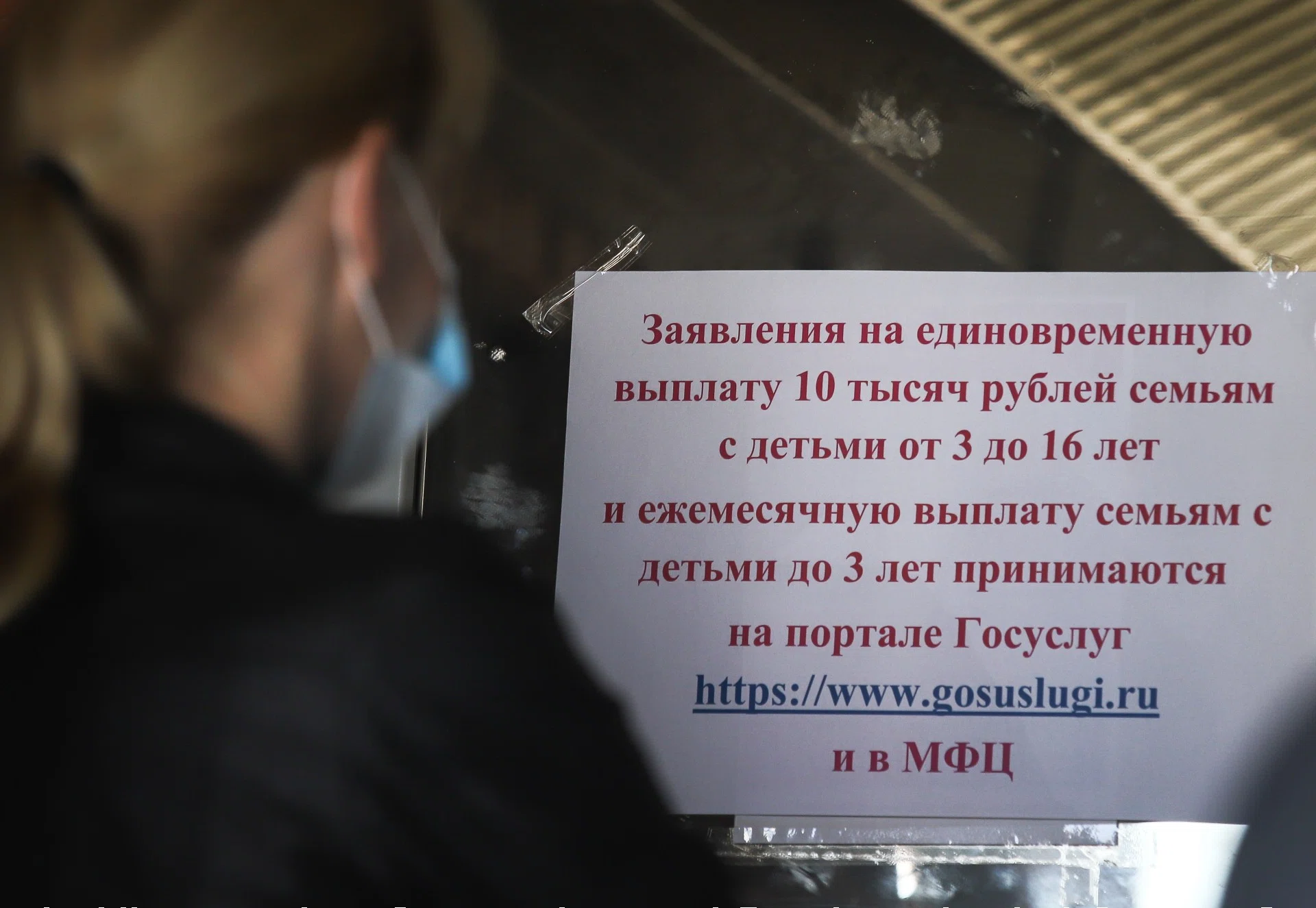
In the message to the Federal Assembly, Vladimir Putin announced new anti -crisis measures. The President, in particular, announced a number of payments: needing pregnant women, children from single -parent families and families with school -age children. The last, by the way, 10 thousand rubles will arrive in August - a month before the start of the new school year and elections to the State Duma. New social support measures in two years will cost a budget of 400 billion rubles, after the message the Minister of Finance Anton Siluanov said. In addition, during the speech, the president decided to replace commercial debts to regions by budget loans with a maturity of until 2029, and also announced the extension of the Moscow -Kazan highway to Yekaterinburg. New correspondents talked with experts about how large the volume of the proposed assistance and whether it can stabilize the economic situation in the country.
Evgeny Gontmamer
Economist, member of the expert group "European Dialog"
- The message to the Federal Assembly cannot be called extraordinary. The proposed new [social] measures are very point, not very large for money. In any case, I welcome the idea to give out money to people. Nevertheless, during the message, Vladimir Putin did not say much of what they expected from him: there were no announcements of workers' pensioners, instead of the expected poverty program, Putin listed chaotic manuals, which are a lot at the regional and federal level.
About new infrastructure projects:
- The main news based on the results of the message is the decision to disperse the national welfare fund and other government reserves for a massive investment in the infrastructure. [Vladimir Putin listed] the construction of the century - the road route to Yekaterinburg, the Northern Way in the Arctic. On the one hand, this is not bad, because in infrastructure we are very far behind the rest of the countries. On the other hand, it turns out that the state here is the only investor. [In the message] there was a fragment about business, and
Vladimir Putin said that the business must be encouraged so that the dividends remain in Russia and invest, and not displayed somewhere abroad. However, this is a duty statement that the president is repeated not the first time.
[In fact, the proposal for the development of infrastructure means] that in the coming years in Russia there will be trillions of rubles aimed at [such large -scale] construction sites. How can the state be able to realize this correctly, effectively and without theft? A classic example is the Vostochny cosmodrome, where the state also invests tremendous money. A wide field for all abuse opens here. The minus of state investments is that they always have a very powerful temptation of corruption, since the contractors are still private. The game will begin: who will receive the money and who is not.
On the replacement of commercial debt of regions exceeding 25% of its own income, to budget loans with maturity until 2029:
- The regions facilitated the burden. In general, this is also positive, since they have tremendous debts, most of the regions are very zerred, including commercial loans. As I understand it, the state takes on commercial loans, [that is,] they will be replaced by budget loans. Here, of course, it is necessary to figure out where such a tremendous debt came from the regions and whether it will grow further, despite the replacement. There, apparently, there are some deep reasons why the regions in this way are sitting in debt.
About whether new social payments and benefits can be considered by “helicopters”, how year ago payments for children became :
- If we consider “helicopter money” a model in which last year they paid money to all families with children, now there was no such [model of “helicopter money”]. The only mention where such a model is used is a promise to pay families with school age for 10 thousand rubles before September first. The rest of the manuals are very cunning, for example, the same pregnant women will be paid benefits if they are registered. In addition, they should be from poor families. I think that in the coming years there will be no [mass assistance for everyone], because Putin, apparently, is sure that the people were able to adapt and survive. Therefore, now it is better to massage money for infrastructure.
Alexandra Suslin
Head of the Fiscal Policy Department of the Economic Expert Group
For assistance to regions with a high level of commercial debt:
- Any delay is help now, on the one hand, and on the other hand, it is the transfer of a debt load for future periods. As an emergency measure is good. It is clear that the regions have no resources in order to extinguish debts. And it is clear that in a crisis they are unlikely to appear so soon. As I understand it, the government chooses between different forms of budget support of the regions.
And instead of direct transfers that never need to be returned at all, chooses this form-"We will help you now, but you will return us later." This is done so that the regions do not relax,
So that there are no incorrect incentives. Because it often happens like this: the region climbed into debt, the governor was scolded, but at the same time the federal center has repaid everything, and you can live on. In order for representatives of the region to have responsibility and a long-term look-help will be, but this help involves some kind of return.
In general, the problem of debts of the region cannot be solved only in this way. The share of the debts of the regions that arose not through the fault of the region is great. And then we move on to the issue of the so -called “independence”, or budget federalism in Russia, because it very often happens that the region gets into debt, because the federal center imposes obligations on expenses. Suppose the federal government decided that the regions should increase salaries to doctors. And the region has no money for this. But he cannot disobey the federal center. And then the region has a choice: either he enters into some other expenses, or he gets into debt.
On the provision of infrastructure budget loans to the regions with a maturity of 15 years and a rate of not more than 3% per annum:
- The construction of infrastructure is a step in favor of the exit from the crisis and intra -regional development. As I understand it, such a measure is going to stimulate growth in the regions. But growth costs are very rarely equal to growth. We spent on the development of infrastructure - where is the growth? In order for it to be, a certain number of conditions must be met: we must not only finance or credit the construction of important facilities, but also make this money to reach the addressee. If funds are allocated for the construction of the road, they should go to the construction volume. It is important that these expenses fall into fertile soil.
The fact that new social support measures over 2 years will cost a budget of 400 billion rubles [according to the Minister of Finance Anton Siluanov]:
- This is feasible. If the price of oil does not fall, no conflicts will begin, there will be no new sanctions and the economy will slowly begin to get out - then, in principle, 400 billion rubles in two years - this is feasible for our budget. Even when compared with those crazy trillions that stand out on national projects.
Lilia Ovcharova
Director of the Institute of Social Policy of the Higher School
On the social support of the population, in particular, the decision to support incomplete families and needy pregnant women:
- The message is more specific than in previous years. It does not say simply “pay attention to”, it is distinguished by specific algorithms of action.
During the discussion in the Council on Trustees in the Social Sphere, I voiced these support measures. Understructed families and pregnant women with low income are the most vulnerable categories. Therefore, support measures against these population groups are simply necessary to accept if the country solves the problems of poverty reduction.
The measure about the payment of 10 thousand rubles for school and kindergarten is very correct. We have strongly announced her for the past 10 years. Because whenever the first of September, instead of turning into an important and positive event in the life of the child and the family, it is overshadowed (especially for low income families) with the understanding that gathering a child to school is very expensive. Therefore, I consider this as a subsidy by the beginning of the school year. This is one of the measures that experts have been stating for a long time, and for example, I am very glad that she finally found a response from politicians.
By the way, this payment in August is also a tool to combat poverty. All these measures to combat her are quite targeted and addressed to the poorest segments of the population.
Tatyana Maleva
Director of the Institute of Social Analysis and Forecasting of the RANEPA
On the social support of the population, in particular the decision to support incomplete families. Children from such families aged 8 to 16 years inclusive will be assigned a monthly payment of 5650 rubles:
- Most of the low -income families in Russia are families with children. Everything that is done in relation to children is fair. On the other hand, these are far from the only poverty representatives that exist in Russia. In Russia there are poor people with disabilities, unemployed and people with a salary that cannot be fed as a family. There may not be children, or children can be more than sixteen. So the further development of this topic should apply to the entire population. It is necessary to introduce a single need for need, regardless of the demographic composition of the family. These measures are not much different from last year’s payments, except that among payments. So there is a movement in terms of social support. However, there is no understanding that the whole country cannot only be kept on benefits. The situation in which we must pay all benefits to all families with children is abnormal. It is right that parents could earn on themselves and their children. All social events of this plan are derivatives from a dysfunctional situation in the labor market. She looks safe in terms of unemployment, which continues to fall. However, the situation is dysfunctional in terms of record low wages.