
Translated material
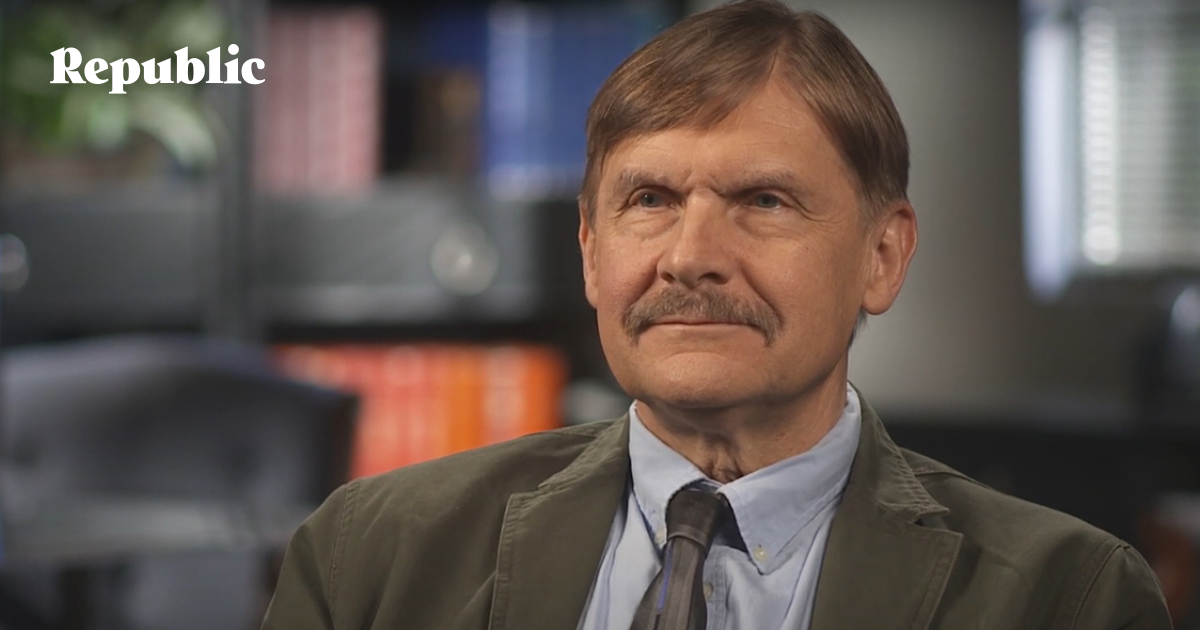
Konstantin Chumakov: “Even if a person was ill with Covid-19, he still needs to get involved. The immune response to the vaccine is better and more durable than the disease itself. "
For six months, mass vaccination from the Covid-19 has been going on around the world. The world has been polarized: some people dream of getting used to as soon as possible, others are afraid of vaccines and campaigning others to refrain from vaccination. But everyone has practical questions about the safety of vaccines, about the duration of their actions, about which vaccines are better, whether the vaccines can be vaccinated and, finally, how substantiated vaccine skepticism is.
In order to get answers to these and many other practical questions, the scientific correspondent of Republic Evgeny Kandiano took an interview with the leading world specialist in Konstantin Chumakov , the director of the Center for the Global Virological Network, the University of George Washington and the WHO Counselor.
-Covid-19 vaccines seem to be a completely new generation of vaccines. How was their development carried out? Was it difficult?
- Suddenly it turned out that it was easier to develop a vaccine from coronavirus than scientists suggested, and many of their early fears did not materialize. Many different companies around the world immediately took up the development, using various approaches, and almost everyone turned out good vaccines. Some of them have almost one hundred percent efficiency, others have the effectiveness lower, but they also work. This is an unexpected and very pleasant result.
Vaccines against coronavirus infection SARS-COV-2 can really be called a new generation of vaccines. The developers, however, did not create them from scratch, work in this direction has been underway for many years. These vaccines do not use a complete virus, but only a certain protein called the antigen on which protective immunity occurs, in this case the so -called coronavirus spike. With this spike, coronavirus penetrates into the human cage, therefore it is considered a necessary element and characteristic feature of this pathogen. Vaccines based on purified antigens were before, and the novelty of today's vaccines is that instead of this, only information is delivered to the protein in the body of the vaccinated person about how to make it - genes or areas of RNA that encode this protein. We can say that these are “make yourself” vaccines - instructions are simply delivered to the body, according to which the desired protein is synthesized already on the spot.
The first type of such vaccines is vector . They use the protein of the spike of coronavirus, which is inserted into any harmless carrier virus, for example, into the adenovirus of a person or animal. On this principle, the "satellite V", the vaccines of ASTRA ZENECA and Janssen (included in the huge Johnson & Johnson) corporation are based.
The second type of such vaccines is MRNC-vaccines . They use RNA areas that encode the same coronavirus spike, but it is not inserted into the carrier virus, but simply enclosed in a lipid nanoparticles. MRNA molecules are intermediaries between our genes and proteins, which are encoded in these genes and which can be called bricks of any living organism. For protein synthesis, the information first corresponds from DNA to MRNA, and the protein is already on the latter. MRNC-vaccines include Moderna and Biontech/Pfizer vaccines.
-Among the anticoronavirus vaccines there is one that is not related to vector nor to MRNC-vaccines. This is the Russian peptide vaccine "Epivaccoron". She uses not the full protein of the spike of coronavirus, but its fragments - peptides. However, its effectiveness is in doubt, and official information about clinical studies on this vaccine has not yet been published. Can you comment on this?
- I would not in a hurry to call this peptide drug a vaccine, because its effectiveness has not yet been proven.
Subscribe to read the whole
Make a subscription Redefine.media to read Republic
Subscribe [you can pay for a Russian or foreign card. The subscription is extended automatically. You can unsubscribe at any time.]
Where are the money subscribers going