
Translated material
Save, save, die
The STORYTEL service was released the second and final season of the audio -series Dmitry Glukhovsky “Post. Save yourself and save "
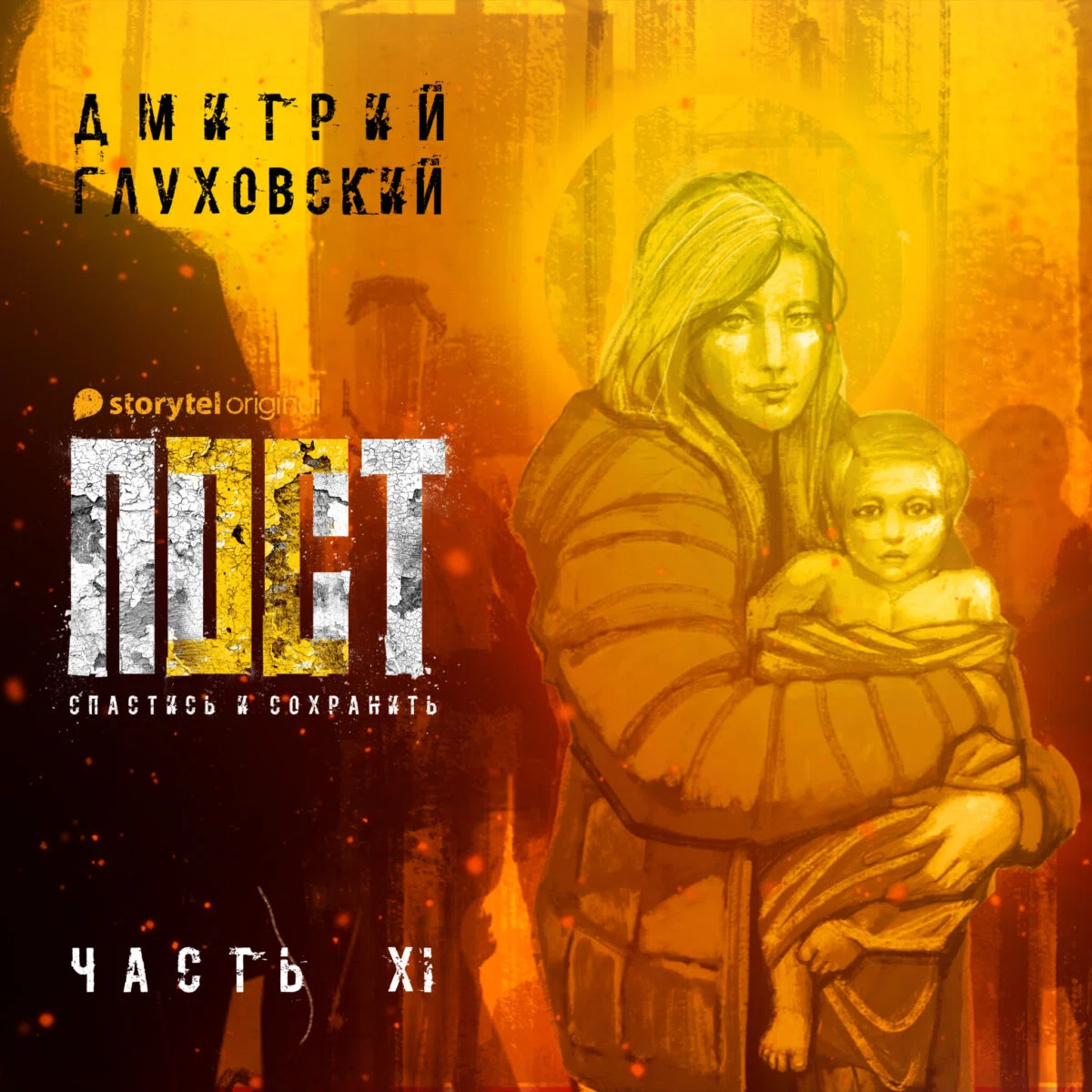
Three rings are boulevard, garden and border along the poisoned Volga - the Lord of the Moscow Empire, the rest - service or death. How the bloodlock sang, "the near future, everything as you asked." After the Civil War of the Russian Federation, they reduced to the Moscow Empire, the farthest line - a guard post on the site of Yaroslavl, under it - a great Russian river, full of poison, followed by unknown Russia. After this war, it seems, there are no veterans. There are rumors that after the use of secret weapons, almost the entire population of non-Moscow went crazy, but the official position of the authorities-we won the rebels, we need to isolate from the outside world, not only from the rotting West, but also from the traitors within old Russia. In the “post”, Glukhovsky represents what “beautiful Russia of the future” can be if the state, obsessed with the restoration, bureaucracy and the idea of the “Russian world”, is engaged in the project. In all the novels of Glukhovsky, the heroes want to “reboot”, to live in a new, different, more friendly world, but the post-apocalyptic space does not tolerate hope.
It is sometimes useful to imagine how the state dies in a single country.
Dmitry Glukhovsky from his first novel, the Metro universe, began to criticize the “State Services” at all levels. In the “text”, the Golunov case and the crisis in relations between the police and society predicted, in the recent series “Topi” showed that this is not a life in Moscow - the capital - the dumb part of Russia, and real adventures begin far beyond the Moscow Ring Road.
Glukhovsky always guesses when to release a new idea. The first part of the “post” came out in the summer before the beginning of the pandemic, and the second - in the spring of this year, when the semi -wiser Russia is waiting for the end of the covid misfortune.
In the modern Russian literature of recent years, men are increasingly being weak, spineless creatures worthy of pity and oblivion - look at the heroes of Vodolazkin or Salnikov. Glukhovsky, flirting with a female man, first chose the main character of his book of women. Yes, they will be beaten, raped, they will not be believed. But it is they who are the longest that can maintain the mind and opportunity, knowing the truth about the disaster, to live on.
However, women in the Moscow Empire do not solve anything. In the “Beautiful Russia of the Future”, Glukhovsky fantasizes that, when transition from conditionally election power to dynastic rule with the holy king, who “saved” the country from the rebels, and the hereditary bureaucracy. The only political program in this state is the course on the deaf restoration of Great Russia, from which Sorokin, Cossacks, cardboard priests, depraved nobles, nesting in the house on the embankment, and to unconscious, who submitted Billy Ailish and look at the telephone, who fled from the “Oprich.” Time and history in this Russia somehow did not take root. Folklore, Cossack songs performed by Aida Garifullina and the Omut Quartet choir also help. As a result, the picture is no longer terrible (that we did not see how people are torn to pieces), but dreary. More precisely about this, but for another reason Andrei Zvyagintsev recently said. The director of Leviathan feels the “lack of a state”. As a believer, God -state can experience, so secular - abandonment of the main service created by society for a person, but at the stage of centuries -old operation, everything went wrong. The “post” has many Easter Easterks for the inhabitants of modern Russia, but the main one is the metaphor “deafness”. In the series, the king, the avatar of the state, does not want to hear the truth about his father and what is happening at the borders of his empire. At the same time, the “secret weapon” in this world is striking in the ear, and those who voluntarily shake can be saved. Contradiction? No.
Salvation in the "post" is the death of the empire, life in the world without a king and state secrets.
And how else, if not deaf, to name today's relations between Russia and the rest of the world, the presidential administration and flickering civil society?
All the tags of the “Russian world” gathered in the “post”: banners and ostentatious faith, closeness from the big world and knowledge of what is happening in your country. Not to mention the fact that in the Moscow Empire there are almost no media, except for the telephone connection of the people with the secret police familiar in the 20th century. A benevolent world in which nothing happens. Only restoration.