
Translated material
And leave your oil for yourself
In the world, the transition to green energy began unnoticed by Russia
For the next 20 years, the future of the Russian economy can be described in one phrase: "Horror, but not horror-uzhas."
First, let's figure out why still “horror”. The Russian economy, as you know, is built on the export of natural resources mined in Russia, primarily hydrocarbons: oil, gas, coal and their primary processing products.
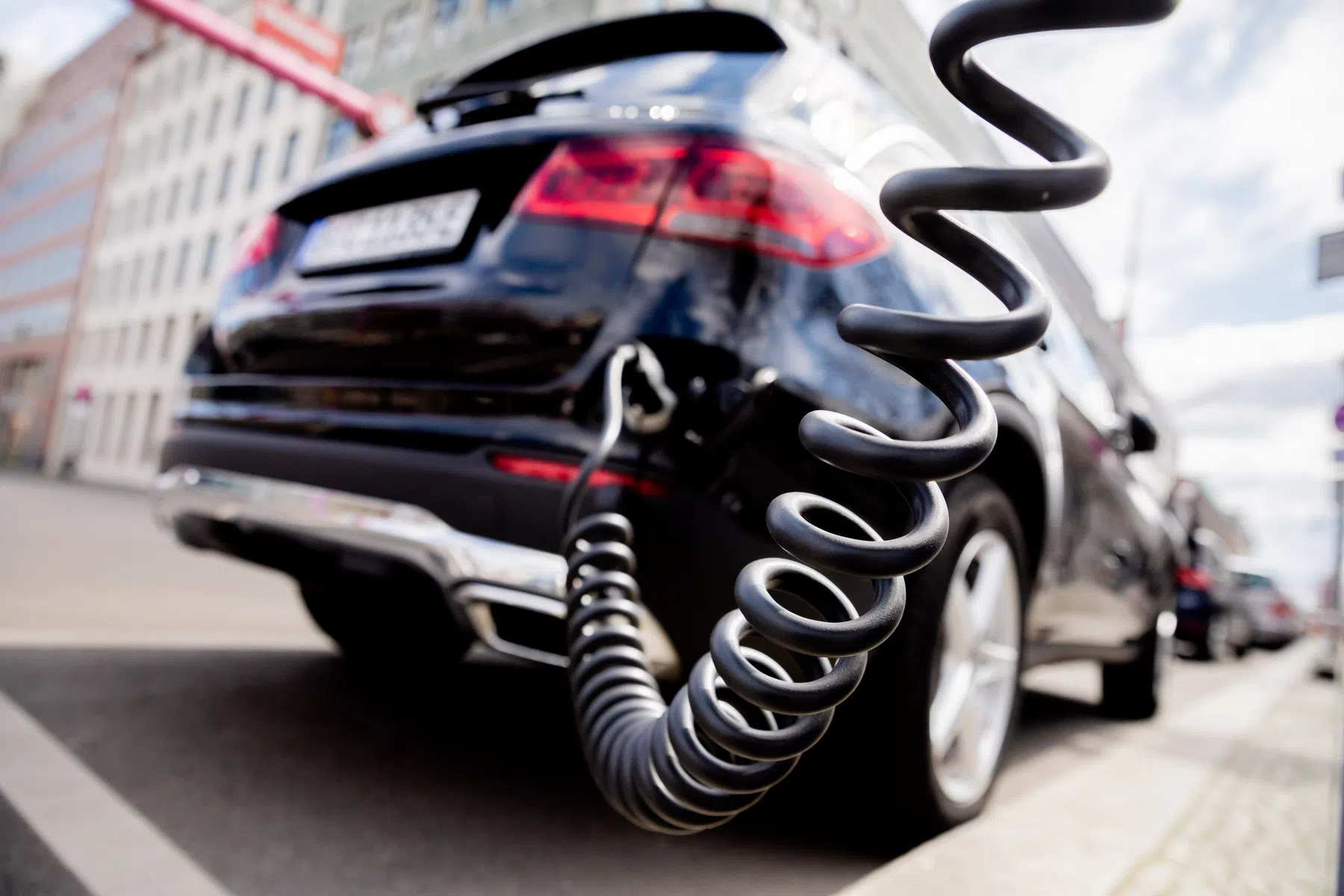
And this export is under the blow of green technologies: solar and wind electrogeviation (and heat generation, by the way, too), as well as the transition of the world fleet to an electric motor associated with the refusal of gasoline and the internal combustion engine. In this area, truly dramatic, albeit in advance in advance, occur changes.
The world in general - unfortunately, is inconspicuous for observers from Russia - is changing rapidly.
In 2020, in the UK VIE, electricity developed more than power plants on fossil fuel: the share of renewable reinforced concrete amounted to 43%, and fossil fuel - 38.5% (the rest is atomic energy).
In the same 2020, in Germany (the fourth economy of the world), only more electricity was developed on the basis of the sun and wind than on the basis of coal, gas and oil: 37.4% gave renewals, 37.3% - fossil fuel.
For the fourth year, a powerful campaign against plastic has been going on in the world, it is forbidden to use disposable products from it, and this is another 8% of global oil production. The European Parliament on March 10 voted for the introduction of a cross -border carbon tax on imports.
The fact is that the political class of developed countries cannot significantly increase the standard of living of its electorate: with an average salary in the United States, more than $ 4033 per month and € 3975 in Germany (before taxes), the population lives and lives quite well.
What remains with politicians? Correctly, improve the quality of life. Hence such attention to ecology, the struggle for which not only helps to improve the quality of life, but also is a new long -term engine of the world economy.
It also ralves around politicians and large groups of voters - and, which is important, on a long -term basis. In addition, reducing their dependence on the import of energy carriers, developed countries strengthen their sovereignty and increase their influence on oil and gas exporters.
After all, it is one thing when the same EU acquires 30% of the gas consumed from Russia, and quite another when only 10-15%. In the second case, Europeans dictate the conditions, threatening to replace Russia with another supplier - the benefit of the infrastructure for receiving LNG is hidden and 3/4 is idle, and large manufacturers of LNG in the world are at least three: the USA, Qatar and Australia. And the first two are torn to the European market.
In general, the “green revolution” is not a whim, but a transformation justified at the state, political and economic levels.
It is no coincidence that “green reform” is the main work of Biden’s presidency, his main heritage, what he will go down with history. The new US administration, as promised, introduced an “infrastructure plan” to Congress, which provides for $ 440 billion of state investments to the USA's refusal from internal combustion:
$ 174 billion in electric cars,
$ 100 billion in the mains,
$ 165 billion in the creation of a national network of electrified railways (in the USA 80% of all goods is transported by vehicles, the remaining 20% - diesel locomotives).
The Biden plan provides for the construction of 500 thousand public points for electric vehicles at the public account. This is enough to transfer half the giant fleet of the United States to the electric motor. The second half of the problem will take on a private business.
That is, a nationwide network of charging stations for electric vehicles will appear in the USA.
Moreover: at the end of March, more than 70 democrats of the House of US representatives, headed by the representative of Doris Matsui, called on Biden to establish strict emissions that “guarantee that 60% of the new passenger and trucks sold will have zero emissions by 2030.” At the same time, ten US senators, led by Democrat Edward, called on Biden to "set a date to which new sales of fossil fuel cars will completely stop."
Such is the mood in the Democratic Party, which at least for almost two years will control both the executive and legislative branches of the federal authorities of the United States. And no next administration, whether it is republican or democratic, will dare to cancel innovations, putting a cross on almost a half -trillion of state investment dollars.
And on the investments of American car concerns in updating production capacities in order to transition from ICE to an electric motor, which is in full swing. The “General Motors and Ford” has already been announced about their rejection of the internal combustion engine.
The last of the American “big three” automakers - “Chrysler” - will be forced to do this, because his new controlling shareholder, PSA Group, along with the German “Volkswagen” and “Tesla” Ilona Mask, is one of the three world leaders in the production of cars with an electric motor. Actually, the application for the transition to the production of electric vehicles was already in a press release on the creation of a new global super giant, Stellantis, which, in addition to Peugeot, Citroen and Kraisler, also includes the Italian Fiat (so it is not for long Italia to be issued from the total mass of transitions to the electric motor).
In 2024, the share of electric vehicles in the general world car costs will be significantly different from 2016 and even 2020, since 77 countries have already officially approved the goal of zero emission by 2050, which requires a ban on the sale of new vehicles with the ICE from 2040, and more really since 2035.
There will be no turning back in this matter, like the fact that Donald Trump tried to crank up a couple of years ago. And the date of the approval of the “green reform” by the US Congress can be officially considered the beginning of the end of the Russian carbon mineries.
Moreover, it is highly likely that already according to the results of the September elections to the Bundestag in the German parliament, a coalition of the Green and the usual CDU/CSS, which one of the first affairs will take a ban on new cars with the internal combustion engine in 2030–2035. The appearance in Germany, on the largest car market of the continent, a similar ban will put the final cross on the prospects of traditional cars.
A similar ban has already been introduced in England since 2030, in France and Spain-from 2040, in Denmark, the Netherlands, Sweden and Ireland-from 2030, and in Norway it will even enter into force in the very short-lived year. By the way, about Norway: four years before the cessation of sales of new cars with the ICE, the share of a car with a “clean” ICE fell to 9% in total automobiles, 56% of which are given by “clean” electric cars, the rest - hybrids.
Such, most likely, is the future of all car markets: sales of cars with ICEs practically stop several years before the entry into force of the official ban.
On the introduction of a ban on sale since the mid-2030s. The authorities of China and Japan declared cars with the "pure" ICE. In the EU in 2020, a real electric revolution began: in December, the share of electric vehicles and connected hybrids in total automobiles was a record 23%, in general - 11%in the year. And with the disappearance of the internal combustion engine, the demand for 44% of oil produced in the world disappears.
All of the above somewhere in the first half of the 2030s. guaranteed to lead the Russian raw material economy, and with it the country's population, to collapse, comparable in its strength and depth with the collapse of the “socialist management model” in 1990-1992. But there is one but, about which I will talk about in the continuation of this material.