
Translated material
Memory of sandstone
The book of the International Buker Prize included the book of Maria Stepanova
Prior to this, Russian authors fell into this list only twice - Lyudmila Ulitskaya (2009) and Vladimir Sorokin (2013).
The prize has existed since 2005 and has been awarded to the works of non -ang -speaking authors translated into English. In addition to our compatriot, the French Eric Vuyar and David Diop, Argentinka Marian Enrixes, Chilean Benjamen Labatut and the Danish woman Olga Ravon were included in the short list.
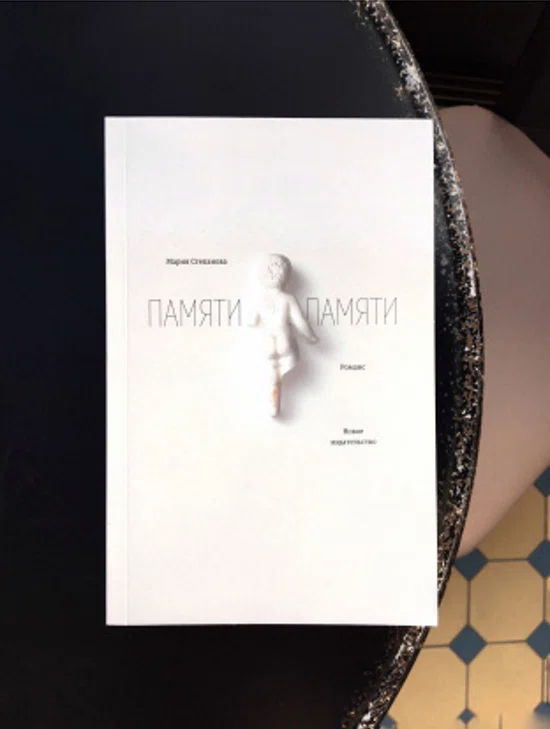
I must say that, in principle, Stepanova’s book (“New Publishing House”) could claim (and, perhaps, it will be) to many awards of this kind - it is translated into a variety of languages, and its international success can be called unprecedented. There is not at least some significant publication in the cultural plan, which would not place reviews of it, and almost all these reviews speak of “memory of memory” as a phenomenon with which modern culture cannot but be considered.
In Russia, there is also a premium success of Stepanova’s text - he received the main prize of “Big Book” and the Nose Prize. At the same time, the perception of the book in the literary and critical community cannot be called unambiguous. And the conversation about her international success, enough, we repeat, unprecedented, often switches to discussions about a certain “there” the conjuncture, which Stepanova’s book seems to be in, so you understand ...
Such judgments, by the way, were warned, stipulated in this text. It tells how during work the author comes to an American archive specialist. He patiently answers her questions, and then asks what kind of thing she writes. “I began to explain. And, he said, this is one of these books when the author travels around the world in search of his own roots, there are now a lot of such. Yes, I said, there will be another. ”
This is not awareness characteristic of Russian literature - the understanding that the writer is not a mountain eagle, flying alone and not like anyone, but a person, and, therefore, is interested in human. For what others think about, it hurts him (in our case with her) where others also hurt. This pain is about the without a trace of the disappearing past; About people who become grains of story and disappearing without any trace; About his specific relatives, “grinded” life, the memory of which will end at a time when the author does not remember their author - Stepanova dares to immerse in the cultural context. She says-look, such and such a wonderful person wrote about such feelings, and such and such an artist handed them to such a thing. In the domestic tradition, this is often called "smart", and the author offers to be easier.
Stepanova does not want to be easier and - it is very important - it is easier for us to be.
She sees in the reader an equivalent interlocutor-a thing in modern domestic intellectual literary practices is almost unprecedented.
After the few Moscow presentations, her books to Stepanova were lined up by those who wanted to talk to her about their aunts and grandfathers, the memory of which is thinned and was about to melt-along with the last moraine relative. Perhaps these people did not read all those books that Stepanova mentions in his text, but this did not prevent them from feeling his truth.
International recognition of “memory of memory” shows that this truth is international.