
Translated material
Where does the freemen come from?
The Nick Award for the best phenomenon was awarded to Andrei Smirnov for the film "Frenchman"
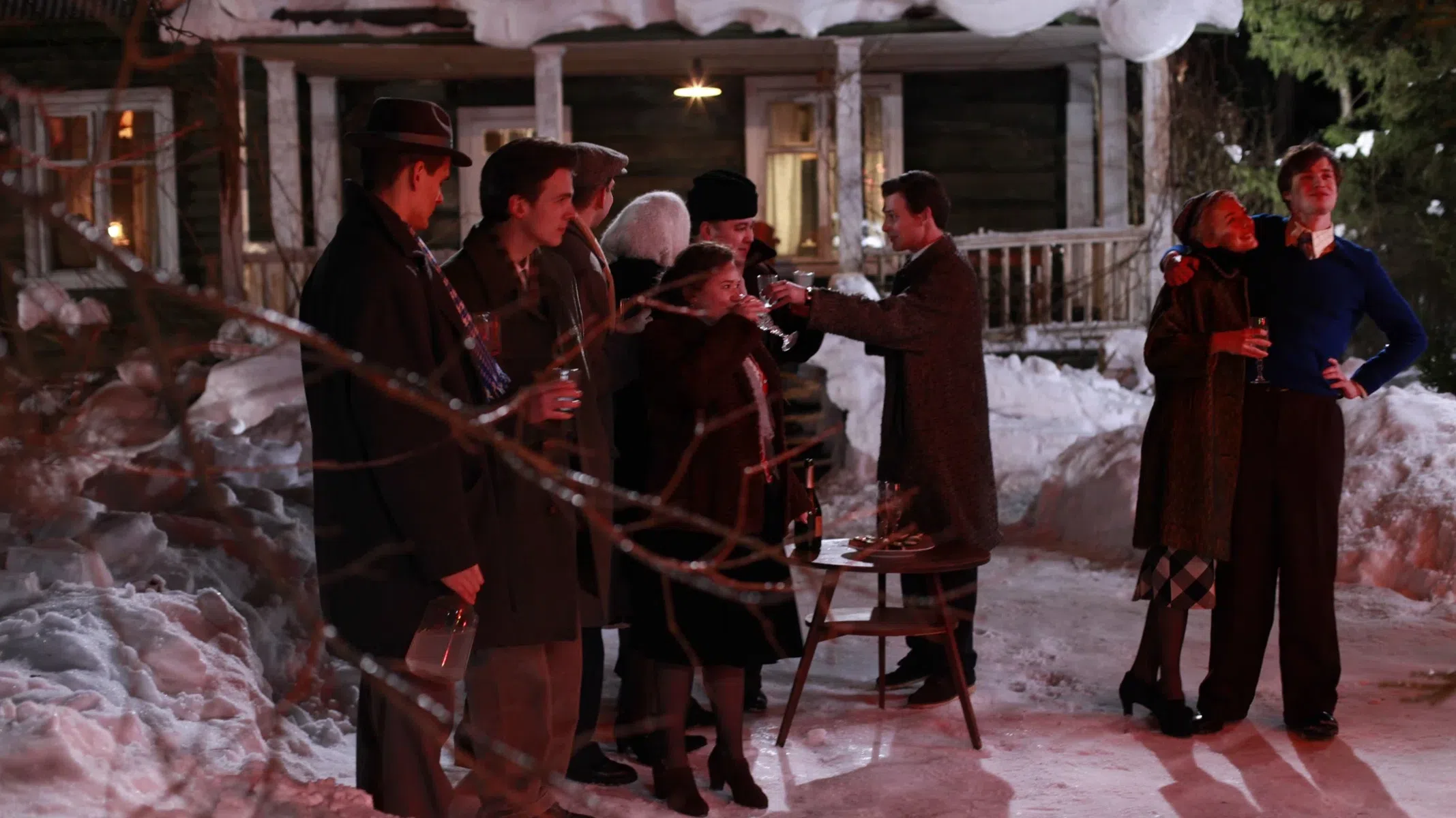
The picture about the end of the 50s is the most relevant statement about our today's reality with the streets boiling with indignation and the lines of the police in body armor.
Where do people come from with unbridled inner freedom among paved reality - one of the most important issues of the film.
Movie. “Frenchman” is a temperamental, honest artistic statement about the country, its people, its injuries. Moscow of the late 50s.
A graduate of the French University of Ecole Normale Pierre Duran (Anton Rival) comes to Moscow. He will be trained at Moscow State University, study the work of Petipa in the Bolshoi Theater, but first of all, to look for traces of the disappeared repressed relative of his Russian emigrant mother. And also - will lose his head from love. What can you say: a real Frenchman. So the Odyssey Pierre begins on the roads of an unfamiliar native country. Meetings with compatriots, to one degree or another hardened system.
This is not Retrokino. Director and operator Yuri Shaygardanov are considering the long time that it has not flowed anywhere. They opened the door, and now it is timidly blooming and immediately freezing the thaw. A short breath of freedom. The twentieth congress has just passed, and Hungarian events on the head. There is no admiration of the era, although Smirnov knows, he feels her skin, he notices a hundred not accidentally details. The authors pull, press the history of the twentieth century in 1957, when a large -scale "Feast of Netness" took place - a festival of youth and students. ... and are already returning from the exile by political prisoners. ... And the uprising in Hungary has already been crushed with the help of Soviet tanks.
"Frenchman" is a movie about a short breath of freedom in a non -free country. About luxury to think and tell the truth even when it is life -threatening. About the generation that believed in utopia and paid for it.
Director. For many years, Andrei Smirnov has been writing a landscape of the Russian twentieth century. The Belarusian Station takes off - about a generation injured by a war, which did not take root in the world that became a stranger. Submits into the darkness of self -destruction, which the people who entered the dark waters of the Civil War in the "Angel" indulged. Thinking about the tragic fate of the peasantry in the epic "Once upon a time, there was one woman." Whatever he shot about - in his films, in addition to bitterness, there is always love for Russia ... Love is like a synonym for pain.
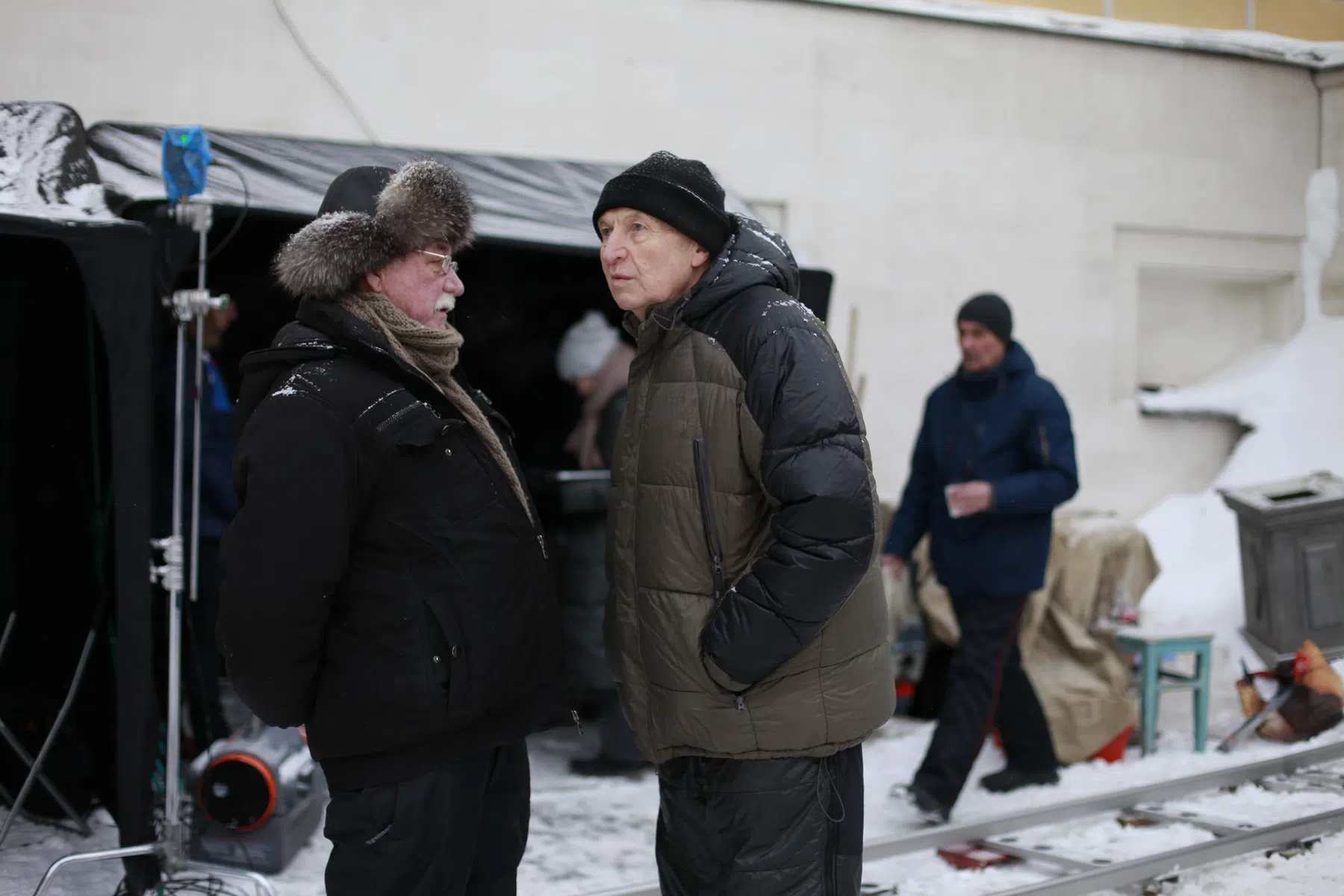
Andrey Smirnov. The impetus for writing the script was the story of the French Slavists, who arrived in Moscow in the late 50s. The first were Michel Protutyuria, a wonderful historian, a connoisseur of Russian literature, who recently died, and Louis Martinez, who translated Eugene Onegin. The French began an internship at Moscow State University after the youth festival. Among them was Georges Niva, going to marry Irina Emelyanova, daughter of Olga Ivinskaya. He was twisted, expelled from Russia, and with grief he went a volunteer to fight in Algeria, after a severe wound, a miracle remained alive. People are outstanding. I asked them how they lived here. The film has the details they told. For example, the Frenchman in a student dormitory pulls out of the wall a non -excessive speaker, behind which the piercing was hiding. This was done by Louis Martinez - the scandal was monstrous. Or a note in the wall newspaper about the "lead behavior" of the French. I found her in the university archive. And yet, first of all, my film about the formation of the generation of the sixties, into which I joined the rights of the youngest.
They could not win, because they did not have tools for influencing the mass audience. Although there was hope in the early 90s. I remember that in America I switch channels in the hotel and with incredible joy I think: "And our television is better today." In the time of the “view”, “Ring” our television was the most free in the world. These 20 years in the life of my generation are a sense of freedom, enormous opportunities. And all this was gone.
Heroes. The USSR in the late 50s is similar to the layered pie of the empire. The coexistence of different countries, ranks, eras. The fragments of the tsarist empire are still alive. We see the "former" in the generous, oil of the written portraits of aristocrats, the old women of the spikes, who drank the fullness of suffering in the Gulag (Natalya Tenyakova and Nina Drobysheva). The Stalinist model of socialism is in no hurry to collapse. Its representative is Nikolai Kuzmich, who is glossy with complacency, who lives in a high -altitude with the original Aivazovsky and Shishkin, a servant and vodka in the decanter (Roman Madyanov). There is a gesnik with an erased face (Sergey Umanov). And the temperamental renegade, the son of the priest is now a teacher of Marxism-Leninism (Mikhail Efremov).
And very close by the prohibited, seething world, splashing out of the clogged bottle of totalitarianism, beating over the edge of the iron curtain. Bright, arrogant, new. With love for the breathtaking Charlie Parker, Hemingway and Blues "Saint-Louis"-a beloved song of a dudes. With the poetry of Chudakov and Brodsky, with underground exhibitions, with the wind of freedom ... from the window. Like the current students, IT -schools, artists, they wanted to do what they love, did not intend to go into politics, they were simply forced to.
Pierre will look into the well of the Gulag archipelago. He will see people who, breaking the ribs, rolled the milk. Crushed, lost loved ones and themselves, and ... retained dignity. Smirnov managed to persuade Vera Lashkova, the very faith that reprinted the Syntax, the White Book (materials of the case of Sinyavsky and Daniel), spent a year in Lefortovo as Lefortovo. And all these Russia are united in a complex country.
The film has 180 characters. Among them are young doctors, students of Moscow State University, Conservatory, VGIK, for whom the first sips of freedom, even under the supervision of vigilant organs, were equal to the opportunity to breathe, to feel, to live. Countlessly revel in jazz, which is no longer prohibited, but is not yet allowed. Drinking for the health of Nonconformist Oscar (his prototype is Oscar Rabin, who blessed the picture, but, alas, did not live to the premiere) at his exhibition in the hut. Instead of the heroism of the metro -building, Oscar glorifies “vodka and herring”, working as an electrician on the railway. Next to Pierre is the ballerina of the Big Kira (she was played by the ballerina Evgeny Obraztsov) and the photojournalist Valera (Evgeny Tkachuk), at his own risk and risk, which spreads the Samizdat almanac of “letters”. So the film is called "Syntax", which was published by Alexander Ginzburg.
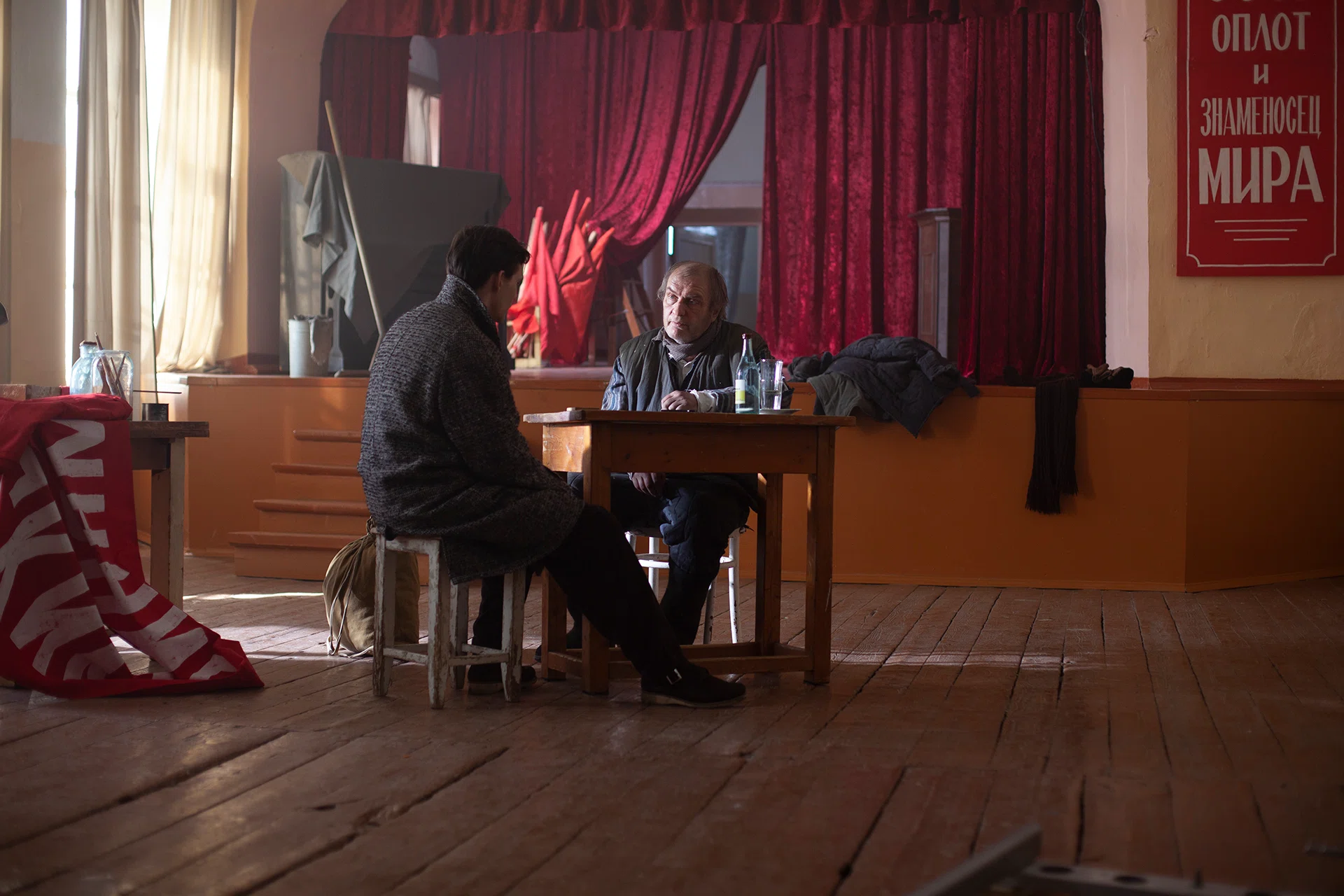
The picture ends with the dedication of Alexander Ginzburg, the compiler of the Samizdat almanac “Syntax”.
Andrey Smirnov. Where did the person come from who took the courage to make the “white book” of the Sinyavsky and Daniel process? And after all, not only sent her to the world, but brought a copy to GB. Unbridled inner freedom! Where do these people come from? But they take.
Russia is a large country, at all times it reproduces courageous, talented people, beautiful women. In every generation, people with an inner sense of freedom appear. All this freemen knocked out of the asphalt after the XX Congress, a countless crowd of foreigners came to the students' festival. It was the most important line. Lesha Kozlov was already playing. The artist Oscar Rabin, a symbol of the non -conformist movement, worked. He read the episodes of the script with the participation of the artist Oscar. I begged: "You just live to the premiere." Alas. In Paris, we arranged a session at which there were Arina Ginzburg - the widow of Ginzburg, and his two adult sons, the wife and daughter of Oscar Rabin, who survived the French from that group of Slavists.
Arina Ginzburg. For me, the “Frenchman”, the book of Vladimir Orlov (“Alexander Ginzburg: Russian Roman”), and “Green Tent” Lyudmila Ulitskaya echoes and create a true canvas of our lives. Not a mockingly punitive image of dissidents, as is customary on the one hand, and not mythologized-heroic, as is customary from the other ...
Vasily Aksenov has a wonderful story “CPCO named after Ginzburg ”, in which he accurately noted that Alika was simply pushed into politics. That under normal conditions, he, who was friends with the “Lianozes”, with the poets, would be some kind of galleryist or publisher, remaining within the framework of the cultural field. But in those conditions to remain a person who respects himself, and at the same time pretend that you can live like that, he could no longer ... There are people for whom the boundaries of a compromise is a very important thing, very serious. ”
... In the camp, the bosses gave the tape recorder to Ginzburg to the repair, in which the recording device was “in order to avoid”. The s/k ginzburg, known under the nickname "Russian People's Capter", managed to record short radio programs on it and transfer it to the will. For which he was expected to pay with the accomplices a transfer of a maximum security prison from the camp. And Lord, how interesting it is to listen to his radio message from those times: “On this we are ending our literary program from the camp, where Major Annenkov is the chief. ... The transfer was organized by the administration oversight. Alexander Ginzburg was broadcast. "
"Syntax". Samizdat typewritten poetic almanac, produced in 1959-1960. Alexander Ginzburg. The first publishing literary project was widely known, oriented directly and exclusively on Samizdat. In total, three syntax numbers came out, the fourth was prepared. The circulation reached 300 copies. Almanac consisted almost exclusively of the verses of Moscow (No. 1, 2) and Leningrad (No. 3) poets, the publication of which met obstacles from censorship. Each number of “syntax” included ten poets, each poet was represented by five poems. Among the authors: A. Aronov, B. Akhmadulin, D. Bobyshev, I. Brodsky, N. Glazkov, A. Kushner, B. Okudzhava, E. Rhine, G. Sapgir, V. Ufland, I. Kholin, S. Chudakov. The alternative of the “syntax” both the censored and “underground” methods of publishing literary texts was intensified by the demonstrative openness of the publication: not only the name, but even the address of the compiler were indicated on the title sheet. The issue number, also affixed on the cover, indicated the periodic nature of the publication. After Syntaxis, Samizdat began to be perceived not only as the continuation of the old Russian tradition of walking forbidden literature in the lists, but also as an independent public institution. The issue of "syntax" stopped after the arrest of the publisher in the summer of 1960 ...