
Translated material
Forty barrels of diplomats
Russia is threatened to ban the import of Czech beer. Pivot owners are waiting for bulldozers. Report from the bar
"When you take revenge on someone, then the innocent suffers from this." So said the brave soldier Schweik, the hero of the book of the famous Czech writer Yaroslav Gashek. So we can say about the initiative of the Russian authorities to ban Czech beer in response to the expulsion of Russian diplomats. The correspondent of Novye visited Czech beer in Moscow and found out what the owners, staff and visitors to pubs about the prospects of “new sanctions” think.
˟˟˟
Monks began to cook beer on the territory of modern Czech Republic in the era of the early Middle Ages. Mass production was launched after the XIII century, and from the XV Czechs began to prepare the beer of the lower fermentation - the camp. Already in the XVIII century, a camp, which became famous for the Czech Republic, was cooked almost everywhere. The consequences of World War II for Czech brewing turned out to be very destructive: the communist system made a lot of efforts to close the breweries, and only after the velvet revolution of 1989, brewing began to revive. If in the early 2000s there were only about 60 breweries in the country, now there are no less than 500 of them.
One of the features of the Czech beer culture is the love of non -poisterized beer with a limited shelf life, the so -called “tank”. For its import, a whole technology has been developed: beer at the factory is poured into a special container, “tank”, where it does not contact oxygen. In this "tank" he is taken directly to pubs. The technology allows you to maintain the taste of freshly brewed beer. And if the same Kozel in Russia can be bought in any store in the country, then the “tank” Czech beer can be tried only in a few Moscow beer.
At the end of last week, the sources of Kommersant in government agencies reported that the authorities were discussing the possibility
Prohibit the import of Czech beer into Russia. Such a measure is considered as one of the options for response to the expulsion of 63 Russian diplomats from Prague.
Reply symmetrically-expulsion-it will not work: in Moscow there are only seven Czech diplomats and 25 administrative and technical employees of the embassy.
The import of beer from the Czech Republic to Russia in 2020 amounted to more than $ 38 million, and last year this figure has grown by almost 10% compared to 2019, although many other indicators have decreased significantly. In the total import of beer, the share of the Czech Republic is about 10%, or 40 million liters per year. Since due to fluctuations in the ruble course, beer from the Czech Republic rises in retail, the volume of its consumption is reduced, but nevertheless, 2 million people drink it in Russia. What do they think? The correspondent of Novaya is transmitted from the bar.
˟˟˟
"Dacha Gashek" at the metro Belorusskaya. Despite the dank evening, the beer is half filled. Inside is an authentic Czech beer interior, books, photographs of the writer, installation of one of the streets of Prague and a monument to Gashek with a beer mug near an old printing machine. Here you can buy ten types of foam from small Czech brewers.
I sit down at the rack. I order Antos. While we tasting, it turns out that in the pub there is one of his co -owners Anton Nadezhdin. I suggest that he talk about sanctions.
According to Anton, if the authorities make the decision to “follow the hard scenario”, then with Czech beer it will be exactly the same as with sanctions products after 2014.
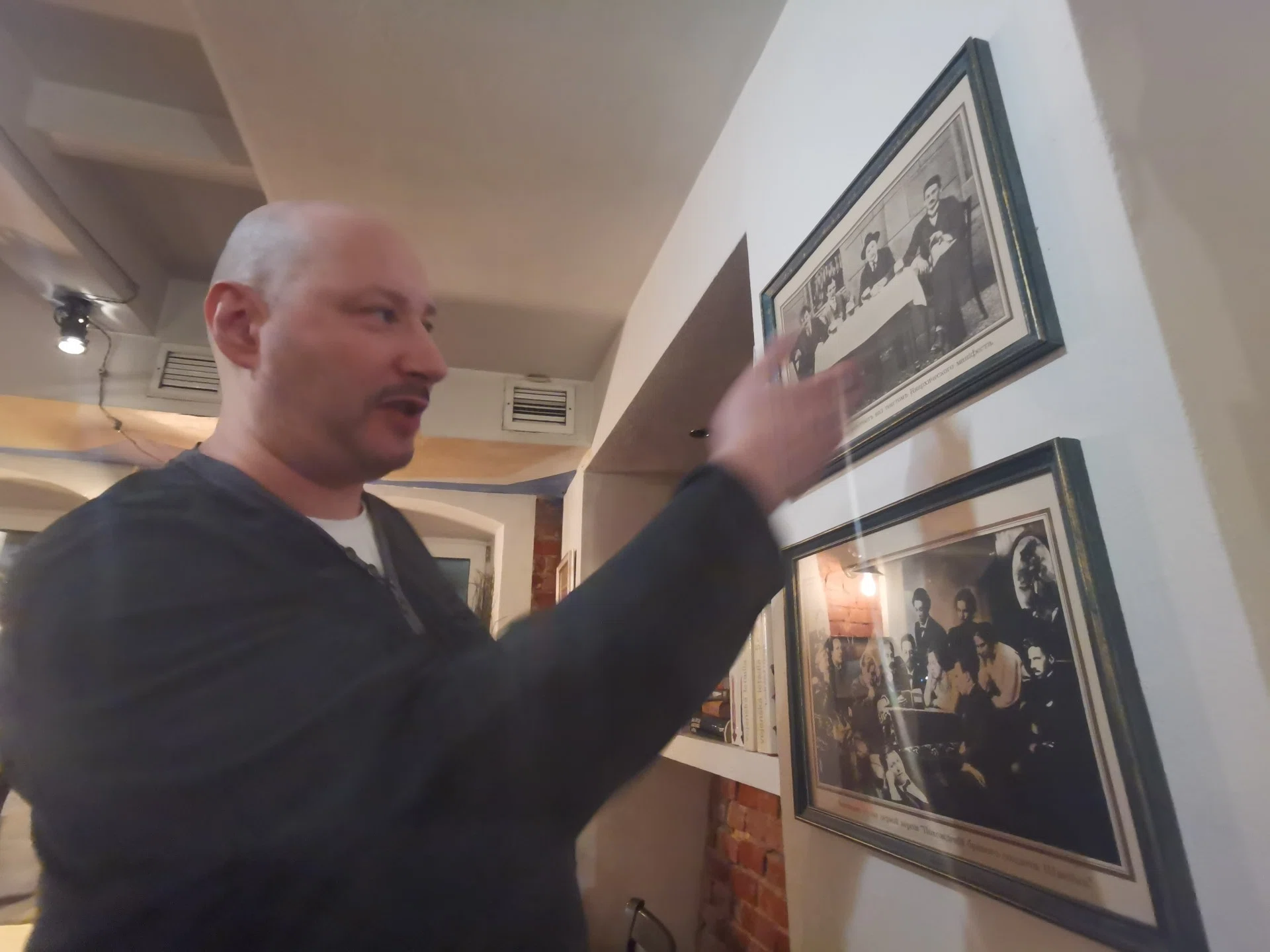
“In my opinion, these are very spot sanctions, because in this particular case they will hit one single institution in the city,” says Nadezhdin.
- In your opinion?
“Yes,” he grins. - We monitor the import of products to Russia precisely small Czech brewers. That is, what is a brand in the Czech Republic itself, and what the locals drink. This is a niche story. I think that on large giants, corporations, those who produce Czech beer on an industrial scale, this will not affect. They will simply change some kind of stamps ( geographical mark.-N.I. ) on a bank or bottle and will be imported the same beer, possibly even under the same brand, but produced, for example, in Austria or Hungary.
According to Anton, large Czech brands, such as Staropramen, Velkopopovickí Kozel or Pilsner Urquell, will find a way out. A few years ago, the Czech Republic stopped pouring beer in Russia. All production was brought back to the Czech Republic. And the fact that is now supplied in the Russian Federation on an industrial scale as Czech beer is import, he says.
But there is a nuance. In the Czech Republic itself, locals produce only 12% of the beer. All other production belongs to foreign companies:
In the first place, the Japanese, in the second-the Canadian-American Molsoncoors Brewing Co., on the third-Dutch, on the fourth-Czech BUDYLEVIVOVICKY BUDVAR, on the fifth-the rest are small local brewery. “We just brought these small Chekhs, these are small breweries, mostly family.”
Anton does not exclude that, along with beer, other alcoholic drinks from the Czech Republic - tinctures can also suffer. If the Russian authorities decide to introduce a ban, you will have to “reorient”. For what - it is still incomprehensible. Nadezhdin says that in Moscow, due to the pandemic, half of the “conditionally Czech” establishments closed. “We are Russian entrepreneurs, we will have to come up with a new concept.”
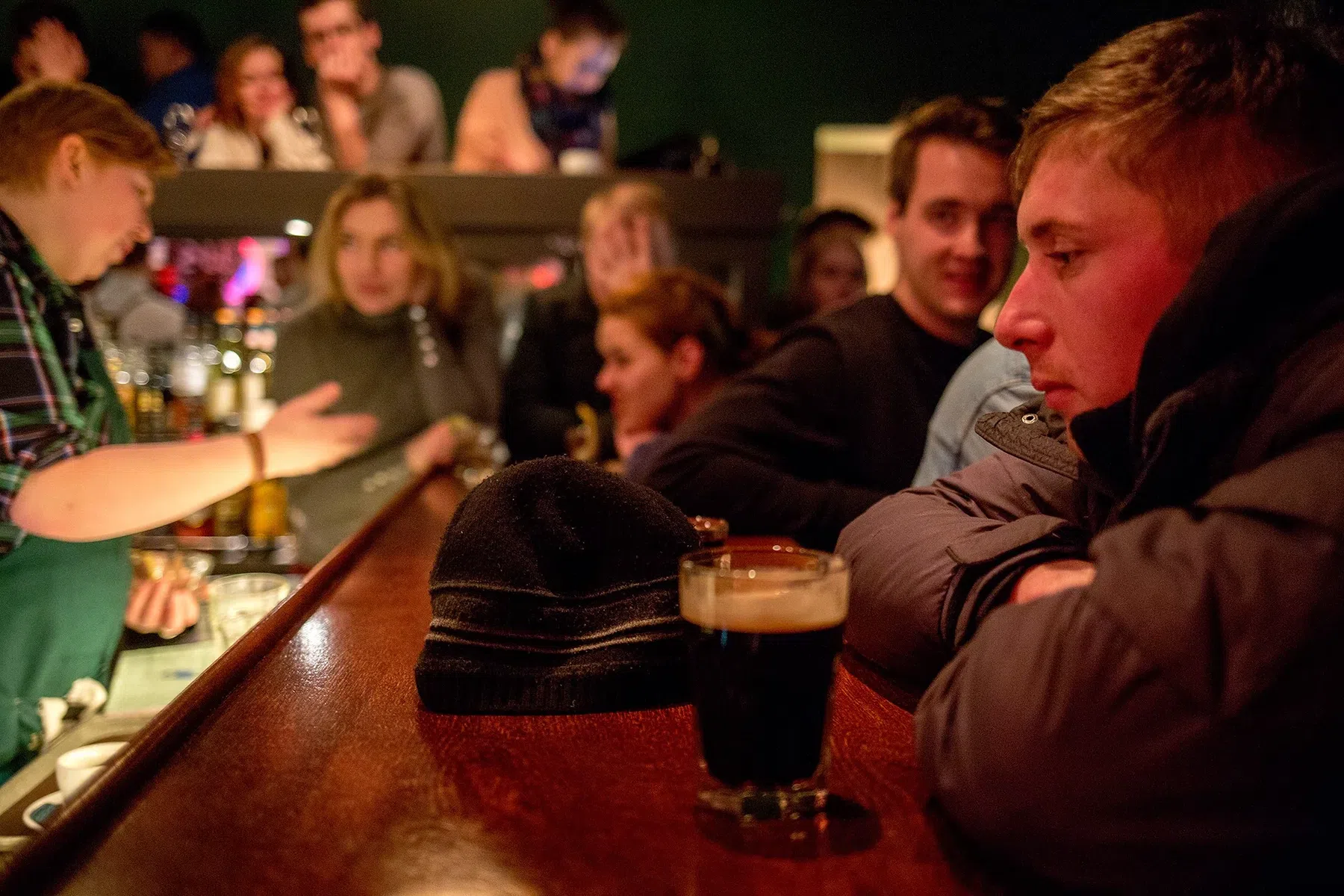
We move with Anton from the rack to see the monument to Gasheku, one of the regular customers of the bar throws me: "You write a good article, maybe then we can come here, drink our favorite beer."
“I am worried about the guys, I am literally worried about Czech beer so that it is here,” says the regular visitor Alexander. - These are household problems, simple. Drink good beer. We have already added to this. We drank it in Moscow back in Soviet times, few people knew about it. You could drink it at the Czech embassy if you learn their language. And we often went there.
Small Moscow pubs, not only Czech, are good for the constancy of their audience, which is divided into two camps: those who live nearby, and those who come from at least the other end of the city for the assortment.
Not far from me at the rack, two men are sitting. I go up to them, I meet. Alexey and Sergey from St. Petersburg, but in this pub they are also regular: every time they come to Moscow. They come precisely for the sake of Czech beer. I ask how they relate to the fact that the Russian authorities can prohibit his import.
“No, this is impossible,” Sergey decisively declares. - Well, why? There are not many of it in our country to prohibit.
“But in 2014, grocery sanctions were imposed,” I start ...
“I'll tell you so that these sanctions are against whom?” Against his citizens, - interrupting Alexei. “I have the association with all these stories: it stands somewhere in the outback rummaged through a wooden toilet, and on it the inscription:“ Biden and Merkel is prohibited. ” Our sanctions will be merciless.
˟˟˟
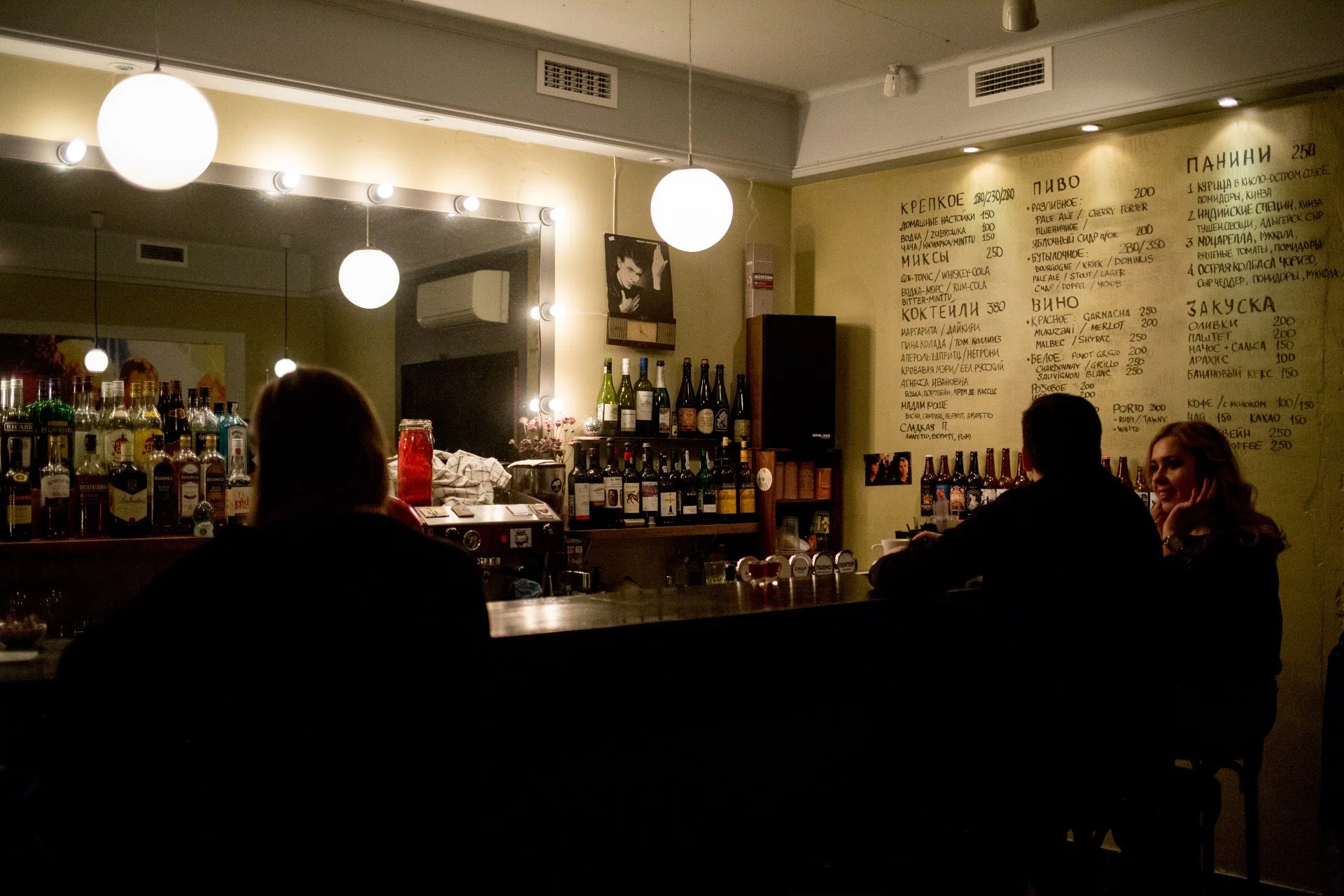
PAB "Pilzer" in the center of Moscow. In the evening, an hour before the closure, it is not enough. I sit down at the rack, study the menu: it has seven types of Czech beer. Everything is mass production. I am interested in the bartender, as a possible ban on imports will affect the institution.
“They just recovered from quarantine, and now they also want to ban beer. I don’t even know what to do, ”he says. - They planned to expand the assortment, import “tank” beer from the Czech Republic. Now what's the point? "
His colleague jokes: "They drove Czech, but they will have German."
Czech brewers do not want to become new "Voronezh".